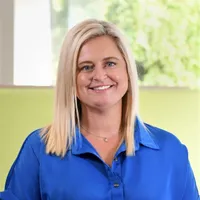
Phil Rhodes
Chief Learning Officer
Phillips 66
Unlock Growth: Democratizing Skills & Proving L&D's Strategic Business Impact
Thesis
“Effective L&D fundamentally leverages experiential learning, democratizes skill development for all employees, and builds strong business partnerships by demonstrating tangible impact to drive organizational growth and individual career mobility.”
What you'll take away
- 01Successful L&D centralization requires deep relationships with business leaders, understanding their needs, and demonstrating concrete business impact through data.
- 02Democratizing learning involves leveraging technology to provide equitable access to growth opportunities and skill development for all generations within an organization.
- 03Adopting a skill-based organizational model fosters internal talent mobility, retention, and enterprise-wide impact by breaking down silos and building organizational bench strength.
- 04L&D functions should operate as a business, aligning initiatives with core business imperatives, measuring impact, and utilizing strong project management to focus on high-impact areas.
- 05Effective learning initiatives must address mindset, skillset, and toolset to provide targeted and personalized development that truly addresses individual needs.


What most organizations get wrong
- Phil asserts that "people are people all over the world" to cut through perceived differences and focus on universal human aspirations when centralizing L&D, rather than getting bogged down in unique divisional issues.
- He advises L&D leaders not to simply "take orders" from business leaders, but to listen, enhance, and scale their requests while demonstrating broader impact.
- He pushes back on the conventional mindset that learning and growth opportunities are reserved for employees who "grind their way through" to a certain career point, advocating for democratization from the start.
In Phil's words
“Peace Corps really trained me and gave me the opportunity to learn on an experiential basis.”
This highlights the foundational experience that shaped his entire L&D philosophy.
“And usually it's around, it's always around people... and it's really around how to drive efficiency and effectiveness within that workforce. As well as how to leverage technology.”
This quote connects the human element of HR with tangible business outcomes and the role of technology.
“I believe there was this mindset of you had to come in and just grind your way through the organization to get to this opportunity space. So I think what we need to do is we need to democratize, bring learning to everyone within the organizations, not hold it within pockets.”
This challenges traditional career progression and champions equitable access to learning for all employees.
“I'm a big believer on skill is the commodity of the future within our workforce, and it shouldn't be held at a certain group or a certain— it should be democratized and available to all who want to really grow their skills.”
This quote emphasizes the critical role of skills as a fundamental asset for both individuals and organizations in the future workforce.
“And then the other thing I've really honed in on is anytime we have an initiative, there are 3 areas we have to focus on. The mindset, the skillset, and the toolset.”
This provides a practical framework for designing comprehensive and effective development initiatives by addressing all three critical components.
“Have a voice. We have a voice. Really believe, especially in the space of learning, we do a lot of the training, the onboarding, the new hire training, the reinforcement. I fully believe we are culture builders at an organization, right?”
This powerful statement positions L&D professionals as strategic culture architects rather than just trainers, highlighting their significant influence.
The problems this episode addresses
- Struggling to centralize fragmented L&D functions and achieve enterprise-wide scale and impact.
- Adapting learning strategies to cater to diverse generational learning styles and technology savviness.
- Demonstrating the tangible business value and ROI of L&D initiatives to executive stakeholders and the board.
- Breaking down organizational silos to enable internal talent mobility and create bench strength through skill transference.
- Moving beyond traditional career progression models to democratize learning and growth opportunities for all employees.
- Designing development programs that holistically address mindset, skillset, and toolset, rather than just one component.
In this episode
Built by People podcast features insights from world's top HR leaders
Built by People
Philip Schumacher joined the Peace Corps after graduating from college
Philip Schoenfeld's Career Journey
Dave Schultz: Peace Corps taught me about connecting with people through relationships
Centralization in the Learning Industry
Phil Phillips says by 2030, majority of Phillips 66 employees will be millennials
Phillips 66's Approach to Learning Disruption
Phillips 66 is transitioning from refining to becoming an integrated downstream energy provider
Phillips 66: The Role of Skills-
How do you approach running L&D as a business and demonstrating its values
Phil, How Do You Approach L&D Talent as a Business
Phil says having a voice is incredibly important in shaping an organization's culture
Phil Philbin on Building a Culture
Topics covered
Organizations and entities mentioned
Full transcript
Expand transcript (0 words)
Transcript is not available yet.