Guest · with Kimball · 16:54
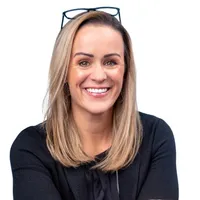
Nicole Buck
Head of People & Culture, Black Rifle Coffee Company
Don't Police, Partner
Key moments
In Nicole's words
“I always tell my team, don't police, partner.”
“HR is really a connective tissue in an organization, and I think that's something a lot of departments can leverage.”
“I've had quite a few mentors in my life. My first one was actually a boss that I had hired myself.”
About this conversation
Nicole Buck is Head of People & Culture at Black Rifle Coffee Company. She started her career as a graphic designer, found her way into recruiting at a staffing firm, and joined Black Rifle as a recruiter in 2019. She and Kimball talk about why she tells her team "don't police, partner," what she's learned moving off Workday, and how she got started with AI by asking the AI what it could help her with. She also tells the story of hiring her own boss, who became her first mentor.
Transcript
Read the transcript2,645 words
IntroHR has visibility across the business, right? Or they should at least. And I always tell my team, don't police, partner.
HostOkay. Welcome to the Built by People podcast, Nicole. We are super excited to have you on. Just kind of a quick intro. Nicole started her career as a graphic designer before finding her way into recruiting at a staffing firm. And then she joined Black Rifle Coffee Company in 2019 and has worked her way up to the head of people and culture. Growing through every level of the recruiting and HR function. And so, yeah, Nicole, welcome. But I kind of actually just wanted to start there. So when you started at Black Rifle as a recruiter in 2019, now you're head of people. What helped you kind of make those jumps along the way? And that was that kind of the goal when you started?
GuestWell, thank you so much for having me. And, uh, no, that was actually not the goal when I started. Um, I actually resisted moving into HR for a very long time. I just really loved recruiting, still do, and it's really the anchor in my career. But when I joined Black Rifle, I just loved the company and the mission, wasn't really chasing a particular title. I just knew I wanted to grow here and contribute however I could. And one of the HR business partners, Mary, was always very vocal about how she thought I'd be great. As an HR business partner, definitely saw something in me that I didn't really see in myself. And yeah, I think for just really how I've grown, I've always been open to taking on more. I think that, you know, anytime there was something that needed to be done, I would always raise my hand and was just very vocal about my desire to grow within the business and And then internal networking was also a really big piece to that as well.
HostI love that. And I guess along those same lines, like, what advice would you give people who want to move up the ranks in HR at, at with their own employer, kind of following that same path that you have?
GuestYeah. I would say build relationships across the business, not just with executives or the people that you think are going to get you promoted. It's about networking with your peers, with managers and other employees. That internal networking isn't necessarily about, again, finding the person that is going to promote you, but really building a reputation as someone that is trustworthy, that's going to solve problems. And I think that the second thing is care about both the success of the business and the success of people. I think people really notice that. And be vocal about wanting to grow. I've mentored quite a few people that, you know, that's my first piece of advice because they're not always vocal about what they want to do or that they want to grow in their career. And so, be clear about that and take on more and ask for stretch projects. And that's, that I feel like is pretty relevant advice for anyone that's looking to grow in their career.
HostI love that. I want to kind of double-click on that where you mentioned just helping the business grow in general. I feel like I was having a conversation with a friend recently and he was that most times when you have communication with HR, it's because someone's in trouble or whatever, but I feel like there's so much underutilized assets and things that you can get from HR that more people should take advantage of. What, what would be your insight on just anyone in sales or marketing? How can you partner better with HR?
GuestHR has visibility across the business, right? And so, or they should at least. And I always tell my team, don't police, partner. That I think HR organizations tend to get a little bit too into policing, right? Don't do this, don't do that. And then all of a sudden everyone's afraid for you to come into the room. And, you know, build the type of reputation where people want you in the room. And I feel like, you know, at Black Rifle, I've been able to partner with the sales, supply chain, finance organization, and they genuinely want to know, I guess, what, you know, what advice I have or how to work with this leader or how to partner with this other department. And that's something that I— HR is really a connective tissue in an organization, and I think that that's something that a lot of departments can really leverage.
HostYeah, totally. And especially as people want to move up, that was another conversation I had too, is you're in almost every conversation with, with upper management. So, you know, the needs of the entire company, you have a really unique view. And so if you're wanting to move up, you have, you know where all the needs are.
GuestYeah, yeah, exactly. And, and I think that putting that— I always tell people when they talk to me and, and genuinely just want advice on how to grow their career, I always encourage that and I tell them, you know, first stop is HR, right? Because we know when those opportunities are coming up and, you know, if somebody's being vocal about that, I actually had a recruiter on my team that was vocal about wanting to move to sales. So, I put him on sales recruitment so that he could start developing those relationships and he did, and I let them know, hey, he is very interested in in being in sales, and I would love to help him get there. And he actually is in sales now and doing really, really well. So,
HostThat's great. I love that. So you've been here now 7 years and obviously there's gotta be a lot of good happening to keep you at a company that long. I feel like now 7 years at a company is a lifetime, but what's going well? Like what keeps employees around and how can If you were to teach other companies how to do that, what, what would be that secret recipe?
GuestYeah. I think that the biggest thing that brings people in and keeps people here at Black Rifle is the mission. And we're really anchored in that, in serving coffee and culture to people who love America, and then supporting our veterans, first responders, and military families. It's something that's incredibly important to us, you know, and we don't just write a check, right? We live and breathe it every day, and we do things that are actively impacting veterans' lives. And, you know, even on my team, we will take time to speak with somebody that's coming out of the military and helping just even mentor them in their career. We have a lot of programs related to helping that transition into the workforce. And so, it's really great to be part of something that you can get behind, and it doesn't just feel like, oh, I'm making a bunch of money for soulless executives so they can buy their next big house. There's an actual impact, and I think that that's something that, you know, in the same way that a consumer really cares about where their dollar goes, employees really care about who they're working for in that sense.
HostOh yeah, absolutely. It, it, at the end of the day, yeah, it is a job. I'm there to get a paycheck, but if I that sense of gratitude or purpose along with getting that paycheck, that, yeah, that, that'll keep anyone at, at that company long term. Yeah, that's amazing. Um, and I know we had talked about this in our private previous conversations, but, uh, you guys are in in the middle of switching HR systems right now. Is that right?
GuestThat is correct. It's a
HostVery fun task. What do people not realize about that process until they're in it? And what advice would you give an HR leader who's about to start that process?
GuestYeah. Um, start as soon as possible, um, because it does take a long time when you factor in really just the RFP process, the analysis process of finding the right vendor for you, and then implement— contract negotiations, implementation timelines, all of those things really add up. I started the process about a year and a half prior to our contract ending with Workday, and I still don't feel like it's enough time. I'm really trying to do my due diligence and find the right partner for us and the right system that's going to scale with us, uh, and then also be a great experience for our employees and for my team. And that, that just, it takes time. And so start as early as possible is my biggest piece of advice. And then my second thing is just know that you're dealing with salespeople, right? And so I think that what the trap that we really fell into with Workday is, oh, look at all the amazing things that the system can do. What they, what they don't tell you is the modules, the money, and the manpower it takes to do those things. And so running such a lean organization like we do at Black Rifle, it just wasn't a sustainable system for us. We, I know some companies that have, you know, 20+ people working on Workday at all times and just in implementation, let alone also managing the system. And so I had 2, so it's, it's not, definitely not for us. yeah, and so, I just be careful, right? Because I think that, again, they're sales, they're trying to, you know, they're trying to do their jobs, which is fine, but just know what you need and what your team needs and what the organization needs and really challenge when they tell you, look at all the amazing things that they do, take a peek behind the
HostRight. Yeah, no, that's, I think that's, that's great advice and kind of going a little deeper on technology. I know everyone is using AI right now, but Um, how have you helped, or how have you used technology to help you just be that more efficient, that much more efficient?
GuestCurtain. Yeah, I use it a ton. It really enhances like my productivity and just capability to be able to do data analysis, workforce planning. There's all kinds of things I could go on and on and on. I love AI, and even, not even just AI, but automation, I think, as well. Just again, something that we're looking for in our system is how do I automate this process so this one trigger does these four tasks that ultimately take administrative work off of your people so that they can focus on our people, right? And so, it's really just enhancing capabilities in our department to where I can continue to run really lean and still support our organization. I've also created some resources for our employees, so performance-related resources. I created an agent that helps them basically write their performance reviews. And so just little things like that. It's, it's, there's so much capability there for sure. Yeah.
HostYeah. Yeah. And I, I feel like for someone who isn't as in-depth into AI, like, like yourself, how do you even kind of get started? How do you know which part of your process can be used, uh, can AI use to make that a lot easier for you?
GuestSo, simplest answer is ask the AI, and that's exactly what I did. I literally just typed in, "Hey, what things can you help me with? Here's where I want to go in my career. Here's, you know, the landscape of our organization," and just provided as much detail as possible, and then really asked the AI, like, "What can you help me with, and can we maybe leverage this resource?" to better the organization.
HostYeah, one of my favorite quotes is, most people stop at the start. And so if we can just lower that, that barrier of entry just to help people start, I think that can— once they get going, it's easy. It's easy from there, but the hardest part is just starting.
GuestYeah, absolutely. And I think that the, the AI thing can be scary for people, but I think that embracing it is the best best thing that you can do. if, if not, then that would be the scary part is if it left me behind. So,
HostYep, for sure. Okay. I, and we're, we're almost to time, but I did want to ask one last question here for us. But if you could leave one piece of advice for our community, something you wish you'd known earlier in your career, what would that be?
GuestSo, kind of going back to what I said earlier on, you know, don't police, partner. I think that is my biggest piece of advice for HR professionals. And then my other piece of advice is, I would say, the financial acumen and learning the business. Listen. To the earnings calls if you're publicly traded, of course, and learn all the things that you can about a business and develop that financial acumen. Understand what a P&L is and really just learn the business, I think, is the biggest thing. I think that that has been something that I've learned in my career, and I've had mentors really bring me along in that, and I'm very thankful for that because I do understand how our business operates, how our business works, how our employees are measured, and what executives are thinking of so that I can really make sure that our people are set up for success. And that is, I feel like, a big part of our role as HR professionals. Yeah.
HostYeah, and I would say, and you mentioned it twice throughout the call, is just finding a good, a good mentor. So any advice on finding a good mentor, someone that that you've looked up to, what worked for you.
GuestSo, I've had quite a few mentors in my life. My first one was actually a boss that I had hired myself, and I remember at the time, my VP of HR felt really bad about me having to hire my own boss. She said I wasn't quite ready for the role, and she was right. I was, you know, at the time, I think, self-aware enough that I knew that that wasn't the right thing for me. And so, her name is Theresa, and she was a phenomenal mentor for me. And I think that's the easy button, right, is your manager, your direct manager. And get those very early on in your career, because when you start reporting to a CEO, they can offer a different type of mentorship, right, an overall business acumen, financial acumen, but You know, for those early stages in your career, really just, you know, try to work with your manager. If not, I think like LinkedIn, finding people on LinkedIn is also a really great thing and a community there of people who, there are people that genuinely want to help others succeed, so.
HostAbsolutely. Yeah, I love that. Well, Nicole, thank you so much. Yeah, it was super nice to get to know you and, and yeah, I, I can't wait to see what happens next in your career as you keep keep moving forward.
GuestAwesome. Thank you so much for having me. I— this is, this is fun.
More conversations like this