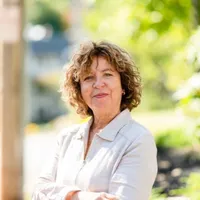
Marymichele Delaney
Vice President for Human Resources
College of the Holy Cross
Beyond Perks: How Holistic Employee Experience Builds Unstoppable Teams
Thesis
“By strategically investing in comprehensive employee experience initiatives—from recruitment to development and well-being—organizations can build a committed, engaged, and productive workforce, even in traditionally challenging sectors like non-profit higher education.”
What you'll take away
- 01A structured 12-month 'Everboarding' process with a buddy mentor program significantly improves new hire acclimation and satisfaction, leading to 100% recommendation rates among new hires.
- 02Implementing a robust employee referral bonus program can drastically reduce time-to-fill for hourly roles and double applicant pools by leveraging existing employee commitment.
- 03Holistic employee wellness, encompassing financial, emotional, and physical well-being, is crucial for combating employee fatigue and driving retention across diverse generational groups.
- 04Strategic compensation adjustments and benchmark-based pay, combined with regular job satisfaction surveys, are vital for understanding and proactively meeting evolving employee needs.
- 05Adapting work arrangements, such as a 4-day summer workweek, can significantly boost productivity, motivation, and engagement, especially in sectors with seasonal workflows and non-profit compensation constraints.


What most organizations get wrong
- In a non-profit higher education setting where direct compensation might be lower than the for-profit world, creative benefits like a 4-day summer workweek and college-paid financial planning can serve as impactful, high-return differentiators in attracting and retaining talent.
In Marymichele's words
“We reduced our time to fill by 56% between 2023 and 2024. The open jobs per quarter decreased by 50%. Our applicant pools doubled, averaging 1,250 applicants per quarter.”
This quote provides clear, measurable evidence of the positive impact of new attraction processes and applicant tracking systems.
“100% of the new hires say they would recommend this partner program to a new hire because it's really given them the opportunity to connect with others outside of their immediate departments.”
It highlights the exceptional success and the value of social connection facilitated by their buddy mentor program during onboarding.
“We know employees will often leave managers, not jobs. So we do everything we can to support managers and provide training to them so that their managing style will work well with their staff.”
This emphasizes the critical role of effective management in employee retention and underscores the organization's investment in leadership training.
“Work-life balance is really important to Gen Zs and to millennials. So we were able to put a 4-day summer workweek in place.”
This illustrates a specific, tailored initiative to meet the distinct needs and values of younger generations in the workforce.
“We know that wellness encompasses emotional, well-being, as well as physical well-being, obviously, but also financial well-being. And it's about connection, and it's about experience in the workforce in terms of culture.”
This quote provides a comprehensive and holistic definition of employee wellness, extending beyond traditional physical health.
“Productivity, we believe, went up. Motivation and engagement went up, and people walk across campus and thank our president for that benefit.”
This powerful statement quantifies the positive impact of the 4-day summer workweek and shows strong employee appreciation.
The problems this episode addresses
- High time-to-fill rates for open positions, particularly hourly roles, impacting operational efficiency.
- Ineffective or transactional new hire onboarding processes leading to slow acclimation and potential early turnover.
- Challenges in employee retention, with concerns about exempt and non-exempt turnover rates and overall resignations.
- Difficulty for non-profit organizations to compete with for-profit companies on compensation alone.
- Increasing employee fatigue and stress, necessitating a focus on holistic well-being initiatives.
- Managers being a primary reason for employee attrition, highlighting a need for targeted leadership training and support.
- Understanding and effectively engaging a five-generational workforce with diverse values and expectations.
- The high cost and effort associated with replacing and onboarding new employees.
In this episode
Intro
Holy Cross has implemented significant cultural changes in recent years
Holy Cross College's Transformation of Workplace Culture
Holy Cross is surveying employees about their onboarding experiences
The Holy Cross on Onboarding
How do you create a value proposition that resonates across generations while maintaining organizational cohesion
How To Manage 5 Generations In The Workforce
Your team has seen measurable improvements in both retention and engagement
Marathon Petroleum Company's Commitment to Well-being and Employee
Mary Michelle leads cultural transformation at a nonprofit college
Mary Michelle's Experience Leading Cultural Transformation
Topics covered
Organizations and entities mentioned
Full transcript
Expand transcript (2274 words)
Welcome to the Built by People podcast, where we share the stories and insights of the world's top HR leaders. Join us as we dive deep into the minds of HR executives, uncovering their strategies, challenges, and triumphs in shaping today's workforce.
Hi, Dave. I'm very happy to be here. Yes, I'm happy to share my journey. So I was intending to go into social work. I went for my master's in social work after college and decided that I would reframe that and instead move into human resources. So I started in human resources in the for-profit world, focusing on benefits and stayed in the benefits field related to human resources for some time. Moved into higher education, worked at Tufts University, Harvard University, and Wellesley College. My career journey brought me to Holy Cross during the pandemic. I was reached out to and thought, well, you know, sure, I'll, I'll talk to Holy Cross. My brother's a graduate. He talks about Holy Cross all the time. The alumni here are so committed and engaged. And the more I learned about the role, the more interesting it sounded. So I've been here at Holy Cross for almost 4 years.
That's great. And in your almost 4 years at Holy Cross, you've implemented significant cultural changes. Can you walk us through your approach to transforming workplace culture and what specific initiatives proved most effective?
Sure. Happy to. I was really fortunate that I came to Holy Cross at a time where there was a lot of interest in looking at the employee workforce, elevating the workforce, looking at culture. I had a green light for setting up initiatives and making an impact there. So I would say that we have a— Aspire is our strategic plan. One of the pillars within our strategic plan that we focus on is a world-class workforce. So HR is very focused on looking at that and making sure that we commit to that and provide the programs and strategies and initiatives that can support it. So we have done a lot of work over the last 3+ years related to retention and related to culture. So for example, we have looked at our attraction process. We got a new applicant tracking system where the applicant experience is much more valuable to the applicant and the process is much quicker. And just on looking at that applicant tracking system, we reduced our time to fill by 56% between 2023 and 2024. The open jobs per quarter decreased by 50%. Our applicant pools doubled, averaging 1,250 applicants per quarter, which tells us there's strong interest in our openings and working at the college. And 43 employees have been hired through our employee referral bonus program. So what we know is that we have employees at the college who are very committed to the institution, to their work, and to the mission. So we put in place a $750 bonus referral program, which means if somebody is hired from a referral into an hourly job at Holy Cross, the employee receives $750. So they already have communicated their experience at the college with their, with the applicant. So the applicant has a sense of the college. So we already have a vetting process there. We've been able to fill our hourly employee roles. At a much faster pace. We've had turnover reduced. So that program works really well. It's also a program that's available for exempt roles that are hard to fill. So we apply it to that as well. So in terms of onboarding folks, we looked at our onboarding process and decided we needed to really elevate that onboarding process so that folks were not just onboarded in terms of one day and done, in terms of here's your benefit plans, here's our policies. So we have a process called Everboarding where this is really a 12-month onboarding process. We actually have a program which is a buddy mentor program where we match new hire employees with an employee volunteer, and those folks are able to connect with others in terms of there's funding available for them to have coffee together on campus, to go for lunch together on campus. And what we've been told by our folks, we've matched 165 people in the 2 years we've had this program, and 100% of the new hires say they would recommend this partner program to a new hire because it's really given them the opportunity to connect with others outside of their immediate departments. It's allowed them to acclimate to campus more quickly, and they really love the coffee and lunch. Vouchers, it's a huge plus. So we're really excited about that program, and that will obviously continue. So we've also had folks talk about their experience of onboarding. We survey our folks to see how it's going because we want to make sure that we continue to learn from what we're doing well as what we're not doing as well. So we've had folks say— we've looked at surveys from August of 2022 versus December of 2024.. And, you know, one example is the question is, my onboarding experience was welcoming and pleasant. In August of 2022, 75% said that was true. In December of 2024, 100% said that was true. We've had some quotes from folks who've said the Holy Cross onboarding process has been the smoothest and most pleasant of any of my previous jobs. So that's one quote. So we love that this is being impactful and people are experiencing onboarding in a significant way. We know how expensive it is to replace somebody and to hire somebody into a role. So once we have the right person in the role through the recruiting process, we want to keep them. So in addition to that, learning and development is a key component of what we do in human resources. And we have a lot of different programs that our employees can take advantage of, including Management Development Series, Leadership Development Series, and so we offer those on an ongoing basis. And our HR team is certified in a number of assessment tools, including the Predictive Index, where we can provide assessment support to individuals and teams, which allows them to function in the most optimal way possible. In their work environments, because we know culture matters and managers have an impact on culture. And we know employees will often leave managers, not jobs. So we do everything we can to support managers and provide training to them so that their managing style will work well with their staff and there's growth and opportunity for everyone on the teams. So in addition to that, we've done a lot of compensation adjustments where we've made sure that we're paying at benchmark. We have a compensation philosophy statement. We also did a job satisfaction survey recently where we asked our employees about their job satisfaction, the first one that we've done since 2014. And we're listening to what they said. We've got some great feedback in terms of what we're doing well, and we have some feedback in terms of what we could be doing better, which we are looking at and we're gonna be adjusting.
Mary Michelle, you're managing 5 generations in the workforce. How do you create a value proposition that resonates across these different generational groups while also maintaining organizational cohesion?
So we're just starting to delve into the 5 generations in the workforce in order to make sure we understand what's the value proposition. What are Gen Z workers looking for versus millennials versus Gen X versus baby boomers? The Gen Z and millennials are going to become the majority of the workforce in about 5 minutes. The baby boomers. Are exiting. We still have 4 employees in the Silent Generation. So we're looking at what they value and what connects them to their employer, which is very different by generation. For example, Gen Zs, they care about social connectivity. They care about mental health. They care about financial wellbeing. Whereas Gen X cares about college support, backup elder care benefits. So we know what the drivers are for engagement for each generation. So as we look at the programs and offerings we have in place, we're making sure that we have what we need to have in place to engage those generations. So for example, work-life balance is really important to Gen Zs and to millennials. So we were able to put a 4-day summer workweek in place. Connectivity is really important to Gen Z as well. So we provide each employee with 5 meal swipes so they can go to the cafeteria and connect with each other over lunch. And, and they don't— they have 5 free meals to do that with each year. So we're putting in specific initiatives for each of those generations, and we'll continue to look at that.
Mary Michelle, your team has seen measurable improvements in both retention and engagement. What are some of the metrics that you focus on, and are there any specific programs or policies that drove these positive changes that differentiate from some of the ones you talked about previously?
Yeah, so we look very closely at retention. We know that our exempt turnover is down 7.7% in those 3 years. Our non-exempt turnover is down 5.1%. And resignations are down 3.11%. So we know that we're making good progress on all fronts. One of the things that we're really focused on is wellness and employee fatigue. We've looked at emerging risks, and we think employee fatigue is an important focus that we need to pay attention to. We know that wellness encompasses emotional, well-being, as well as physical well-being, obviously, but also financial well-being. And it's about connection, and it's about experience in the workforce in terms of culture. So we are looking at wellness from a really holistic approach. We're going to be putting in a number of things. We have a financial planning benefit for all of our employees. Which is paid for by the college, which is a game changer in terms of an employee benefit because, you know, that the vendor is not tied to outcomes in terms of where you invest your defined contribution plan money or any outcomes. They're actually, they invoice us on an hourly rate and they meet with folks individually to learn what it is their challenges. Is it paying for college? Is the challenge paying for care of an elderly parent, is the challenge of disabled child, being able to retire in X number of years, and they do a deep dive and provide that assistance. So that's a game changer. We're also putting in a new resilience tool that's scientifically based that will really allow people to provide their individual information into this portal it's a game changer for just helping folks be calm during the day if something challenging is happening, to build their resilience and to reduce their stress. We're also looking at a legal benefit because, again, financial well-being is key. And when legal resources are needed, they can be very expensive. So we're looking at providing that to our folks.
Mary Michelle, in your experience leading cultural transformation, What were some of the unexpected challenges you faced and how did you overcome them?
I would say that personally, I really enjoy changing culture. I really enjoy looking at the landscape and seeing what's working and also seeing opportunities for change. And problem solving is always integral to that process. And I like problem solving. So when we uncover a challenge and we uncover the problem, it's just a process of creatively looking at that and seeing what can we do? What can we do that has the lowest cost impact possible, but has the highest possible return? One of the things that was fairly intuitive and simple for us to think about in higher ed, we're a nonprofit. Folks can work in the for-profit world and make more dollars. It's, there's often bonuses and are different in the for-profit world, et cetera. So what could we do that would be impactful and different? And one of those examples was the 4-day summer workweek. Not everybody can take advantage of it, but in higher ed, the students are for the most part not on campus. Many of the faculty are not on campus. And we were able to structure that. We piloted it. We looked at the pilot. We benchmarked it with other institutions that are part of our collaborations.. And we were able to create a policy that is a game changer for productivity. Productivity, we believe, went up. Motivation and engagement went up, and people walk across campus and thank our president for that benefit.
Mary Michelle, what parting advice would you like to share with our community?
I think that in HR is challenging now, but it's also full of opportunities and full of ways to be creative and make the employee experience really positive. Every day there's something new that's coming up that is, what are we going to do with that? You got to have a sense of humor. You got to make sure you have fun. And you have to really value your teams because when everybody's rowing together and enjoying themselves and cohesive, the impact you can have on the work is tremendous.
Mary Michelle, thank you so much for joining us on the Built by People podcast. It was a pleasure to have you involved.
Thank you, Dave. I appreciate it.