Episode 82 · February 6, 2025 · 9:21
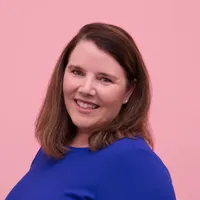
Lizzie Garner
Chief People Officer, ClearChoice Dental Implant Centers
HR's New Blueprint: Reverse-Engineering People Strategy for Business Impact
Episode 82 · February 6, 2025 · 9:21
HR's New Blueprint: Reverse-Engineering People Strategy for Business Impact
Key moments
In Lizzie's words
“I have been sort of brought up and trained to make decisions based on business need, not HR theory or how it should work.”
“I really hold back any HR plan until I know exactly what the business needs to be able to support it.”
“Reverse engineering our program to fit the customer experience is what's ultimately most important to me.”
Transcript
Read the transcript1,551 words
IntroWelcome to the Built by People podcast, where we share the stories and insights of the world's top HR leaders. Join us as we dive deep into the minds of HR executives, uncovering their strategies, challenges, and triumphs in shaping today's workforce.
HostI'm excited to welcome Lizzie to the Built by People podcast. Lizzie, thank you so much for joining us. And as a starting question, I always love to ask a little bit more about your career journey.
GuestYeah, absolutely. Thanks for having me. I came up through the Chase retail bank back when Chase was putting bank branches on every corner of every city and major cities in the early 2000s. So a fast growth kind of industry. I then moved to Guaranteed Rate, another top 5 mortgage company here in Chicago that was going through tremendous growth, both organic growth through hiring as well as a lot of acquisition work. I learned a ton there. And there's a funny story I tell about joining ClearChoice that when I was at Guaranteed Rate, we had met with these financial planners for like young executives who are first starting to make money. What are you going to do now that you can, you know, maybe more than just pay your bills? And so the financial planner was looking for things like save for retirement or buy a second home or send your kids to college. And I said, I never want to have to wear dentures. I want to ensure that if someday I lose my teeth, I can have like implants, dental implants, so I will always have teeth. And the financial planner of course laughed like, it's not a typical answer from like a mid-30s person who's setting up their, their, you know, financial thoughts of the future. But when the opportunity for ClearChoice came along, it certainly rang to something that was always kind of important. Here I am.
HostComing from a sales and business background, what unique perspectives do you bring to HR that differ from traditional HR professionals?
GuestYeah, I've been so lucky to meet so many great traditional, well-legacy, the right pedigree of HR experience, and I'm happy to call them mentors and friends and people who have helped me, but I don't come from a deep, rigid HR playbook. How exactly do we, do we, you know, do we run things? I have been sort of brought up and trained to make decisions based on business need, not HR theory or how it should work. So for myself, I really hold back any HR plan until I know exactly what the business needs to be able to support it. That has really allowed me to be attractive to founders. I found myself working with founders the last 15 years or so. It allows you just to be a bit more flexible, still again, with all of that great information that comes from that HR theory, but always in support of or second to what it is that the business needs are first.
HostLizzie, you mentioned in the past not having independent HR goals. Can you elaborate on your philosophy of aligning HR priorities with business needs, and how has that approach benefited? Clear choice.
GuestYeah. Again, that kind of idea of reverse engineering any of the HR programs, policy support to ensure that you're fitting the customer experience is first reverse engineering our program to fit the customer experience is what's ultimately most important to me. I've had great success ensuring that we then know what the business needs and how do we reverse engineer that. Here at ClearChoice, that really looks like programs that are built around patient centricity. What is it that patients need? What training programs do I need to provide? What type of additional support to be able to prioritize patient experience? That's at each step in that same retail center, from the very first introduction with the patient throughout the final words with them. What have we done to set up our talent, get the right skills in front of each one of those patients? It really keeps me from kind of running two different strategies, what HR should be doing versus what it is that the business needs.
HostLizzie, what challenges did you face transitioning from sales leadership to HR, and how did you overcome that initial skepticism about your non-traditional background?
GuestYeah, it's a, a great question. I'm not sure I fully overcome the skepticism of my non-traditional background. I think there are still some. Who have seen my adjacency to HR. I've certainly been adjacent to HR. I ran a lot of learning and development, onboarding, building organizational design within a lot of the merger work that I did. But again, as a people or sales leader, I found myself being energized by helping people grow, find them the right role, even when it was out of sales. And much like a puzzle, I could find myself sort of energized by finding the right people in the right places and helping, helping them to grow. So when that opportunity to be in HR full-time was available to me, I found it like, oh, I'll be able to use the best parts of what I learned in leadership and spend my full day every day sort of working through that puzzle of what could the opportunity of this organization be if we could look at it through that people lens. I, again, there's still a, a good amount of theory that's really important to ensure that we're all successful. So I certainly tap into that as needed. It just isn't my guiding principle.
HostLizzie, how do you approach organizational design and people strategies differently in your business-first mindset?
GuestYeah, I think back to that idea for me of the reverse engineering. I just don't tackle it from a should, from a, a template that you could download. I need to first understand what are the business goals, how is it organized, what experience does the business already have? As I mentioned, both through merger and organic growth, there's a tremendous amount of legacy knowledge that is important that we need to have. So where do I need new innovation, new innovative skills, talent to disrupt existing teams to be able to meet whatever the business needs are? And even the business isn't even always exactly clear on how that organization should work. So Being able to kind of come in and out as someone who's influencing the leaders and showing them what the talent could be does allow you to design the talent to ensure that you're creating a truly high-performance team with the strengths, the opportunities, varied approaches to get all of the right talent in the right place. And I don't always get it right the first time either, but I'm quick to make changes or adjust as needed.
HostLizzie, as someone who didn't plan to end up in HR, what would you tell other business leaders who might be considering a similar career your pivot?
GuestYeah, I was HR adjacent and found myself energized by the pieces of my job that were more traditionally called HR, the people work, the growth, the training, the development, that org design. And I would say, if you have those interests, the things that you like most, identify those transferable skills. Fill the gaps that you don't have with certification or skills or adjacency to some new work to help you fill the things you don't have. And then, you know, go for it. Take the first step. You'll figure it out along the way. No one quite has it all worked out, no matter how competent they present themselves to be. You've gotta just go out there and give that first step. But you've got a strong base. You know what it is that interests you, what energizes you. I think any of those transferable skills, I, again, I came from a lot of financial services and now in patient-centric work. That's going to help fill any gaps that you didn't have with kind of the exposure to new things and make sure that you believe in yourself. Take the first step.
HostLizzie, what parting advice would you like to share with our community?
GuestYeah, I, I love this question. I love that you finish all of your podcasts with it. I, I like hearing everyone's sort of different, but the through line of, of what you can accomplish listening to everyone's great ideas. And the piece that I give others, or that I try to remind myself, is to stay curious just a little longer. Ask one more question, ask one more kind of deeper belief question. Try to figure out exactly what it is that people are trying to do. I know people often, certainly is just good life advice, but certainly in HR, we sometimes get the rap for being the people who are going to say no to things. Before you get there, just stay curious a little longer. Ask one more question.
HostLizzie, thank you so much for joining us on the Built by People podcast. It was a pleasure to have you involved.
GuestThank you so much for having me.
More conversations like this