Guest · with Maddie · 19:00
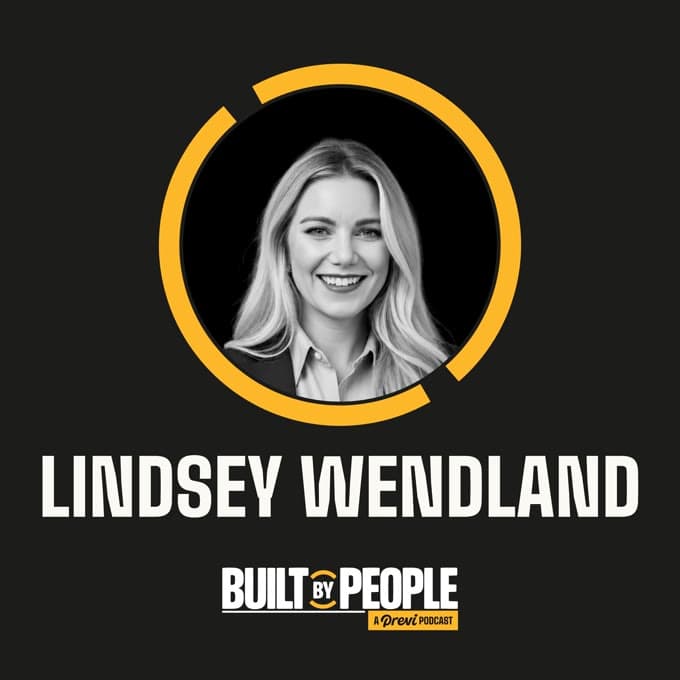
Lindsey Wendland
Head of People
Structure Has to Follow the Problem
Key moments
In Lindsey's words
“Structure has to follow the problem. I would rather write a policy… because we've hit the same issue 3 times than just write policies for fun.”
“Every process you add is something that people have to work around or it impacts them. So I feel like it really has to earn its place.”
“There's a saying… if you have to eat a frog, eat it first thing in the morning. And if you have to eat two frogs, eat the bigger one first.”
About this conversation
Lindsey Wendland started her career at the Detroit Symphony Orchestra, working on partnerships for its music series and on patron loyalty. She moved into business operations, picked up HR work when a colleague went on maternity leave, and never left. She's now Head of People. She and Maddie talk about why patron loyalty turned out to be a lot like employee loyalty, what she learned watching the orchestra come back from a musician strike, and why she'd rather write a policy after the same problem shows up three times than write one for a problem that might never happen.
Transcript
Read the transcript3,187 words
IntroEat the frog. There's a saying, it's very silly, but it's basically if you have to eat a frog, eat it first thing in the morning. And if you have to eat two frogs, eat the bigger one first.
HostWelcome to the Built by People podcast, Lindsey. We're so excited to have you on.
GuestThank you so much for having me. I'm really happy
HostUm, Lindsey started her career at the Detroit Symphony Orchestra building patron loyalty programs before moving into HR. Today she leads HR at a global tech company. So again, welcome, and I'm so excited to have you on here, especially because I feel like your journey into HR from being at an orchestra, I feel like, is crazy. So tell me a little bit about your career journey. You spent 4 years at the Detroit Symphony Orchestra working on patron loyalty before moving into HR. What pulled you toward HR? What ultimately led you to leadership? Kind of Tell me a little bit about that.
GuestYeah, so a lot of my work on the music series at the Detroit Symphony Orchestra was really about partnerships. So I was working with organizations and people around Detroit, finding ways to showcase what they had to offer and trying to bring some of their audience into the symphony and turning them into patrons. And obviously partnership only works if we actually understand each other's goals. And it taught me what really good partnership looks like. You can have the same end goal and, um, completely different views on how to get there. So you don't always know best. Good things take time and you need to keep improving. So a lot of that experience taught me about partnership and I feel like You never really start in your career where you end up. I mean, I'm sure some people do, but I, I think you, it's more about the experiences that you have there. So patron loyalty turned out to be a lot like employee loyalty. They both come down to the question of like, what are you getting, or are you getting what you expected out of this exchange? For a patron that's feeling valued enough to come back the next season, but for an employee, it's about being paid fairly, respected as a person. Having your skills be put to good use. So different relationship. Yeah. Um, yeah, I, I think it has a lot of similarities. I, I joined a company actually in between in business operations, and I feel like that can be a really broad field of things. And I really liked HR because again, I got to connect with people. So I just kind of fell into HR and then decided I really liked it. And now, obviously, in hindsight, I see the similarities that I was just talking about. In the moment, you don't. I think you just kind of feel like, this feels right, and I'm kind of good at this, keep, keep moving forward. Yeah.
HostSo you went from the orchestra to business operations, and then did you just like apply to, for an HR role at a different company?
GuestThere was an HR need within the company that I started in business operations, and there was someone I think going out on maternity leave and they wanted some help. And so I just kind of got my feet wet there and, and was okay at it and, and really enjoyed it. So I just built from there and took on more and more. And as small comp— it was a small company as well. And so as small companies grow, the need grows as well. And so I think opportunities are really plentiful in small companies for sure.
HostYeah, no, I, I get that. I totally understand. what do you love most about being in HR? Like kind of what did you, was there like a passion for it when you first went, um, when you first started, or did you kind of like find certain things that you loved about it?
GuestYeah, I do tend to like process, and we can talk about that maybe a little bit more later, how I try to evaluate if the process is necessary and not over-processing things, especially at a small company. But, um, at the DSO, at the Detroit Symphony Orchestra, I got a lot of exposure to culture work because right after I, or as I was joining, a musician strike had just ended. So I got a front row seat to a lot of culture work. I watched the organization. Yeah, I mean, it was really incredible. I was very young and didn't really know a lot about that, and so I got to watch an organization go through something really, really hard and come out the other side. And yeah, I mean, I saw that it works. I felt it work and the results showed that it worked. So that's really what made me wanna do it myself. And, um, one of my favorite parts about it are just building a culture that feels authentic too. You don't want to. You don't want to do something that feels inauthentic to the company that you're in, and a lot of cultures are very unique to the field or to that organization, so you want to be sensitive to that. But I think it can work, especially if leadership commits to it. So that is what I like most about leadership and, and what has led me to leadership is I really enjoy partnering with people and I really do believe that that some of the culture work has benefit.
HostYeah, that's great. if I shadowed you for a week, where would you— where would I see you spending time on things that aren't as strategic?
GuestYeah, I mean, sometimes a lot of it doesn't feel strategic or it might not seem strategic to somebody else at a small company. I mean, I'm mostly the whole people team. We all work together and, and we have a really great group, but you'd still see me writing letters, answering payroll questions, fixing things that broke earlier that morning. I think that's all okay. And it is really important though to try to strategize the best use of your time. And if you do have limited time and resources, that making sure that you're getting the most out of your day is very important. But I also think that some of those things that seem not strategic can be very, very helpful and strategic in the long run. Most people problems start pretty small and maybe just nobody wants to deal with it or they don't have time to deal with it. And if you can get the small things right and not dodge uncomfortable Conversations. Some of that really big stuff never happens, but you're also building a lot of trust with people by doing the small things well for them and seeing just the benefit to that. So I do think that's worth more than any huge strategic initiative that I can roll out is just building trust day to day with a team.
HostYeah, let's, I'd actually wanna double-click on that because I love the fact that it starts out with the trust so that you can accomplish those bigger conversations or those, those harder problems. So. Tell me how you like to establish trust with your, with your employees.
GuestYeah, I mean, we've been working remote for so long at both of the companies that I have been in since the pandemic, so I've gotten better at that. That's a little bit challenging. It's prioritizing in-person
HostThat's a whole new world.
GuestFor sure. So prioritizing in-person time when you can, I think is great. We have an, a local office here in Metro Detroit, and I try to be in that office a lot, but establishing trust is being a really good listener, remembering things, about employees or Honestly, even kind of asking questions and really seeking to understand. Sometimes I will just listen into a meeting that you could argue doesn't have a lot to do with me, and I'm not doing that in the way that like teachers in school used to have people sit in the back and evaluate their teaching. That's not what I'm doing. I'm really trying to say, okay, what is this team facing? And what are some of their day-to-day stresses so that I can better understand how a decision that I might be a part of separately needs to be influenced by what, what they're facing. Yeah.
HostOh, that's cool. Like understanding different parts of the business, different teams, different, like getting kind of granular. That's, that's really cool. Um, what do you think most of the world misunderstands about your job?
GuestI mean, what I mentioned earlier about process. I, I think people really think HR is policies and paperwork, saying no a lot, slowing things down. I hear a lot in the world, HR is not your friend, um, all of those things. And especially at small companies, but maybe all companies, I don't think they want that. They don't want HR in that sense. They want someone who will deal with hard stuff. The conversation that someone's been putting off, or a process that is broken, a relationship that isn't working or needs to be adjusted. but you wanna build just enough structure so that the company can keep going and growing. I had an HR mentor very, very early on talk to me about if you're receiving the same question 3 times, then it's probably time to send something out about it. And I guess now what I, on a larger scale, what I think about that is that structure has to follow the problem. I would rather write a policy or an email or communication or make an amendment to our employee handbook because we've hit the same issue 3 times than just write policies for fun and write policies for problems I think might happen someday, maybe because Yeah, I mean, it's just every process you add is something that people have to work around or it impacts them. So I feel like it really has to earn its place.
HostYeah, that's great. if you could leave one piece of advice for our community, something you'd wish you'd known earlier in your career, what would it be?
GuestI'll start with the second part cuz I've, I have two things I think about a lot and, and I speak to anyone who's looking for some mentorship or advice. The thing I really wish I had known earlier is how formative those first few years are, and they're formative from your failures. A lot of what you're gonna learn is com— coming from failing. I have a lot of stories about my internships even where I did these really humiliating things and I still think about them when asked this question, so I don't make that mistake over and over again. but yeah, like do things before you feel ready. Stumble forward. It's okay. And when you make a mistake, you probably won't make it twice because it will live with you. so that is for early in your career. I, I just think it's to be with failure and as long as you don't make the same mistake twice, most people should and would be pretty patient with that. One now that I, I like, it's eat the frog. There's a saying, it's very silly, but it's basically if you have to eat a frog, eat it first thing in the morning. And if you have to eat two frogs, eat the bigger one first. So I, I like to think about that a lot. You know, whether it's just you hate working out first thing in the morning, get that over with. But in terms of professional, things, do the hardest thing on your list first, the conversation that you're dreading, the project that nobody wants or that you don't wanna do. And it really doesn't get easier when you wait. I mean, obviously it's good to sleep on an email that's written out of a lot of emotion and frustration, but that email's probably not gonna get scar— or less scary to send in a week. And I just think, yeah, I mean, it's so silly, eat the frog, but I, I think about
HostNo, I love that. I've never heard of that, so I'm, I'm gonna start saying it.
GuestYeah. I mean, they don't, you, when you look it up, the, it's one of those quotes that people are like, it's not really known who said this. It might be this person, but still it's a saying out there in the world.
HostYeah, I love that. I mean, I hate working out, you know, in the, in after work and in the morning, but it's like, it's true. It's like, just do, just do it first and then you're done. You don't have to like dread it all day.
GuestYeah. Yeah. And you're usually freshest in the morning. I mean, not everyone is, some people are night owls, but yeah, then it's just done and, you know, it's done and you had that difficult thing. Yeah.
HostUm, what is one initiative you've rolled out recently that you're proud of?
GuestYeah, that is a great question, and I am very proud of this. We have an employee volunteer program that we started a few years ago. It's called Shibumi Cares, and each year we pick one dedicated cause for the company, and we try to choose something that's very important to a large amount of our employees. This year we chose food insecurity, so we have people volunteering at food banks, teams stocking shelves, filling the little pantries, and people even making monetary donations. So everyone gets a day off, a paid— a PTO day to volunteer, and then we match contributions that they make to an organization of their choice up to a certain amount. yeah, I'm super proud of it, but from an HR perspective, it, it accomplishes so many things at once. It's team building, but also a benefit. So instead of a pizza party or going out to dinner or giving someone another pen, we, yeah, we can, um, give a donation to something that's important to them and it feels really powerful. Yeah, it's fun.
HostYeah. Wow. So do each team, like, cuz I worked at a company and we did the kind of the same thing, but it was like each team had a day. It was like a full week where it was like you picked, your team picked like what they wanted to do and then they all went out. Or was it, is it just like all year round, one person from the company will go pick their day that they wanna do and go do kind of what, what they wanted to do. Yeah.
GuestYeah, I would say a mix of both. Where we have our core offices, we tend to do a group outing and a dedicated day. And then we do have some people that they're the only person working remotely in their town. They might already be volunteering at their food bank and feel really passionate about it. So what's fun is that in Slack they'll share about their day and their photo, and it, I think it's just inspirational, but it's also a good way to remember that we're all out there.
HostNo, I, I told, yeah, I feel like one thing that I try to live by is like true happiness comes from service. You know, it's like getting outside of yourself, being with other people. Making those like connections, I feel like that is so important in life. So I, I love that. What would you say, this kind of puts you on the spot, but what would you say to a company like that didn't, I guess doesn't have those resources yet?
GuestTo do a, like a volunteer program.
HostYes. How did, I guess, how did you kind of get it started?
GuestYeah, it's pretty amazing. Our CEO actually asked me to look into doing something like that. So I, I do understand that that's not always the case and we're pretty lucky and, and that's special. I think if a company doesn't have the resources to do that, even just encouraging someone to maybe take off 2 hours early, leave an hour early that day for something that's important to them, I think is great. Being supportive if someone is taking a PTO day off and even using their own balance to do something like that and talking about it, but I mean, I feel very strongly that stuff like that comes from the top. So if leadership shares something that they're doing, even if it can't be company-wide, I think that's pretty inspirational and helps remind us that we're all people living amongst people and working with people for people.
HostYeah, yeah, that's true. okay, last question. If we sat down again 12 months from now, what would you hope has changed most in your org— organization?
GuestYeah, I, I would hope that the biggest change is timing. I always want people to bring problems to me earlier. I feel like they tend to be smaller and there are better options the earlier that issues are brought to me. yeah, I mean, I think, I think that's the biggest one. That's a little bit of a broad concept, but It can be something as simple as, hey, I noticed an error in this reporting, or a larger issue with employee performance, or, um, they don't think the team is properly staffed or they're missing a skill. I, I just think coming to me earlier and bringing the problems earlier would, would lead to more success. So I'm hoping for that.
HostYeah, more being more open, more like how, like kind of leaning on you, you're there to, to help and you're there to support. So leaning on you, even with the smaller problems. Cause kind of, when you think of HR, it's more of just like, oh, something happened inside of our team, or this action needs to be taken right away. Right. And not necessarily like, hey, this would help me do my job better.
GuestExactly. So something we're working on a lot is career development, and I think that is a great way of addressing something earlier. Let's think about what the next however long will hold for this person and what steps might be to get there. And that's something that's really important to us. So yeah.
HostYeah, that's huge. Career development and making sure people feel like they have a future at the company, not just what they're doing right now. I love that. Well, thank you so much, Lindsey. It was so fun with you.
More conversations like this