
Guest · with Maddie · 15:49
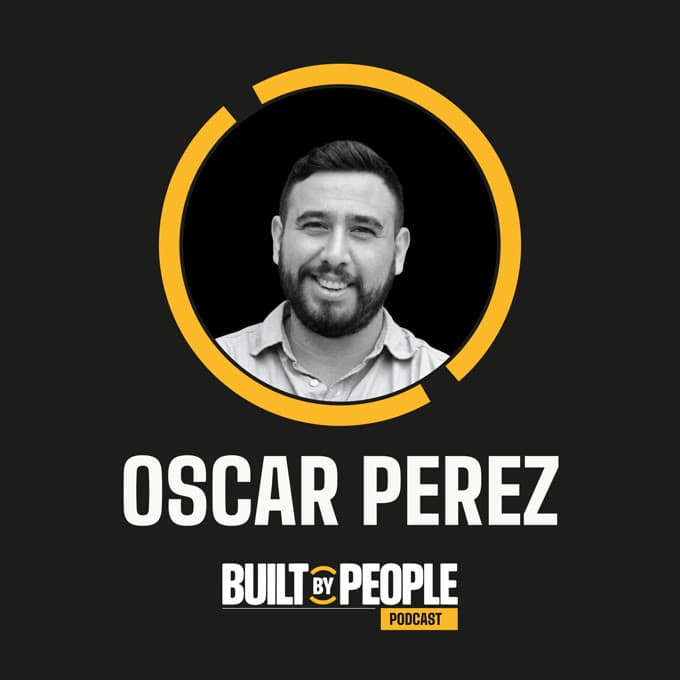
Oscar Perez
People Ops Specialist for Startups
You Don't Have to Be the Expert
Key moments
In Oscar's words
“The things that you build up in your head is a huge moment might actually turn out to be something that could have been an email.”
“There could be a day that a hormonal 15-year-old might come into your classroom with really big feelings and derail everything that you plan for.”
“If you are not failing in some part of your career, you may not actually be stretching your skillset.”
About this conversation
Oscar Perez spent 8 years building DEI recruiting at Meta, then became the first people hire at Equilibrium Energy, a startup. Before HR, he taught 10th grade English with Teach For America. He and Maddie talk about the executive who walked out of a pitch Oscar's team spent weeks preparing, then approved all of it over email a few days later. They also cover what the classroom taught him about people who show up with really big feelings, and why he thinks failure should be something you leave space for, especially now with AI.
Find Oscar at oscarperezconsulting.com
Transcript
Read the transcript2,722 words
IntroLike the things that you build up in your head is like huge moment might actually turn out to be something that could have been an email.
HostWelcome to the Built by People podcast, Oscar. We're so excited to have you on. Oscar has been in HR since 2011, 8 years at Meta building DEI recruiting and Tech for America before that. Um, most recently he was head of people operations at Equilibrium Energy where he was their first people hire. And we're excited to announce that he just launched his own consulting practice helping early-stage startups build strong HR foundations, navigate culture challenges, and adapt as priorities change. So Thank you again so much, Oscar. We're so excited to have you on.
GuestYeah, Maddie, thanks for having me on the podcast. I'm excited to chat a little bit more and share some of my experiences. I'm sure folks have experienced very similar things, so it's cool to be here. Thank you.
HostOf course. Um, okay, just to warm up, what is the wildest thing that's happened to you in HR that you are allowed to talk about?
GuestYeah, I think about my time at like Meta, like I think that was my first exposure to very like senior tech like executives. My head of global recruiting tapped me in to do a presentation where we were going to pitch like a number of initiatives. University diversity recruiting was kind of a big focus at the time. And so that's how I got tapped in to present with this group. When I say we prepared so much, we spent like weeks, like probably every other day, like putting together the deck. And then it was all meant to culminate in this like live meeting Friday at like 3 PM. So I understandably was a little nervous about this presentation. It's probably my first exposure to this level of seniority, especially in big tech. And then more recruiting was just like, you got this, don't worry. I think you're as prepared as you'll ever be. we wait for the executive. He walks into the meeting. It's this big like conference room. Uh, he's listening for about 1 minute and he says, I actually don't have time for this right now. Let's follow up over email. And he got up and walked in the room. He didn't ask for permission. He like just kind of was like assessing the room and hearing like we were about to pitch. And he's like, not a big priority for me right now. So it's kind of one of those we did spend hours and hours prepping this. So it's a little odd that like in a minute you can say like, I don't have time for this. And probably at the time I was like, what a jerk. Now in retrospect, I'm like, yeah, think about all of the demands that are like on a senior tech executive's plate. Like, would it have been good to know that ahead of time so that we didn't all like set up in this conference room, Sure. But he was assessing it all the time. Like, what, how can I prioritize in this moment? And everything that we pitched got approved, but over a singular email, probably like 3, 4 days after. So I had built this moment. I was like, oh gosh, it's like gonna be so heavy and I'm gonna have to pitch and do all these things. And that's just not the altitude he could meet us at, at that moment. And so I tell people all the time, it's like, yeah, like the things that you build up in your head is like huge moment might actually turn out to be something that could have been an email. So always be thoughtful of just like where you're meeting a founder or where you're meeting a tech executive because they've got a lot on their mind. Yeah. Hmm.
HostYeah. Oh, that is, that is crazy actually. And I mean, at least you were prepared, you know, it could have gone the other way glad we were prepared. Yeah. Okay. Well, thank you. Um, you taught 10th grade English before you ever worked in HR. Um, when you're building people infrastructure at us, like at a startup, does any of that show up, any of your experience that you have taken from teaching, I guess up here in a startup company?
GuestYeah, like unequivocally yes. My experience teaching, uh, 10th grade English, you know, it doesn't seem that connected, but if you think about like a role where You have to pitch every day. It's like, this is why Lord of the Flies is interesting. This is why, like, uh, this is why I think it's important for you to work on, you know, like grammar or passive voice in your writing. Um, and you're constantly pitching, you're presenting nonstop, you're on your feet, you're exhausted by the end of the day, and you have to learn to be like really adaptable. I think for the first time also of just like tracking student data, So like all of the elements of like the things I do in my job day to day, those were present in my first job as a teacher. I credit Teach for America specifically because their whole central tenet is teaching as leadership, that like all the 15-year-olds that are sitting in your classroom, they, you know, for them, they have learning that needs to get done. For you, you are accountable for that learning. I think now to this day, like the theory of adaptability of, you know, it doesn't matter how tightly you plan, there could be a day a hormonal 15-year-old might come into your classroom with really big feelings and derail everything that you plan for. And how you respond, both in terms of the curriculum and how you respond to that individual student, That's hugely important. 20 years later, almost, it's probably like, yeah, senior tech executives and founders that are going to show up some days with really big feelings. But how you respond is still equally important and how you adapt to kind of like big emotions and then recentering us into like, what do we actually need to achieve together?
HostTotally. That is, I mean, yeah, 100%. I, I feel like being able to read a room, right? It's like, and read people is like, is so essential in, in the, in the working space. So that's great. At UCLA, you moved African American accepted applicants up 150% in a single recruiting cycle. Um, what did you actually change to get there?
GuestYeah, I think part of like all things diversity recruiting is like the real lesson is like you could let the funnel play out as is and you'll get the same outcomes every single time. Or you can really focus on like the top of the funnel. So what we did or the strategy we set, I don't think it was like that revolutionary, but I think that we— the benefit I had is that I did a first recruitment season at UCLA. Fall to spring. So then that spring, we really focused on like an intentional like outreach of like, hey, applications aren't due until the fall, but we want to connect with people. And when we were thinking about like Black students at the campus at the time, not only were we focused on like connecting with leaders, we said we need referrals. I think it's important that, you know, Black students across some of the most struggling school districts across the country have the benefit of really strong teachers that share their background. Um, ultimately the tactics, I don't think it was that complex. I think we went in with a very clear focus to diversify the candidate pool, didn't stop our intentional like referral campaign. Uh, I think big difference is we built that early network momentum in the spring prior to our first deadlines and having like a few months to really let that grow and build momentum, it, it, it paid off. I think the results speak for themselves, but truly, uh, it was kind of one of those lessons of like, uh, we're not just letting the top of funnel play out per usual. We have an intentional focus and, you know, talented people from a variety of backgrounds. So why not just work harder to like get those people into our funnel?
HostRight. Yeah, that's great. People helping people. Okay, and you spent 8 years on DEI recruiting at Meta and then moved to a startup with no HR infrastructure. What was the hardest thing to build from scratch?
GuestYeah, yeah. Well, I think like, um, to the credit of like our CEO and founder, it's not that I went in with like zero infrastructure, right? Uh, so I think he had a really good solid foundation and a vision for what he wanted for people operations. What he lacked was the time to go deep into this arena, right, where he very thoughtful about— here's our, I think, are the level structures that make sense for us. Here's how I generally want to approach compensation. Uh, and so what we had to do is just like codify, solidify, and help scale a lot of those systems. I think at Meta, I went from having a pretty narrow scope at a huge company to then moving to a startup, everything is your remit, everything is on your plate. So you have to accept that some of the things you are an expert on, some of the things you're not. When I came into working at the company, things like benefits and working with, you know, medical insurance, dental insurance companies, I had to quickly just say, I'm not an expert in this. I will learn this space and I'm going to come back with 3 options for us and we can like debate like the cost effectiveness. Uh, so in that startup world, it wasn't like fake it till you make it. It's more just like learn the right level of detail here to come back and make good decisions for the business. And I think that that was sometimes difficult for me of like, you don't have to reach expert status on every topic, but you do have to come to the business with thoughtful, like, recommendations that actually do help us achieve our business outcomes that we want to.
HostYeah. And even having that humility to even say to an executive that like, I actually don't know, you know, and like that takes, that takes a huge level of courage as well. And I think that's like, I think that's okay to say, right? Like you can't be an expert on everything. So being able to say like, yeah, you know what? Like, let me put time and energy into researching this so that we can find the best solution.
GuestYeah. And if that feels like a potential threat to say like, I don't know, don't say that obviously, right? you say like, hey, I'm gonna do some deeper research. I want us to have a good recommendation that's like thoughtful. How about I come back with 3 options for us to discuss in a week?
HostYeah. And what were the executives' reactions to you saying that?
GuestUm, well, oftentimes they didn't have a bunch of time to go deep on a topic, I think that, yeah, the likelihood is that if you're dealing with an early stage founder or CEO, they are in the exact same position. they are not experts in like the venture capital world or like what exactly like data requirements are necessary to launch their product to market. They're not an expert in every single thing, but they do have to have like a cursory knowledge and a cursory understanding of all these different things. And they have to balance that with like the places they are experts in. And so I think they empathize because they have to build in a very similar way.
HostRight. Yeah, yeah, no, that's great. Okay, moving to what you're going to be doing in the future. What are you hoping to achieve? What are your top priorities? Priorities, kind of give me a layout of like what's kind of happening with your new practice of consulting.
GuestYeah, I'm really glad you asked. Thank you. Uh, so it's brand, brand new. I think I launched this morning the, the website for my company. but the consultancy that I'm, uh, starting is, as I'm looking for new opportunities, I just realized that there's a lot of startup founders that are in a similar place where they care a lot about people operations and they care a lot about the culture that they are building at their organization. They understand that like the products that they developed and the people who build those products, those are very intertwined. They'd like to go deeper on a lot of these topics. They'd like to professionalize their offerings in the people or HR space. But they don't always have time or the background of like, I've never built this before. So I think the consulting practice for me is an opportunity to just say, it is okay that you don't have all of this set up yet. You care enough. Why don't we like have a conversation, build out the theories that like you believe will become the eventual culture of this like growing startup. And then I'll help you in a variety of ways. Do you need kind of just like a trusted advisor on a few decisions? Do you need actual scaled-out building of the systems? So whatever it is, I hope to just be a trusted advisor to early-stage founders who want to get this right.
HostYeah, that's great. Okay, and to finish off, if you could leave one piece of advice for the community, something you'd wish you'd known earlier in your career, what would it be?
GuestYeah, I think, um, one of the things that I'm working on, uh, is especially in the age of AI adoption, is that like failure not only is a part of your career growth, it should actually be a thing that you leave space for. Uh, cuz as I kind of see it. If you are not failing in some part of your career, you may not actually be stretching your skillset. You may not be stretching your mindset. So maybe it's just that, hey, I haven't been the best at data visualization, so I'm gonna practice on the side, dedicate like an hour to taking large swaths of data and turning it into clean visuals for executives. No one has to see it, but you actually have to have the opportunity to like try that, fail at it a little bit, get feedback from someone maybe who has the time to just give you a perspective. But I think failure should be a more regular part of everyone's rhythm. No one is an AI expert.
HostAI is so new.
GuestYeah. It's so new in the world of HR, especially there's kind of like a, cycle of existential dread to hesitance for adoption. And then you're like, oh wow, it could write all my emails for me. And then there's kind of like other level of depth of like, oh, I could actually build agents that automate big portions of our work. And I think all of those are like valid emotions to go through. But as it comes to just like learning new skills, it's never been easier to just try something, fail at it a few times. And then get comfortable being stronger at it. So if you don't have more safe space or guardrails to fail a little bit in your career, you may not actually pushing towards something bigger. Absolutely.
HostTotally. Yes. Yeah, make those, get those stretch goals. Yeah. Yeah. Okay. Well, thank you so much, Oscar. It was so good chatting with you. Thank you for joining us on Built by People. And thanks for listening.
GuestAbsolutely. Thanks so much.
More conversations like this