Episode 191 · May 12, 2025 · 11:42
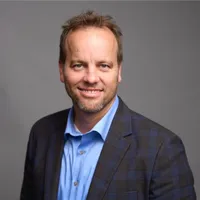
John Kral
Chief People Officer, Green Garden Child Development Center
Curiosity: Reshaping HR for a World of Non-Linear Careers
Episode 191 · May 12, 2025 · 11:42
Curiosity: Reshaping HR for a World of Non-Linear Careers
Key moments
In John's words
“what I learned is while titles change, people are still people. And so my journey has been definitely not linear and not normal, but it's been an opportunity to connect with and to love and to build up people into different avenues and different venues.”
“I realized that what my leader told me, it wasn't that he was wrong, it was just he didn't have the full picture and the full story. And so what I learned from that very early on experience was that I needed to do some investigating on my own. I needed to be curious, right?”
“we shifted what HR was from the rules enforcers to the people that were really a part of the team to just bring about health and wellness for the entire organization.”
Transcript
Read the transcript2,350 words
IntroWelcome to the Built by People podcast, where we share the stories and insights of the world's top HR leaders. Join us as we dive deep into the minds of HR executives, uncovering their strategies, challenges, and triumphs in shaping today's workforce.
HostI'm excited to welcome John to the Built by People podcast. John, thank you so much for joining us. And as a starting question, I always have to ask if you could share a little bit more about your career journey.
GuestYeah, I really appreciate the time and opportunity to be able to come here and connect with you. Honestly, I shouldn't be on it. I do not think I know enough compared to all the incredible guests you've had. So I'm humbled and honored to be a part of hopefully just sharing a little bit that will encourage somebody in their journey, especially as they care for people, because that's really my passion. So my career journey has not been linear, and honestly, I wouldn't have it any other way. It's just who I am. I grew up in trouble. I don't want to call it trouble, but I guess a difficult situation, right? I had my biological father died before I was born. I had my mom who was single and young and trying to figure it out. I had a grandma who was faithful in there. And so my life's always been not quite linear and not quite normal. But from that, I learned a passion for people. I learned a passion for just connecting with people and loving people. And that took me into ministry. So I was a pastor for 17 years. I cared for people, sat with them in hospital rooms, officiated over funerals, baptized babies, preached sermons to tens to thousands. But honestly, throughout all of it, what I learned was that while titles changed, I shifted from being a pastor to now being in the business world and the Chief People Officer of Green Garden Child Development Centers, which honestly in its own story is not a linear thing. It started as a single mom just looking to take care of her son 12 years ago to now having 6 locations and caring for 500 kids on a daily basis and caring for 150 staff, trying to connect with them and be there for them. And what I learned is while titles change, people are still people. And so my journey has been definitely not linear and not normal, but it's been an opportunity to connect with and to love and to build up people into different avenues and different venues.
HostJohn, thanks for that great introduction. I want to start by having you share a specific example of a challenging project you've worked on that required you to adapt your strategies. What were the key takeaways that you applied to future endeavors?
GuestOver the course of my career, there's so many times where we get things wrong. I'd love to always share those opportunities with our team because I want them to realize I don't do this from a point of view that, hey, I went to school, so I know everything. I've done it wrong too. But I can think back all the way to my very first position where I was hired in and I was told by my leader at the time, hey, these people are the problem. This is the issue that's in front of us. You need to go fix it. To the point that I bought into that and I repeated those phrases Hey, I'm just here because we have this problem and I'm just here to fix it. After leading those teams for a little while and working with them, I realized I was the only person in our whole organization— I'm talking hundreds of people— that wasn't invited to one of the key leaders' weddings. And that was pretty insightful to me where I went, wait a minute, this is one of my key leaders. She invited everybody else to her wedding, but not me. And I thought we were okay. I thought we were close. And so that allowed me to lean in a little bit and to talk with her and find out what in the world happened. And being a young leader, I learned a lot. I realized that what my leader told me, it wasn't that he was wrong, it was just he didn't have the full picture and the full story. And so what I learned from that very early on experience was that I needed to do some investigating on my own. I needed to be curious, right? No matter what information I was given, I needed to dig in. I needed to lean in and listen to people. And really learn how to have a posture of curiosity, right? How to understand what are the actual problems that are happening here from different perspectives, not just the one that pays the bills or the one that writes my paycheck or gives me the review, and be willing to care enough about people that I may not be able to fix everything that they have a problem with. I may not have an answer to every problem, but I can at least listen to them and find where those commonalities land and help us to drive towards change. And what I was able to do with that, I've taken with me to every position I've had, is lean in and listen and be curious from the get-go. Find those places where we actually all want the same thing. We just talk past each other or over each other, and then help lead towards where we want to go, right? Help us get from here to there. And that's what I experienced there to where those people that were the problems became the solutions. To the very problems that we were having. They were my biggest supports, my biggest people that did the work in order to get done what we needed to get done. So instead of being people that I thought we needed to write off or push out, they were actually people that I was able to bring in closer and to develop them even further. And so again, if I would've went in there and just stuck with what I was told and not been curious through some painful experiences, I would never have had the opportunity. So I carry that with me into every position today.
HostJohn, tell me about a time when you had to drive change within an organization. What were the obstacles you faced and how did you overcome them to achieve success?
GuestWhere I'm at today in Greengarten is an incredible company with a great story like I've shared a bit about, but it's a company that's gone through explosive growth over the last few years as I've been involved. One of the things that we realized was that with that growth came some unique challenges. One was that Nobody knew what HR really was in this company because it was young, it was new. They had different leaders that had been hired in and lost and hired in and lost. And HR kind of became a bad word. Instead of being somebody to look to and to find support in, it was the gatekeepers. It was the ones that holding people accountable and not in a positive way, but in a way to bring shame, to find blame. And so What it was an opportunity to come in and again, do what I've done in other positions and lean in and listen. And so one of the things that we had to do was realize all of our people, whether they were the CEO or one of our assistant teachers at one of our locations, all had something to share. So we did some learning labs where we just went around and we just listened. We asked a few key questions, right? It's going really well for you. What's getting in your way? What do you wish your boss would know that they don't know? And what could we do to be a part of making your experience here better? And we were very clear with all of our staff and all of our teams, look, we're not going to fix everything. That's not what we're looking to do. We just want to find out. We're just investigating and trying to find out how to make this the best place possible. And so we shifted what HR was from the rules enforcers to the people that were really a part of the team to just bring about health and wellness for the entire organization.
HostJohn, can you describe a case study where a particular innovation or decision led to significant growth or transformation? What lessons can other leaders take from this experience to apply in their own context?
GuestOne of the things that I learned as I listened to our team was that we have incredible values as far as who we are as an organization. We offer childcare in a way that other organizations don't. It's just what makes us different and why we exist. One of the things that I realized listening to our team was that we were holding values for our customers that we weren't necessarily carrying out in our day-to-day interactions with our employees and our team. And what I challenged our people with, and one of the things that we shifted, was taking it from being just values for our product or our services to bring our values throughout everything we do. And we literally took the things that we do for our kids. In our kids, in our classrooms, we always talk about we want them to have curiosity, we want them to be growth-minded, we want them to figure things out. We're not just gonna fix it for them. We're gonna get in the mess with them and let them feel the feels that they have and struggle through the things that they're struggling through. And then we're gonna help them to grow into the best versions of themselves. So all those things are what we do for our kiddos.. And I found myself often with our leaders saying, hey, if this staff member was a 3-year-old in your classroom, what would you do? And they'd go, oh, I wouldn't do it that way. So what should we do? Let's carry that value now that we have in our product or our service into leading our people because it's who we are. And if it's who we are, it's just a natural way to lead them. It's also the way that they want to be led because they're attracted to your organization for that very reason. Right? They want to be a part of what it is that you're doing. And so they want to be led in the same way. So that's where I would say that anybody can honestly look at their organization and say, hey, why do we exist for our customers? What is it that they want to buy from us? Or what service are they getting from us? And how do we do it different to the fact that we are still in business? And then what is it that we can do to actually lead our people from those same values.
HostJohn, what parting advice would you like to share with our
Guestcommunity? That change doesn't start with policy, it starts with posture. So for me, talking with every single person that's out there, maybe you're a CEO, all right, maybe you're the CEO, you're the visionary of your company. One of the things that I've learned is that CEOs are people too. And one of the things that is a challenge for you is that you're not going to know everything and you have great ideas and phenomenal vision for where you need to go as company, but I would challenge you, so often our number twos or our right-hand people are operations people. And no offense to our operations people, man, you guys are so important. And in the HR world, we have tons of policies, so many legal things that we have to follow up with. Totally get it. So it's not that that's not important. It's instead of just bringing operations in close, bring your people leaders in close as well so that as you develop these policies, as you develop all these procedures, you're hearing from your people leaders that can say, here's what they're gonna hear from that. Here's how they're going to interpret what you are about to share. And so I would challenge you with, start with that posture. Start with that posture of leaning in and listening and hearing and realizing you don't have to be right all the time. You just wanna have to get it right. And that leadership isn't about finding the right group of people and who are, have already arrived. And just assembling them together, right? It's about actually getting together those people that have the same passions and enthusiasms that you do and inspiring them towards growth to go from here to there. And so that's what I would encourage all the leaders out there to do is just listen and be innovative enough that it's not about having the coolest new gadget or idea, especially in the world of AI. What's gonna make it unique is you and your voice. So don't be afraid to share your voice. Don't be afraid to listen to their voices. And when it's your turn to speak up and do so with gentleness and respect. And it's going to be amazing to see the seeds that you plant along the way.
HostJohn, thanks so much for joining us on the Built by People podcast. It was a pleasure to have you involved.
GuestDefinitely. Thank you so much for your time.
More conversations like this