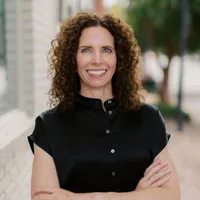
Jim Miller
VP of People & Talent
Ashby
Outcome-Driven HR: The Strategic Playbook to Build a Future-Proof Team
Thesis
“Strategic HR leadership, particularly in hyper-growth tech environments, demands a proactive, outcome-driven approach to headcount planning and talent acquisition, leveraging internal partnerships and cutting-edge technology to build a resilient, future-proof organization that avoids common pitfalls like RIFs.”
What you'll take away
- 01Proactively direct your career by identifying desired companies and roles, even pitching for positions that don't yet exist.
- 02Implement outcome-based headcount planning (e.g., tied to revenue targets or book value) instead of traditional quarterly plans to enable 'just-in-time' hiring and avoid RIFs.
- 03Foster critical internal partnerships with product and engineering teams, especially when your company develops HR technology, to sanity check features and ensure product utility.
- 04For asynchronously remote companies, invest significantly in annual, all-inclusive company-wide offsites to build culture and face-to-face connections across global teams.
- 05Embrace radical transparency in compensation, using multiple data sources to benchmark pay, particularly for specialized talent like AI engineers, to attract and retain top talent.

What most organizations get wrong
- Approaching company growth by trying to keep the company 'right-sized and future-proofed' in a very different way than most, specifically to avoid RIFs.
- Anchoring headcount hires based on business outcomes (e.g., revenue targets, book value) rather than temporal quarterly hiring plans.
- Utilizing multiple compensation providers and datasets to benchmark pay, rather than relying on a single provider, to navigate unique talent markets like the 'AI engineer phenomenon'.
In Jim's words
“I'm a recruiter through and through. I've had 25 years in the TA space, despite now being a head of people. And it's that journey that led me into this role.”
Highlights his deep expertise in talent acquisition as a foundational strength for his current People leadership role.
“My team, we're all hands on deck, building out the company-wide offsite. We're an asynchronously remote company. So we invest every year on bringing everybody together from 23 different countries this year into one place.”
Demonstrates a concrete, significant strategy for fostering culture and connection within a globally distributed, remote workforce.
“I feel that my job is to, first of all, future-proof the company. I never want to make a riff... to hire the right people in the right spaces at the right time. To do just-in-time hiring in effect.”
Articulates a proactive, anti-RIF philosophy for headcount planning that ties directly to business outcomes and avoids past industry mistakes.
“The critical partners to me are internal. So it's the product team, the engineering teams who are building our product... because I am the persona that we sell to, and my team are the people who use the product.”
Emphasizes the unique and crucial synergy between an HR leader and product development within an HR technology company.
“We're very transparent against— with compensation, even in jurisdictions that don't require comp transparency, we do it across the board. And it's critically important for us to make sure that we're hitting that right to attract the talent.”
Showcases a commitment to radical transparency in compensation as a key strategy for attracting and securing top talent in a competitive market.
“I knew that when I was changing jobs last that I wanted to go to a must-have product... I pitched myself to a job that didn't exist in a company that I aspire to work for. And I remember just waiting for a long period of time to click send on that email... take that leap. Go be your own— direct your own career, take control.”
Provides powerful, actionable advice on proactive career management, encouraging individuals to create their own opportunities rather than passively waiting.
The problems this episode addresses
- Rapid company growth creates the challenge of keeping headcount 'right-sized and future-proofed' without resorting to RIFs.
- Traditional quarterly headcount planning is inflexible and doesn't adapt to fast-paced business growth, leading to inefficiencies.
- Attracting and compensating highly specialized talent (e.g., AI engineers) requires a nuanced approach and multiple data sources beyond standard compensation benchmarks.
- Scaling an HR team from generalist HRBPs to specialists (like comp and benefits) to move from reactive to programmatic work is a critical growth challenge.
- Internal product teams may not develop desired HR features fast enough, creating a backlog of 'utopia system creation' for HR leaders.
In this episode
Built by People podcast features insights from world's top HR leaders
Built by People
I'm the head of people at Ashby, and we build talent technology
Head of People: The Journey to Ashby
As head of people, what's your top priority for this quarter
Top Priority for This Quarter
What's your biggest challenge in HR? Company growth
What's the biggest challenge in HR?
Jim: I'm meeting with heads of TA who are looking for work
The Secret to Meeting With Heads of TA
What's keeping you up at night right now? Headcount planning
What's keeping you up at night? Headcount planning
Which tools or partners are most critical to you today in your role
Which tools or partners are most critical to your role?
I think reaching escape velocity with the HR team is key
Have We Reached 'Critical Mass'? in HR
What parting advice would you share with our community or with aspiring HR professionals
WSJD Live: Taking Control of Your Career
Jim Miller joined us to talk about his company, Built by People
Jim Henson on Built by People
Topics covered
Organizations and entities mentioned
Full transcript
Expand transcript (0 words)
Transcript is not available yet.