Episode 118 · March 14, 2025 · 18:47
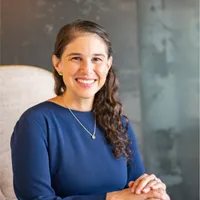
Jenna Eichberg
Chief People Officer, AlertMedia
Transform Your HR Career: Strategic Skill-Building for Impactful Leadership
Episode 118 · March 14, 2025 · 18:47
Transform Your HR Career: Strategic Skill-Building for Impactful Leadership
Key moments
In Jenna's words
“I always say I'm the unicorn in HR in that I knew from the very beginning going into undergrad that I wanted to have a career in HR.”
“The best HR leaders are deeply embedded in their businesses. They understand the business strategy, they understand what their leaders are going after, and can really be a true partner and come out with the right kind of human capital strategy or people strategy and vision that really enables that business to achieve those goals.”
“If you can start your career in manufacturing, There is no better place to learn HR than in supply chain.”
Transcript
Read the transcript3,490 words
HostWelcome to the Built by People podcast,
Introwhere we share the stories and insights
Hostof the world's top HR leaders.
IntroJoin us as we dive deep into the minds of HR executives, uncovering their strategies, challenges, and triumphs in shaping today's workforce. I'm excited to welcome Jenna to the
HostBuilt By People podcast. Jenna, thank you so much for joining us. And as a starting question, I always love to ask if you could share a little bit more about your career journey.
GuestSure. Thanks so much for having me. I'm excited to be here. I always say I'm the unicorn in HR in that I knew from the very beginning going into undergrad that I wanted to have a career in HR. I was raised by a CFO and an attorney, and when I think about growing up, it was always about sitting around the dinner table and talking about talent. And who'd have known they were going to raise two CHRO daughters, and my sister and I have been on this journey together and growing our careers in the HR world, but I I started going to undergrad and I knew I wanted to get my undergraduate business degree. I think as I talked to different HR leaders when I was exploring this career path, what I always heard was the best HR leaders are deeply embedded in their businesses. They understand the business strategy, they understand what their leaders are going after, and can really be a true partner and come out with the right kind of human capital strategy or people strategy and vision that really enables that business to achieve those goals. And so, Getting my business undergraduate degree was always a priority, but specializing in HR, I started interning in HR when I was a freshman in college and interned all throughout college because I remember the number one rule for my dad was when I graduated from college, I needed to graduate with a degree I could get a job in. And so my bigger fear in that was, okay, but I need to actually know that when I graduate, I'm going to the job that I truly want. And let's be honest, most people do not graduate from college and go into the exact job that they planned for. I did. I felt such strong conviction coming out of undergrad after doing all the different internships with Aflac Insurance, with Boeing, that this was truly where my strengths could come into play for an organization. And I had two pathways. I could go and join Boeing full-time, or I could go to grad school. And I decided to go to Cornell and get my master's in HR. And I will say, like, it was probably one of the best decisions I made early on in my career. I think a lot of people struggle with that decision of, Do I go straight through? Do I go get some work experience? I would say for most, I'd say go get work experience unless you know 100% what you want to do. Because I'd worked in HR all throughout undergrad, I felt such strong conviction that I found my calling in my career, and I just wanted to make sure that when I truly entered the workforce, I was entering it with the depth of expertise as a strategic HR professional, but also that I'd built a network of HR people who had really diverse experiences. Like, I loved being in grad school with people from around the world who were pursuing careers in HR, who had been at different stages in their HR careers, or even career changers into the profession. But I was also surrounded by the top CHROs who were doing their research on trends around the world. So getting exposure to those different industries and learning from practitioners in some ways, like, I remember, like, learning mediation from a mediator., and I use those techniques all the time when I'm navigating complex employee relations challenges or trying to resolve conflict with team members. And so I just share that in, and I don't think everyone decides to pursue that master's in HR in their careers, but I would say I undeniably got some really great benefit from doing it. And I think it's served me throughout my career because at different stages of my career, I've taken a lot of risks and gone into spaces in different industries and roles that I'd never done before. And I've always tapped into my Cornell network of leaders who inspired me when they presented to a classroom or my peers. And so that's kind of my start, but my journey is, I always say, is a jungle gym in that I started my career out of grad school with General Mills. I interned with General Mills while I was there, and I always say like General Mills is where I earned my stripes as an HR leader. I always say like, if you can start your career in manufacturing, There is no better place to learn HR than in supply chain. You deeply understand businesses, you understand how things work, you get exposure to all the functions of what runs a business, and you have to be a really agile and flexible HR person because you have to wear every hat of HR in a manufacturing site a lot of the time. But you also encounter challenges that you will probably never encounter in a white-collar workforce that just teaches you true grit and leading with curiosity. Because you have to put a lot of puzzle pieces together to solve those problems and the different kind of employee relations challenges that come your way in that environment.
HostJen, I want to go back to when you were 18 years old and you knew that you wanted to pursue a career path in HR. What sparked that early interest specifically in HR, and how did that early clarity shape your career path?
GuestYeah, you know, this seems really silly, but I think about my childhood and just the experiences I had that really made me who I am. It was being a leader in different organizations throughout high school. It was engaging in my community and with diverse populations to make an impact, whether it was making a difference in our community around like philanthropic work I was doing. Leading a team of high schoolers in an extracurricular that I was passionate on, being a field hockey player, being out on a team and understanding how you need to amplify the strengths of different individuals to get the goal, right? I know that that sounds so silly, but I think about those experiences and how they shaped me. And when I got into what am I going to do when I grow up and hearing my sister as, you know, an HR person and talk about the experiences she was having and how she was able to really help teams be effective. She was able to coach and develop people and really unlock the strengths and capabilities that they may themselves not have known was possible for them. For me, it all came together of, I'm going to help organizations be successful through the people dimension of the business. And I love that I could have a million careers in HR, right? There's not many role jobs you can go into and have a lot of versatility in the skills that you're building and demonstrating, or be able to go into jobs that are just completely different than one another. And what I've loved is I've had a lot of different careers in HR. I've done a lot of very different things, and I loved that. I think there's a lot of companies who believe, oh, you need to have X industry experience to be successful in this job in this industry. I fundamentally don't believe that in HR. I believe any HR leader who has a good business, has good business acumen, who has a growth mindset, who wants to learn and understand how businesses work, and has the deep expertise as an HR professional, you can go into any industry and thrive. And I don't think a lot of jobs you can do that, but I feel pretty strong conviction about it. And I think all those little pieces that kind of led me to where I am today are pretty amplified by, I just wanted to take on new challenges, but always lean on my strengths and lean on the deep expertise that I built as an HR professional. Through diverse jobs rather than one single pathway.
HostJenna, I want to switch gears and talk about AlertMedia's Aspire program. Can you tell us about how that's designed to prepare the next generation of leaders before they step into managerial roles?
GuestYou know, like, I think a lot of organizations build leadership development programs and say, hey, I'm going to enable managers to be successful when they get to that role. And when we talked at Alert Media about how do we prepare the next generation of leaders, it was, we need to develop and grow them before they get that job. Because if they get into that job and they haven't already had the right kind of development, experiential learning, and exposure, we could be inhibiting their ability to actually accelerate their success as managers. And as I think about what a manager's job is, is you're a force multiplier. Your employee success is how— is contributing— is going to be a reflection of how successful are you as a leader. And so, I'm really excited that we've launched our Aspire program. We have about 30 employees who are going through our— it's an emerging leaders program for individual contributors who have raised their hand and said, hey, I have an aspiration to be a future people leader, or, hey, I might want to be a future people leader, but I don't really know what that even looks like, and so getting some development and exposure could help me How do we make that clear decision? But also for the benefit of the business, it's asking our leaders, who do you have strong conviction have high potential to be future leaders in this organization? And how do we invest and grow our bench of leaders, of future leaders, so they're ready and willing and excited to take on that next challenge when it presents itself in our organization, or ultimately maybe in other organizations, and that's okay too.
HostJenna, you talk about being a skill collector. Can you elaborate on what that means and how HR professionals can diversify their experiences?
GuestI'm gonna actually go back to my comments before around like getting those diverse experiences in your career as an HR person. I think the people who say, hey, I wanna be a deep total comp— like total rewards expert, that's amazing. Go build that depth. My journey has been a little bit different in that I've wanted to build breadth, and I always say build depth in at least one area where you have deep expertise. How does each diverse experience I've had throughout my career help me build a new skill, develop a new capability, and hopefully enabled me not just to be really good at what I'm doing right now, but really good at what I want to do as I move forward, and being really intentional about identifying What are those experiences or what are those skills that they, that you want to build as an HR leader? Because as I said before, you could go do a lot of things in a career in HR, but it doesn't mean you're going to be fulfilled and happy doing them. And what I really appreciated in my career is, you know, I went to, I went to General Mills. I got a lot of great supply chain experience. I worked in organizational effectiveness to really understand how competency models enable you to have clarity on learning and growth within organizations. And then going to Capital Group, it was great in that I'm in a global organization, I'm in a financial industry. And so when I think about skills, kind of making that pivot, going from CPG to financial industry, completely different kind of culture, industry, vision, mission, strategy as a business, right? But fundamentally, there was very clear skills that I had built that helped me transfer and build upon when I got to my next opportunity. And when I went to Capital Group, one of the things that I loved is I didn't get that global experience at General Mills. I didn't have it in those experiences that I had. And going into a global organization where I got to get exposure to new cultures, to new HR strategies, to some of those nuances and how do you lead global hybrid teams across those cultures and thinking about that coming together. I think it's every experience allows you to build a new skill and it's how are you as an HR leader being really intentional about What are the diverse skills that I want to get out of this experience and collect? And then what are those skills that you're threading the needle through your experiences that you are deepening, strengthening, so you have the depth of expertise in certain core areas that you can continue to lean upon as you take on new challenges that may be really scary and unfamiliar, but you have those core that you can always lean back on.
HostJenna, many HR professionals feel pressured to follow a certain career pathway. How do you recommend they navigate finding their authentic path while still growing professionally?
GuestYeah, I think that's a great question. I think people feel like there's one answer, and what I'd say is your answer is what you try and what you learn from it. There's been plenty of jobs and opportunities I've taken that I didn't know what it was, but I'm so glad I took it because I learned not just what I love doing, but what I don't love doing, and I used those insights to help guide me on what was next. I think that sometimes it's about throwing yourself into the things that you don't know and that could be scary or could be areas that you're like, I don't know if I'm going to be successful and just trying it because you're going to walk away stronger no matter what. I think the other piece that I hear a lot from HR folks is, for example, I've been in this area of HR and I want to make this pivot, but I don't think I can because I'm having these barriers or I can't get my way in. My thought there is, this HR network and the HR function around the world is really tremendous. I learn every day from my peers from other organizations. I have taken jobs because people have recommended, Jenna, this is what I'm hearing from you that you're really loving. You should go try this job. My guidance is you're not alone. I think that the people who struggle with this are the people who are really not using that broader HR network to help them and guide them on what might be those next steps or how you get there. A, don't be afraid to try something new. B, if you can't get your way into something within the HR world, you should be asking yourself is, who's going to help me get there? And who can I reach out to help me navigate this in the best way? I always say the worst HR person is you. Like, I'm the worst HR person for myself. I am not good at it. I think a lot of HR people probably feel that way. Like, I can't write my resume, but any HR person could write my resume. I could probably write anybody else's resume and they'd love it. I guess my thought there is sometimes you need your own HR person to be that outward perspective and person who's digging in to say, why, why, why? Or, hey, have you thought about X? To guide you in making those intentional decisions throughout your career as you make those different pivots.
HostJenna, you mentioned the importance of paying it forward to the next generation of HR leaders. Your commitment to Cornell is a good example of that. What specific approaches have you found most effective in mentoring and developing emerging HR talent?
GuestYeah, I think if when an HR person reaches out to you via LinkedIn and says, hey, I love your perspective, I love your guidance, don't ignore that message. And also don't be really hard on yourself when you're crazy busy at work and someone reaches out to you and says, I really need your advice. And say, hey, I can't be that person right this moment, but let me introduce you to another HR person who can be that. It's not always about what you're going to do. It's also being the connector for others to help them. I always take the call, and if I can't take the call, I try my very best to introduce them to somebody else who can, because there were so many people who paid it forward to me. I would not be where I am in my career if it weren't for the leaders, the mentors, the bosses that I've had that not just helped me in the moments when they were connected to me, but when I reached out to them at other stages of my career and said, I really value your advice and I'd love your perspective on X, or I see you're connected to this person, I'm trying to get this job at that company, is there any way you would make a warm introduction for me? And so I think that The biggest loss is the question you don't ask. And so when you think about paying it forward, on one side of, hey, asking someone to pay it forward is one of the pieces, is being willing to reach out to HR people and ask them for help, because I think most HR people will. And I would say for the paying it forward is always being willing to take the call. If she got an offer, she was really excited about it, but it's 100% in-office and she was just asking me, can I negotiate this? And I said, of course, if you don't ask, you'll never know. And it, it's okay if they say no. I think your job then is to figure out what does flexibility look like, or what is the why behind that? And then asking yourself, does that still align with what I want? I think sometimes you just need the validation from someone in the HR space to say, yep, you're thinking about this right. Sometimes you need someone to ask you the hard questions that you're not asking yourself, or you just don't know how to ask yourself in that moment. And for me, that's paying it forward. It's, it's being that valuable soundboard and advisor, and also the questioner and an inquisitive coach that helps you maybe get to the solution you couldn't get to by yourself.
HostJenna, what parting advice would you like to share with our community?
GuestI think my parting advice to this community is that don't be strangers for each other. I just think there's so much for us as an HR community to learn from one another, to seek out advice. If you're trying to navigate a really challenging problem, there's a million HR people in this world who've already navigated that and learned from their mistakes and had some great wins to share. And so if you're trying to solve something, Don't be afraid to reach out. One of the ways that I've done that is I've joined tons of HR Slack groups and I crowdsource all the time. You don't have to be the smartest person in the room. You need to be the smartest person to go ask the smartest person for help. And so my advice to you is don't stand silent. Don't be alone. Use your networks. Reach out to other HR people. Go to the conferences. Join HR communities. Connect. And I find if you connect, you'll be that much better as an HR leader, not just in your career today, but in the long term.
HostJenna, thank you so much for joining us on the Built by People podcast. It was a pleasure to have you involved.
GuestThanks for having me.
More conversations like this