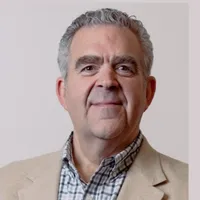
Episode 173 · April 25, 2025 · 18:13
Courtney Cherry Ellis
Head of People, Nativo
Scaling Talent Beyond Hiring: Intentional Design Fuels Exponential Growth
Episode 173 · April 25, 2025 · 18:13
Scaling Talent Beyond Hiring: Intentional Design Fuels Exponential Growth
Key moments
In Courtney's words
“I promise that if you're here a year, and you like it, you can stay. And if you're here a year and you absolutely hate it, I will put you back in at least as good of a place or better to where you were before.”
“communication solves the most known problems”
“I think coaching as a mindset and a framework, not necessarily a tool, really helps individuals with the critical thinking skills necessary to address complex issues, especially when they see them for the first time or the second time.”
Transcript
Read the transcript2,560 words
HostWelcome to the Built by People podcast, where we share the stories and insights of the world's top HR leaders. Join us as we dive deep into the minds of HR executives, uncovering their strategies, challenges, and triumphs in shaping today's workforce. I'm excited to welcome Courtney to the Built by People podcast. Courtney, thank you so much for joining us. And as a starting question, I always love to ask if you could share a little bit more about your career journey.
GuestYeah, Dave, happy to jump in there. So, I think like many others, my career did not necessarily start in the people function, but I found myself to it very quickly. So, I started my career in management consulting. And when I was doing that, I was the first person always to volunteer to do on-campus interviewing, career fairs, et cetera. I thought this was a perk of my job, and I quickly realized that most of my colleagues thought that this was a toll they had to pay. So from that process, I stayed in really close touch with our internal recruiting team. And when a new chief people officer came into the organization, actually the first Chief People Officer, there was an opportunity and need for some internal consulting work, really thinking about organizational transformation of the people team and the people function. And the Chief People Officer reached out to me and did something that I think was unique and extraordinary and something that really set the trajectory not only of my career, but also how I've approached career changes. And he said, come do this internal consulting gig, commit to giving me at least 1 year and do what you do externally for my team internally, thinking about organizational transformation, technology, and growth. And I promise that if you're here a year, and you like it, you can stay. And if you're here a year and you absolutely hate it, I will put you back in at least as good of a place or better to where you were before. And that's really how I got started in people. And I jokingly and adoringly say that it was the largest startup I ever worked for in that it was a company that was 6,000 people at the time. Scaling to 10,000, going through the first transformation from a founder CEO to a non-founder CEO, and really building out programs, process, infrastructure for the first time and trying to leverage technology to do that. And that was transformational for me, not only to introduce me to a people function, but it really set up a few core beliefs that I've had since then about career trajectory and growth. Number one, I came into an established leadership team of seasoned professionals who really knew their stuff. And I was a 23-year-old who like not had had one performance review in my entire career and was asked to redesign a performance review process, things that I had truly no business in doing. And so building trust was really key. And my boss set me up for success with that by just starting out, one, telling me I had to find a way to help every single member of that team in my first week, identify something I could do or uniquely contribute that could make their work life better. Not only did that kind of ingratiate me, but it also helped me build context and really try to understand the work others were doing. And so it was a quick timeline, but it's something that I've tried to replicate in my career since. And what I will say is I also had phenomenal exposure there to all facets of the people function, some really wild rides in terms of M&A and divestitures, And that set me up for a career that I've built that really has anchored first around people operations and then more broadly around a people function.
HostCourtney, how do you approach scaling people alongside business growth and what strategies have you found most effective in building organizational capabilities?
GuestThat's a great question. I've been really fortunate to be a part of a number of different companies at key inflection points in their growth, seeing companies not only double or triple in size, going from 300 employees to 1,500, but also going from that small startup mentality to a scale-up, or even at times a publicly traded company. And I think that scaling people alongside the business really starts with intentional organizational design. So aligning the talent you have with the talent that is where the business needs to go next. Too often businesses and organizations will hit an inflection point and just assume that the talent that built from 0 to 50 aren't the right people to take you to the next point in that journey, and that teams can't necessarily rise to meet the challenge. In my experience, it's really about thoughtfully reorganizing aligning people with the right skill set to the right role, clearly investing when you're making changes, and then strategically bringing in new skill sets, especially individuals who've not only witnessed scale or been at behemoths, but have actively participated in the build and journey and can win the hearts and minds going through this. So often we focus only on that end game when we're going through those moments of scale, and don't necessarily think about what it takes to go there. One of the things I've seen as most effective in that process is being really transparent, being thoughtful in consistent communication, the why, because that gives people understanding. Someone I once worked with years ago said communication solves the most known problems, and I find this especially true in scaling because it becomes then about you have control of the narrative. And are able to transparently tell people the story about not only what you're doing as an organization, but why. And then I'm candidly a strong believer in coaching as the silver bullet in scaling people. I don't know if that's a hot take or controversial, because most people think about coaching and they think of it as something that's inherently individual. And I've gotten the pushback that's contrary to scale. But I think about it completely differently. I think coaching as a mindset and a framework, not necessarily a tool, really helps individuals with the critical thinking skills necessary to address complex issues, especially when they see them for the first time or the second time. And I'll say, outside of this workplace, the workplace, this was something that was instilled in me, I think, pretty early on. It's a quick personal story. Growing up, my father was a finance executive at a big company, and when it came time to choose a major in college, I just assumed I was going to be an undergraduate business major. I had internships, I was good at math and numbers, I liked negotiating maybe a little bit too much for my parents' liking, and I came to my father really excited. And he called me back and he said, that's great if that's what you want to do. He found he was an English major in college. How did he wind up with an MBA and a finance career? And he said he really thought that was what distinguished him and enabled him to be even more successful because he learned the skills to think, to reason, and most importantly, to communicate effectively. And when I take that into the workplace, I think that's often what we can do with coaching skills. I see coaching in really just a similar light. It builds those foundational skills to help people approach challenges thoughtfully, strategically, and then to resolve them and communicate that alongside the success.
HostCourtney, could you share some insights on designing programs and processes that support both organizational and personal growth?
GuestYeah, I think it really starts at the beginning of the employee journey. This is something when we approach this at AuditBoard, when I was leading the people team there around when we went to rethink and develop our talent and growth strategy, we took a fresh look at our internal goal setting. And also in concert with that, how we thought about career development. And we started with a fairly standard approach, right? Like that plain vanilla version of we're going to have an annual goal setting process, and then we're going to revisit annual goals as part of a performance process and individual goals. And as we reflected on this, we realized it really wasn't serving our people. And when we thought about where do we have the opportunity to make outsized impact? We thought it's the beginning of the journey or the beginning of an employee experience. So we brought all of that forward and said this actually has to be part of the first week of any employee journey. We need people to, number one, while they're thinking about why they took a new job, really articulate what they're hoping to get, build, and develop, and also have their managers reinforce the reasons they are in their role, the skills and strengths they saw, and then two, how that aligns to the business goals and needs and tie those together. And as part of that, we did this formally leveraging systems, but I think we also said something explicit in that, which is Often we talk about managing the career as the role of the employee, and that may be true if you have the structure and systems in order to facilitate that. But candidly, often in growing companies and scaling companies, they're not all built. It's an iteration. And so we said it is uniquely and especially important as a manager and leader that while the employee is responsible for identifying growth areas and working on them, you are responsible for identifying opportunities to help them meet those in a way that aligns to the company goals. I think it goes back to my early career experience. That's almost the perfect illustration of that. How do you take personal and professional goals and map them with the needs of the business in order to align towards something that works for both of those. That said, I think adopting this requires some cultural facets, right? You have to have a culture that is open to piloting and experimenting because it's going to require people to stretch individually and also to exercise a degree of creativity.
HostCourtney, in your experience, how do you create cultures and systems that effectively link talent, performance, and rewards to motivate your team?
GuestI think it starts with being really clear on what those systems are, understanding number one, how compensation works, again, communicating it clearly. One of the most important shifts I've made is when you think about talent and performance, really getting specific on what you mean. And for us, and for me, that's been talking about impact on the business, right? So, when you think about talent and performance, I think everybody has tremendous— many people have tremendous capabilities. And the question is, how do you tap into those and align them? But what you're really looking to reward, or what I'm looking to reward when I think about compensation systems specifically, is the impact that you have on the business. And looking at those who have an outsized impact and making sure that they're rewarded in an exponentially outsized way through whether it's cash compensation or equity compensation or even just other forms of recognition.
HostCourtney, what are some of the key elements of building business acumen within a people leadership team and how does that contribute to effective organizational partnerships?
GuestYeah, that's such a great question. So Dave, I really think, first of all, it starts with relationships where you ended, right? Having strong business relationships and making sure that the people team understands they're working towards business goals and sees the company goals as their own goals. Sometimes that means making the implicit explicit. It could be something as simple as you Number one, I think it starts with communication. So starting every people team— I was surprised. I came into an organization and I was really surprised to learn that the people team really only talked about the people team in their team meetings, in the leadership meetings. They had no connection to or understanding of what was happening in the broader company and at the executive team. So it can start with something as simple as making sure the guide and communication is happening and people have understanding and awareness what the company goals are. Then the second piece is helping people understand how they tie to those company goals. It can be as simple as sitting down with your talent acquisition team and helping recruiters understand that the reason time to hire and time to fill for a sales role matters is that we have a revenue goal. And having a ramped account executive in seat quicker means that their time to productivity is quicker. And that means that we are able to have dollars in the door quicker. That's an easy example that also flows through when you think about customer support, customer success, and even if we think about our product roadmap, but so often we just assume assume as people leaders that across our organizations, people understand and make those connections versus taking and making the implicit explicit. So I think that communication really helps. The second thing on the communication front is I've spent my career mostly in B2B SaaS, which is business-to-business software as a service, right? It's an alphabet soup to start with, and so often there's a barrier to entry in understanding information just in terminology. So something that's been really important for me as a people leader is making sure that my team speaks the business language, and that has meant demystifying acronyms, for instance. So taking that alphabet soup and actually saying, here's your glossary and index, and then bringing partners in from the business to explain what those mean, how they impact the business, and ideally also making that connection to the work our people team is doing and then the business outcomes they are driving, whether that is around revenue, ACV, you know, and customer NPS. You know, but taking these acronyms and making them mean something to our team and understand how they impact them.
HostCourtney, what parting advice would you like to share with our community?
GuestI think it's stay curious. I think now more than ever, people leaders and the people function has an outsized role to play in shaping not only the future of organizations, but the future of work. And the way we're going to do that is one place we're uniquely positioned is both to make connections and then to ask questions. So don't be afraid to be the person in the room who speaks up, who asks the question and seeks to know why.
HostCourtney, thank you so much for joining us on the Built by People podcast. It was a pleasure to have you involved.
GuestThank you so much, Dave. I appreciate being here. Thanks for the opportunity.
More conversations like this