Episode 258 · June 27, 2025 · 11:53
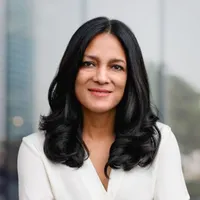
Christie (Cimring) Hall
VP, People & Development, Taylor Morrison Home Funding
Future of Talent: Why Ditching College Degrees Unlocks Your Next Great Hire
Episode 258 · June 27, 2025 · 11:53
Future of Talent: Why Ditching College Degrees Unlocks Your Next Great Hire
Key moments
In Christie's words
“I did not take the normal trajectory to get into HR. I actually taught for 5 years... I didn't even know it was a career path.”
“We're not looking for a 10-year career path. If it happens, great, but we know individuals usually stay for 2 to 3 years.”
“Not everybody has to go to college. You do not need a college degree to become a loan consultant or to become a processor or a closer.”
Transcript
Read the transcript2,102 words
HostWelcome to the Built by People podcast, where we share the stories and insights of the world's top HR leaders. Join us as we dive deep into the minds of HR executives, uncovering their strategies, challenges, and triumphs in shaping today's workforce. I'm excited to welcome Christy to the Built by People podcast. Christy, thank you so much for joining us today. And as a starting question, I always love to ask if you could share a little bit more about your career journey.
GuestYeah, first of all, thanks so much for having me. I'm really excited to be here. You guys do great things with this podcast. I'm happy to be a guest on the podcast. So I did not take the normal trajectory to get into HR. I actually taught for 5 years. And through being an educator, I was able to get exposure to being a team lead. I was able to get involved on the interview committee with our principal. I was able to really get engaged in a lot of brain-based learning through Marsha Tate. So teaching for 5 years at a Title I school was incredibly challenging, and I decided as much as I love kids, I didn't necessarily wanna do that as a full-time career moving forward. But what I did love were interviewing the the team lead, the learning and development. And so I really wanted to take that and pivot to a career that allowed me to focus on that. That's how I ended up in HR, which to be honest, I didn't even know it was a career path. I majored in journalism. I hosted a bunch of shows at UF, and that was the way that I thought my career would go. It did not take the normal path to get me to where I am today. But I went back to school, got my master's in HR, and started my HR journey with Brasfield Gorrie as an HR generalist. They are one of the largest privately held commercial construction companies in the Southeast. And then the rest is kind of history.
HostKristi, you've developed several next-gen talent programs at Taylor Morrison Home Funding. Can you walk us through how you identified the need for these programs and the process of creating the Financial Services University?
GuestYeah, absolutely. So the next-gen programs are something that me and my team are incredibly passionate about. It's a twofold approach. One, similar to how I didn't know there was a career path in HR, a lot of individuals don't know that there is an incredibly rewarding and oftentimes lucrative career in the mortgage and title industries. One, I wanted to bring awareness to those programs, and so my team has done a ton when it comes to branding, building out LinkedIn pages, partnering with a nonprofit, New Journey, to really reach different high schools and colleges and things like that. So one is bringing awareness in and of itself. The second was we have an aging workforce in many industries, right? And ours is no different. So when I look at our Gen Z, millennial population today, we're sitting at around 5 to 7%. Fast forward, let's say even 5 years from now, that could easily ramp up to 25 to 30%. And so where are we getting this next generation of talent from? And on the flip side of that, how are we ensuring that our managers know how to manage the next generations? And how are we creating rewarding environments where we can attract candidates, we can develop them, we can grow them, and we can retain them? And so that was how our Financial Services University came about, because we want to put in place really cool programs, not only for external talent, but also for our internal talent. So we really try to balance what that looks like, and our goal is to meet them where they are and really make sure that we are listening to the next generation of talent.
HostI'd love to hear about a specific success story from one of your talent development programs, whether that be from Explorer, Pioneer, or Rise. How did that individual's journey transform both them and the organization?
GuestYeah, that's a great question. We've actually had quite a few success stories. So I know you said one, but just to touch on our conversion rate, I think that speaks to the success of these programs in and of itself. For our RISE program, which that is for internal talent looking to move cross-functionally into a new department, we actually had 3 individuals who were— they were currently holding positions within the organization in multiple different roles, and they have since become loan consultants, or they're going to be the next in line to become loan consultants once those roles open up. So we were able to offer that to 3 individuals. Our Pioneer program, it actually started August of 2024, and it's going to be wrapping up next month. And of the 4 individuals that went through, which that's where we find talent externally, and we put them through a 10.5-month cross-functional rotation program with the end goal being that they land in one of the positions that they've rotated through. We've already found permanent positions for 3 of the 4. And the last individual is actually wrapping up that cross-functional rotation program right now. And then when we look at our Explorer program, which is our internship program, we were actually able to offer full-time positions to 2 of our 3 interns. And the only reason we weren't able to offer it to that third intern is because they've not yet graduated, so they weren't even eligible for hire. So just to speak to the success of those programs, I think that's really telling how many people we've been able to convert. And then one of the really cool success stories that we have, an individual who was a processing intern, really enjoyed the time in processing, but through additional cross-functional exposure that we were able to give him, identified that he'd rather make a complete career shift, and we were able to find him an entry-level role in our finance department. So just being able to understand our next-gen talent, What do they need from an organization? How do they learn best? What's gonna make them stay with us? We're not looking for a 10-year career path. If it happens, great, but we know individuals usually stay for 2 to 3 years. So it's hearing from them and what they need. So whether it's Explore, it's Rise, it's Pioneer, it's just having next-gen talent in our workforce. We do focus groups and things like that.
HostKristi, you've mentioned in the past partnering with New Journey. To teach financial literacy in low-income areas. Could you share how this initiative came about and the impact it's had on both the community and your talent pipeline?
GuestBut New Journey is really twofold. One, it's again going to our branding efforts, bringing that next generation of talent into the workforce. One of the things I love about New Journey is it's reaching them at the high school level. Not everybody has to go to college. You do not need a college degree to become a loan consultant or to become a processor or a closer. So that's something that's really important to me. While I think education is essential in some instances, it's not the path for everybody, right? New Journey has been great because instead of only targeting colleges or recent college grads, we're now able to target high schools as well for people who just want to begin working versus going the traditional 4-year education route and then master's or PhD. Reaching students, I think our most recent, we went to 2 HBCUs, we visited 4 high schools. I think we reached almost 800 students within those 4 to 6 schools that we visited, which was really amazing getting our name out there, hearing from them, talking through potential career paths. So that's the career side of things. In addition, doing lunch and learns and speaking to them on a smaller scale so they really get to understand what we are about, career paths that people have had in our organization to get to where they are. And then the second part of that is the financial literacy piece. It's given our organization an opportunity to go to these schools and talk through financial literacy, right? Whether it's savings or whether it's investing, haves, needs, wants. A lot of times they don't even teach you that in school. It's a missing piece of our curriculum, and it's something that being in financial services, we are uniquely positioned to speak on this topic. We're actually looking at rolling this out across our company in some format, hopefully in 2026 as well, so that we're able to not only share these tips and tricks and insights to the external talent pool, but also to our own internal team members within financial services.
HostKristi, you've talked about eliminating unnecessary education requirements in your hiring process. What does that look like now? Can you tell us about the resistance you faced?
GuestSo it's interesting, very blessed, the executive leaders that I work with, if I bring something to them and we talk about it and we're able to showcase the reason why, they're very quick to jump on board. So I feel very blessed in the fact that I don't face a ton of resistance when it comes to how are we putting together job descriptions for the talent of today and then also the skills that we need for the future. But when we look at those that we have determined are top talent within our organization, not all of them have a college degree. And if you go to college, you're not majoring in mortgage. I don't want to put barriers in place for individuals who could be fantastic employees simply because they did not get a piece of paper at the end of the day. So we have really gone through, and I think you should be looking at your job descriptions every year anyways, especially with AI and tech and how things are evolving and shifting in the workplace. So in doing a very robust and thorough analysis of our job description, we meet with department heads, we meet with hiring managers, we meet with those that are doing the job today, and we ask them, what are we missing on our job description? What needs to shift? What are you doing a day in the life? What does that look like? And do you truly need to have a degree in order to be successful in this job? Some of them, fine, right? If it's IT, I can get behind. Maybe HR, I'm on the fence about that one. Finance, I can understand. But otherwise, those true title insurance mortgage positions, we've really gone ahead and reduced the barriers to entry. One of that being having that college degree and asking for experience in lieu of, or going through one of our programs like the ones that we talked about earlier.
HostKristi, what advice would you like to share with our
Guestcommunity? There's a lot, but as it pertains to this, I think it's just get out of your own way. I think a lot of times we put things in place and we're so rigid in our belief systems and this is the way we've always done things. And that's one of my biggest pet peeves, I guess, is for people thinking just because we've done it in the past, this is how it's going to continue working in the future. If we want to attract the next generation of talent, we have to do things differently. We have to have programs in place to get them in the door. We can't operate the same thing we did with some of the generations prior. It's not going to work. So I think it's just to continue being open and being willing to change and shift and be adaptable and talk to that next generation, right? Like we don't have all of the answers, but I think collectively we can really create a workplace where everyone is going to thrive regardless of what generation
Hostthey're a part of. Christy, thank you so much for joining us today on the Built by People podcast.
GuestThanks so much for having me, Dave.
More conversations like this