Episode 287 · July 22, 2025 · 14:20
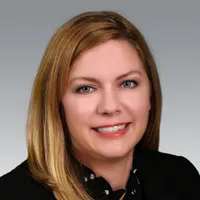
Arthur Yamamoto
Chief People Officer, Medely
Culture isn't a feeling. It's a meticulously designed framework for success.
Episode 287 · July 22, 2025 · 14:20
Culture isn't a feeling. It's a meticulously designed framework for success.
Key moments
In Arthur's words
“Eventually found my way to agency recruiting, did that for close to a decade before finding my way out west in tech. And since then, I have been kind of straddling the line between recruiting and people and eventually took on chief people officer responsibilities that I've been doing for the last few years.”
“Part of that was tied to lack shared language, just understanding of our values. And I think the problems that creates is just the lack of cohesion. You have subcultures that develop within each department, and then that leads to a lack of overall communication.”
“The biggest thing was making sure that you drive— when you have a meeting, you need to come out of there with a decision. Meeting for meeting's sake and saying, we'll meet again to talk about it more is really just a waste of time, right?”
Transcript
Read the transcript2,450 words
IntroWelcome to the Built by People podcast, where we share the stories and insights of the world's top HR leaders. Join us as we dive deep into the minds of HR executives, uncovering their strategies, challenges, and triumphs in shaping today's workforce.
HostI'm excited to welcome Arthur to the Built by People podcast. Arthur, thank you so much for joining us today. And as a starting question, I always like to ask if you could share a little bit more about your career journey.
GuestYeah, thanks for having me. Just to give you a shorter version of my story, born and raised in New York, started my career in finance, didn't love it, but was in it for the money and Eventually found my way to agency recruiting, did that for close to a decade before finding my way out west in tech. And since then, I have been kind of straddling the line between recruiting and people and eventually took on chief people officer responsibilities that I've been doing for the last few years.
HostArthur, when you arrived at Medley and discovered there wasn't a clear company culture, what specific challenges did this create for the organization? And why did you feel it needed to be addressed?
GuestYeah, I think we are a fully distributed company and I think there were definitely through lines of folks having great bedside manner, being that the company was built around clinical backgrounds and had a lot of early employees with clinical backgrounds. There was this lack of overall company culture. Part of that was tied to lack shared language, just understanding of our values. And I think the problems that creates is just the lack of cohesion. You have subcultures that develop within each department, and then that leads to a lack of overall communication. While everyone is still trying to do the right thing, there's a lot of inefficiencies because you have one hand not knowing what the other hand is doing.
HostArthur, could you walk us through the process of developing what you call the Medley Operating System and how you narrowed down from 9 core values to just 3?
GuestYeah. And so as I mentioned to you before we had this podcast, when we started, we had a bunch of core values. I think the intent from our founders was great and jotted a bunch of things down on paper, but it was too many. And so really, Genesis, the operating system, was just trying to figure out, reverse what it was from this lack of culture and what are these questions that we have to answer to start to develop that. And like I said, shared language is one of them. And so To develop the operating system, really set out to, to answer a bunch of different questions. The first one being, why do we exist as a company? The second one being, what do we do as a company? And I think everyone had a version that was correct. If you asked everyone in the company those two questions, you got a bunch of different answers. So we didn't even have a unified statement on why we exist or what we do as a company. And so that was first and foremost, is getting people aligned around like these statements. And so why do we exist is we empower facilities and professionals to deliver the best care. And that's like a mission and a statement that everyone can really get behind. And what do we do is really just that when someone asks you on an airplane, hey, what does Medley do? You have this clear statement that you could tell the person next to you on an airplane, you could tell the press, you could tell your mother. And it's a consistent statement, which is we provide a workforce management platform to solve healthcare staffing challenges. So first was getting everyone aligned around that shared language. And then it was the next question we want to answer is like, how do we get it? Which is really our core values. Like I said, we started with 9. We eventually cut it down to 5 just from the simple aspect of you need to have it short enough that everyone can remember it and internalize it. But in this conversation around the operating system, what we really boiled down to was like, what are our core values? These are these principles that drive our behavior, our interactions, and like the foundation of our culture. And so the first most important thing is they have to be non-negotiable and they have to exist in our employees that we hire. And I think in that process of having this conversation, we really realized two of them were great. But were really more aspirational than really being practiced. And maybe it's a point in time in the future that we get to that and we revise our values again. But I think we decided in the moment that like, let's boil it down to these 3 that we think are really important, exist in all of our employees, and are completely non-negotiable. And for us, that's we're stronger together, which means we align all our actions and decisions to align with the business goals. The second one being we think critically with a bias for action. So we had this critical thinking component that really existed in everybody, but as a growing startup, we really want to prioritize that bias for action. And so the biggest behavior change we had to drive to, to make that really a reality was not just encourage risk-taking, making sure that there's no punitive action if people took risks and failed. And so that's something that we push quite a bit for and really exists in the company today. And the last one is that we communicate with purpose. Like I said, we always had this great bedside manner and conversations and communication was always incredibly respectful, but I think sometimes lacked transparency, lacked directness. And so we really wanted to make sure, you know, the leaders were doing a good job modeling that, but really pushing that down to the next line of leaders, so the managers all the way down to the ICs. Number one, we prioritize respectful conversation, communication, but it has to be clear, direct, and foster dialogue, and really has to be with purpose. And so the second part of that purposeful communication is really not just how we talk, but all of our communications, right? How we send written communications out, even down to how we think about meetings, making sure that when you set up a meeting, everyone has to have a purpose for being there. Everyone has to have a clear agenda. And the biggest thing was making sure that you drive— when you have a meeting, you need to come out of there with a decision. Meeting for meeting's sake and saying, we'll meet again to talk about it more is really just a waste of time, right? So making sure that the purpose of the meeting is to drive a decision, right? That's why we're having this conversation, we're all gathering together. And so having that purposeful communication was something that I think existed in a lot of ways, but really codifying these and our values crystallize that for a lot of folks. And, and then the last question that we really wanted to answer was how do we succeed? And that's really our strategic anchors. And so for us, that's product innovation, being customer-centric, and being value-driven, right? And so crystallizing that, codifying that was really important because these become the guiding principles that drive all of our decision-making, whether it's for products, how do we build those products, how do we sell those products, and really what differentiates us from our competitors. And so integrating that into our thought process and when we're talking about new features, new ideas, has really made it easier to align to what's going to make us successful.
HostArthur, can you talk a little bit more about how you implemented the new operating system across the company and what obstacles you encountered when trying to get everyone to adopt this shared language and framework?
GuestYeah. The first problem is that this is a 6-year-old company at this point. We're close to 8 years now, but when we started implementing this, close to 7, 8 years now. And anything new philosophically is very just hard for people to adopt. And so a lot of it just is around repetition and making sure that people hear these things over and over, understand these things. We went through a really a grand unveiling of of the operating system, making sure that people understood what it was through our all-hand process. We talk about our statements, why do we exist and what do we do, at the start of every all-hands that we have. Our core values are recognized in every all-hands where we have core value awards where we nominate folks, and we talk about them in our performance review cycles. Are people exhibiting these qualities? How are they in the spectrum? We even made custom swag, and I'm not sure everyone's seen the video, but we have everything from mouse pads to t-shirts, right? So that it's in your face every day and it just gives you a better chance to internalize these things and think about them a little more. Just starting with the top line leadership, right? When we have meetings or strategic anchors, are we aligned to those things? Making sure that we're regularly talking about our values and recognizing when someone really exhibits that value or really goes above and beyond to show it in our Slack channels, in our all-hands. A lot of it has just been repetition, but it's always a work in progress. And I think when you clarify visions and values for folks, sometimes it feels like you've changed them and it takes people a little time to internalize it. But again, I think we've tried to open as much dialogue with folks as possible. And that marketing principle of just keep repeating it, putting it in people's faces over and over.
HostArthur, what measurable impacts have you seen since establishing your company's operating system, and how has that transformed the way decisions are made at Medley?
GuestYeah. I think as far as the different measurable impacts, the first one was really around our engagement survey. We had The year before, we, we went through a tough time, right? Tough macroeconomic conditions. We went through reduction in force like a lot of companies did and just to increase our efficiency, and that really hurt the morale internally. I think people just didn't feel in alignment to what we were doing. And so giving folks this kind of North Star and statements to align around, I think showed a pretty immediate effect in our next engagement survey. I think our engagement score went up by roughly 150%, just under, probably 146 or 147 if you're doing the exact math. But that's a pretty big jump in our eNPS score. And then when you boil down to the deeper scores, I think people were scoring better on the alignment around missions and visions and values pieces. And, you know, what that also increases when you have that better alignment is better efficiency of the business. And what was really interesting to see is we had this reduction in force, which decreased our headcount significantly. That being said, our revenue went up, and one of the biggest jumps in score in our engagement scores was the question around having a manageable workload. We had almost an 18% jump in that score despite teams being smaller, doing the same amount of work, having higher productivity. But also feeling like you have a more manageable workload just speaks to the efficiency gains when you have everyone aligned around things.
HostOh, it was just around the results that you've achieved and the impacts that have stemmed from it, as well as how that's shifted decision-making within the company.
GuestYeah, I think the key decision-making pieces that have changed, again, having those strategic anchors have been a game changer in how we think about developing things and making sure that when someone is putting a business case together that they're touching on these things. And it just makes it easier for us to align around if this is the right move or not. I think the other tangential business decisions that have been impacted is this increase in understanding that if you can align teams in a better way, you can be more efficient and get these productivity gains without just increasing headcount, which also provides a tangible financial benefit to the company. And you can do it in a way that's not burning folks out because we've seen that from our scores in terms of workload, perception of workload at least, increasing in a meaningful way. I think this company has done an amazing job since then of increasing our efficiency financially and from a headcount perspective, which ties to the finances. When you do that in a meaningful way, that generally touches on folks' ability to learn and grow and develop functionally and in terms of ability to touch things and get exposure to different areas. So that's exciting to see, and I hope to see more results from that in the coming year or so.
HostArthur, what parting advice would you like to share with our community?
GuestYeah, I think the biggest piece of advice or the biggest learning I've had from this whole process is that culture is more than just like this feeling or having parties or happy hours, right? It's really setting up an intentional framework to set people up for success and make decision-making easier. And the most important way to do that is to really start at the top and sit down and discuss As a leadership team, what's most important to you? What's most important to the business? And then you start looking at your top performers and what really is the common thread around those folks that make them differentiators in the company. And so just being really intentional about everything is probably the biggest piece of advice that I would share with anyone else listening to this podcast.
HostArthur, thank you for joining us today on the Built by People podcast. It was a pleasure to have you involved.
GuestThank you so much for having me.
More conversations like this