Guest · with Maddie · 33:49
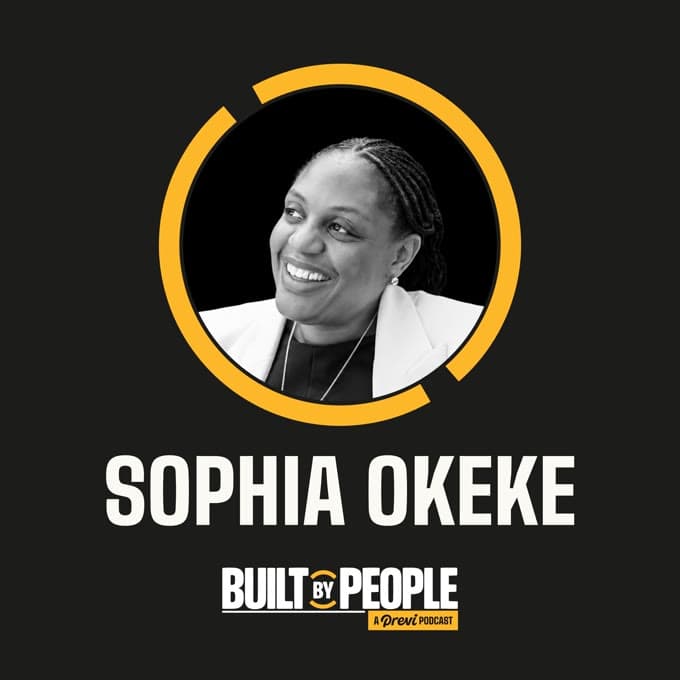
Sophia Okeke
Executive Vice President - Chief People & Culture Officer, The Center for Family Support
Communication Is So Underestimated
Key moments
In Sophia's words
“AI is using what's already existing. You are your own unique person.”
“I look at it from two points. How did it change the person? And then how did it impact the organization?”
“I'm a relationship builder, so I'm looking for ways to integrate technology into my team.”
About this conversation
Sophia Okeke is Executive Vice President and Chief People & Culture Officer at The Center for Family Support. She worked in news before moving into HR, then spent seven years building HR for country offices in Sub-Saharan Africa, including a first town hall in Togo before she could speak French. She and Maddie talk about why communication is the skill leaders underestimate, how she measures whether a training program worked, and what she's focused on now: hiring for hard-to-fill care roles and using technology so her team can spend more time with managers and staff. She also talks about her first book, God, Me, and Coffee, and how it started with a devotional she wrote for her church.
Transcript
Read the transcript5,596 words
IntroI will tell you this now, any leader, it's communication is probably the number one skill that you need. And it's so underestimated
HostOkay, perfect. Welcome, Sophia. We're so excited to have you. welcome to the Built by People podcast. Sophia spent 5 years in the news, um, producing for CBS News and CBS Network Radio before moving into HR. She's now the Executive Vice President and Chief People and Culture Officer at the Center for Family Support. This year she published her first book and it's called God, Me, and Coffee. So thank you so much, Sophia, for joining. So just to warm up, what is the wildest thing that's happened to you in HR that you obviously are allowed to talk about?
GuestOh, I love that question. Um, so I spent about 7 years in Sub-Saharan Africa, like doing HR, building country offices out for, at the time it was HIV care and treatment. So we had a lot of international funding and I was working in a French-speaking country. And part of the job was to, you know, learn basic French, but I was told I would always have, you know, someone who spoke fluently and we would also have translators and everything. But I am someone who's dedicated to learning and I really wanted to grasp the language, but they were like, The COO at the time was the best. He said the best way to learn is just to go there, you know, to be with the team. And of course, you know, I could say hello, goodbye, whatever. And I get there and I'm in, I've been thrown into one of those meetings where it's like a town hall where all the employees are saying what's wrong, what's right, what And my colleague was here, she speaks, she's French, and I had my translator on, and of course No internet connection. The translator was not working. So I'm sitting there and it started okay because she was translating for me, but it got heated, you know, when employees are saying what's not right. And she's, she's speaking in French and it was just them. And I was sitting there and it was just the worst. And then the country director looks at me and he's like, Sophia, qu'est-ce que vous pensez? Like, what do you think? And I was just like, um, you know, and I've never, I actually got up at one point and I just cried because I wanted to help, but I couldn't understand anything. And I just felt like I couldn't do my job. And I was relying on my colleague to do all the translation. And I just felt so, so out of it. So like I didn't belong, but everyone I remember when I left, that was the first trip. Togo, when I left, they said, don't worry, you're going to come back and you're going to get better. And I did. I went back like maybe 6 months later and I was better. And then a year after that I was better and I just got better and better. So,
HostWow. How long were you at that, at that company?
GuestSo I was at that company for 2 years, um, and then before that I was at another company which was all of Sub-Saharan Africa, not just the French-speaking, for like 5 years. So in total, 7 years doing international work. But I think that the 2 years I was at the other company, they chucked me in a lot of things. It was like, you'll be all right, don't worry, you'll get it. You know, it's always like, you'll be all right, don't worry. Like, I remember the CEO, she was amazing. She never ever— there was nothing she wouldn't let you not try. And
HostWow. Yeah, that's cool. Wow. That's crazy. So how long did it take you to, to learn French to be able to communicate?
GuestIt took, well, I, so what happened was I had, they put me in lessons every day for maybe 3 months, but because I was in meetings and travelling, I picked up a lot of bad habits. So I learned a lot of conversational French without learning grammatical French. So I could be understood, but my grammar was really poor. And so I would speak French and, you know, I still speak it now and I can be understood, but grammatically, there's errors all over the place because I was always learning through listening and not necessarily doing. So I, it took me about 2 years to clean it up with the teacher cuz she was like, you got some terrible habits. Um, and you know, I've. But it took me about a year to be understood and to hold a meeting, and I would script out my meetings beforehand, so I would always have that.
HostThat is crazy. That is so cool. I love that. Congratulations, you know French!
GuestWell, yeah, I, you have to practice with languages. I think that you have to be constantly practicing it. And the good thing about that job was because I'm based in the US and I was going to Togo 3 times a year. I was writing my emails in French through DeepL, which is a translating system. So you write your emails through DeepL and you're learning that way. And then even today, one of my old colleagues, he texts me and we were chatting, but I don't speak as much French now. So it drops off, but as you practice more and more, you know, and you can, I also watch a lot of French TV shows, French music,
HostOh yeah. I've heard like listen to the music or you watch the TV shows, like that's how you pick
GuestWatch it in French and then have English subtitles, but listen in the language and you will pick it up. Yeah.
HostInteresting. Okay. Well, that is, that is amazing. Um, so you came from, to HR from newscasting. What, what has helped you in HR, in a way that surprised you that you took from newscasting? Okay.
GuestYeah, communication. I will tell you this now, any leader, it's communication is probably the number one skill that you need. And it's so underestimated because first, I, I did have a boss, she told me emails, presentation, and like conversation, right? We'll start with emails because we're in the technical, technological age, right? And API's out there writing your emails for you. But for me, I want to feel your presence in your email communication. I want to feel genuine, you know, how you doing? Like I'm all about connection. So being able to write an email to somebody, like say if it's, you know, say it's a difficult conversation to be able to write in a way that's They're going to take action, but it's still emotive. It's still empathetic. It's you. And you want to feel the sincerity in the email, right? Because a big part of my job is, you know, giving difficult messages sometimes is what it's having me. So if I have to do that in an email, you know, I need those skills. And there's the presentation, right? When you have to lead a team. If I'm asking you all to get on the bus and we're gonna go somewhere or do something, you're not gonna do it if I don't present it to you in a way that makes you feel engaged and you're sucked in. You're not gonna wanna get on my bus. You'll be like, ugh, why are we doing that? But if I it, if I present it in a way that makes you feel that you belong, that you've got a piece, you know, your, your area that you're working on is really important. And you feel connected to me through the way I present, you are gonna do it. So there's that presentation. So that's a group meeting or anything like that. And then there's the one-on-one, like what we're doing now. So you need those, you need to have those communication skills. And I do believe that my news, you know, my news background or my journalism background has really helped me with that because there's the presentation, obviously if you're in front of the camera, if you're on the radio, so, you know, That translates over pretty well. And then obviously there's the writing, right? You know, I've read some things and I'm like, I'm lost. Like, the first paragraph, I'm like, what are you
HostMiddle, and end? Yes.
GuestSay? Yeah. You know, I'm like, what are you trying to say? And sometimes I, you know, I'm a writer, you know, I've recently picked that up again and I've published things. So people at work know I'm a writer. So, and I try to be gentle with them and I'll say, You know, that's great, but it's getting a little bit lost. Can we tighten that middle bit up, or can we— because it's not going to land the same way if it's 2 pages, you know what So I think that's definitely translated over from my previous career.
HostYeah. Well, I'm gonna send you all of my emails and I'm gonna get coaching from you. I feel like I, I just like, I overthink everything that I write because especially with AI now, it's like, Well, how, like, how do I add my personality? Like, I guess this is a good question. Like, how do you add kind of personality with also making it, like, getting to the point? And, um, yeah.
GuestWell, a lot of people are using AI and I, I, I don't have anything against AI, but I always say this. I say this a lot. I say AI is using what's already existing. You are your own unique person with your personality, your experience, your likes, your dislikes, where you're born, how you was reared, your mum, your dad, your sisters. And you are, when you write an email, all of that comes out. So don't suppress Maddie and Maddie's personality, right? So I, I always start with being myself and then I use the AI to to, you know, maybe tighten it up because I can talk a lot and I get excited and I'm all smiley and sometimes that's not needed. So I like have to like, you know, use it to clean it up. But I, I try to, I always write me first and then I'll have the AI, Grammarly's great too, you know, or whatever you're using to clean up, to tighten and clean it up. The language if you're going on too much. And, and then as well, I think you can give it direction too. Like sometimes if you have to do something hard, you could say, all right, can you make this more concrete? Can you make this more a call to action? Can you make this more, you know, they need to know I'm not happy, you know? So that's how I, I use
HostPeriods and less exclamation points.
GuestBut always start with yourself. Don't, don't ever feel that you have to walk yourself down or, you know, get rid of yourself. And I think that some people, especially on my team, they're using AI. I'm like, where's, where's Katie? Where's Mel? Where's just want them back.
HostTotally. Okay. Well, that's so good to know. I will not suppress my personality Um, okay. Well, you have, um, built training programs. How do you measure what a successful training program is?
GuestYeah, that's a great question. You know, I always look at, well, I look at it from two points. How did it change the person? And then how did it impact the organization? Because some people walk out of the training and they think it was the best thing since sliced bread. And they got it and they loved it and their life is forever changed. And then they go back to their job and they're exactly the same and there's no impact on the organization. So I think the best way is to go in with goals before you even create anything. You know, if you want to take it all the way back, you can do a needs assessment to see what is actually needed. What is the problem you're trying to solve? Is it that you have a set of recruiters and You know, we've got a lot of open positions, so are we trying to help them with interview skills? Is it that the managers aren't very good interviewers? And so, you know, we're hiring the wrong type of candidate. Is that the problem? Or is it the candidate pool? Do we need to change our sourcing? So it's kind of like, start with the problem before you design anything, right? Because, you know, I love to design and create. We all loves to design and create, but do an analysis of what's needed, a thorough analysis. What is the problem I'm trying to solve? Then once you've done that, you can build something that solves that problem. And I suggest you do it by looking at data. You know, you can see, okay, if I'm trying to solve open positions, how many open positions have I had in the past month or 2 months? What's the number? Where is my candidate pool coming from usually that fill the positions? How old are they? Where do they live? Use the data to see what the problem is, and then you can design around that. And as you design, you want to bring in the people that would be trained technically. I like to think, okay, so if I'm doing something for the recruiters, I need to have them as part of the design team. Then I can also call on other professionals, like I'm in a lot of HR networks that have designed a successful training for recruiters, because I don't have to invent the wheel from scratch, right? I can
HostYes. You don't have to do it
GuestYeah, yeah, yeah. They've done it before, or I can use my sources and I can bring them into the design team. And then, you know, I can go from there plus with my people. And then once I've built something that actually solves a problem, measuring its effectiveness is much easier, right? Because then I can do a survey to see how the recruiters, but then I can also look at the rate of people filling new roles since the training. So say if, like, before I went in and I said I had 90 open positions in 3 months, then after I've administered the training, do I still have 90 positions or has it gone down? Has it gone down to maybe, you know, 75 or 80, you know, is there a higher proportion of the managers, you can survey them, do they feel more comfortable post-training, you know, sitting down, having one-to-one, you know, with candidates? So, you know, I think once you pinpoint the problem and you have clear metrics, this is my problem, this is what I'm trying to solve, and you design it well, then it's easy to evaluate effectiveness. You see, because you can go back. So that's kind of how I look at it. If I just go in and design, I don't know what the problem is. I'm just doing something I've
HostWell, I love that. I love it. Okay, you've done HR in mission-driven organizations, and in finance. What does the mission change about the work that you're doing? Okay.
GuestYeah, I think that's a great question. So many people in my current organization, because we work with individuals with intellectual development disabilities, so most of our population live in our residences and they don't, you know, they don't necessarily wake up in the morning and get ready and go to work. Some of them, you know, need help waking up, need help getting dressed, need help having breakfast, and then they might go to a dayhab program and do community activities. So, you know, the people that work for us feel connected to these individuals. They're very relational. You know, they want to help people. They want to improve someone's life. They want to make a difference. And some of the time you talk to them and they say, oh, my, my son has, is you know, has an intellectual development disability, or my brother had this and he had a tough time. And, you know, so I think in where I work right now, there's a heart connection. A lot of the staff has a heart connection to the work we do. And if they don't have anyone in their family, they, that has an intellectual development disability, they are, they feel that they're doing something that changes lives. You know, they feel like they're making a real impact and a difference. And so, you know, when I was working in finance, when I first came to HR and I was like, you know, just doing generalist work, well, not just, it was a big deal because Um, a lot of the people, yes, there was that connection. They loved doing what they did, but there wasn't necessarily a heart connection. it was more like, well, you know, I'm doing this so I can get the next job, so I can get the next job, so I can make more money, so I can, you know, and they were still, you know, innovative and very creative people and they were very driven, very ambitious, but it was a different motivation, you know.
HostYeah, totally. Yes. Yeah. Motivators, I feel like, I feel like those are two different, they, people like that have two, they're just two different motivators, right? Like one is like helping the wellbeing of another human. Another is like probably very like process-driven and like, They love, like, they love probably their, their community and their coworkers, but it's just a very different emotional connection, one or the other.
GuestYeah, definitely. I mean, it's not to say that the philanthropic arm of some of the financial places that I worked didn't exist, and they did. Like, especially in some of the big banks, they have a very strong philanthropic community program, and that's their way of giving back to some of the underserved populations, which is fantastic. But I found that You know, it was a different type of person that, you know, would work in an organization, say in finance, as opposed to someone that would work in a community organization with people that needed that special care, that special attention.
HostYeah, that's, I applaud those types of people because we need those types of people, you know? Um, okay. Well, currently tell me what are your top priorities right now in your, in your role? Yes.
GuestYeah. Yeah. So I mentioned recruitment. So, um, I have an VP of recruitment and, you know, I'd say we are struggling to fill some of those roles for that very same reason. It takes a special type of person and unfortunately the pay is minimum wage. So we're asking you to, you know, do some very deep care activities for someone that's not a member of your family or your child. And we pay, you know, we pay a decent wage compared to other organizations, but it's still, you know, it's comparable to say doing a retail job or something that wouldn't require as much of your You know, heart So I'm working on that and, you know, I'm working on sourcing different avenues of people instead of relying so much on, you know, the ZipRecruiter and the Indeed. I mean, they're great. I, I don't, I don't doubt them, but I feel like some of the community connections will help, especially with like, you know, hospitals and churches and, centers. So I'm really pushing hard for that at the moment. That's kind of a major priority. Um, and we have a lot of temporary staff that come in that I'm really working on to try and get them to work for us full-time because jobs. And it's, it can be hard because they would lose some of that quick cash in hand, but we would provide benefits. So I'm working on that at the moment. That's kind of a major priority. I'd say drop the, um, open vacancy rate, driving that down. And then also AI is just coming up everywhere right now. I was in a conference yesterday and I'm like,
HostSpeaking of emails, yeah,
GuestI mean, it's crazy. I mean, I think, you know, I, I'm a relationship builder, so I'm looking for ways to integrate you know, technology into my team so they can be more of a relationship builders with the managers. So, you know, if there's an employee relations issue, which can take up a lot of time, they have time to go to the location, meet the manager, hear what's happening, maybe sit with the staff, as opposed to say, being behind their desk doing paperwork that could be automated. So I'm trying to like, yeah, I'm going to a lot of conferences. I'm listening to other leaders. I'm, we've just implemented a new HRIS system. So I'm looking at different modules to add on to that. You know, so I'd say that is kind of a priority for me to make sure that my department is able to go out on the field and have time to really serve the managers and the staff, as opposed to doing a lot of, you know, entry HR administration.
HostTotally. I know the nice thing about AI is that it allows it gives employees time back to be, to get to know other people on a more personal connection, like making their job more personable rather than just behind the screen. Yeah. I, Yeah. Um, okay. What's one initiative that you have rolled out recently that you are proud of?
GuestYeah, I'm proud of our performance management. you know, we hadn't done it in about, I think, almost 8 or 9 years. It hadn't been structured. And people were having a really hard time with it because it was too many forms. They didn't know how to rate people. One manager's more generous than another manager. And, you know, it wasn't, it wasn't equitable. So last year we rolled it out for the first time and we did it in the SharePoint. And now we're going to be, I think next year we'll move it to our HRIS system completely. But we created it in our SharePoint drive and we just put it in like 5 sections, had different categories, you know, technical skills, relationship, management skills, you know. Community skills, and then we created a 5-rating scale. So, you know, acceptable, you know, not acceptable, you know, exceptional, that kind of thing. And we did some training to make it easy for people to understand. So the first year we rolled out, people were really excited about it because it was easy. You know, people like easy. And when you have a lot of direct reports, you just don't have time to be doing lots of forms.
HostNo, it's another thing to add to their plate.
GuestAnd we had about, you know, cause we have, we have 1,500 employees, but most of those employees, 900 are DSPs. So they do a different evaluation according to the state, but the other, like, you know, 400, they're admin staff. So they were actively doing it. And I think the first year we had about 186 people, which, we're not quite Quite a half, but year we had a little over half of our admin staff do it. So I'm really pleased with that because it's kind of like putting in a new system and getting people to think about why is it important to have a time of reflection with your staff and really be honest about the future and to talk about goals too. And, you know, I think that's really important.
HostNo, I, I love that. Implementing something that like employees don't dread is very— is something to be proud of Um, okay, going along with that, if we sat down in 12 months, um, from now, what would you hope has changed most in your organization?
GuestYeah, that's a great question. Um, I hope that people— there's a stronger relationship between our managers and our staff, you know, especially the ones on the field, because I feel like the ones on the field have a really stressful time and some of them come into the organization and they don't have that instant connection. I think connections, especially in our organization, have been established for many, many years and they're the ones that are sticking, the tenured people that have been there, say, 5, 10, 15, 20 years, and they're sticking like glue. But for the newer people, especially with the generational gap, like we're in a multi-generational workforce now. That's why I use that because you've got people that are straight out of college or still, you know, students who might be DSPs on the weekend because they want to go into a medical career. All the way up to people that are probably going to retire in the next 5 to 10 years or something like that, or some people that are past 65, you know, past retirement age. So we've got multi-generational workforce, and I would hope that we can all mesh. And that's what we're working on doing by having more performance conversations that, you know, the older, more seasoned will learn from You know, the newer cats, the newer cats will come in and maybe be less arrogant and learn from the old people. And then the middle people, kind of like the peacemakers, you know what I mean? We all try and get on a little bit. And I would love that in 12 months, people are having more conversations. Performance management isn't just once a year, but people are doing their independent coaching sessions, more feedback sessions, more participation, people just
HostAnd being there. Yes. Yeah, I know. That's, that's crazy. I, I feel like people, you can always learn something, you know, from anyone, from someone younger than you, from someone older than you, from someone the same age. And so that is. That's huge. okay. Onto the most exciting topic. your book, God, Me, and Coffee came out this year. Um, and the next amazing. I love it. Beautiful. And the next one on the series is on leadership. what made you want to write these books?
GuestOh, it's crazy. I, you know, I, I took some time off, so I was doing a lot of international work and then I moved into human services and I did, I'll be honest, I had some real burnout issues cuz I'd been traveling for so long and I had children while I was doing all that. And my youngest was like, she's 8, she was like, you are so stressed out, you're not home. And I was like, oh boy. You know, this is yeah, yeah. Because my husband's very laid back, but she was like, oh, and I was, I was stressed and it was starting to really take its toll. So I took some time off. I took about 4 months away. And during time, I was like, my husband was like, you don't need to work right now. Just, just do I love working. And he was like, you will work when it's the right time. Just do whatever you want. Right. So yeah, you do the school trips and all that. But then I was volunteering in my church because I loved being there. And, um, my senior minister said, can you write something for us? You know, we, we, they, every Friday they have these devotional stories that come out. And he had asked me to write, and it was Lent and they did 40 stories. And he's asking everybody on the Governing Body. So whether you're a writer or not, you gotta write something. And so I, and he was I you're gonna learn. But they, they, funnily enough, they didn't know I had this journalism background. I don't really talk about my past I wrote something and it kind of blew up. People loved it. I started writing every Friday and I knew something was different because I would get into church and people would come up to me and they'd be like, I love that story about the basketball. How did you come up with that?
HostYou're like, I just wrote it.
GuestYeah, well, Adara's playing basketball, whatever, you know. And I, I was just getting a lot. And so I, you know, and then they wouldn't put it out every week because I'm not on the staff. And I said to— yeah, because it rotates with the staff. And I said to Pastor, I said, I'm really loving this. He says, why don't you keep doing it? And so that's what happened. And my idea to publish— my neighbor, she's a She's like a bestselling romance novel person. Yeah. And she was like, you could just put this together yourself. You should do it. And, you know, she kind of pointed me in the right direction. So I self-published. So I self-published, came out in March, and I'm really enjoying it. But I didn't realize that you had to do all these press things. It's weird. Would you like to know?
HostJust be there. It's just on Amazon. So just, yeah.
GuestOh yeah, it'll sell itself. It's on Amazon. But no, like people want you to turn up. Like things like this happen, like what you guys did, like people find you and they want you to do things. So you have to kind of promote the book as well. So I've done, I've done, I've done maybe 5 book signings. I do, I'm You know, it's great. I mean, I love doing it cuz it's my faith. I'm kind of sharing my faith, which I feel like, I feel like I share my faith every day without saying that's my faith.
HostYou present yourself and how you are. Yes. Totally. Yeah. Wow. That's so amazing. So when does your next one come out?
GuestThis came out in March, so I don't do— I'm— this is all new to me, so I'm the same pattern that I did the first time, which was I released after Easter. You know, I have my book designer, I work with him in the fall, end of the year. So I'm doing that now and I'm launching my website as well. So I'm kind of like coming up to that point in November. And then I announced the book, like I'm telling people now, because last year I didn't have anyone to tell because I wasn't doing anything. But now I'm telling people. Oh yeah, yeah. I wasn't telling people last year, honestly. It was so scary. I was so scared.
HostIs like so, like, it's so vulnerable to be like, to put something of your own work out there for people to have in their hand and read. And yeah, I can only imagine. Yes.
GuestIt's scary. I tell you what is scary is like you will write— like, I love writing. I'm like in my own world and it's like, yay, fun, woo! And then you get a designer or something and he mocks it up. And the first time I read it and it was like a cover with this, and it was like the dedication, and it was like, to my darling. And I was like, oh my God. And my husband's reading it, he's like, oh my God. And then, and then they do it. And then he, we put it on Amazon, everything. And then you get author's copies in the mail. So you still don't believe it, but then you, it turns up at your door and it's a box like your work, your words. And it is the freakiest thing. It's like having a baby and it comes out and it turns up in these boxes. And then you're like, you don't want anyone to read it because you've, you're worried. And then you go to BookSnipe and then you have to give it to people. So it's and then the weirdest thing is when they start reviewing you. Now that is hard because I've seen that on TV and I'm like, why do people get so
HostYes, yes. And then it happens to you and then it's like, whoa, whoa, whoa.
GuestThen you're like, oh God. But I've had some good reviews, which is good. I don't know how I'm gonna do with the second book. They might not like it. People might turn on me. I don't know. But you just— yeah,
HostYou are doing it, and that is all that matters. That is amazing. Yes. Oh my gosh. Well, it was so good to chat with you and have you on the podcast. Thank you so much again. and thank you for listening.
More conversations like this