Episode 328 · September 19, 2025 · 11:34
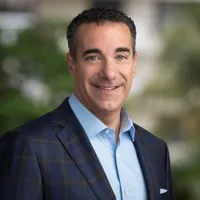
Sinead Condon
Chief People Officer, Guidewire Software
CPOs, your role isn't HR. It's time to lead business transformation.
Episode 328 · September 19, 2025 · 11:34
CPOs, your role isn't HR. It's time to lead business transformation.
Key moments
In Sinead's words
“I was not interested in being an HR lady. I was interested in leading as a chief people officer, which was a conversation that needed a lot of unpacking and education.”
“operationalizing and scaling organizations is probably one of the most difficult challenges that any company is facing.”
“A lot of employees don't necessarily have the financial acumen to understand what it takes to operationalize and scale a company.”
Transcript
Read the transcript1,540 words
HostWelcome to the Built by People podcast, where we share the stories and insights of the world's top HR leaders. Join us as we dive deep into the minds of HR executives, uncovering their strategies, challenges, and triumphs in shaping today's workforce. Junaid, thank you so much for joining us today. And as a starting question, I always have to ask if you could share a little bit more about your career journey.
GuestSure. So, I'm born and bred in Ireland, as the accent gives away. I've been in tech my whole career. From as soon as I finished college, I actually set up my own business in the west coast of Ireland, primarily doing software development and training on computer literacy back in the day for a lot of the biotech and tech companies that were establishing themselves in on the west coast of Ireland. And so tech is definitely my passion. And so spent probably half of my career in Ireland in a bunch of different consulting firms. I've been an SAP consultant. I've been a network engineer. I've done it all, or as I like to say, I've done it all until I haven't, until I see something. And then I came to the States in '98. So, I've been doing this a long time and continued to gravitate towards tech. Was hired by an SAP consulting firm in Foster City in the Bay Area and did a kind of a plethora of large-scale implementations of ERP systems for the first kind of half of my career in Silicon Valley. And then 6 years ago, this is the turning point, 6 years ago, I was hired by a company called Guidewire Software, which is a property and casualty tech company. And I joined Guidewire at the inflection point of moving from on-prem to cloud. It was a company that is well established in the insurance tech space, but a behemoth journey in front of them to transform. And I joined really as a transformation consultant. I think a lot of CPOs kind of fall into this role having gone through large-scale transformation. And I'm an agilist at heart also. And so, um, joined Guidewire as more of a transformation agile consultant. And 6 months later, the head of HR at the time decided to step down for personal reasons. And they asked if I would take on the role, to which I said no, because I was not interested in being an HR lady. I was interested in leading as a chief people officer, which was a conversation that needed a lot of unpacking and education. But they said yes. And I've been very privileged to lead Guidewire as the Chief People Officer, probably in, in totality in this role for about 5 years.
HostCan you share a specific challenge you faced in your HR leadership journey? What made it a pressing issue and why was it important to address it at that time?
GuestYou know, I think we're at a very interesting inflection point in the world. Both the market and society has thrown lots of challenges. I think any CPO or CHRO that's listening to this podcast are saying, where isn't there a challenge every day of the week? And so it's not lost on me that it's just par for the course. I think for me, it is scaling the organization. And I want to preface this by saying COVID was hard. We reek the residue of that. But there's goodness and there's healthy and unhealthy manifestations of any of these large challenges that we face. So I'm just going to put that to the side for a second. But to help listeners, I suppose, in the role that I'm in, operationalizing and scaling organizations is probably one of the most difficult challenges that any company is facing. Given the current backdrop, given the impact that both the market and society and the intersection of those things that is being created to— that's having an effect on, on companies. So I think staying relevant, learning to build and operationalize and build world-class is something that every company is dealing with, regardless of whether they're a tech company or not. We always say every company's a tech company now. And so how do you lean into building a robust, resilient, lean, but heavy operational, heavy agile, organization and all the things that come with that. And that to me is where it's at because, not to say that none of us have scaled before, not to say that none of us have operationalized before, but the current backdrop is something that is unprecedented.
HostCould you talk about some of the specific steps that you and your team took to tackle that challenge you described? And what were some unexpected obstacles or setbacks that you had to overcome? Along the way?
GuestYeah, you know, I think it's interesting as a CPO because I think that the role of a CPO is shifting to, we've always been a counterpart and almost a counterweight to the CEO. And where I would see a significance of the role playing the part of helping to design what the operational future of the company is going to be, I think is an important role that we play. And, uh, the, I think one of the things that kind of strikes me is because of the current backdrop, because of the varying degrees of mechanics that go into scaling and building an organization. A lot of employees don't necessarily have the financial acumen to understand what it takes to operationalize and scale a company. And one of the things very tactically that we intentionalized, if that's a word, is to start by bringing employees together, bringing the community together. And building muscle in what it means to run a company financially and operationally. Why that's important is because it, in every step of maturing an organization, difficult decisions have to be made. And we can make them in isolation. We can do them with limited transparency, or we can do our best to be as transparent as possible, but adding a layer of education and understanding and breaking down why these decisions have to be made. So much of it is financial. So much of it is the relevance of driving value for our customers. And how often do we hear people say, you know, our organization is siloed. We do this and somebody else over there does that. It's really important for me that every single employee and every function understands the part they play in the plot.
HostCould you talk about some of the key lessons and takeaways that you've had in scaling and transforming organizations, including what you would do again and what you might recommend others to avoid?
GuestI think there's a couple of things. One is most organizations weak of assumption. We make assumptions about everything instead of qualifying our thoughts, our perspectives, our points of view with the people in our orbit. And so the first thing I think that's super important is rather than making assumptions and either, you know, I say to folks, We have, we have a choice when we hear information. We can either amplify it and react to it, and that's different to sense of urgency, right? But when we hear information, we can amplify it or we can absorb it. We must absorb first. We have to take the information that we're hearing, absorb it, and then look to understand it, break down those assumptions, and make sure that we come out the other end of it truly understanding the problem that we're trying to solve, the people that are in the orbit of that problem, so that we can help facilitate driving outcomes towards it. How do we do that? It's very basic. We build relationships, right? And how many times, I think anybody that's listening to this podcast will say, for all the problems that we have, whether they're technical in nature, whether it's dealing with a customer escalation, et cetera, et cetera. When push comes to shove, it's the cast of characters, it's the people that are involved that are really creating the blockers in all the problems that we have. We facilitate removing those blockers by leaning in, facilitating, and by building relationships, trusting the people that we're working with, understanding the people that we're working with, and Removing this idea that everything is based off assumption.
HostWhat parting advice would you like to provide to our community?
GuestBe curious. Be curious. Ask the questions. I often find that CPOs and people in HR specifically tend to stay in their own lane. Your job is not to be a HR leader. Your job is to be a leader. And one of the most powerful things that we can do is facilitate clarity and facilitate the removal of assumptions so that we can drive outcomes, whether it's HR related or not. It's not about HR. It's about driving outcomes, period.
HostThanks so much for joining us today on the Built by People podcast. It was a pleasure to have you involved.
GuestThank you. Glad to be here.
More conversations like this