Episode 68 · January 28, 2025 · 13:04
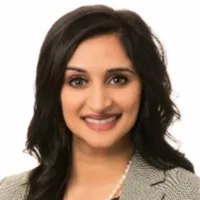
Renu Chhabra
VP, Global Head of Benefits & Total Rewards, Tyson Foods
Rethink Total Rewards: Data Trumps Trends for True Employee Value
Episode 68 · January 28, 2025 · 13:04
Rethink Total Rewards: Data Trumps Trends for True Employee Value
Key moments
In Renu's words
“For me, the biggest challenge was converting from kind of that individual contributor being the expert in the room to taking a step back and saying, how do I give this person the opportunity to shine? So, So understanding that building, building loyalty, building credibility, that is far more important than being the smartest person or knowing all the details.”
“When the, when the numbers were coming in, instead of being solely focused on, let's say rebates, really kind of stripping that out of the equation and saying, If utilization changes, how does the cost change based on the cost of the drug? So unit cost, essentially pricing.”
“We took a step back this year to look at different options so that people didn't have to overinsure themselves or underinsure themselves. They could find the right level for them and their families.”
Transcript
Read the transcript2,241 words
HostWelcome to the Built by People podcast, where we share the stories and insights of the world's top HR leaders. Join us as we dive deep into the minds of HR executives, uncovering their strategies, challenges, and triumphs in shaping today's workforce. I'm excited to welcome Renu to the Built By People podcast. Renu, thank you so much for joining us. And, uh, to start, I'd love to learn more about your educational and career journey. And some of the pivotal experiences that led you to having oversight of total rewards at Tyson Foods?
GuestSure. Well, I graduated from UT Austin, so Hook 'Em Horns, where I focused on actuarial mathematics. So right out of college, my first role was with Caremark at the time, now CVS. And ironically, I worked on kind of specialty medication financial analysis. So I had a really cool opportunity to understand the mechanics around rebates and pharmacy financials. And I started my MBA at CVS, and then I got the opportunity to work for Towers Perrin, which is now Willis Towers Watson, totally showing my age, and had an incredible run managing large multinational accounts. I would set contribution strategies, learn detailed actuarial data analysis, and I really did learn from some of the best in the industry, and consulting really shaped how I looked at problems. And after a few years at Towers, I got an opportunity from one of our existing clients to actually move to the employer side. And at that point, I was really excited because I was able to take that consultative experience and then pair that with being in-house and actually implementing the strategies. It was an interesting change. It certainly took time to adjust to it. Internal HR is very, very different than being a consultant, right? So, Oftentimes internal HR can feel monotonous, where in consulting you have different projects throughout the year. But ultimately I landed at CBRE managing global total rewards and really enjoyed the pace and culture there. They were really fast and it was really fun. I learned, uh, all about global benefits and I had full oversight of the Canadian population, which was really fun and exciting to manage. And then at CBRE, we were going through a lot of growth. I got moved into an M&A role where I was responsible for all the total rewards kind of activity as it relates to all the deals. And so that was consultative in nature, and I had a lot of fun doing that. I got to learn stakeholder management and overall business operations. So it was a really cool way to kind of tie in my consultative experience and my employer side. There was a lot of travel, and at that point in my career, I wanted to build a family. So I took a more stable role overseeing benefits at Comerica Bank. Less travel, and after a year we welcomed our son and he's now 7 and a half. I cannot believe it. I made a decision to go back into consulting where I could be a little bit more flexible with my time as he was little. And so I took a consulting role where I focused on really large health system clients. My experience at Tennant in the health systems really helped as I took over really great clients like Baylor Scott White and helped them manage kind of their internal benefit strategy. Since they own their own health plan. So it was really fun. And then when my son got a little bit older, I did move back to the employer side and I joined McKesson where I was responsible for all of their kind of total wellbeing and benefit structure. And so that was really, really fun. Enjoyed it. It was domestic. The role was very domestic in nature, so I had all of US under me. And then I got the opportunity, Tyson kept pursuing me for a global role, and that's when I finally took the bait. And joined Tyson.
HostWhat's been the biggest challenge you faced in your career and how did you overcome it?
GuestSo this is a really interesting question, an important question. And I think for me, it was learning to balance managing above me and managing below me. You know, oftentimes early in your career, you become technically strong, you're a subject matter expert, so you're building relationships with your peers and senior leadership, right? That's your focus. But then as you grow and you move up in your career, learning how to build relationships with your direct reports is a top priority. You want them to feel empowered, you want them to feel like they can take something and run with it. And, and for me, the biggest challenge was converting from kind of that individual contributor being the expert in the room to taking a step back and saying, how do I give this person the opportunity to shine? So, So understanding that building, building loyalty, building credibility, that is far more important than being the smartest person or knowing all the details. For me, that was definitely the biggest thing that I had to adjust as I was growing in my career is learning how to manage up and manage down while also maintaining the value that I brought to the table. And I think once you achieve that balance, you begin to build loyalty and credibility and it makes you feel rewarded and fulfilled.
HostVernu, how has your actuarial background shaped your approach to total rewards at Tyson Foods? And can you share a specific example of how your quantitative analysis has influenced a key decision?
GuestYeah, I think this is a fun question. So my background in consulting, working for the PBM when I started out early in my career, and then when I worked at McKesson in, in the pharma distribution it gave me a really unique lens on understanding kind of the pharmacy transparency world. Oftentimes when you're consulting, you're looking at something from a rebate-driven cost structure, or you understand the main metrics, but when you work in pharma distribution, you understand how much you bought a drug for and how much you sell the drug for. And so it was a very unique kind of position to see if I bought it for $5, I sold it for $6, but when the employee plan gets charged, it's charged at $10. You start to see these spreads. And so you take a step back and you say something has to shift so that you understand how to essentially evaluate the cost. That helped me kind of develop a different approach on how to look at PBM bids. So when the, when the numbers were coming in, instead of being solely focused on, let's say rebates, really kind of stripping that out of the equation and saying, If utilization changes, how does the cost change based on the cost of the drug? So unit cost, essentially pricing. So that for me, it really helped me understand how to evaluate costs differently.
HostIn the current economic climate, how do you balance the need to control costs with the desire to provide competitive and attractive total reward packages that drive employee engagement and retention?
GuestYeah, this one is, I think, probably on top of mind of many executives across the board. Healthcare is increasing significantly higher than it has in years past, right? We're coming on 8 to 9%. And so this has been kind of the burning question going into 2025 and even right now developing 2026 strategy. A few things that we did at Tyson, and I'm sure others in the industry also probably have evaluated, We tried to create more choice of medical plan options. So really thinking about oftentimes people don't need to have the highest PPO, or let's say they're younger or more active in the workforce and they just kind of need bare minimum coverage. We took a step back this year to look at different options so that people didn't have to overinsure themselves or underinsure themselves. They could find the right level for them and their families. Another thing that we looked at was looking at pay-banded premiums. So, you know, the more money that you earn, the more that your medical premiums would be. So that was one way for us to balance high healthcare inflation for all of our different income levels and making sure that we weren't putting too much burden on certain income levels. And then lastly, we evaluated our point solutions. So it's very easy for us to chase different types of innovative solutions, but if you don't really see that they're performing and you're getting kind of the bang for your buck, it's not in the best interest to really keep those plans open or even covered. So we took a step back and took some of our low-utilized point solutions. We sunset them so that we could take that money that we saved and reinvest it back into the employee value programs. So really it was just a matter of us taking the money where it wasn't being left appropriately and investing that into programs we knew that our team members truly cared about.
HostCan you talk to us about some other ways you're using data and analytics to inform your total reward decisions and share a specific example of how data has helped you identify trends, measure the impact of programs, or optimize your current strategy?
GuestSure. So most recently, our team worked with our current medical carrier to develop a social determinants of health-driven data to examine our preventive screenings. We've got a very, very unique workforce, different literacy levels, different backgrounds. And so oftentimes when we look at the screening for our preventive they're very low relative to the market, relative to our industry. And so we really wanted to take a step back and look at the data in a way that helps us understand why aren't folks going and getting their screenings? They're free. It's covered at 100%. What's causing them not to do it? And so we're partnering with our medical carrier to really understand, is it transportation? Is it access to care concerns? Do we believe that based on those zip codes in which our team members live, Is it a financial strain? What's the probability that maybe, you know, they don't own their home and they're trying to rent or whatever those things are that they aren't able to go and get their care? And so when you start to understand those impacts outside of somebody's work demographics, you can understand how to best bring the care to them. Should I get a mobile unit? Should I give an incentive for them to go and get their mammogram? Things like that. So we're going to take the data of social determinants and really try to figure out in the areas in which we have low screening rates, how do we then combat that with different strategies to get them to care, or do we bring the care to
Hostthem? Renu, as the world of work continues to evolve, what emerging trends are you monitoring in the total rewards space and how are you adapting the total rewards strategy to meet the changing needs of the workforce?
GuestI think right now mental health is is top of mind. I think that we've got different generations, different backgrounds, and I think mental health right now, getting one-on-one therapy or even getting an appointment, it's difficult. It's really hard. And so how do we leverage different innovative solutions to help meet our team members where they are? So, you know, right now in a world where technology and digital mindset is a priority, How do we find the right kind of solutions to address all these different generations? And so we're evaluating some pilots for mental health that is more of a community-based, online kind of support structure. So I think mental health for sure is something that we really want to keep top of mind to help our team
Hostmembers. Any parting advice for Anu that you'd like to share with our audience?
GuestYou know, I think it's— It's sometimes exciting to chase all the new things and innovative solutions within comp and ben and those types of pieces, but I think the biggest thing that I would suggest to anyone is literacy, really educating team members on the programs that you offer already. I think that's probably the most important thing. You know, we, we have to evaluate what's in our ecosystem, what makes sense, what needs to stay, what needs to maybe be repurposed, but I think really making sure that you communicate the programs you feel are effective and make sure people understand that they're there. And then really from there, where you feel that there are gaps, looking at those point solutions. But chasing all the new solutions all the time doesn't necessarily always mean you're going to have the right level of engagement in all of those. So I definitely think communicating the programs that you have and then evaluating where those gaps and opportunities are.
HostRanu, thank you so much for joining us on the Built by People podcast. It was a pleasure having you involved.
GuestThank you.
More conversations like this