Episode 252 · June 23, 2025 · 21:17
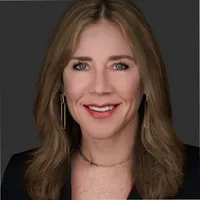
Kristine Karnath
US Director Of Benefits, Moog
The Hidden ROI of Care: Transforming Manufacturing with Employee-Centric Benefits
Episode 252 · June 23, 2025 · 21:17
The Hidden ROI of Care: Transforming Manufacturing with Employee-Centric Benefits
Key moments
In Kristine's words
“I always joke that nobody actually ever plans on getting into benefits as a career.”
“I read the article and my initial reaction was no way. There's no way we're doing this.”
“I think any time in the benefits area that you can have a win-win is beneficial, and it doesn't happen often.”
Transcript
Read the transcript3,998 words
HostWelcome to the Built by People Podcast, where we share the stories and insights of the world's top HR leaders. Join us as we dive deep into the minds of HR executives, uncovering their strategies, challenges, and triumphs in shaping today's workforce. I'm excited to welcome Christine to the Built By People podcast. Christine, thank you so much for joining us today. And as a starting question, I always love to ask if you could share a little bit more about your career journey.
GuestYeah, thanks. And thanks for having me. I'm excited to be here to talk to you today. Yeah, so my career journey, I always joke that nobody actually ever plans on getting into benefits as a career. And so I actually started out with a degree in finance and I added HR as a secondary concentration just to make myself more marketable. And I didn't realize at the time when you combine HR and finance together, you end up with total rewards. And my first job out of college was for a bank working in the benefits area. And they offered me the job and told me I'd be focusing on 401(k), which I was really excited to do. And I got off the phone, immediately looked up what a 401(k) was because I had no idea. And little did I know that I would spend, at least up until this point, the rest of my career in that area. So yeah, I worked at a bank in the benefits area for about 3 years and then realized the culture really wasn't what I was looking for and decided to make the move. And Moog, where I'm at now, had a similar job open and decided to apply and ended up getting that job. And the culture is very different, much more of what I was looking for. And 20 years later, and I'm still here and still working in the same department, luckily a different job, but really just moved up throughout that department over the course of the past 20 years. And now I'm leading the function. And yeah, so it's a straight path, but I did take a few detours on the way, just different assignments working in different areas, but primarily always been finance.
HostChristine, a lot of our conversation today is going to focus exactly on that. My next question is related to the implementation of your on-site medical centers. Can you walk us through the story of implementing those at your company from the initial idea to construction to seeing them in operation today?
GuestYeah, so here at Moog, we very much welcome ideas from employees regardless of what their area of expertise is. And so I was actually on maternity leave, and when I returned, I got to work, there was an article sitting on my desk that an employee had sent in that was about a company that had implemented an onsite medical center and asked if we would ever consider doing that. I read the article and my initial reaction was no way. There's no way we're doing this. But as I dug into it and I did some research, I thought, you know what, maybe this is something that we could do and could really kind of help us from the medical side to control costs and things. I had no idea where it was really going to lead us. We engaged our consultants who we work with, continue to work with Anne, and asked them to help us try to figure out if this would work. So oftentimes when we're looking at rolling out projects or rolling out anything, new policies, we always want to take the time to see, will it actually work? Do we think that the— not just the— not just financially, but also from a culture perspective, do we think that this is something that really has legs to it and would actually be successful at Moog. And so we started on that path. We spent a number of months really doing the research, looking at our claims, looking at finances. We traveled to Milwaukee and Chicago to take a look at some medical centers that were already in existence and up and running. Because the thing with the onsite centers, they can vary so much from not only company to company, but site to site. And the possibilities are almost endless of what you can do. And so actually physically seeing them was really helpful. And so after that, we determined, yeah, this really actually did make sense. And we were looking primarily at our headquarters, which is based in Buffalo. We were looking at that location primarily, and we then put a proposal together for our C-suite. And it was a significant investment that we would need to make because the actual building out of a facility, which in benefits is not something that we normally get to do. And we got them on board. And so then we hired a third party to help us run those centers. And we were involved very hands-on, not only through the analysis, but through the entire construction. I was often walking through the construction sites and I was picking out flooring and paint colors and ceiling tiles and everything in between. And then 7, 8 months later, we opened our doors and we had our 10th anniversary for our first center this past September. For our second center, our 10th anniversary will be this December. And our third center's been open about, about 3 years. And yeah, so it's been really successful for us and it all came from an article that an employee read and came to us and said, do you think we can do this? And so here we are today.
HostChristine, what challenges did you encounter while establishing these medical centers and how did you adapt and evolve them over the past decade?
GuestI think there's a few different challenges that we looked at or we thought possibly could happen. One was just getting people on board with the idea. So when you talk about a wellness center or a medical center or medical clinic, different people have different ideas of what that means. And I mentioned before about kind of the possibilities are endless for what you can do with these. So trying to get people to understand what this actually was going to be. That was actually the challenge. So as we were doing communications, whether it was with the C-suite or management or just with the employees ahead of the opening, a lot of people just didn't understand what this was actually going to be. So it was only until people could physically walk through the space that you could see the light bulb go off of, oh, okay, now I see what this is. And we held a grand opening. Open house prior to opening. And so many people walked in and said, oh, this actually looks like a real doctor's office. And we would correct them and say, no, it is a real doctor's office. It doesn't just look like one. It actually is a real doctor's office because people just didn't know what to expect. And so that was a challenge. So we continue even 10 years later to continue to hold open houses and tours of the facility so that people can actually come in and see so that they can realize what it actually is and what services they could have there. Another challenge that we had was the facility where we built the facility is actually in the same building that HR sits in. And we have it completely separate, so separate entrance. We don't, as HR, we don't actually have access to the building except through the same way employees do. But we had to make sure that we were strategic in where we were putting the center. So if we put it in any of our other buildings, it was challenging for dependents, spouses and dependents to come in. So we didn't want it anywhere where people needed to sign in to get badged, to have to be escorted to the facility because of what we do here. We're an aerospace company. People can't just wander around the facilities. So we had to be very careful about where we placed the center. And so we decided in the building that HR sits in. The problem with that is we were concerned people would think, oh, HR can see what I'm doing. They're watching who's coming in and who's going. They can see what I'm going for, they have access to our data, which none of that is true. All of us, we have a lot on our plate, so we don't have time to just watch who's coming and going out of the facility. And we don't have access to any of the data that's there, just like we wouldn't have access to any other doctor's office. And that actually proved to not really be too much of an issue. I think we have some employees that are still a bit skeptical of what we're doing with what, what's happening over there and how much do we know. I think over time people have realized we don't know anything. We don't have access to any of this. We haven't used any of this data to be held against anybody. And so that— but I think because of the steps that we took, we were able to limit some of that. I would say the biggest challenge that we saw, though, was in running the facility. Working for an aerospace company, we employ a lot of engineers. We employ a lot of folks that work in the shop, in the touch labor area side of the business. Working on the medical side is vastly different. So we were very involved in the hiring of the folks that worked in the facility in the beginning, along with the vendor that we chose. And we were not used to hiring medical professionals and trying to find somebody who understood the culture of Moog, which is very important to us because they're physically on site working with our employees. They had to understand our culture, also understood the culture of the company they were actually working for, and understanding the model that we were rolling in, which was not the same as a community model for medical. That was a challenge. And so trying to find that right mix of doctors and nurses and physical therapists who were great at their craft, but then also understood the model and were a culture fit was a huge challenge. And in the beginning, we had more turnover than I would have ever expected. Some of it voluntary, some of it involuntary, just because that we couldn't find that mix. Once we figured that out, and honestly, part of that was us letting a bit of that go and letting our vendors really take the lead on that because this is what they do. We've now been very successful in hiring the right people and keeping them we do have some turnover. Like we just had to turn over one of our doctors, but it's because she retired. She had been here for, I think it was around 8 years and decided she wanted to retire. And she's actually still here part-time because she doesn't want to completely step away. That was a challenge. And that's a challenge because employees are coming, they want to make sure there's consistency. They want to see the same doctor all the time. So if we have constant turnover, that's— employees are going to lose their faith in the services that we're providing. Once we kind of got past that, that was good. And like I said, some of that was us saying, okay, maybe we don't know best and we're not the most knowledgeable in this, so we're going to trust the people we've hired to do this.
HostChristine, how have these on-site medical centers created a win-win situation for both employees and the company in terms of tangible benefits and financial impact?
GuestYeah, I think any time in the benefits area that you can have a win-win is beneficial, and it doesn't happen often. So usually if it's a real win for the employee, it's a cost to the company. And if it's a real win for the company, it's an impact, usually negative, to the employee. So when you can find those win-wins, you want to take advantage of it. With the medical centers, we have fixed costs here. So we are not interested in kind of the churn that you see in the community. Where you have people, you have providers that are just trying to get as many patients in as possible. And by doing so, you often are— you get limited access to those providers. You might wait 30 to 60 minutes for that appointment, and then you're in there for 5 minutes with the doctor, and you've got to rush to make sure that you're covering everything that you think is important. What we want to be able to do is really provide that quality care at low cost. And because of the fixed cost model, we're able to do that and we're able to control our costs on the MOOC side, and we're able to provide quality because we can provide those services. Our model is little to no wait for appointments. It's not a walk-in clinic, so people do have to schedule appointments, but once you get here, it should be little to no wait and 45-minute appointments typically. We don't have to necessarily align with the rules that we have on our medical insurance. If our doctors wanna see somebody once a week because they're newly diagnosed with a condition, they can do that. And they wanna spend 45 minutes with them every appointment, they can do that. If they, if our physical therapists think that somebody only needs 5 appointments, they are not incentivized to keep somebody on for the limit that the insurance offers. So if our insurance covers physical therapy for 60 appointments, and our employees only need 10, they're coming in for 10. If they need 70, they're coming in for 70. And so we're getting people that quality, that one-on-one time. So when you're in there with a provider, you've got that time solely with you and the doctor or solely with you and that physical therapist. And so that actually, our employees are walking away going, I'm either paying nothing for these services or I'm paying very little. So for those on high deductible plans, we have to charge something, but we charge as minimal as we are allowed to. For those on our PPO plans, they don't pay anything. So they have low cost, and they know that they're getting that quality. In addition, we've added other services, like we have an onsite dietitian, we have onsite mental health therapists, we have a fully Cleo Wave lab set up for blood work, we have an onsite pharmacy, we have an onsite vision center. So we have all these other services as well that kind of help create that medical home that where employees can come in and they can meet with the doctor. And if they're newly diagnosed as a diabetic, they can go right to that dietitian and make an appointment and go see them, or they can go meet with that mental health therapist to help them with whatever issue they're dealing with. And then from there, they can get a script and go right across and go to that pharmacy and get that script filled immediately. And it's really that convenience, that quality. They know the providers. I think pretty much if you use our pharmacy, Brian, our pharmacist, or Aaron, our pharmacist, And so that really helps because people then build that trust in those services. And so they want to keep coming back because it feels very personal and very connected. And Mo, year over year, we are seeing a positive ROI. Even during COVID it was small, but there was still a positive ROI there. And so our clinics, ever since we've opened them, have been financially beneficial for us almost right from the beginning. And so it's something I can't see us stepping away from because it benefits everybody.
HostChristine, beyond medical centers, what other innovative benefit solutions have you implemented that have had a significant impact on the employee experience?
GuestSo there's been a number of things that we've done. One that stands out to me would be our vacation plan. So we implemented this a number of years ago, back in 2019, actually. We had prior to 2019, we had about 27 different PTO-type plans. Yeah, between vacation and sick time and just a general PTO bucket. A lot of that was due to acquisitions, that when we would acquire a company, not necessarily by my choice, but we would let those sites keep their paid time off plans. And so it became a nightmare to really try to manage this and created different employee experiences depending on where you were sitting. So we decided we needed to consolidate and have one plan. And there were two rules we were told that we had to follow. One, don't add cost to the company, and two, don't take anything away. Well, when you have 27 different plants, that's almost impossible to do. And so what we ended up doing is we rolled out, for lack of a better term, a vacation plan that's basically, it's a no-limit, unlimited vacation plan. We don't call it that here, but that's essentially what it is. So our employees have no limit on the amount of vacation that they can take. And we rolled that out for our entire workforce. So we rolled that out for our manufacturing areas, our touch labor, our Engineers, every single employee has access to that exact same plan. So we often do not roll out plans that differ depending on grade level or role in the organization. It's just against our culture to do. I couldn't find, when we did this, another company that did this for touch labor. We did this for hourly folks. So being able to do that and roll that out successfully, that's been a huge change. And it's really part of that success was really having to change the mindset of our managers and our employees about what vacation needs and what what time off means. We had a plan before where people could bank their time unlimited. And so people were sitting there with 2, 3 years worth of vacation on the books, and that's not encouraging time off. That was basically a retirement plan that they created. And so we really needed to shift people's mindset on taking time off and what does that mean from a productivity standpoint and why people taking time off is actually good for production. So that was challenging, not in the sense of the plan itself was very easy. It was getting people to understand why this was really important. There's still some struggles with that, especially in the production area, but overall, once managers understood the importance of it and what we were doing and why we were doing it, it was, it's been fairly successful and our employees, especially our new employees, love it because they don't need to wait to build up time for 5 or 10 years like it was before.
HostChristine, what parting advice would you like to share with our community?
GuestOh gosh. When— so I would say, I mentioned before, I've been at Moog for 20 years, which is a long time, and it's a long time to be in one place, especially staying in one department. I've been in different roles throughout that time. I would say whether you, you're changing jobs often or you're staying in one place, there's pros and cons to each of that. I would say in general, continue to be innovative, continue to Not allowing yourself to get bored. People often will ask me like, wow, you've stayed at one place in one department for 20 years. And it's not because I have nothing better to go to. It's not because I have no interest in trying new things. I think it's actually quite the opposite. I worked at a company that I have really enjoyed being at and allows me autonomy and allows me to be innovative. And I've taken advantage of that and I've not relied on the company to tell me when to be innovative. I have done that myself. So anytime I get bored, I look at, okay, what's new? What else can I do? So I think always trying to think about what's going to be exciting for you will also kind of lead to excitement for the company and for employees. So I would say that is one thing. And the other thing is continue to be present. So whether it's through innovation or through your career. I know a lot of people— this is something I talk to some younger employees here about a lot— is they have these set goals of where they want to go and what they want to do for their career. And that's great to have that. But sometimes they're so focused on that goal. They want to be at a certain grade or a certain job by a certain age. And sometimes they end up missing what's right in front of them and opportunities that are in front of them because they are so focused on that future. And just because you have a future goal doesn't mean you're a right fit for that goal or that is ever going to happen depending on the company or the area that you're working in. If I had a set goal 20 years ago, I have no idea where my career would be right now. I didn't have that. And I was— I had myself very open to any possibility that was out there. Now, I've stayed in the same function for that 20 years. But I've been able to branch out. I was very involved. I'm very involved in our CSR activities in the company. I've been involved in recruiting and employee engagement. So I've gotten involved in different things. But the opportunities that have presented themselves to me, I've been able to take advantage of that. And had I been so focused on something else, I would have missed those opportunities. So for me to be able to grow within the organization, part of that is being in the right place at the right time. But some of that is also recognizing you're in the right place at the right time. And if I hadn't been present and I hadn't been so focused on what can I do for Moog now, what can we do for our employees now, what can I do for myself now, I would have missed all of that because I would have been trying so hard to move up grades. And when you have that focus, sometimes you end up just getting really frustrated with that because it doesn't always work that way. And so That's my biggest advice that I usually give to people when I'm talking to them here is focus on the here and now, and tomorrow you will benefit from that. So those, those are my parting words.
HostChristine, thank you so much for joining us today on the Built by People podcast. It was a pleasure to have you involved.
GuestYes, thank you for having me. I appreciate it.
More conversations like this