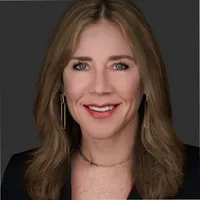
Ram Palaniappan
CEO
EarnIn
The Future of Work: Real-Time Pay Unlocks Performance & Financial Freedom
Thesis
“Pay should be continuous and accessible as employees work, as modernizing the payroll process and providing financial liquidity significantly reduces employee stress, improves performance, and benefits both employees and employers.”
What you'll take away
- 01Employee compensation is shifting towards continuous pay, where employees access earnings as they work, moving away from traditional bi-weekly paychecks.
- 02Addressing financial stress through earned wage access significantly improves employee work performance, reliability, reduces absenteeism, and lowers turnover.
- 03Modernizing payroll systems beyond an employer-centric model to a more employee-centric, continuous, and streaming system offers substantial benefits for both parties.
- 04CHROs should prioritize providing faster access to pay as a key strategy to stand out in the current labor market and improve overall employee well-being.
- 05HR leaders should focus on fostering financial security, growth, and belonging through authentic leadership and transparency, rather than overhyped 'perks'.


What most organizations get wrong
- "There's no other digital product that ships every 2 weeks." (2:41) — Challenges the conventional wisdom of bi-weekly payroll in a digital age.
- "What could be overhyped is perks over purpose." (9:11) — Pushes back against the common HR trend of offering numerous perks, suggesting a deeper focus on fundamental needs like financial security.
In Ram's words
“I thought we were paying everybody well. And when I spoke with one of them, the problem that she had was that she needed money the next day, couldn't wait till the following Friday for payday, and it was already halfway through the weekend.”
Highlights the fundamental problem EarnIn solves, born from a real-world employee struggle with traditional payroll cycles.
“There's no other digital product that ships every 2 weeks.”
A sharp critique of outdated payroll systems, emphasizing the need for modernization in line with other digital services.
“Why does it take 4 days to go from one system to another? It shouldn't, and it's because we're using very outdated money movement rails. We're using ACH, which hasn't changed in 70 years.”
Pinpoints the technical bottleneck in current payment systems that causes delays and negatively impacts employees.
“Financial stress impacts individuals in so many ways, and it shows in the— in sort of their work performance as well.”
Connects financial well-being directly to employee productivity and reliability, making it a critical HR concern.
“I would think of financial wellness as feeling secure about your financial situation and being able to make choices that allow you to enjoy life.”
Provides a concise, human-centric definition of financial wellness, moving beyond buzzwords to practical impact.
“What could be overhyped is perks over purpose. I think employees want financial security, they want growth, they want belonging.”
Offers a contrarian view on common HR strategies, advocating for foundational employee needs over superficial benefits.
The problems this episode addresses
- Employees experiencing overdraft fees and needing short-term loans due to bi-weekly pay cycles and unexpected expenses.
- Traditional payroll systems being inflexible and unable to provide earned wages on demand, leading to employee financial stress.
- Slow money movement (e.g., ACH taking 4 days) causing delays for employees to access their pay after it's earned.
- Financial stress among employees leading to reduced productivity, increased absenteeism, and higher turnover for employers.
- Employers struggling to differentiate themselves in a competitive labor market and attract top talent.
- HR leaders focusing on 'perks' that don't address fundamental employee needs like financial security, growth, and belonging.
In this episode
Intro
About 1% of US workers actually use Earnin to access their pay
In the Elevator With Earned
Your paycheck is digital today, but it still ships every 2 weeks
Payment Processing in a Digital World
Ram: You just rolled out payroll, which is quite unique
Employee Payroll: Why Live Pay?
How does integrating earned wage access with payroll change the experience for employees and employers
How Earned Wage Access with Payroll affects employees and employers
Financial stress impacts individuals in so many ways, and it shows in work performance
Financial Wellbeing and the Future of Pay
Ram: I think pay is going to become continuous. There might be small pockets where pay could be biweekly
Biannual Paychecks
Ram, if you were CHRO today, what would be your top priority
Ram Khan on the Future of Workforce
Topics covered
Organizations and entities mentioned
Full transcript
Expand transcript (2135 words)
Welcome to the Built by People podcast, where we highlight the stories and insights of the world's top HR leaders. Now, let's Let's get started and welcome our next guest. I'm excited to welcome Ram to the Built by People podcast. Ram, thank you so much for joining us today. And as a starting question, I always love to ask if you could share a little bit more about your career journey.
Sure. Excited to be here. My career journey hasn't been a very straight line. Started off after school working in logistics and consulting, and then worked at a financial services company. And then I started doing something out there that was not directly connected with the company, which is actually what led me to what I do now in Earned. When I was there, I heard that some of my employees were running into overdrafts and short-term loans, and I was surprised because I thought we were paying everybody well. And when I spoke with one of them, the problem that she had was that she needed money the next day, couldn't wait till the following Friday for payday, and it was already halfway through the weekend. So I thought we should just pay her for the day she already worked, and I couldn't make our payroll system do that. And so I gave her the money for the days she had already worked, and I continued doing this completely in person for a handful of my employees. Did this for about 4 years in the office. And I think this is something that happens in millions of small businesses and stores where the store manager or the business owner does this for their employees. And when I left the company, the people who I was doing this for wanted to know if I'd still do it for them. And I didn't mind doing that because these are people I'd seen in the office for years. And so it started, and I also knew how the office systems worked and how the time and attendance worked and things like that. And so I did it for them. In the beginning, it was over Instant Messenger and Instant Messenger is not the most convenient way because I was trying to do some other stuff as well. And I'd keep getting messages. And so at some point I built a really simple web form and said if they needed money to just use the web from. And when I had this webpage up, then people who I did know tried to use it. And that was when it really got interesting and I realized I could do it for other people as well. And what I realized was that if you give people access to the money that they've already earned, their life is much simpler. They're paying all their bills on time. There's no more late fees on bills. There's no more overdraft fees, no more payday loans. And that's when I realized that if I didn't try to make this into a product, I'd always feel bad about myself. And so that's how I got started into got started with Earnin. Today it's far more automated and about 1% of the people in the US who get a paycheck actually use Earnin to access their pay.
Brahm, building on that, for those unfamiliar with Earnin, what's the problem that you're solving in a few sentences?
Well, at a high level, the problem is that once you've worked, you shouldn't have to wait to get your pay. Your paycheck is digital today. You get it electronically into your bank account, but it still ships every 2 weeks. There's no other digital product that ships every 2 weeks. Take another digital product as an example. Think of text messages. If your phone said type in your messages every day and it would send it out after 2 weeks, you wouldn't use that. But that's exactly how a payroll system works. And so we're really trying to get this whole payroll process to be much more modern, and that actually helps the employees a lot. So that's what we're working on.
Ram, I've come to understand a bit about the earned wage access space in the last year. You just rolled out payroll, which is quite unique based on what I understand in the market. That's a big move. Why payroll and why now?
Yeah, so we already had the employee side of payroll built out. We actually, I think the employee side of payroll built out much better than all the current payroll systems. What we found is that the payroll systems are still like very much designed for the employer and not creating a modern paycheck. So one of the things that we just talked about was why does your paycheck ship every 2 weeks? If it's a digital product, it should ship more often. In fact, it should be continuous and streaming, just like you can stream your movies, you can stream your music, why can't you stream your paycheck every second? And we had that built out with Live Pay. Modernizing this, when you think of it from the employee's point of view, the other part that really stands out as being antiquated is how long the money takes to reach the employee's bank account. So typically the employer runs payroll on Tuesday and the employee gets their money on Friday. Now, if you think of money as being a digital product, as electronic, why does it take 4 days to go from one system to another? It shouldn't, and it's because we're using very outdated money movement rails. We're using ACH, which hasn't changed in 70 years. And so we're modernizing all of that internal plumbing, and that makes a much better experience for the employee, which actually then benefits the employer as well.
Ram, how does integrating earned wage access with payroll change the experience for employees and employers?
So the employers always knew that their Employees want their pay faster. This now lets them offer that benefit without paying for it as an additional benefit and without needing to do any additional work. And the employees also have much more control over their pay. They can all, like typically when you get a job, you agree with your employer on how much you're gonna get paid, but your employer decides when and how often. Now we're putting that control into the employee's hands without actually changing any of the cash flows for the employer. So it's very seamless for the employer. But it gives the employee much more control over their paychecks, and paychecks are better with Earned In. So the employee can decide when they want to get it, they can decide how often, they can even get it continuously if they want. And the paycheck's also more valuable. When the employee turns on Live Pay, the paycheck also builds their credit history. And so they're actually getting much more out of their paycheck than they would be getting from the older way in which they were getting their pay.
Ram, I wanna switch gears and talk about financial wellness and the future of pay. You obviously have unique visibility into when employees actually need money. What have you learned about financial stress that most HR leaders are missing?
Financial stress impacts individuals in so many ways, and it shows in the— in sort of their work performance as well. When they're not stressed financially, they're much more focused on work. They're more reliable at work. We see from just with our product and our product provides liquidity and liquidity is stability. We see clear benefits for the employee. There's reduced absenteeism, there's lower turnover, there's an increase in productivity. And so there's definitely benefits to the company and the employer from less financial stress, but there's also, it also impacts the individual beyond their work. Like it sort of affects how you make every decision. Your driving is worse when you're financially stressed, you're less focused on your driving. It can strain your personal relationships and like that tension plays out at home as well. And so I think it's helping the employee with their financial wellness is good for the employer, but it's also just good for the employee and just good for society as well.
Ram, we hear financial wellness thrown around a lot. Is this real or is it mostly marketing and what does it actually mean?
I would think of financial wellness as feeling secure about your financial situation and being able to make choices that allow you to enjoy life. There was a customer who I spoke with, she works at healthcare in Columbus, Ohio, and her daughter likes to dance and she needed to pay for dance class at the beginning of every month. If not for earnings, she wouldn't have been able to pay for the dance class. And so to me, it's amazing that because of the flexibility that we were able to get her, her daughter was able to pursue her passion for dance and actually go for dance competitions. But it's being able to do things like that.
Ram, big picture, where is employee compensation headed and do you think that biweekly paychecks are gonna exist 10 years from now?
I think pay is going to become continuous. People will get access to their pay as they work. There might be some small pockets where pay could be biweekly. You sort of see that with like most of your money is being spent electronically, but you do use cash every now and then, or you might use paper checks every now and then. So there is some leftover, but I think largely pay will be continuous and it's good for both the employee and the employer. One of the things that's really fascinating is that wages go up when an employee starts using Onnit. And it goes up in ways that are actually good for the employer. So one of the ways in which this happens is many customers can't afford to lock up $50 or $100 of gas in their gas tank. So they're filling gas $15 at a time. If something unexpected happens, they're not going to overdraft to fill up gas to come into work. They just miss work. And so there's absenteeism. When they have access to earn, then they download the previous day's earnings and they fill up gas and they come into work. So their attendance is better, they're more reliable. They also When you know that you can get your money at the end of the day, you're actually more eager to try to get the overtime shifts, to show up for work. And so that helps with attendance, it helps with people wanting overtime, which are all things that the employers want. And so I think this will become the norm because it's good for employers and it's good for employees.
Ram, if you were a CHRO today, what would be your top priority given the current labor market and the work that you're doing at Earnin?
I think it's providing faster access to pay. Employees want it. It's a way for employers to stand out in the, in the current market.
And Ram, AI is obviously a hot topic in HR. I'm curious to get your perspective, one, as a CEO leading a financial wellness company, a company in the earned wage access space. What do you view as overhyped versus what is actually going to be transformative?
I would say if I were to just think of HR in general, What could be overhyped is perks over purpose. I think employees want financial security, they want growth, they want belonging. Motive is going to be authentic leadership and transparency. And I think HR has a role in building that into the culture of the company and the culture of all of the leaders.
And Ram, what's one piece of advice for founders building in the HR tech or future of workspace?
I think it's to stay close to the customer and to see what is possible with today's technology. That was not possible previously and try to build those things. What the customer wants that you can do with today's technology.
Ram, as we're wrapping up, where can people learn about Earnin and your new payroll product?
Yeah, so there's information on our website, www.earnin.com/payroll, and that would be the best place to find out about our new payroll product.
Thank you so much, Ram, for joining us today on the Built by People podcast. It was a pleasure to have you involved.
Great to be here.