Episode 326 · September 16, 2025 · 15:03
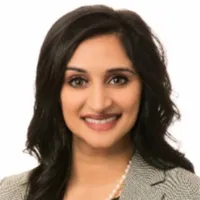
Priti Patel
Chief People Officer, G2
Stop separating HR from ROI: A people-forward financial strategy for leaders.
Episode 326 · September 16, 2025 · 15:03
Stop separating HR from ROI: A people-forward financial strategy for leaders.
Key moments
In Priti's words
“My career journey may be a little bit unique in its, in its, what seems like windy path to getting to be G2's Chief People Officer for the last 4 years.”
“Having the underpinnings of business in this role, I think, is my secret weapon. Maybe not so secret.”
“If we are consistently upholding our expectations of what a great culture is and what G2's culture is, I think over time that strengthens what it means to work here.”
Transcript
Read the transcript2,261 words
IntroWelcome to the Built by People podcast, where we share the stories and insights of the world's top HR leaders. Join us as we dive deep into the minds of HR executives, uncovering their strategies, challenges, and triumphs in shaping today's workforce.
HostI'm excited to welcome Preeti to the Built by People podcast. Preeti, thank you so much for joining us today. And as a starting question, I always love to ask if you could share a little bit more about your career journey.
GuestMe too. And thanks for having me, Dave. It's really good to be with you. My career journey may be a little bit unique in its, in its, what seems like windy path to getting to be G2's Chief People Officer for the last 4 years. I actually started my career in corporate finance. I started my career during the, I think what we now call the Great Recession, and really wanted to build the foundational business basics of of business with GE. And so, I did a rotational program with them and ended my time there in mergers and acquisitions. And in that time, I actually noticed like, even though I was leading the financial integration of those companies, I actually was so interested in the entrepreneur stories that we were acquiring, especially GE being such a big fish. And so, knew I wanted to make a change before I went back to get my MBA and go back to business school, I moved to India for a little bit of time. And this was— didn't know it at the time, but a really critical point in my career path because I learned the practice of meditation, living in an ashram in silence. And while that was for me a moment of wellness and escape and maybe even getting in touch with my cultural roots, I realized that it defined what fulfillment and happiness looked like for me in life. And so when I started sharing this story at business school, I realized people were leaning in and they wanted to know more. And so that led, fast forward, to starting, turning down all my job offers and starting a meditation training business. And I actually sourced my first customers from Kellogg, where I went to business school at Northwestern, and teaching meditation. And I sold that business to a company called Life Cross Training, where we built that business together with the founders into a coaching program. And so I— this was my first foray into HR. I was selling to HR, consulting with HR, and ran that business into a quite successful program where we were actually able to show measurable results with big consulting firms, big healthcare companies, and law firms. And I then became an executive coach myself, and G2 was actually my first client. And so, um, I started coaching here at, in 2019. Uh, Godard Abel, our co-founder and CEO, asked me if I wanted to be G2's chief people officer. November 2020, uh, of all days, my birthday, and I was 6 months pregnant at the time. And so I said yes, and I probably have to have this baby first. And so became a mother. And interviewed for the role 6 or 7 weeks postpartum with our board and executive team and got the role and started on my first son's 4-month birthday. And that was now 4 years ago.
HostI got to ask, what motivated you to make the transition into HR?
GuestIt's a good question. I, I think now it makes total sense that it was a culmination of all of my experience up to this point. Having the underpinnings of business in this role, I think, is my secret weapon. Maybe not so secret. I, a lot of my peers talk about the criticality of knowing the business in and out to be a successful chief people officer. And I love being a people-forward, uh, people-centric leader. And so tying what makes a business great financially and what makes people great in their careers, to me, the perfect combo is sitting right here in my role.
HostPreeti, can you tell us about a career-defining moment that you've had in your HR career?
GuestYeah, a bit of a— it was a bit of a tough one. I guess they maybe all are in some ways. It was the second week of my time at G2 as G2's Chief People Officer. Where we had an investigation that we had to lead, and without divulging details of the investigation, it resulted in a decision to terminate the employee. And this is my first one, first call to terminate, and of course, just natural fear of the decision. And for me, the guiding light in that entire process was a commitment to uphold G2's values. And, uh, this is actually something I'm super proud of too at G2. I think the number one thing, if you ask anyone who works at G2 what's great about G2, is our culture. And I think the reason is, is that we say who we are and we act like that in every moment, in every facet. And so this decision while it was tough and the nature of it was, my gosh, what are we going to do when this person's gone and how are we going to fill their shoes? Remaining steadfast to our values was what I'm super proud of that I did. And I guess the best analogy here is parenting, being a parent of a 4 and a 2-year-old. It's like if you're clear on the expectations consistently, then over time your kids get used to what your expectations are, and that is how you can successfully parent over time. If you sometimes live by those expectations and sometimes don't, then your children are going to take advantage of you. And so in this situation, the analogy applies is if we are consistently upholding our expectations of what a great culture is and what G2's culture is, I think over time that strengthens what it means to work here. And this was a pivotal moment because it was so early in my tenure. And since then, we have remained consistent, and I think that that is something that people have come to trust and rely upon in a really positive way.
HostPreeti, can you tell us about a challenge that you faced in your career and how you overcame it?
GuestYeah, I, so I was in my first C-suite role I guess you could say like skipping the entrepreneurial venture, which I guess technically would be C-suite, but C-suite of my own thing. So when I was acquired, 27, I think was my first, I was Chief Operating Officer of Life Cross Training. And so yeah, I struggled with that in the beginning. Early on, I would get a lot of feedback like, too, and too much would be the words before the feedback, like too much in-your-face direct feedback, too much candor, maybe coming on too strong in different interactions. And, and oddly enough, it would always come from people who on paper had more experience than me. And so the, what I heard in all that feedback was like, too much, like bring it down, bring it down a notch. And of course, 27, like imposter syndrome loud and clear, right? Like it was very much, do I belong here? Should I be in this conversation, let alone this room to be selling to CEOs of healthcare systems and law firms? And so the takeaway for me, and I was lucky that I sought out, I won't say lucky, actually, I'll claim that one. I actively sought out support at all points in my career. And so I had mentors. I also had an executive coach. And the big advice, and again, it was hard for me to hear this, but it was sometimes you kind of have to meet people where they're at, and that doesn't mean it's a departure from who you are. And I remember one of them was a dear mentor and still great friend of mine. And I was like, but what, what are we sending? Like, what's the message we're sending to women if we say Hey, you kind of have to like change your style depending on the audience. That feels inauthentic. And she's like, you know, it's not like, it's actually like knowing your customer and knowing your, your audience in a way that they'll decode. And so while at the time I was just really taken down by that feedback and thought this was a departure from being authentically myself, I realized that lesson. And I think for me as a chief people officer now, I use that almost every day. And, and how I use it is in reading a room or reading a situation or a conversation to bring what's needed from me in that room. And, and that might sound a little woo-woo, like it's not like I'm, you know, reading people's auras or anything like that, but it's more like paying attention about what needs to be said or not said or felt. To achieve the outcome that we're all there to achieve. And so it's, um, kind of really like a, almost like a spidey sense of EQ that I'm so grateful I got that feedback early on, um, even though it was really rough at the time, uh, to develop that.
HostAny other input around that you, that you would provide to HR leaders who are looking to get into a room and really understand who's at the table and, and what needs to be said? Are there any cues that you're looking for, any dynamics?
GuestYeah.
HostAnything tactical that can really help people get to where you are now?
GuestYeah. So a big thing that I am a big fan of is conscious leadership, and at its, at its core, conscious leadership is about leading with EQ. And one of the things that conscious leadership talks a lot about is it's hardly ever the content, the topic of the conversation. It's almost always the context. So said a different way, if you and I are arguing about, about a budget, like 9.9 times out of 10, it's actually not about the budget. It's actually about how you are feeling or the story you've made up about the budget and the story that I've made up. And we're probably like arguing about who has control in this situation, or something else our egos are struggling with. And so my advice to HR leaders on this would be, it is hypercritical, especially as the people leader, for you to know people's motivations and their strengths and really why they're even at your organization. So my challenge to HR leaders then would be like, do you know from let's say director and above across your companies, most people-wise. If you don't, or let's say you've never had a one-on-one with people at that level, then you probably are missing context that is critical for you to be doing your job, uh, well. And so maybe that sounds like a tall order, especially those of you who are leaders at really big organizations, but that'd be my challenge is over time, How do you create moments where you can get to that depth, especially with your senior leaders?
HostPreeti, what's a legacy you hope to leave as a leader and why?
GuestI don't think doing what's best for people and doing what's best for businesses has to be mutually exclusive. And to say that a different way, like I often hear people say like, are you people-centric or business-centric? And it's like, I'm both. And so, the legacy I hope to leave, especially if my team is listening to this, is there is a huge ROI of the work we do. And I say this a lot to my SaaS peers. As chief people officers in a software business, we actually impact like 90% of OpEx. So, if we're not having the business conversation centered around ROI of our businesses, we're missing an opportunity there. And so, the legacy I hope to leave is just that pure conviction that we are as strategic and as critical for the future of businesses as any other C-level leader. And I think shedding that story of we don't matter is really just, it's almost like old news. And I hope that I can inspire that in the future leaders of HR.
HostWhat parting advice would you like to provide to our broader HR community?
GuestI say this to my team a lot. The moment the tough decisions don't feel tough for you is probably the moment you should start to think about leaving HR. And said another way, the things we do in our roles, there's so much humanity there. And so, I would encourage us all to continuously stay in touch with that guiding why of why we do what we do, the people and human side of what we do. And it's okay if you start to feel disconnection from that. The invitation then at that point though would be, are you still in the right role? I think asking that brave and courageous question is maybe the most powerful thing you can do.
HostThanks so much for joining us today on the Built by People podcast. It was a pleasure to have you involved.
More conversations like this