Episode 120 · March 17, 2025 · 19:01
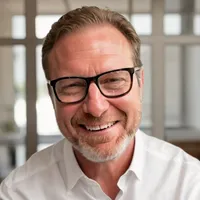
Phil Rhodes
Chief Learning Officer, Phillips 66
Unlock Growth: Democratizing Skills & Proving L&D's Strategic Business Impact
Episode 120 · March 17, 2025 · 19:01
Unlock Growth: Democratizing Skills & Proving L&D's Strategic Business Impact
Key moments
In Phil's words
“Peace Corps really trained me and gave me the opportunity to learn on an experiential basis.”
“And usually it's around, it's always around people... and it's really around how to drive efficiency and effectiveness within that workforce. As well as how to leverage technology.”
“I believe there was this mindset of you had to come in and just grind your way through the organization to get to this opportunity space. So I think what we need to do is we need to democratize, bring learning to everyone within the organizations, not hold it within pockets.”
Transcript
Read the transcript3,152 words
HostWelcome to the Built by People podcast, where we share the stories and insights of the world's top HR leaders. Join us as we dive deep into the minds of HR executives, uncovering their strategies, challenges, and triumphs in shaping today's workforce. I'm excited to welcome Phil to the Built by People podcast. Phil, thank you so much for joining us. And as a starting question, I always love to ask if you could share a little bit more about your career journey.
GuestSure. Thanks, Dave. And appreciate the opportunity to join you. So out of college, I joined the Peace Corps and I had the opportunity to serve 5 years in Southern Africa, small country called Lesotho, which is inside South Africa. And an amazing opportunity. I was a farmer working with local host country nationals, and it really was around to improve the infant mortality rate of under 5-year-olds. Through nutrition. So it was the growing of vegetables as well as how to cook them and preserve them. So as you can imagine, no one spoke English, totally different culture, no electricity, no plumbing, no roads. My job really was education and really bringing the importance of nutrition to family, families, mothers, fathers, to really impact the children and lower the infant mortality rate. Which we did in my 5 years within my valley. But what it really did was spark in me a, a passion for experiential learning. Peace Corps really trained me and gave me the opportunity to learn on an experiential basis. So previous to that in the American education system, it was much more sit in a classroom, be memorized, regurgitate, you know, spin it back out and then get a grade. Peace Corps really trained me and gave me the opportunity to learn in an experiential basis. And that just opened my mind and I ended up becoming a trainer within the Peace Corps, managed the project I was in. When I returned to the United States, I actually worked at the headquarters of the Peace Corps. I then, as a side kind of hustle, became an Outward Bound instructor, which is based off experiential learning also. And I started doing more corporate clients and their 1, 3, 5-day kind of ropes courses and. Trust falls and things like that. And that really sparked my passion for developing and behavioral growth and seeing that in people and the ability to do that in an experiential nature. So that started my journey. Had a great opportunity in DC when I had to get my master's in organization development. I was the only nonprofit humanitarian relief student in my 30-plus class. Cohort, a 2.5-year program. And then from that, we got an opportunity to work at Verizon or Bell Atlantic at the time in their organization development change management practice. And that really started my journey within more for-profit corporate America and really just found my niche in that space of learning, talent development, and working with business partners. How do you really shift mindsets, skill sets? And then as technology started advancing so much. How do you leverage technology to really drive efficiency and effectiveness in roles? So my journey started very humbly on a mountain, a mile high in Lesotho. And I'm so fortunate to have that because that really has been the foundation for all my work.
HostAs someone who's led multiple learning transformations, what are the key factors in successfully transitioning from a decentralized to a centralized learning function, Phil?
GuestSure. So Dave, I'm going to, I'll get off the Peace Corps, but I got to do one more thing. One thing I realized, Dave, in that environment. So imagine being in a hut, literally like people used to say, it looks like National Geographic. You're in grass huts, mud floors, mud walls, no furniture. And my mom and aunt came to visit me at one point and they're like, wow, these people are so poor. And I'm like, no, they're not. No, no, they're not. There's, there's, so there's differentiation even amongst my village of 30 families. And what that really taught me, Dave, was that people are people all over the world. We all have core foundational, we want our families to be healthy, our children to have a future. We want our house. We want to be able to support our families. We want to live and be safe. And that really created a foundation. And I know your question is now around centralizing learning, but what I learned there is the power of connecting through relationships and the power of connecting with people and the power of connecting to their dreams and wishes and being an enabler to that. So when you are centralizing an L&D function and you come from this core belief that people are people all over the world, you can go just laser focus right through the differences and the preconceived notions, agendas you may have, things like that. And start talking about what they need to succeed as a business leader, not what you need to succeed as a learning talent leader. And, and usually it's around, it's always around people. All the organizations I've worked in were operating companies. The, the headcount or the people, the FTEs are the, the largest resource and, and commitment of, of dollars. And it's really around how to drive efficiency and effectiveness within that workforce. As well as how to leverage technology. And if you can marry that together and show the impact you can have to the business, which ultimately is going to get into savings and efficiency and growth, you are centralizing it, but you're doing it business unit by business unit. So then what you have to do is think, how do you scale that? Because that's something else you can bring when you've got an enterprise mindset across organizations, because lines of business are thinking within their business unit. Right? They're siloed. It's just the nature of our org designs. And so it's how do you leverage that scale of what I'm going to do, Dave, for you as a senior leader within an organization that's also going to enable another part of the business so you can bring scalability, which is cost savings. And so I think it starts with that relationship building. It gets back to that core of really my belief of my Peace Corps days are people and just listen to what their needs are. And then the other thing is don't take orders. They're going to try, they're business people, right? They're operating, they're going to, they know what they want to do. Yet your role is to listen and hear and then enhance it and show what you could do to scale it or bring complexity to it. And so I think that's important. And two, and then just showing the impact you're having to the business and having those touchpoints monthly, quarterly, and just saying, here, this is what we're doing and this is the impact it's having. And this is what we're doing and this is the impact it's having. And you get that down to an individual or a group or a team, an organizational level. And I think the business leader, they live in the space of data. And so once you can start talking and delivering in their space of metrics, they start to see and understand the impact you're having.
HostPhil, you've mentioned in the past that democratizing learning is really important to you. Can you share how you're approaching this at Phillips 66, particularly with your apprenticeship programs and early career initiatives?
GuestSure. Yes, Dave. There's a generational shift happening within our workforce. I think we all are aware of that. With, by 2030, within our workforce here, the majority will be in the up-and-coming generations. And so there is a massive shift happening and there's a massive shift in how these generations learn and adopt in their technology savviness. And so part of that is we need as an organization to be able to tap into and I call it democratize because organizations had in the past really held learning and growth and opportunities for those at a certain point in your career. I believe there was this mindset of you had to come in and just grind your way through the organization to get to this opportunity space. So I think what we need to do is we need to democratize, bring learning to everyone within the organizations, not hold it within pockets. Also, when I mentioned democratize, I think it's leverage technology to allow all generations or all employees based on where they are in their journey, access to information, opportunities to grow and create that mobility within an organization. And I also, and I learned this from my father and mother, and I'm now getting to this space, Dave, where you reach a point in your career and I validated this now granted, it's with mainly my circle of people within my network and of— you want to give back. People want to give back. It's inherent in after committing yourself to a career, committing yourself to supporting your families, yourselves, you actually want to see the next generation succeed. And so into that apprenticeship space, there is an opportunity when you place it into that context and you at the employee level, where you actually start to impact culture, you impact career, you start challenging beliefs, right, around these different generations. And it's all around enabling skill transference. I'm a big believer on skill is the commodity of the future within our workforce, and it shouldn't be held at a certain group or a certain— it should be democratized and available to all who want to really grow their skills. And the basis of skill transference, getting back to that experiential learning space I talked about at the very beginning from my early in my career, that experiential transference of knowledge and skills and mindsets and how do you leverage toolsets really gets enabled when you start doing it in that apprenticeship space. So I think it's the combination of managing through the generational shifts, managing this inherent nature of human beings to want to share and grow others. And then we all know the best way And the most impactful way to show transference and excellence in a skill is when you teach others, right? So you're actually, it's twofold. You're sharing with others, but you're also becoming an expert in a skill. And skills are the commodity which organizations need to capture because that's where you create that ability to really scale and bring enterprise impact to the businesses.
HostPhil, building on that, what role does skill-based organization play in modern L&D and How are you implementing this transformation at Phillips 66?
GuestYeah, so the last two organizations I've been really focused on the space of skills as a commodity. And as I mentioned earlier, it really is a way to create internal talent mobility and opportunities that, that is democratized. It's just equitable, it's inclusive, and it's based on bringing access to skill opportunities and allowing individuals to harness and learn those skills. So we're on a journey right now. Our business is shifted to become the leading integrated downstream energy provider. So in the past, we may have been solely focused on single energy sources. Now we're diversifying, and that allows us to really grow our business and integrate across these different lines of energy or businesses. What that allows you to do is start to break down those silos of the business units and really start, what are the core skills at each of those roles? All the way from a frontline role, say a technician, a welder, and et cetera. Those skills are the same regardless of which type of energy source refinery you work at, right? And so that creates mobility for individuals if they need to relocate cross the United States for personal reasons, or they want to grow their career based on a larger facility with more complexity, and they can shift. It also allows the business to be able to create bench strength, right, to handle outages, shift work, etc. So skills at that level, then you think of skills at like an IT and HR, more corporate function group. There are critical skills that are necessary to really grow individuals in their career. And right now there are less and less people going to universities and coming out with degrees, and there are more that are just looking for certification and skills. So if we can provide those opportunities, it's a retention play. It's a space for people to really grow careers within the organization. And then if you start to think of leadership skills, all the way to a mid-level or an executive leader, that is truly what enables a team to maximize its productivity. And so skills are the commodity to the future, I think, for success at both an organizational level and then that individual level.
HostPhil, how do you approach running L&D as a business and demonstrating its values to stakeholders, whether that be to the board or to the executive team?
GuestSo I fortunately have had great experience working with other senior leaders who taught me a lot in this space of running L&D talent as a business. It's all just around showing impact. And I think the impact is in the space of the business impact. So you need to go back to that partnership with the business. They're running, they have their metrics in place from operations. What we need to do is just tap into those datasets and show where our initiatives have pre-post impact in the space of the data of the business. So performance, productivity, retention, whatever application adoption of a new technology tool. So I think it's just absolutely critical to tap into the resources and analysts of the business leaders, not try to create that ourselves. We just don't have the scope to do that or the resources. So I think that's one that's critical. Two, I think you've got to run your L&D, your talent as a tight operational P&L group. And where the organization needs your support, if you don't have the resources to support it, come forward with business cases. I've been very successful in just the business cases are put forth from a learning talent perspective, but they're all around business impacts and they're all owned by the business. We're here to, in support of the business, right? That is our job. We are in support, enable the business, not to lead the business. So I think through one, just tying to their business imperatives. Coming forth with business cases that you can measure that impact back to the business is critical. And then there's a piece around the L&D, the talent team itself. I think we're a bunch usually of creative folks. We're designers, we're human-centric, all these elements that are great. We need to tighten our project management skills to stay on task and allow us to really focus on where we can have the most impact and not spread ourselves too thin across an organization where Every leader may have a request, but it may not be an enterprise request.
HostSo going back to your Peace Corps experience, one of your learnings being people are people, how else has that international background influenced your approach to L&D?
GuestI think I can think of as twofold. One, when building teams to support initiatives within the business, I truly believe in having as much diverse representation in your team, why it may slow you down during the ideation and design phase, 'cause there's so much differences, it really makes for a much more holistic and inclusive solution to meet the diversity of our employee base. And so I think it's important that you— and diversity, I'm talking about people from non-L&D or talent coming in from the business. I'm talking generations. I'm talking the full host of diversity there. So I think that's important. I think the other thing, if I think about it from a learning back to the business, is the demographics of our workforce is much more diverse now. And so to think you can do things one way and meet all of the needs of each individual is naive. And when I started talking about that education system of growing up, sitting there, memorize, regurgitate. That's great. If you've got a photographic memory, you're an ace. But if you don't, it's a bit of a struggle. And it was those individual teachers who understood that and made a difference. So how do we, in a space of learning to the business, ensure that we are being inclusive of many different learning styles? And then I think the other thing I've really honed in on is anytime we have an initiative, there are 3 areas we have to focus on. The mindset, the skillset, and the toolset. The mindset, what it's going to take to be able to deliver on the initiative. And then the tools, there's usually always technology involved. I've learned we used to focus solely on the technology, then we layered in skill, but now I'm realizing we've really missed that mindset piece. And that alignment on mindset is so critical because then you can begin to differentiate where an individual's struggling at a mindset, skillset, or toolset. Tailor and personalize what reinforcement they need based on some analysis. So they're getting the targeted development they need, not just pushing everyone back into a class to learn about the technology or everyone back in around the skill building. Because there's nothing more frustrating than being in a class when you already have the competency.
HostSo what parting advice would you like to share with our community?
GuestHave a voice. We have a voice. Really believe, especially in the space of learning, we do a lot of the training, the onboarding, the new hire training, the reinforcement. I fully believe we are culture builders at an organization, right? You usually work with your teammates or your supervisor, and then you go into a classroom and who that person is and how they hold themselves and how they represent what we're doing is so important. And so I think having that voice and sharing that And then being able to talk data, right? Talk data gets you in the door, and then the impact you have on the culture is through the work that we have.
HostPhil, thank you so much for joining us on the Built by People podcast. It was a pleasure to have you involved.
GuestThank you, Dave. Appreciate it.
More conversations like this