Episode 35 · January 3, 2025 · 7:58
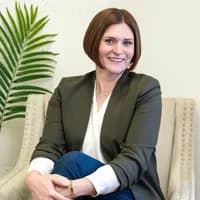
Leslie Gutierrez-MacEachern
Lead VP of Human Resources - Global Business Services, Capital Group
The HR Secret: How Psychological Safety Drives Innovation and Resilience
Episode 35 · January 3, 2025 · 7:58
The HR Secret: How Psychological Safety Drives Innovation and Resilience
Key moments
In Leslie's words
“I personally believe that the more, from an HR perspective, we encourage leaders to, to allow safety in their environments so that associates are asking questions, so they're thinking out of the box, they're being bold and trying something new and different, that when it doesn't work out, it's okay. And that's where I believe an organization can move towards, um, failing forward and failing fast.”
“The question of how to build resiliency, I think, depends on the culture and the makeup of any given organization. It is one that is not easy to build, but I believe that when we can really learn from our mistakes and create environments that are judgment-free, that allows for resiliency and adaptability.”
“If we establish safety, a psychologically safe environment for associates to ask any and all questions without judgment, then they will more often than not ensure that they are comfortable asking those intellectually curious questions and therefore be open to change, be open to that adaptability and resiliency. So, I truly believe intellectual curiosity is a first step.”
Transcript
Read the transcript1,086 words
HostWelcome to the Built by People podcast, where we share the stories and insights of the world's top HR leaders. Join us as we dive deep into the minds of HR executives, uncovering their strategies, challenges, and triumphs in shaping today's workforce. I'm excited to welcome Leslie McGeachran to the Built By People podcast. Leslie, thank you so much for joining us. And as a starting question, I always love to ask if you could tell us a little bit more about your career journey.
GuestAbsolutely. Such a pleasure to be here. So I would say I'm coming up to almost 20 years of HR experience across various industries. So everywhere from healthcare to, um, food and retail, and now the finance world. Full disclosure, I am one of those people who wanted to be in HR since I was 17 years old. I remember going into a library and figuring out that industrial organizational psychology was my passion. Like, this was it. And the practical application of that was HR. I've had, you know, the privilege of working with some really great companies that have allowed me some global experience. And I may look like I'm 16, but I definitely put in some miles and I've loved every second of my career. That's genuinely the truth. And I'm not sure if you ever see the movie Up in the Air with George Clooney. He's a consultant, but goes to different cities and makes tough decisions. I did that job for a bit as well. And yeah, you meet a lot of different people and you travel to many different places. So in a nutshell, that's been my journey.
HostYou're now at Capital Group, over 9,000 employees. Curious to get your perspective on how you create a culture where leaders and employees feel safe making mistakes and learning from what we'll call intellectual failure?
GuestYeah, I have to share with you that it's been a personal journey allowing for intellectual failure. You know, as a recovering perfectionist, it is very easy to want to drive a high-performing team and high-performing results. And I believe as organizations get more and more comfortable with innovation, that allows for intellectual failure, that allows for the ability without judgment to make mistakes. I personally believe that the more, from an HR perspective, we encourage leaders to, to allow safety in their environments so that associates are asking questions, so they're thinking out of the box, they're being bold and trying something new and different, that when it doesn't work out, it's okay. And that's where I believe an organization can move towards, um, failing forward and failing fast.
HostLove to also get your perspective on what practices or frameworks you use to encourage resilience and growth, especially after failures within an organization.
GuestI believe this to be a hot topic for many companies, especially one that I'm currently with. The question of how to build resiliency, I think, depends on the culture and the makeup of any given organization. It is one that is not easy to build, but I believe that when we can really learn from our mistakes and create environments that are judgment-free, that allows for resiliency and adaptability. Expecting associates to have change in the constant forefront of their minds will really encourage the mindset to say, changes every day, changes often. If today doesn't work, tomorrow will. And I think the mentality of creating a culture that is very change-forward and just part of the DNA will allow for resiliency.
HostLeslie, what role does psychological safety play in allowing people to think creatively and take risks without fear of repercussions?
GuestYeah, I think it plays a significant role. I think of a particular example where I had an associate trying a new, uh, a new client group, trying a different part of the organization in terms of support. And the questions they asked about how am I gonna ask an executive member to better understand him and his business? How am I gonna better learn my approach, the most successful approach in entering this new partnership? In creating an environment that associates, leaders feel comfortable asking even basic questions, I think is critical. I also believe in learning from everyone. Intellectual curiosity I believe leads to resiliency and adaptability. If we establish safety, a psychologically safe environment for associates to ask any and all questions without judgment, then they will more often than not ensure that they are comfortable asking those intellectually curious questions and therefore be open to change, be open to that adaptability and resiliency. So, I truly believe intellectual curiosity is a first step.
HostCan you share an example where embracing failure led to unexpected growth or success at your organization?
GuestYou know, frankly, I recall once telling my manager at the time, I'm not failing right now. And I recall that exact moment because I knew that it tied to feeling stunted. In my growth. And so when I think of like specific examples of intellectual failures, it can be anything from leading a large program that has multimillion-dollar budget and not successfully, you know, ensuring that associates understand what exactly it is. Using acronyms that really don't resonate, spending so much money on a program that your own associates don't really understand its purpose and its value, I think is what I consider intellectual failure and the opportunity for organizations to pivot in their approach. So those are some immediate, like, personal examples that come to mind of where intellectual failure actually has led towards pivoting, resetting, and ensuring that the intent behind spending millions of dollars on a program is the right one.
HostWhat parting advice would you like to share with our audience?
GuestFrankly, ask questions. Seek to understand, especially from an HR perspective, what are the key deliverables of being in business? What is the future state of that business? How do we learn from one another? I genuinely believe I can learn from every associate in my company. So, from the entry-level HR associate to the, to our, you know, executive suite, I believe diverse perspectives allow for success, especially from a resiliency standpoint, and being curious from those, uh, for those diverse perspectives, I, I would be my parting advice.
HostLeslie, thank you so much for joining us on the Built by People podcast. It was a pleasure having you on.
GuestOh, thank you very much. It was a pleasure being here. Appreciate the call.
More conversations like this