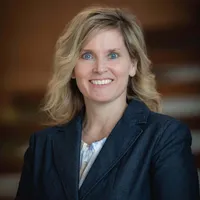
LaToya Lyn
Chief People Officer | Advisor | Instructor
Fractional HR Consultant (working with PE firms, investor capital firms, CEO forums)
From Reactive to Revenue: The HR Transformation Imperative
Thesis
“HR must transform from a reactive problem-solver into a proactive business leader and revenue function, strategically aligning its initiatives and tech stack with overall business outcomes and focusing on core problems rather than symptoms.”
What you'll take away
- 01Foster consistent connectivity between HR, finance, and marketing/communications through regular stand-up meetings to ensure aligned messaging and strategic planning.
- 02Strengthen relationships with executive leaders and board members by scheduling 'walk-and-talks' or off-site casual meetings to provide a change of pace and facilitate more open dialogue.
- 03Prioritize HR initiatives by aligning 80% with business goals and 20% with essential compliance, ensuring HR actively contributes to the company's bottom line.
- 04Design HR systems and processes with the 'end-user' (employees) in mind, making them self-sufficient and enabling them to access information and solutions independently.
- 05Focus on identifying and solving a few fundamental 'causes' of problems rather than 'boiling the ocean' with numerous superficial symptoms, allowing HR to be a solution-provider.


What most organizations get wrong
- She pushes back on the idea that some tasks are 'not strategic,' stating that 'there is actually nothing that's not important' if framed as symptoms of larger underlying business issues.
- HR should be viewed as a 'revenue function' rather than solely a cost center, emphasizing its direct contribution to business outcomes.
- Instead of trying to solve all problems, HR leaders should strategically narrow down and commit to solving a few critical issues per quarter to build trust and demonstrate impact.
In LaToya's words
“This type of work as the integrity holder, the truth-sayer, the truth-setter, and the business leader for our business, this role is not for the faint of heart.”
This quote defines the demanding and critical nature of the Chief People Officer role as a core business function.
“we are essentially, you know, customer service. Leaders, and our customers are the employees, right? And we need to have products where we can enable them to become smarter and better.”
This emphasizes an employee-centric approach to HR, advocating for systems that empower and inform the workforce.
“80% of the HR function is supporting the business goals. The 20% is the run-of-the-mill stuff.”
This highlights a strategic allocation of HR resources, emphasizing business alignment over routine tasks.
“HR is a revenue function, believe it or not. And the way to have people understand that they're a revenue function is by attaching your goals, the design of your team towards outcomes for the business.”
This statement reframes HR's value proposition, linking its activities directly to financial and strategic business results.
“you cannot boil the ocean. It's okay to push things down. Like, I am notorious in all-hands meetings saying, here are the 20 things that you guys complained about, right? This one is attached to this. Okay, we narrow it down to 5. Now, here are 3 things that I'm going to work on really well, and hold me accountable to them.”
This provides actionable advice on strategic prioritization and building trust by delivering on a few key initiatives.
The problems this episode addresses
- Lack of integrated communication and strategy between HR, finance, and marketing/communications functions, leading to disjointed messaging and processes.
- HR teams struggle with limited resources for marketing, graphic design, and communication expertise, hindering effective internal communication.
- Existing HR tech stacks are often designed for HR's convenience (the 'initial user') rather than empowering employees (the 'end-user'), creating dependency and inefficiency.
- HR leaders are overwhelmed by numerous small, seemingly non-strategic issues (symptoms) that distract from addressing root causes of organizational problems.
- Organizations incorrectly perceive HR as a cost center rather than a revenue-generating function that contributes directly to business outcomes.
In this episode
Intro
Tell us about your career journey and what's on your priorities this quarter
Top HR Executives on Their Career Journey
Sometimes we get put into tasks that don't feel as strategic, right
Tasks that don't feel strategic
One issue that comes up for me is the relationship between people and finance
WSJDLive: Communication Processes
What's one initiative you rolled out recently that you're proud of
What's One Initiative You're Proud of?
Being outside creates a better memory, right? Being in the real world
What Do We Do to Enhance Our Mental Fitness?
One thing we've heard recently is employee communication is becoming harder across organizations
Better Communication Through Better Communication
One thing that I would want to see done better is creating an HR system
WSJDLive: One HR System that's Broken
Latoya: HR needs to focus more on solving problems rather than symptoms
WSJD Live: The Future of HR
HR leaders are facing rising employee expectations, rapid changes in the market
WSJD Live: On Managing Employee Expectations
Latoya, thank you so much for joining us on Built by People podcast
Latoya on Being Built by People
Topics covered
Organizations and entities mentioned
Full transcript
Expand transcript (4078 words)
Welcome to the Built by People podcast, where we share the stories and insights of the world's top executive leaders. Join us as we dive deep into the minds of executives, uncovering their strategies, challenges, and triumphs in shaping today's workforce. Now, let's jump in and get started with our next guest.
Well, I'm super excited to welcome Latoya onto the Built By People Podcast. Latoya, thank you so much for joining us today.
Thank you so much. So happy to be here. Very excited.
We're pumped, and I'm very pumped to have the conversation. So, I wanna start out with the first question, which is, Tell me about your career journey. How did you get here?
How did I get here? Well, I mean, everyone has their journey, their career journey. I think for me in particular, and I'm from New York City, so shout out to anyone listening to this from the New York area or the East Coast. We're here representing. Very oddly, at 16 years old, I was very intrigued between a relationship between an employer and an employee. I didn't have the language for it then, but I was very intrigued. Fast forward, I worked at a camp with a very intentional culture when I was 18, 19 years old. I had, I had about 20 or so, 11 or so direct reports. I had to figure out a way to kind of build that. And then fast forward, here I am getting a dual master's in IO psychology and organizational behavior, really understanding the philosophical aspect of the workplace and why it matters. And I don't think I would be doing anything else in this world. I've been a chief people officer for many years. My first seat was, I was 35 years old and I went in there guns a-blazing. I've been able to take two companies public, and I always say this type of work as the integrity holder, the truth-sayer, the truth-setter, and the business leader for our business, this role is not for the faint of heart. So, here I am out here in the world making one organization better at a time as much as I can.
I love it. I love it. Well, and again, you have a lot, you've got some great history of what you've done and grown and built. So, looking at that, right? I think a lot of people, they're always, you know, it's right at the start of the year, they're trying to figure out what are priorities, What is top priority for you this quarter?
Yeah, for me this quarter, I have been really fortunate to engage with a lot of organizations where I, you know, I have worked with a lot of heads of people, chief people officers in my career, and they just haven't had the best experiences coming into organizations. So, then what I did late last, last, last year, and now bringing into this quarter in Q1 is focusing on our fractional business where I go into, I work with PE firms, investor capital firms, CEO forums, things like that, to really help them identify their stage of organization and also what level of HR leader that they need. Acute problems that can be solved by a very senior person very quickly, but they don't really need that person for the long term. And it could be vice versa. They have— they hire someone that's very junior that can't really lay down a foundation that they need to grow and excel. So, I have been working with a lot of clients and building up my clientele portfolio on really supporting that. And I'm really doing it for my HR community. So whenever you get a recruiter saying like, hey, are you interested into this amazing job? They have been vetted by Latoya. I love it.
I love it. Building out your brand, right? I mean, that's a big part.
So, all right.
So looking at this, if I were to take time, right? And, and let's say, you know, looking through all the, the companies you've worked with, even the ones you're working with now, um, you know, unfortunately sometimes we get put into things that don't feel as strategic. Um, where would I see you spend time that doesn't feel as strategic that you're like, I would like to try to remove that out of my day a little bit?
I mean, like examples of things, tasks that I've been asked to do. I mean, listen, there is, if you really think about it, there is actually nothing that's not important. It all kind of ladders up to like a bigger picture, right? So for example, if you have an issue with, and I'm almost like an investigator detective type person personality when it comes to these things. So, I would get like an email or I'll get like a, be my one-on-one with my, you know, my, my chief, my, my CEO, and they will say things like, man, you know, emails are not getting turned off, you know, when people are exiting, or emails are not getting turned on when people are entering the organization, you know, that may seem like a small task, but it actually isn't. There's a lot of things around how people are being onboarded, the structure around that. It also, you know, And I also think about costs, like, are we like losing money, you know, and also like security and I, you know, intellectual property and things like that and exposure. So there's so many different things that come up and you have to think about the business in that way. So really there's nothing too small. I mean, I've even had another situation where we had, um, we were giving, they were trying to order snacks for the office. And what came across my desk was we didn't have enough vegan Um, and vegetarian options. It sounds ridiculous, but people need sustenance while they're, you know, don't have time to run and grab food. And, you know, they're relying on that, you know, that vegetarian ramen noodle, and they only have like 10 minutes to, you know, you know, grab that hot water and, and ramen situation. And it makes it so like, again, there's no task that's too small. You can find me kind of doing everything. Yeah.
Okay. Well, all right. Let me, let me phrase it a little bit different. Is there an internal process that you found that maybe consistently creates friction or slows a team down, or you're your team down, right, from things in the past?
I think one thing that does come up for me is the relationship between people and finance and how that needs to be connected. Another area that I feel like that I have seen, you know, experience my team and myself and also have challenges around like just communication around an organization and how they communicate. I think there needs to always be a direct connection between, you know, communications, marketing, and HR. And even finance, right? You know, really big messages or messaging around that. So, some processes there that can really get some help and some structure is really making sure that you're having standup meetings with those very important functions. So, then, and it sounds odd, but like, I always would set up, I would lead meetings with finance, the head of communication, and my team, and my leadership team. And we would talk about all the things that are coming up. And then we invite business leaders, sometimes a CEO, to my meetings to discuss, like, you know, what's on the horizon quarter over quarter, what, how can, and everybody will be taking that information from their perspective on, on how to make things better. So that's one thing that I think is super important and a process to put in. Yeah.
Consistent connectivity between the stakeholders that you need.
That's right. That's right. I like it. Okay.
Um, all right. So this is one of my favorite questions. What's one initiative you rolled out recently that you're proud of? Or multiple.
Or multiple. So, the one that I'm really, really, that I've been proud of is, I, you know, I'm on the East Coast. The weather isn't always favorable for us, but, you know, when it is favorable for us, most of the offices that I've worked at was in, are in the Union Square area. And, um, I would take my CEO on walks. Oh, especially if I've seen that they have been in back-to-back meetings and conference rooms all day. And then, and like, I am the last person— I would like to not think that— that they want to talk to. But how do I become the most memorable person and the most, you know, intriguing conversation to kind of get my agenda across? And nothing is great than saying, hey, let's grab a coffee and let's do a walk. I'll take notes, you know, I'll take some notes on my, on my, on my, on my iPhone. And then, you know, we'll come back with initiatives, but I just wanna talk some stuff out with you. Yeah. And that initiative right there, you know, not only strengthens the relationship, but also just kind of gives change of pace, you know, and it helps the CEO kind of separate, you know, one meeting to another. And then, you know, we can casually walk back to the office, you know, the last 15 minutes. And, you know, continue to talk about things that are not as stressful, especially if they're stressful. I like to take them out of the office and just give them space to discuss these things. That's super important. I've done that with my CEO. I've done that with board members. I've done that with the CFO. There's a variety of different people just to have that conversation where we can vibe. And that's a very important initiative that rolled out, which I love.
Well, I was going to say, I think one of the biggest things that, you know, subconsciously it's happening, it creates a better memory, right? It's like, oh, now it's like, oh, I remember my meeting because I was outside for that. It wasn't just this back-to-back inside of a small enclosed room, right, where everything gets lost. You're behind a computer screen, you're looking at something else, right? Being outside and actually engaging and being in the real world and open, I think, is a really big piece to what that is.
Yep. And something else I've always done too is I would schedule— when I was at Compass, I was a business partner an executive coach for the CFO during the IPO process. And man, was she stressed, obviously, right? Taking a company public and getting that going. So, to help provide some levity for her, I would then take her— we would— I would schedule a biweekly breakfast by her apartment. That's awesome. So, I would meet her at her apartment and I would schedule a breakfast and we would have breakfast and we would just talk. Yeah.
And connect.
And obviously there's things that she couldn't tell me and, you know, whatever, because of the confidentiality, uh, of things. But she had a, a space which I think had an, which I believe, not think, know, had an impact on her performance and also the performance of the IPO for the company, her as a leader, so on and so forth. Yeah.
Now I love it. Okay. Well, all right. Switching gears to this, I'm, you know, you kind of mentioned it before, right? Having the key stakeholders, having communication as a whole. One thing we've heard a lot of recently is employee communication is becoming harder across Every organization, right? You're getting different demographics of individuals, different age ranges, right? So what's an area where you're trying to improve engagement through better communication?
So, I know you're gonna edit this. I am on the advisory board for Change Engine, and they're a communication AI platform, and I use them everywhere I go in a sense of using marketing collateral information, updated information for us to be able to communicate effectively and be taken seriously. Because, you know, because we don't have a, as HR functions, we don't have the resources to have our own marketing graphic designer. We don't have the resources to have the right level of communication correspondent. And if we have, but we are experts, we know what's on there, we know what belongs there, and so on and so forth. So, I've been partnering with Change Agent for the past 2 years as their, you know, as their advisory. I get to have input on the product and things like that. And I would love to learn more about other opportunities as well, but that has been amazing as far as like how to communicate, putting up the most polished decks that are clear and consistent, um, great graphics, great pictures, and, you know, a fun personality like myself.
Yeah, I love it. Well, I, I think that's big for it, right? Like there's been, um, I think a lot of times where HR leaders have kind of, and, and even communication leaders, they've kind of get, they get stuck into, hey, here's what we have access to, right? We have Slack, we have Teams, we have email, we have a intranet site, maybe, oh, we're going to use maybe Rippling as the communication force outward, right? Or Paycom, whatever it is, right? They have. And then it gets a little bit difficult because now it's multiple channels that they're trying to use.
Let me, let me, let me double-click on that. Yeah. I came, I went into an organization and they had all of these systems And then I sat the leadership tent, the HR leadership team down. I said, who are these systems for? Yeah. And they said, well, we need it because we need to do payroll and we need it because we need to store benefits and we need this because, and I said, that's not really, that's, you never get byproducts for your, for you, right? We are, we are essentially, you know, customer service. Leaders, and our customers are the employees, right? And we need to have products where we can enable them to become smarter and better, right? And if we have, we need so many processes to do our job that we gotta think about what are the things that we're doing, right? And so I think that, so I think it's, it's really a conversation around who needs these products, why are they there? It should always be for the employees. The second thing is, what are the priorities, right, of the HR function? I 100% always put this in, and going back to your other question around like initiatives that you push out, I would lead the OKRs or KPIs for the organization. And part of that would be that 80% of the HR function is supporting the business goals. The 20% is the run-of-the-mill stuff, right? You can't get over open enrollment. You can't get over certain compliance things, right? You gotta kind of keep the ship moving in that way. But 80% of our initiatives has to support the bottom line of the business. Therefore, your communication, your vendors, your relationship, your partners, everything has to be able to help the company. If the goal is to make, you know, hit $100 million ARR for 2026, then what can the HR team do to get there? Help that company get there. So that's, that's, and then, then it goes, and then it comes back down to what are the different platforms, programs, communication strategies in order to, to drive that forward. Yeah.
Okay. Well, looking at, obviously with multiple softwares out there, if you could obviously maybe wave that magic wand, right? And improve, I was gonna say one part, but I, there's multiple parts. Like what would that one thing be that you'd love to kind of change within maybe a workflow or the tech stack?
I think some companies do it better than others, but one company, one, one particular thing that I would want to see done better is really creating an HR system for employees, for them to be able to— we manage the data, we own the data, we make sure that it's clean and it's going in there. But, you know, think about your, your RevOps team, right? Like we're the RevOps team, but who owns the numbers, right? Sales leaders, the reps, is it things like that, right? So, think about that in a sense of, you know, an HR function where I think that from a product standpoint should build to help scale organizations, make them more independent, make them more smarter, and not dependent on like, okay, well, this is how I'm, I'm gonna outsource half of my information. Either I can, I can, you know, Slack someone from HR, they can give me the answer, or they can say, hey, maybe I can go into this platform and find the information, and maybe I can have the HR leader, you know, help me consult over a particular solution, which is much more beneficial for everyone. And I think that the lens of a lot of these platforms really focus really on like, you know, not the end user, but the initial user. So, so that, that to me is super important. And I have worked for organizations that have focused on the end users much more. And they have seen a lot of success through that, um, and influence and things like that. Yeah.
No, I like that. And that's, it's hard, right? I mean, it's hard as the company, cause it's like, oh man, we gotta focus on where the revenue is. And sometimes revenue isn't tied to the end user in some capacity. So I totally get what you're saying on that. Um, all right. So look, I guess, you know, looking at the future outlook, right? If we were to sit down again, say in 12 months, right? What would you hope has maybe changed, let's say from the employee's view of the HR community?
That's such a tough question because I immediately want to say HR needs to do some work, but let's say they did. I think, I think that, I think the HR/people function needs to kind of go back into a space where it's not kind of like where the problem is, but more where the solution is. And the problems that do kind of percolate within an organization that HR needs to be on top of are often symptoms of a cause, right? And what my hope is at the end of the year is for the HR function to go back and say, Wow, I didn't solve 40 problems. I solved 3 really good ones.
Yeah, I like, yeah, I, I listen, you said something earlier that was, you know, sometimes you feel like you're a great detective. I think that aligns really well to it, right? Because you can't just focus on, hey, you're going to, as an HR leader, you're going to get hit with just problem after problem after problem after problem, and a lot of them might not feel super strategic, but everything piles on top of each other. But if I can actually find 3 to 4 to 5 real problems, right? Like the actual, not the symptoms, but the actual, you know, causes, causes, then I'm gonna actually fulfill on what I needed to fulfill for the company.
Yeah. And I think that's right. I think that sometimes people feel, I think that a lot of HR firms feel like they're boiling the ocean. Something, another tactic that I've done and have implemented when I enter an organization is I go to the leadership, I go to the, the, the current existing HR team. I said, okay, put together a list of what's, what's a priority, right? What's a task that you need to do and something that's on fire you need an answer for. Yeah. And then when they write it all out, I, I, I would say 80% of it gets nixed immediately. Yeah. And then they go, oh, well, what do I do now? Because they're in crisis mode so much. And, and I think that sometimes you'd be like, well, why are you not so stressed? I'm like, I'm not stressed because I'm solving the problems that matter the most. Not saying that the problems like the water cooler issues or the ramen noodle issues aren't issues, but it's also like, okay, well, this person is— I don't think it's about the vegan options. It's about this person opened up a cupboard and doesn't feel like they belong. Right. Yeah. Yeah.
You know what I'm saying?
So it's really thinking about things like that in a very strategic way. And I think that that will definitely bridge the gap between employees coming to HR and feeling a little bit differently about us, as opposed to always having that really stressed face when they come up to our desk or knock on our door. I don't know. I don't know. I've never worked, by the way, I've never worked in a— as senior as I've been, I've never had an office. I don't care to have one. People come up and talk to me all the time, but come in by my desk and be like, hey, Latoya, and you're like this kind of like, you know, you're really like crunchy looking and you're upset and whatever. And then, you know, you immediately like feel like unattractive to speak to in that sense. So, and that goes back to the responsibility of the integrity holder, the levity provider, you know, for the organization. So, you know, you really want employees to feel that they can speak to the HR team and partner with them to get ideas. Or like maybe it wasn't, maybe it is a big deal. Maybe it's not a big deal. Who knows? But like you guys can have that conversation and think through that.
Yeah, well, you've already given up so much advice. I am gonna ask the last question though, which is, is there any additional advice you would share with other leaders right now specifically that obviously they're trying to navigate a lot, rapid changes in the market, AI, right? They're rising employee expectations. What other parting advice would you like to give them?
HR, this is for the CEOs, my peers. Um, and anybody else who's listening, HR is a revenue function, believe it or not. And the way to have people understand that they're a revenue function is by attaching your goals, the design of your team towards outcomes for the business. Okay. And the other piece is, and I said it, I said throughout this conversation, you cannot boil the ocean. It's okay to push things down. Like, I am notorious in all-hands meetings saying, here are the 20 things that you guys complained about, right? This one is attached to this. Okay, we narrow it down to 5. Now, here are 3 things that I'm going to work on really well, and hold me accountable to them. Let me get that trust by winning. I, you can't expect me to do well with 5 things at once, but how about 1 or 2 things for 1 quarter? And, and, and you ha— and that's the point of HR leaders. We have to get in front of the employees and we gotta be able to speak to them, speak truth to what's happening. So that's my advice. Don't be afraid. All right.
Well, everyone's gonna focus on not being afraid and taking those learnings and adapting, right?
Yeah.
Latoya, thank you so much for joining us today on the Built by People podcast. It has been an absolute pleasure having you.
Thank you so much. So much fun. Go Built by People. Let's do it.
I appreciate it. See ya. See ya.