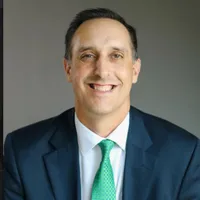
Kristine Karnath
US Director Of Benefits
Moog
The Hidden ROI of Care: Transforming Manufacturing with Employee-Centric Benefits
Thesis
“Innovative and employee-centric benefits design, even in non-traditional environments like manufacturing, can create win-win situations for both employees and the company by controlling costs and enhancing well-being. Career growth is often found by being present and open to opportunities rather than rigidly adhering to a predefined path.”
What you'll take away
- 01Proactive benefits innovation, such as on-site medical centers, can lead to both cost control for the company and enhanced quality care and convenience for employees.
- 02Successfully implementing large-scale benefit changes, like an unlimited vacation plan for all employees including manufacturing, requires significant effort in shifting manager and employee mindsets about productivity and time off.
- 03Employee-sourced ideas can be powerful catalysts for significant strategic initiatives if the company culture is open to considering them.
- 04When designing new benefits, it's crucial to understand cultural fit and address potential employee skepticism through transparent communication and physical demonstrations.
- 05Career development often benefits more from being present, open to unexpected opportunities, and self-driven innovation rather than strictly adhering to long-term, rigid career goals.

What most organizations get wrong
- Implementing an 'unlimited vacation plan' for an entire workforce, including hourly manufacturing staff, which is noted as uncommon in the industry.
- Acknowledging that the company initially had too much involvement in hiring medical professionals for on-site centers and that trusting the vendor more led to better outcomes.
In Kristine's words
“I always joke that nobody actually ever plans on getting into benefits as a career.”
This quote highlights the often serendipitous nature of HR career paths, particularly in specialized fields like benefits.
“I read the article and my initial reaction was no way. There's no way we're doing this.”
This shows the initial skepticism towards a significant innovative idea, emphasizing the need for thorough research and a shift in perspective.
“I think any time in the benefits area that you can have a win-win is beneficial, and it doesn't happen often.”
This quote encapsulates a core philosophy of the guest, emphasizing the rarity and value of benefits that truly serve both the company and employees.
“We don't call it that here, but that's essentially what it is. So our employees have no limit on the amount of vacation that they can take.”
This highlights a bold and uncommon benefits strategy, particularly for a diverse workforce including manufacturing, challenging traditional PTO models.
“Sometimes they're so focused on that goal. They want to be at a certain grade or a certain job by a certain age. And sometimes they end up missing what's right in front of them and opportunities that are in front of them because they are so focused on that future.”
This offers valuable career advice on the importance of presence and adaptability, contrasting with rigid goal-setting.
The problems this episode addresses
- Companies struggling with managing a multitude of disparate PTO plans resulting from acquisitions, leading to administrative nightmares and inconsistent employee experiences.
- Organizations seeking to control rising medical costs while simultaneously enhancing the quality and accessibility of healthcare for their employees.
- Challenges in effectively communicating the value and nature of new, innovative benefits (e.g., on-site medical centers) to employees and leadership to overcome skepticism.
- Difficulty in recruiting and retaining medical professionals for on-site clinics who not only possess clinical skills but also align with the specific company culture and operational model.
- Resistance from managers and employees in adapting to new policies, such as unlimited vacation, requiring a significant mindset shift around productivity and time off.
In this episode
Built by People podcast features insights from world's top HR leaders
Built by People
Christine Johnson shares a little bit more about her career journey
Exploring Your Career Journey
Moog implemented on-site medical centers from concept to construction
Moog Company's On-Site Medical Centers
Christine, what challenges did you encounter while establishing these medical centers
Challenges of Establishing Medical Centers
On-site medical centers provide benefits for both employees and the company
Employment Benefits: On-Site Medical Centers
Christine, beyond medical centers, what other innovative benefit solutions have you implemented
Benefits implemented at Covanta Health System
Christine, what parting advice would you like to share with our community
A 20-Year Employee's Ending Words
Topics covered
Organizations and entities mentioned
Full transcript
Expand transcript (0 words)
Transcript is not available yet.