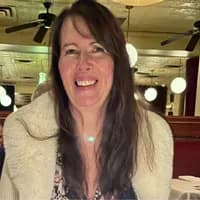
Kevin Henry
Executive VP & Chief People Officer
PulteGroup
Ignite Employee Engagement: Discover the 'Why' Behind Human-Centric HR
Thesis
“Effective HR leadership is rooted in humanity, empowering employees through clear communication and strategic recognition, and embracing innovative thinking to drive both business performance and a thriving organizational culture.”
What you'll take away
- 01Lead with humanity, especially during challenging times, by prioritizing employee care and support to enable them to serve customers effectively.
- 02Cultivate a culture of innovation by embracing a 'give it a shot' mentality for ideas that are legal, ethical, and won't cause harm, fostering breakthrough performance.
- 03Drive employee engagement and discretionary effort by clearly communicating the 'why' behind initiatives, building followership rather than dictating tasks.
- 04Redefine and rebrand the HR function (e.g., 'People and Culture Team') to align with its core purpose and establish a clear brand promise like 'able, accessible, and accountable'.
- 05Focus on capability, capacity, and culture as key drivers to achieve sustained superior performance within the organization.


What most organizations get wrong
- Pushes against a risk-averse mindset: "If it isn't illegal, if it's not unethical, and if nobody's gonna get hurt, let's give it a shot."
- Challenges traditional HR nomenclature by changing the department name from 'human resources' to the 'people and culture team' to explicitly state its core purpose.
- Advocates for 'doing through people, not to people' by emphasizing explaining the 'why' to 'important people,' countering a purely directive management style.
In Kevin's words
“The importance of humanity and leading with humanity, particularly during troubling times.”
This quote encapsulates his core philosophy of compassionate leadership during crises.
“If it isn't illegal, if it's not unethical, and if nobody's gonna get hurt, let's give it a shot.”
This highlights his pragmatic and innovative approach to problem-solving and risk-taking.
“I have a strong conviction around the importance of doing through people and not to people. To unimportant people, you simply tell what. To important people, you explain why.”
This quote explains his belief in empowering employees by providing context and rationale for initiatives.
“We are the artists formerly known as human resources, like Prince was. One of the things that I did shortly after joining the organization is I introduced my 3 A's—able, accessible, and accountable—and then changed the name of my department from human resources to the people and culture team.”
This demonstrates a bold, strategic move to redefine the HR function's identity and focus.
“Be joyful in earning the right to lead other people. You know, this is a fabulous vocation. Leadership, a wonderful privilege that you earn through interactions and being able to activate the willingness of others to allow you to lead.”
This offers profound advice on the nature of leadership as a privilege earned through service and influence.
The problems this episode addresses
- Maintaining business solvency and employee protection during unforeseen crises (e.g., pandemic operations for an essential business).
- Engaging and recognizing frontline employees effectively to motivate discretionary effort and align with performance goals.
- Overcoming stakeholder resistance and building followership for significant organizational change initiatives.
- Increasing product consumption and customer convenience through packaging innovation.
- Shifting organizational mindset from risk aversion to strategic risk-taking and innovation for market advantage.
In this episode
Intro
I'm glad to have you with me. It's a real joy and a privilege to be with
In the Elevator With Steve Jobs
Kevin, when was a time you faced a significant challenge in the field of HR
Challenging the HR Field
Kevin, could you tell us about a project or an initiative that you worked on
Exploring the Big Blue Bonus
How do you approach building a successful team or culture in your work environment
Building a Successful Team and Culture
Kevin Martin: Coca-Cola introduced a packaging innovation called the fridge pack
Coca-Cola's FridgeVac
Kevin Miller shares some advice on leadership with the Built by People community
A Few Words of Encouragement for Leaders
Topics covered
Organizations and entities mentioned
Full transcript
Expand transcript (2499 words)
Welcome to the Built by People podcast, where we share the stories and insights of the world's top HR leaders. Join us as we dive deep into the minds of HR executives, uncovering their strategies, challenges, and triumphs in shaping today's workforce.
I'm excited to welcome Kevin to the Built by People podcast. Kevin, thank you so much for joining us. And as a starting question, I always love to ask if you could share a little bit more about your career journey.
Sure. Thanks for having me. It's a real joy and a privilege to be with you and excited to spend some time together. So my career journey, I was born and raised in New York, in Queens, and then grew up in Long Island. I am a lifelong Yankees fan. In case anybody was wondering, go Yanks. I attended Cornell University's School of Industrial Labor Relations. Of all things, my dad was a chief HR officer for his corporation. And, and as the saying goes, apple trees make apples, and so I didn't fall too far from the tree there.
Kevin, when was a time you faced a significant challenge in the field of HR, and how did you overcome it? What lessons did you learn from that experience that can benefit our listeners.
Yeah. And I would imagine that most of our listeners, if not all, can probably relate to the context that I'm gonna provide. I was in chair as the chief HR officer for a company called Extended Stay America Hotels. The reference that I'd give you is during COVID The challenge I think is pretty obvious, operating a multi-billion dollar publicly traded hotel company during COVID You know, the challenges of being an essential business, making sure we were protecting our employees and our guests while maintaining the solvency and the profitability of our company, while at the same time minimizing any disruption to our employees and our guests. Lots of lessons learned there. Probably first and foremost, The importance of humanity and leading with humanity, particularly during troubling times. The willingness to do things differently to meet that particular situation that we were confronted with. I have a saying that many people on my team have heard me espouse over the years. If it isn't illegal, if it's not unethical, and if nobody's gonna get hurt, let's give it a shot. And it really is a bit of a precursor to doing things differently and really leaning into innovative thinking, which often lends itself to breakthrough performance. They, they say necessity is the mother of invention, and it really is. And certainly in that case, it was. We changed our business model. We really leaned into investments as opposed to being really focused on expenses. And we made strategic investments in our teams and our people to make sure that they were cared for, that they were supported, and that ultimately they can do the same for our customers. Some really interesting things. 2020 happened to be an election year and not to be expressed or heard as any particular point of view on elections or election outcomes, but we thought that it was really important that everybody who could voted in the election. Still think that. A lot of people fought and died for the right for all of us to participate in a free democracy. And, and so given the size and scale of our footprint, we had over 100,000 guests a night stayed with our hotels or stayed in our hotels. And so we launched a program called Stay Counted and essentially deputized all of our associates, all of our teammates to educate and encourage our guests on how they could register to vote and participate in that upcoming election. Now, we had some constraints. You couldn't get close to anybody. You couldn't touch anybody. It was obviously the middle of COVID And we used technology, we used our chain scale, we again commandeered the hearts and minds of our employees who wanted to be a part of something bigger than themselves. And we were able to migrate well over 50,000 people to register to vote with the presumption that they participated in the election that year. That's one example that comes to mind where we were faced with a challenge and we did our best to turn lemons into lemonade and not only run the business to the best of our ability, but also extend beyond our core business to really try to be a part of something bigger than ourselves.
Kevin, could you tell us about a project or an initiative that you worked on that had a substantial impact on your organization? What strategies did you use and what were the results?
Yeah, again, a few things come to mind. I'll just pick one to share with our listeners. A previous organization that I was a part of, I had the pleasure of serving in this capacity as Chief People Officer. We introduced what we called our Big Blue Bonus Program. And if our listeners have done any research on me, you won't be surprised. The company was called BlueLynx, hence the Big Blue bonus program. And it was an opportunity for us to really engage and recognize and celebrate all of our frontline employees. And we introduced a bonus program that paid monthly that was really predicated on the operating performance of specific locations and/or teams within those locations, and we were able to align our workforce against some key priorities that we thought were really levers in ensuring that we were able to deliver on our performance requirements. In terms of strategies we used, it really started with identifying the problem, or the opportunity may even be a better choice of words, explaining the why, and building and creating followership. In those individuals who were gonna be impacted and really focusing in on the change management and the comms or communication side of things. Establishing a plan and key metrics that would allow us to keep score and really measure and display our results. I have a strong conviction around the importance of doing through people and not to people. To unimportant people, you simply tell what. To important people, you explain why. Making sure that we really over-indexed on the why. Why are we introducing this program? What's in it for me? What's expected? And how do I get recognized and celebrated? And then lastly, we equipped and empowered and set a very clear expectation on our leaders that they would lead. With respect to all of those kind of steps, we just practiced good old rinse and repeat.. And in short, we created this virtuous kind of cycle where we iterated and delivered some goodness to the organization on behalf of our employees. And the results really flowed from that. A highly engaged, empowered workforce will give you discretionary effort and will always help make the business better. And that was our experience.
Kevin, how do you approach building a successful team or culture in your work environment? And can you share a specific example where your leadership made a big difference?
Yeah. And by the nature of the question, it's an I question. And my approach is more of a we approach. And everything and anything I'm about to say, it's really a function of a dedicated, hardworking, thoughtful, and committed team for which I'm appreciative and I'm honored and humbled to have the opportunity to lead. For years, I've carried around with me at various organizations what I call my 3 A's: able, accessible, and accountable. And that's our brand promise. That's my brand promise. That's what I want to enter the room before I enter the room, before my team enters the room. I want the business, those folks that we have earned the right to serve, to think of us as able, accessible, and accountable. And so that's the brand proposition. That's the uniform that I and members of my team wear. And ultimately other people get to judge, but we put forth the expectation. With respect to a specific example, most recent example in my current role at PulteGroup, I say this with a smile, we are the artists formerly known as human resources, like Prince was. One of the things that I did shortly after joining the organization is I introduced my 3 A's—able, accessible, and accountable—and then changed the name of my department from human resources to the people and culture team. And the reason I did that is because I think words matter. I want there to be no confusion or surprise about what we stand for. We stand for people and we stand for culture. We also introduced a bit of a formulaic expression where capability times capacity Performance times culture equals results. And so every and anything that we do functionally and how we engage the business, how we keep score, what we reflect as a V, our metrics, it's focused on capability, capacity, and culture. By really focusing on and over-indexing on those three things, we can drive superior performance over an extended period of time. And lastly, the question around my own personal style and how I hope people experience me. I talk a lot about leading with heart. In addition to being a math nerd, I, I think I'm maybe a little bit of a closet marketer. And so when I write heart, I use really big font, really bold font on the H, and then really big font, really bold font on the R. If you can picture the word heart with HR kind of waving at you, that's again, the kind of leadership orientation that I try to espouse and I try to role model for others. It's really rooted in the concept of being other-centered, earning the right to lead others and be of service to others, and building relationships through intimacy and meeting people where they are, all of which is really predicated by the importance of building trust.
Kevin, can you tell us about a case study where a particular strategy or innovation led to a breakthrough? What were the key factors that contributed to its success?
Yeah. And again, I'll give an example that I think our audience could probably relate to. One of the roles I held, I was formerly the Chief People Officer for Coca-Cola Consolidated. It's the largest Coca-Cola bottler and distributor here in the United States. And many years ago, we introduced a packaging innovation known as the fridge pack. And if you think about how you may purchase take-home beverages across a whole bunch of categories. It started with Coca-Cola and it started with Coca-Cola Consolidated. The fridge pack is the lower profile elongated pack that, as the name sounds, you can put into your refrigerator. It's got a gravity feed chamber. When you consume a beverage, it'll dispense another beverage and prep it for, for enjoyment. And the why behind that— and all good change and innovation has to have a why— is we were trying to figure out how do we increase in-home consumption of our products. And prior to the fridge pack, a lot of beverages in the soft drink space were sold in cubes. They were big square 12-packs or 24-packs. The reason that was that way is because they were really easy to pack on a truck and you could optimize your freight expenditures and your return on those assets employed. Now, what happened with those big packages is most of them ended up in the bottom of a pantry or they ended up in your garage. And in that moment when a consumer at home really wanted a refreshing ice cold beverage, they had to go to the bottom of their pantry and go to the garage. And guess what? They, they would get a beverage, but it wouldn't be ice cold and it would require additional steps to prepare it for enjoyment. Putting it in the fridge for a while. Some people would stick it in the freezer for a while. Some people may grab some ice and pour it over ice. And, and so we thought about it and said, if we could minimize some of those steps and make it more fluid and make it more convenient, could we sell more? And the result was this innovation called the FridgeVac. There were a few things that went into it. And again, I think about the question that you asked. One, what was a willingness to think outside of the box or package, pun intended. We're talking about the FridgeVac. And the importance of having good strategic partners. In this case, it was our packaging partner who shared our vision and the ideation and the imagination of what was possible. Change management. I mentioned that earlier, and it's really making sure that all stakeholders are bought into the change, employees, customers, and then ultimately consumers. Facts versus feelings, making sure that we're measuring and merchandising results and not just what we think, but what we know and really leveraging facts and competing on analytics. And then the last piece was being a first mover in the marketplace. And that really required a willingness to take some risks. And we did that and it was a raging success. Shortly thereafter, you saw lots of other iterations of the fridge pack beginning to show up. As other competitors caught up with the technology and the manufacturing capabilities. But we benefited from and really never relinquished the head start that we had by being a market mover and a market maker. And that was all based on a willingness to be innovative and to take some risks.
Kevin, what parting advice would you like to share with our community?
Yeah, a few things. And maybe this is the most important, at least in my view. Be joyful in earning the right to lead other people. You know, this is a fabulous vocation. Leadership, a wonderful privilege that you earn through interactions and being able to activate the willingness of others to allow you to lead. Be bold. As my pastor once said years ago, be bold, but wrap your boldness in wisdom. Be wise while you're being bold, but be bold. Take some risks. And then the last thing I'd offer is, if not you, then who? And if not now, then when? As the saying goes, be the change that you want to see in the world. Finally, be a good steward of what you've been put in charge of. Don't waste it and don't waste your leadership and your ability to influence in ways that have
lasting impact. Kevin, thank you so much for joining us today on the Built by People podcast. It was a pleasure to have you involved.
My pleasure. Thank you so much for your time.