Episode 149 · April 4, 2025 · 10:48
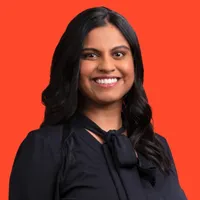
Kate Kemp
Chief People Officer, Restaurant365
Beyond Compliance: HR's Strategic Shift to Empowering Your People & Amplifying Impact
Episode 149 · April 4, 2025 · 10:48
Beyond Compliance: HR's Strategic Shift to Empowering Your People & Amplifying Impact
Key moments
In Kate's words
“I still remain very focused on understanding what makes each of us really unique, right? And how you bring that as an asset to your work, and also how to really think about everyone's unique experiences and backgrounds and perspectives and how that's really an asset in an organization as well, versus something that we need to shy away from or build around.”
“HR is at its core an enablement function. We're here to accelerate and amplify the organization and really remove friction from the employee experience so that people can thrive at work and drive the biggest impact.”
“And I think acquired teams oftentimes are bringing really special skills and experiences to organizations... And I think it's about clearing the way for the team... and amplifying that within the organization, that you're really going to get a bit of the best of both worlds.”
Transcript
Read the transcript2,013 words
HostWelcome to the Built by People podcast, where we share the stories and insights of the world's top HR leaders. Join us as we dive deep into the minds of HR executives, uncovering their strategies, challenges, and triumphs in shaping today's workforce. I'm excited to welcome Kate to the Built by People podcast. Kate, thank you so much for joining us. And as a starting question, I always love to ask if you could share a little bit more about your career journey.
GuestYeah, absolutely. So I'm one of the rare people in our line of work who actually deliberately chose being in this line of work. I was an undergrad and fell into learning about diversity, equity, inclusion, belonging back more than 20 years ago now. And it led me into the space of really understanding people's experiences at work and how their differences show up and the experiences that can bring to bear. And I then got a job working for the state government in HR and moved into tech in 2007 and things went from there. And really have been doing it since, which is great. I think I still remain very focused on understanding what makes each of us really unique, right? And how you bring that as an asset to your work, and also how to really think about everyone's unique experiences and backgrounds and perspectives and how that's really an asset in an organization as well, versus something that we need to shy away from or build around. To me, it's like building with it and towards it together, and that continues to just be in my DNA. All these years later.
HostKate, how do you approach setting strategic goals and leveraging cross-functional leadership to drive business impact in HR?
GuestYeah, I think HR is at its core an enablement function. We're here to accelerate and amplify the organization and really remove friction from the employee experience so that people can thrive at work and drive the biggest impact. And I think Historically, HR was there to play block and tackle and to guide and to cut. And to me, it's more and more like we're almost a platform and a service, right? Like we're here to provide people with the information and resources and tools that they need to do their jobs really well, and not here to put blips, right, in, in people's days. And so, the more we can be linked with other functions in really understanding problems that kind of cut across the organization. And not just problems either. I think it's just like really where are we headed and why, and how do we link arms to enable that and remove people needing to think too much about it, right? And enable them to really focus on what they were hired to do. So, examples of that could be on headcount planning, right? I think HR being really well aligned with the business in terms of where they're headed and why, as well as with finance to understand sort of the parameters that you're operating in, and then asking great questions and thinking from the lens of each of your stakeholders, right? And helping to guide and shepherd also really then enables that cross-functional leadership to be aligned from the onset. And it removes a lot of the later phases of, did this headcount get approved? Or do we have— right? Because you've already had a lot of those conversations at the onset and you've been aligned, and therefore you're really just partnering and kind of executing and moving ahead.
HostKate, can you share your experiences and strategies for optimizing post-integration processes after an M&A to harness the unique talents and of acquired teams?
GuestYeah, I have had the pleasure and privilege of getting to do, it's probably between 20 and 30 different acquisitions. Everything from a couple folks in a house in Iceland to thousands of people all over the world. And I think it's an amazing sort of puzzle piece or amazing puzzle that you get to be a part of in architecting. And I think acquired teams oftentimes are bringing really special skills and experiences to organizations, many of whom are joining larger organizations. They are a lot of times just brilliant entrepreneurs who can bring and infuse a new kind of DNA in an organization in really like demonstrating risk-taking and rapid innovation and iteration and thinking slightly differently, right? It's what got them where they are. And I think it's about clearing the way for the team. And connecting them to other acquired teams, as well as connecting them to senior folks and giving them sort of the opportunity and the forum to bring their special sauce, if you will, to bear and amplify that within the organization, that you're really going to get a bit of the best of both worlds. I worked at an organization where we created what was called a founders forum, where all the acquired founders at the time, there were about 40, would come together with some regularity virtually and in person. They would meet with the executive team and get plugged into kind of business challenges or opportunities, and we would really just leverage their unique and different way of thinking to go after things in a way that we might not have as a larger organization where many of us were kind of thinking about things in our own way. And so I think it is just, it comes back to that sort of diversity of thought and experience. A lot of acquired teams are going to bring a really unique and different perspective to the organization rather than that getting lost. I think it's just creating a little bit of a rhythm around it. And continuing also to ask a lot of questions. I think doing acquired team pulse surveys, I think doing roundtables, Q&As, just continuing to spotlight it can be really helpful in infusing their culture in the rest of the organization and in making them feel really welcomed as well.
HostKate, what are the key skills and experiences that you believe are crucial for making the transition to an executive leadership role in HR?
GuestThat's a great question. First of all, I'd say it's getting out of your own way. It's funny, 'cause I think like many folks, you spend some time doing this and all of a sudden you realize like, I've been doing this a while. And as my husband said to me kindly once, you're not a spring chicken in HR anymore. And it took, it was an epiphany for me, but it was like, okay, I've got the experience and I'm the type of person now who can really just step into the role based on what I've done and try to bring my own flavor to it. And I think it was just a matter of remove, like dusting off whatever stories you'd been telling yourself and really just like leaning into the discomfort of saying, I've got the experiences, I'm gonna bring 'em together in my way and test it out. And it's not perfect every time, but I think it was more just untelling my story to myself, right? And really removing my own barriers to just lean into something that actually feels like home now, right? It was done the work and I'd spent the time and now I'm in a place where I'm really getting to bring that to bear and it's been the most fun and rewarding year and change of my career to date.
HostKate, how have your diverse career experiences contributed to your current success, and what unexpected lessons have you learned along the way?
GuestYeah, I started my career in HR, and I spent time in some of the different sort of centers of excellence work at Google. So, I spent some time in talent acquisition and employee relations, and then also in compensation and benefits. I didn't realize it at the time, but I was laying this amazing foundation in understanding different components of HR, going a bit deeper in those. And then I was able to apply that into a transition to HR business partnership where I knew enough to be dangerous, to be able to navigate across and down and leverage my COE friends as experts and thought partners. But then the HR business partnership, you're essentially like the hub in a hub and spoke model in helping unlock HR for an organization. And so I think Again, I didn't— at the time I didn't know it, but I was actually laying this amazing horizontal base for myself to then be able to bring my skills to market in partnering with business leaders. And there is no better way to learn HR than to be a business partner in a fast-moving, dynamic organization with incredibly smart and driven people who demand nothing but the best from you, and being asked to deliver that ongoing all the time for years and years, right? That is how you get your stripes. And it's super fun, super tiring, and over time you just, it starts to become your rhythm and your second nature.
HostKate, could you explain your thoughts on reverse engineering solutions in HR and how this approach has benefited your organization?
GuestYeah, I think a lot of organizations are gonna have very unique needs. And so there are obviously certain things that are legally required, but A lot of the rest of it is based on what the organization wants and needs. And so I often think about our customers are our employees. And if you think about applying design thinking to that, it's really thinking about the customer experience and how you enable that and working backwards from there. And so I usually ask my team, is this something that our organization wants or needs? And if the answers to those things are no, it might not be a priority for us right now. We need to understand what our clients are saying, and we also need to be very close to the data in terms of understanding what the organizational data is telling us and use that to really inform where we're focused. Doesn't mean we don't stay compliant and legal, right? It doesn't mean we don't do some of the standard, but I think in general, a lot of us are really passionate and think we know what greatness looks like and think we know what an organization needs. And in reality, each organization's super different. And we have to seek to understand first, and then we have to build towards that and iterate and ask a lot of questions and get a lot of feedback ongoing and continue to be really agile and nimble in the work that we're prioritizing for the organization. Thinking really both strategically about where they're headed and what they need operationally, about how we're going to get them there, and then being very comfortable adapting and pivoting as the organization changes.
HostKate, what parting advice would you like to share with our community?
GuestAnother thing I like to consider is we are doing really important work and we're not saving lives, and so let's have a good time. Like, I think sometimes we take our work super seriously because we're working with people and it is really important. And that said, we get to work with people every day and we get to do amazing things to help people have a better time at work and grow and thrive in their work lives where they're spending so much of their time. And so I think it's always remembering to have grace for yourself, grace for those around you, bring a lot of levity and joy to the work, and the rest will kind of come.
HostKate, thank you so much for joining us on the Built by People podcast. It was a pleasure to have you involved.
GuestIt's been a pleasure.
More conversations like this