Episode 36 · January 3, 2025 · 18:18
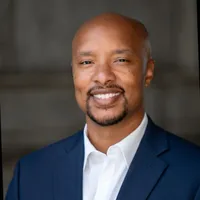
Jason Lioy
Chief People Officer, Dawn Foods Global
Beyond HR: Why People Leaders Must Master Business & Finance
Episode 36 · January 3, 2025 · 18:18
Beyond HR: Why People Leaders Must Master Business & Finance
Key moments
In Jason's words
“You have 4 things you need to do for me. And if you can do those 4 things, you can do your HR job. Know the people, know the business, never let me get surprised. And by the way, you have to be able to run this plant.”
“You can't have a talent strategy that's focused on building capabilities that your business doesn't need to grow.”
“Engagement's got to be outcome-based. It's got to be behavior-based. It can't just be on feelings, right?”
Transcript
Read the transcript2,791 words
HostWelcome to the Built by People podcast, where we share the stories and insights of the world's top HR leaders. Join us as we dive deep into the minds of HR executives, uncovering their strategies, challenges, and triumphs in shaping today's workforce. I'm excited to welcome Jason to the Built By People podcast. Jason, thank you so much for joining us. As a starting question, I always love to ask if you could tell us a little bit more about your career journey.
GuestYeah, so yeah, thanks for having me. I really appreciate it. And thanks for the opportunity to share my story overall and my thoughts on the podcast, because quite frankly, you know, it's an exciting topic. You know, I hate to— some people might say, oh, how is HR exciting? Well, to me, HR is very exciting because it's a function within a business that touches everything., you know, and you have, if you're doing it right, you have the opportunity to let, to influence, make, have an impact on all levels of the company. So that's, that's what I love about it. And from my vantage point, in terms of my career, I spend most of my time in plants and operations types of environments. And I would really go back to my first job in HR after graduate school as one of the most critical, moments in my career because I find myself repeating the words I heard in that first orientation meeting with my boss. I worked for a plant manager, and he had every job in the company from VP of Operations down to plant technician, and just loved build— you know, building and fixing broken plants, right? But he was an operations zealot, right? He just loved operations, and he had a reputation for chewing up HR people, you know, and chewing up functional people to a certain degree. But he sat me down first, first day really after graduating grad school. Uh, it was my first real job, and he said, listen, Jason, you can take all that HR stuff that you learned in graduate school and throw it out the window. I had some other expletives that he threw in there, uh, but, uh, I was left befuddled, like, what are you talking about? He's like, well, You have 4 things you need to do for me. And if you can do those 4 things, you can do your HR job. Know the people, know the business, never let me get surprised. And by the way, you have to be able to run this plant. And I was looking at him like, are you outta your mind? I'm not an engineer. I'm like, you know, he's like, no, no, no, think about what goes into those 4 things and then you can do your HR thing, right? And once I got that, I mean, I got it pretty quick 'cause I mean, he was able to, you know, cut through all the BS and really just hone in on what was important. And once I did that, it made perfect sense, you know, because to be able to do anything as a function, you know, a support function, you have to understand who you're supporting. And that's what I loved. That's what I loved about that learning opportunity. That's what I've loved about my job ever since. And in terms of ascending into the position I'm in today, which ultimately is the pinnacle of an HR career, you know, being a chief people officer or chief HR officer, whatever you call it at your company, you know, it was by circumstance but also exhibiting those traits, you know, that my first boss instilled in me, you know, being known as a person that wasn't just an HR person, being known as somebody who knows how the business is run, someone who knows how they impact the business on a on a, on a financial level and not just speaking HR speak, right? And I— great, you have to have all that other expertise too— labor relations, employee relations, compliance, all that stuff. So that's what the other thing is too, is that you have to have all that knowledge, but you have to have all this other knowledge too. And that's one thing I love about my— that's one thing I've loved about my career. And every job I've had, I've had that opportunity. I've worked for some of the best companies in the world that really honor and that really understand what what true HR partnership looks like. So I've been very, very fortunate in that respect. But then in my job, I look at— view— I view my job now as someone who's trying to instill that in my HR, in my HR team as they grow in their career.
HostJason, how does HR directly influence the company's P&L, and what metrics do you track to demonstrate that impact?
GuestYeah, so I mean, there's lots of literature out there that you can read around how HR impacts the P&L, but in terms of my, my, my experiences, I view that HR influences the P&L, the business, by aligning all these, the talent strategies with our business objectives. Meaning you can't have a talent strategy that's focused on building capabilities that your business doesn't need to grow, right? So making sure that HR can influence capability building to drive business objectives, reduce costs, improve operational efficiencies through culture and culture types of initiatives. Jack Welch at GE, I mean, I worked at GE for a long time. He emphasized that HR leaders should focus on productivity, employee engagement, and leadership development. Which would then enhance business success. And moreover, organizational capabilities that are focused on innovation, speed, agility also impact profitability. You know, in terms of how to measure this, there's lots of key metrics that are very easily quantifiable. Revenue per, you know, revenue per employee, turnover costs, time to fill, but also succession. Of critical roles, you know, time to fill and succession of critical roles. Employee engagement scores, but when I say engagement scores, it's not just happiness scores. Engagement's got to be outcome-based. It's got to be behavior-based. It can't just be on feelings, right? I enjoy working for my company. That's not a question you want to ask. You want to ask questions around, to what degree do I want to, you know, go above and beyond for my company, right? That means the discretionary effort that you're gonna, you're gonna go after to get your job done, to drive business. That's commitment. HR cost per employee, HR ratios like HR to team member ratio, productivity metrics, and then also ROI on training and development. You know, where can you quantify training and development and have a return on investment mechanism there? That, and if you If someone is asking, well, how do I measure ROI on training? Well, that means you're not doing the right training. You should be able to actually look at a training program that you're doing or that you're putting in place, and it either directly impacts an initiative or a program at your company that's driving business revenue or a training program that's going to reduce cost eventually. Like if you're doing a leadership program, it's gonna reduce your cost of executive search firms later down the road because you're gonna be putting in place successors for key positions that you would normally go outside for, putting them in place with internal people, and you're gonna save hundreds of thousands of dollars in those types of costs.
HostThat's great. Jason, my next question is, what steps can HR leaders take to transition from being seen as people managers to true business leaders within an organization?
GuestYeah, so it goes without saying, understanding the business, you know, as I reiterated, as I stated in my first, in my opening around my career, the first thing you have to do is understand the business, learn the financials, learn the P&L, learn the market dynamics. If you're in a plant, Understand all the costs and all the inputs and the outputs of the plant. Get involved in initiatives in your plant, lean initiatives, lean programs, lean projects, stuff that's outside the HR box. Learn how to make data-driven decision-making. Understand how to use analytics to link HR initiatives to measurable business outcomes. Such as profitability, market share, customer satisfaction, and learn how you can correlate these things. Like, you can correlate engagement scores with other types of factors. You just have to learn how to do the statistical analysis and the regression analysis to see how things impact each other. Really educate yourself on how to put in place proactive solutions. You know, understand how do I anticipate What are our workforce needs? And develop strategies to address them ahead of time, like future skills training, succession planning. We've got a very big initiative right now around succession planning for certain capabilities, because we have a lot of people that are retirement age. So we want to make sure that we have a succession pipeline in place for that specific group of people, because that would directly impact our business. And also communicate. Be able to communicate and talk about, be able to tell the story of what you've done to senior leadership and to your team as an HR group. And the other thing I would say, absent all those things I just said, absent those 5 things I just said of, you know, understanding the 4 things I just said about understanding the business, data-driven decision-making, proactive solutions, and demonstrating impact. Don't change your title to try and change the perception of your function. Don't change your title to business partner or anything like that to try and change the impression of your— of the function in your group, because that is just— it's smoke and mirrors and window dressing.
HostCan I get your perspective on balancing prioritizations around employee satisfaction with driving business outcomes and HR decisions?
GuestYeah, so I view them as very interlinked, right? I think there's not a balance needed. They're all, they're all together. I've learned throughout my career that, that if you approach the organization with an emphasis on satisfied employees, satisfied— I don't want to say happy, but satisfied employees, employees that feel like they belong to where they work, they belong to that company, you will get better performance, better customer satisfaction, and better financial results. I don't view them as mutually exclusive. Employee satisfaction is not a trade-off. It's also, it's a driver of business outcomes. Also, use workforce segmentation to tailor solutions for different employee groups. You know, looking at different groups of people, whether it's by generation, whether it's by function, whether it's about other things like that, they all have different needs. You know, ensuring that you tailor your solutions to fit and meet those team members, those employees where they're at, so they can align with business goals. Continuing to leverage feedback, conduct regular surveys, pulse checks, you know, get aggressive about asking for feedback, but then also get aggressive and almost obsessed with taking that feedback and providing solutions to get results against those feedback points. Because if you do that, people are going to get more committed, they're going to get more engaged into their work because, and that'll raise morale because they know that you're listening and then you're trying to tailor solutions to fit their needs so they can deliver the business goals. Also, making sure that leaders set very clear expectations, communicate how this employee engagement, employee satisfaction, and business outcomes align, and ensure that employees understand their role in driving organizational success. And then, absent it all, outside of it all, making sure that you're properly resourcing, allocating the resources to ensure that you drive all these objectives. Now, Grant, I know that some allocations may be sparse, depends on your financial situation. So you allocate resources to those areas that are going to drive the best business outcome, the critical capabilities that are differentiating your organization.
HostJason, what strategies have worked for positioning HR as a hard business function that contributes to measurable organizational
Guestsuccess? Yeah, I think that, again, I think it can go without saying, you know, if you just listen to what I've said before, making sure that you tie your programs to business metrics or to business objectives or to strategic business outcomes. You know, in my HR function, we ensure that every program that we have is tied to something very specific that the business is asking for, whether it's capability building, whether it's mergers and acquisitions, whether it's cost control, technology, what have you. We ensure that all these objectives from a business perspective are tied right back to an HR program. We want to also make sure that we adopt very business-specific KPIs And what I mean by that is that HR should measure success through using business-relevant metrics such as profitability, productivity gains, retention rates, succession, so on and so forth. Driving culture as a business asset. And when I say driving culture as a business asset, it's not this soft and fuzzy notion of culture. It's really talking about what elements of your culture are driving specific business outcomes. You know, a high-performing culture boosts customer satisfaction, innovation, and adaptability to the business. You know, and we've shown some very good success at Dawn where we are striving for this high-performance culture, and we've shown a lot of ways that we've adapted, overcome, innovated, and that's driven our success throughout these past few years.
HostI want to ask a tactical question that builds on what we just discussed, and that is, how do you coach your HR team to align their work with the broader business strategy and communicate that value to leadership?
GuestYeah, so when I have my HR meetings, when I have my, either my global town halls or even my leadership team meetings, I ensure that we are doing a lot of storytelling around our metrics and how we are driving not only HR-specific metrics, but also business metrics. I also talk about creating this line of sight for our business, our HR programs, and where this comes into our revenue growth, market share, organizational impact, if, you know, operational efficiencies, et cetera, et cetera. Every program we talk— every program that we talk about, I ensure that I create that line of sight back to a business objective. The other thing is too, we want to make sure that we develop business acumen. Before I start any global town hall, I talk about the finance— finances of the business. And then I start peppering my team with questions on, you know, what's our operating income goal? What's our cash flow goal? What's our top line sales increase goal, et cetera, et cetera. I'm not talking to them about HR stuff. I'm talking to them about business stuff. And it's not a raise your hand, you know, and wait for me to call on you type of scenario. It's me calling out people and seeing if they understand what the business is all about in terms of metrics. And then also I encourage my team to seek continuous feedback about how they're doing, about how their teams are doing, about how my team is doing. To ensure that they are remaining relevant in the business.
HostJason, any parting advice you'd like to share with our community?
GuestYeah, I'd say since the pandemic, HR has had a real opportunity to lean in because the pandemic provided that opportunity. It provided that door to be opened for this function to show its true value to the organization because of all the people-related activities that were going around, going on with the pandemic. Some HR organizations took it to be even more people-oriented and less business-oriented. Some did a balance. I would encourage everybody to seek that balance and to have the words of my first boss resonate in your heads: know the people, know the business, and never let your leader get surprised. And by the way, you should be able to talk about and run pieces of the business. If you strive for those 4 items, if you strive for those 4 true north pillars or whatever you want to call it, you and your function will take a step above the rest.
HostJason, thank you so much for coming on the Built by People podcast. It was a pleasure having you on.
GuestYeah, thank you. I appreciate it.
More conversations like this