Episode 46 · January 14, 2025 · 15:57
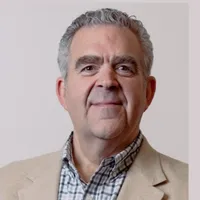
Janice Deskus
CHRO, Staples
The Real Secret to Big Change: Understand Your Org's Soul & Develop the Whole Self
Episode 46 · January 14, 2025 · 15:57
The Real Secret to Big Change: Understand Your Org's Soul & Develop the Whole Self
Key moments
In Janice's words
“Every time you come into an organization, you have to really take a step back and understand where has the organization been, what is it actually trying to change, what's the reason, what's the rationale, the business strategy, whatever it is that's prompting some level of change.”
“Similarly, for the employees, it was very important for us to make sure folks understood where the delineation was.”
“Over the years, we have gotten much better in terms of integrating and making sure we're talking. So the CHROs from the 3 entities, as an example, we have spent a lot of time over the last 6 or 7 years making sure we all know what each other is doing and making sure we're managing either the customers, if there's impact to our customers, or to the employees going forward.”
Transcript
Read the transcript2,826 words
HostWelcome to the Built by People podcast, where we share the stories and insights of the world's top HR leaders. Join us as we dive deep into the minds of HR executives, uncovering their strategies, challenges, and triumphs in shaping today's workforce. I'm excited to welcome Janice to the Built By People podcast. Janice, thank you so much for joining us. And as a starting question, I always love to ask if you can share a little bit more about your career journey.
GuestYeah, great. Well, thanks for having me. I'm excited to have this conversation with you and everyone. So my career goes back about 30 years at this point. So there's, you know, a lot of stops along the way. But I came out of graduate school where my background was primarily organizational psychology to go right into an internship with United Technologies in the aerospace industry and was fortunate to get into an HR role. I did talent acquisition and training very early on. In my career with them, and then transitioned over to do labor relations, which was a wonderful experience to have early in my career as well. After I spent about 10 years with United Technologies, I switched over to Danaher and had the opportunity to be the head of HR for a group of their companies, and again, spent a lot of time doing union negotiations there, but also more broadly running the HR function for the group that I had responsibility for. And then at that point, true to living in the Hartford, Connecticut area at the time, you have to do a stint in the insurance world because it's the insurance capital of the world. So I ended up doing two stints. One first was at Cigna, and then I ended up moving over to Aetna. When I got to Aetna, it was really the beginning of my career doing large-scale change and transformation. It was a significant turnaround as I joined the organization and got to experience it under some really great leaders, and they learned a lot through that process that I've carried on in my career as I went forward. After I was at Cigna— sorry, Aetna— for about 8 years or so, I moved over to Covidien, which was a med device organization, and again led HR for a large group of businesses there. The year or so after I arrived there, we had the largest merger in the med device industry, where Covidien merged with Medtronic. And it was another opportunity to kind of flex some change transformation, even integration, if you will, muscles, and learned an incredible amount through that experience. Just a great organization all the way around and great people again to learn from and work with. After I did that role for about 6 or 7 years, I then moved over to Staples. I got a phone call from a private equity firm, Sycamore Partners. And they asked me to come and talk to them about the CHRO role at Staples. And my first reaction was retail, not something I'd ever been really that interested in and didn't have any experience in. And they helped me to understand that Staples is actually more of a B2B business than retail, which is surprising to most people. So got me interested enough. And again, another opportunity to spend, you know, the last 6 years with them doing again, a major turnaround and transformation of that organization. So that's kind of 30 years in a nutshell.
HostJanice, you've been with Staples through a significant transition under private equity ownership. Can you share what it was like to join a new leadership team during that time and how it influenced your approach to change management?
GuestYeah, sure. So, you know, I think a lot of people will read books or take a course on change management, and you think you have sort of a standard recipe around how you might do change. And to a great extent, the foundation, the basic fundamentals of change management are probably pretty consistent across most of the experiences I've had. Every time you come into an organization, you have to really take a step back and understand where has the organization been, what is it actually trying to change, what's the reason, what's the rationale, the business strategy, whatever it is that's prompting some level of change. Understanding where the organization is at that point and then getting really clear on where you want to go. So that really brings in sort of that different flavor to the change management process. And that was no different at Staples than anywhere else I had worked. So when I came in, it was important for me to learn all of that, the, the past, kind of the present, and what we were trying to achieve going forward. And the leadership team was made up of people who had been with the organization back to the days of the founder of Staples, working with him, all the way to people like myself who joined just as private equity had purchased the organization. And so I really had the opportunity to learn from the people who'd been there a long time. I talked to a lot of employees as well, spent a lot of time just really trying to understand the organization. And then, of course, working with the leadership team, both the folks who'd been there a long time, but a number of us who were new to the organization, trying to make sure we were crystal clear on what the objectives were around this change process. So, you know, in the early days, it really was a lot of listening, asking good questions, and just experiencing the culture to figure out, where it is we were, and again, as I say, where we wanted to go.
HostJana, Staples underwent a major restructuring, splitting into 3 entities. What were some of the key challenges and opportunities you faced during this process, and how do you ensure alignment across these different business segments?
GuestYeah, it's a great question. So as I said, everyone thinks of the stores, the Staples stores, as the Staples business, but in fact, it's really made up of 3 different elements. One are, of course, the stores, the retail. What we've always called US retail. There's the Canada side of the business, which is actually B2B and retail stores up north. And then there's the US B2B side of the house, which is North American distribution. And that's the business that I think really attracted me and where I've spent most of my time over the last 6 years or so. The challenges were, as you can imagine, it's one company, our customer base always viewed us as one company. When we split into three, it was really a challenge to make sure our customers understood the differences between the three businesses, where it is they, they were, their resources would be, how they would get the products and services that they needed, et cetera. Similarly, for the employees, it was very important for us to make sure folks understood where the delineation was. And in particular, US Retail and US North American Distribution were, and are still, housed in the same corporate headquarters. Canada is physically removed because they're, they're up north, but it was hard for employees to see that there were two separate legal entities with two separate C-suites leading these two organizations within the same building. We had to help the organization and the employees understand that there may be different policies or approaches. There may be different levels of funding and resources applied to the different businesses. So really helping the employees understand that as we went along was really important. Over the years, we have gotten much better in terms of integrating and making sure we're talking. So the CHROs from the 3 entities, as an example, we have spent a lot of time over the last 6 or 7 years making sure we all know what each other is doing and making sure we're managing either the customers, if there's impact to our customers, or to the employees going forward. So lots of integration needs to happen. And I would give a lot of credit to our current CEO, John Lederer, who really has been instrumental in making sure that those bonds and those conversations and connections and sharing of information across the three entities are very strong so that we're not negatively impacting our constituents and our customers and our employees.
HostJanice, the pandemic posed unique challenges for Staples as an office supplies company. Could you elaborate on how the organization navigated these challenges and what strategic initiatives were crucial in rebuilding momentum post-pandemic?
GuestYeah, sure. So at Staples, you know, obviously we are based on having folks in the office because the majority of our business is on the B2B side. So when everyone went home during the pandemic, they stopped ordering through their normal channels all of their office supplies. Instead, they were going to Amazon, they were going to Walmart. They were going wherever they thought they could get the products that they need as they were sitting at home. And we lost that connectivity in many respects to our customer base. So our overall EBITDA went backwards. We had achieved great gains from an EBITDA perspective over the first 2 or 3 years of our transformation. We lost all of that as we went into the pandemic. And so it was important for us to really pivot and to shift our business. And we've continued to actually do that even post-pandemic. But during the pandemic, it was all about making sure, like so many CHROs had to do, making sure our employees understood how we were going to work, what are the new rules of the road. A lot of trial and error relative to how we managed our workforce and the things that we would allow in terms of work at home as we continue to progress back into the office. On a customer side of things, it was a lot of work to make sure that we were going in and making sure that the companies that we support were working and communicating with their employees to ensure that they were ordering products through the system and the contracts that we had with them, which was a challenge, but it was a benefit to the customer once the employees and the customer understood that there's a significant discount when you work through a contracted business like us versus going to your local Walmart to purchase your office supplies. So making sure people understood the value that we brought to them during the pandemic from a customer perspective was was very important. Additionally, we also looked at diversifying over the years. So we bought additional businesses that were sort of ancillary. We had a, a copier business as an example. We had a business that we purchased that was very high touch in terms of its concierge service. So folks looking for a higher level of value in terms of its services and products. So lots of things we've done and continue to do. We've also looked to maximize our distribution channel. We have incredible warehouse functionality and capabilities. And with, you know, things like the DoorDashes of the world and lots of other companies who are out there trying to make deliveries, we have a great network that they're always looking to tap into. So trying to find ways to continue to diversify and utilize that resource beyond our core business has also been key.
HostJanice, with your extensive experience in HR and leadership, what innovative approaches have you implemented to foster leadership and effective change management at Staples, especially during times of significant transformation?
GuestYeah, it's one of the things I'm most proud of, of the work at Staples. Back when I started with them 6 or 7 years ago, they had been in serious distress as a company for many, many years. You could even argue 10 or 15 years. And as a result of that, they did not really invest in leadership or just general professional employee development. And it was the right thing to do. They didn't have the resources to be able to do that through that time. But once I came on board and started to work closely with our CEO, who really valued and understood not just the value to the organization, but also the value to the employee, I think both myself and the CEO really believe that the value of someone working at an organization certainly should come from their paycheck and those obvious things, but they also should be able to walk away one day, whether it's through retirement or or elsewise to be able to say, I really grew as a professional here. So what we started to do is we partnered with Babson College in Massachusetts, right down the road from the Staples headquarters. And we implemented a leadership program for our directors and our vice presidents to start with. And it was based around this premise that's a little different. It wasn't your standard leadership program where it came in and we just talked about simply being a leader in an organization like Staples. But rather, we talked about what is your overall full-picture ideal self? And we spent the first year working with folks not on how they would necessarily be a better leader at Staples, even though that was a bit of a, of an ancillary benefit. It was more helping them to really spend time and focus and give them some structure around thinking what is their ideal self in the future. And that future could be a year, 3 years, 5 years, didn't matter. And the ideal self could involve, revolve around, I wanna be a better father. I wanna get in better shape. I wanna rekindle my spiritual life. I wanna travel. I wanna be a better leader for my team at work. So it could be any of them or all of them. And we actually had folks spend a good amount of time with coaches and sharing information to get crystal clear on that. And the basic belief in it is if you are focused on your whole self and what's important to you and really understanding the why that drives that future-oriented self of your, of your own, you will see those benefits trickle through all aspects of your life. So even if you only focused on, I want to be a better father, the premise is you will, through that process, also become a better leader or manager at Staples. And it has just been a really well-received program and one where folks have just seen personal and professional growth that I think they're surprised by. And giving them the time to focus on that, I think, was a real gift to our leaders in the organization.
HostJenice, what parting advice would you like to share with our community?
GuestI would say maybe it's where I started with your first question, which is, you know, change and large-scale transformation is— it's a lot of fun, quite frankly. I'm a bit addicted to it. I love that level of change and scale. But it's not a one-stop shop. You don't have a one-way method that you can just blindly apply. Make sure you get in and you talk to people and you get down to all levels. You talk to your frontline workers, you talk to managers, every cut of the organization possible to get the insights that you need so that you really understand your starting point. And then of course, be very, very clear on where it is you want to go and make sure you're bringing those employees along every step of the way. Communication is one of the fundamental building blocks of any kind of a change effort, and it will make or break you. So don't in any way ever feel like you're overcommunicating because it's never enough. But come at it from a perspective that the employees can hear and that it's from a perspective that shows them you understand what's important to them and how it connects to the overall goal of the transformation of the company. And at the end of the day, you'd like to believe that you get to the end goal and you've brought all those people along and you walk away from that change effort knowing I've in some way helped the organization and those employees have a better experience going forward.
HostJanice, thank you so much for joining us on the Built by People podcast. It was a pleasure having you involved.
GuestYeah, thanks again. It's been fun.
More conversations like this