Episode 29 · December 24, 2024 · 15:12
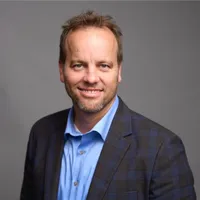
Fred Skinner
Chief Human Resources Officer, Eversana
The Real M&A Due Diligence: Valuing Culture Over the Numbers
Episode 29 · December 24, 2024 · 15:12
The Real M&A Due Diligence: Valuing Culture Over the Numbers
Key moments
In Fred's words
“culture eats strategy for breakfast.”
“If you have really happy, engaged employees, you're going to see the pull-through with really happy, engaged clients, and then the financials are just going to come for the ride.”
“we lean with, with culture first to make sure that it's a good fit for us. And then after we know that, when we expand, we double down on it”
Transcript
Read the transcript2,557 words
GuestWelcome to the Built by People podcast,
Hostwhere we share the stories and insights of the world's top HR leaders. Join us as we dive deep into the minds of HR executives, uncovering their strategies, challenges, and triumphs in shaping today's workforce. I'm excited to welcome Fred to the Built By People podcast. Fred, thank you so much for joining us. And as a starting question, I always love to ask if you could tell us a little bit more about your career journey.
GuestFirst off, thanks. It's awesome to be here. I'm really stoked to talk a little bit about Eversound and what we've done. My journey is, I don't know, probably underwhelming. I started in talent management. I never wanted to be a chief HR officer ever. I was like, now I know my space, I know where I want to play. And it's in the, as my wife would say, the fun side of HR. So I started off in a lot of different industries. I've actually moved all over the place. I lived in Chicago and started there, worked for a big pharmaceutical company and moved to a diversified manufacturer. Or no, before that I moved to a software development company and I worked there for like 5 years and grew up in kind of organizational development. And I went to a diversified manufacturer, then I went to an automobile place and did organizational development there. And then I went to this smaller company called a life science company called Dolmen, and I was brought over to build up learning and development for there. And then eventually they asked me to be the chief HR officer and I said, I'll do it for like 6 months. I don't know, like, I'll help you out because we should find out who really wants to do this and they would be good at it. And then, and then I really liked it and, and then I've been doing it ever since. And that was probably like 9 years ago. So, and then now Eversana, which was— we sold that company into what now is called Eversana. So, and now I live in Milwaukee, Wisconsin, where my wife's family is from.
HostAwesome, Fred. So how was Eversana's cultural foundation built from the start and how have you woven those beliefs into every aspect of the company's growth?
GuestYeah, it's a great question. It's an awesome story. I wish I had like days to talk about it, but let me tell you, I'll set the stage to talk about like what we did that was, I think, unique to a lot of organizations. So when we first started this journey, it was probably like 2018 and we knew we had something special, like whatever Sana does. I mean, we're changing life sciences in the pharma industry, which is a really fun thing to do in an industry that needs to be changed. And so we ended up purchasing like 7 different companies. And one of the big questions that we had was, okay, how do we bring them together and actually have one company? Because a lot of organizations struggle with that. If you look at like the M&A market, when you acquire organizations, you know, a lot of the times those fail. And I believe a lot of the times they fail because they haven't really considered culture and what culture can do. And it's true of the saying culture eats strategy for breakfast. So what we decided to do was we leaned all into it. We said, okay, we just pulled all these companies together. We announced it and we said, okay, we don't even know our name yet. We're NewCo and we're going to design what the company is. But before we even do that, we're going to bring like 100 leaders across all those different companies together. For 2 days and just talk about culture. So we did that. We brought them all in to Milwaukee and said, okay, first day is what do you really love about your culture that you have in your organization right now? What do you love? What do you not like that you'd like to get rid of? And what don't you have that you'd want to create? And that was day 1. Day 2 was set up. I mean, okay, all that work that we just did, let's create what we want this company to be, which again, was an exciting moment in time because we got to create what now is, you know, 6 years or, yeah, 6 years running a culture that has been far different than anything I've experienced. So back to the idea of what that culture is, there's a lot of ways to define it, but we really just led with simplicity and we said, okay, there's 2 elements that we want to talk about. One, is something called key results. A lot of companies have key results. Ours are pretty easy. We want to make them easy that everyone in the company could align to, like, what are we focused on? Everybody. So they're around 3 things. And again, the beauty is its simplicity. One's around employee engagement, two is around client delight, and three is around financial results. And the recipe is simple because it is— if you have really happy, engaged employees, you're going to see the pull-through with really happy, engaged clients, and then the financials are just going to come for the ride. And that's what we've seen. We have a highly engaged organization. We have awesome client delight that rivals anyone in our industry or outside of our industry. And then we have the financials that go along with it. So that's one element of it. And then the other element was how we want to behave. So we created something called culture beliefs, which are a little bit different than any cultural values, which a lot of companies have. These beliefs are ever-changing. We have 8 of them right now. We started with 6, then we added some, we combined some, but they're really around like how we all want to operate as a company, as individuals, and treat each other and work together and, and just show up. So that's what we created and we launched that and it has been successful ever since.
HostYou've scaled across a lot of countries. What strategies have you used to maintain an employee-empowered organization while expanding across geographical boundaries?
GuestYeah, it's a great question. It's hard to do. I think I'll liken it to a couple of different things. One, there's geographical changes, there's cultures that are outside of, you know, predominantly we were in the US at the time. Now we're really across the globe. And then there's been a bunch of acquisitions on top of that. And, you know, each company that you acquire has got a different culture as well. What we've done, again, aligning this idea of simplicity, we've really just led with culture. And I think this is where mergers or expansion often fail. They say, hey, we're going to acquire this great company and we now want them to assimilate to what we do. And do how we do, and you just like butchered the economic value that you just purchased because you're now going to change them on what made them successful. We take a different approach. We, during like the beginning parts of the process, will spend more time, effort, and emphasis around culture to make sure it's a good fit with our organization before we even look at financials and things like— I don't tell— I said that or anybody else, but But it's true, we lean with, with culture first to make sure that it's a good fit for us. And then after we know that, when we expand, we double down on it and we'll spend— we'll do the exact same effort that we did back in 2018 when we brought companies together. We do that with these new companies. So, or new expansions into different regions, we'll say, You know, what's great about what you do right now? What didn't you want or don't you want to do anymore? And what don't you have that you'd like to do? And then we tie it to what we are. We already know it's gonna be eerily similar because we've done our due diligence on the front end, but we get to a point of alignment. And then additionally, like when you think about sustainment, we tie it into everyday practices. So we tell a lot of stories around our culture in this organization. We start off meetings talking about our culture. And the great things that we're doing and giving culture kudos across the company. We also tie it to our compensation, which a lot of people are afraid to do, but it's one of the things that'll break a company if you say you do this, but then you reward for this. It's— it can really hurt an organization. And so we really look at the what you do and how you do it and reward accordingly related to that.
HostWhat practices or initiatives have contributed to Eversana being recognized as a great place to work for 6 consecutive years?
GuestYeah, there's a lot of different things. You know, what I would say is the biggest thing that has caused this is we did a lot of work on the front end, and people really enjoy working for a place that has a great culture. And it just manifests itself into awesomeness. And I think that really has led to this. If I were to think about some of the stuff that we do besides what I've already mentioned, you know, we, we try to be the smallest, largest company ever. And I think that's what a lot of companies lose as they grow. They put in a lot of bureaucracy because they feel like they have to manage to the 1% that breaks the rules. And we've always pushed ourselves and our CEO, Jim Lang, has always asked me to think this way. He said it on the front end of when we first started this thing. He's like, so many organizations, you know, then cater to this 1% and we want to create something pretty special here where we can lead with trust. We know we're going to hire amazing people that are really good at what they do. We should get out of their way. Like, it's as simple as that. And so we try to do that as much as possible and we test ourselves on all the things that we're putting into place. If you think of, you know, HR specifically, like we have a lot of regulatory requirements and things like that that we have to think through and we try to ease that on our employees and our leaders across the board. Not to say that we're going to do their work, but to minimize things as much as possible, still be compliant, but not create all this stuff for the 1% that's going to break the rules. We, we know that that will work its way out when you have 99% that are really engaged and focused on being here. And I think that's what we've learned. And so it's simple things like, you know, we can trust people to approve their own expense reports to a certain level. Like, how much bureaucracy do you take out of doing that? And, you know, management, the— our performance review process is not, you know, months and months in a 50-page document that employee has to create to prove what they've done. It happens throughout the year and it's simple, easy conversations that happen at the end of the year. So simplicity is really how we've made this thing grow and continue to grow. You also have to have simple things like leadership on board, an awesome CEO that really gets it, and everything will just start to domino into a very special place to work.
HostYou've endured a lot of rapid growth where you are. I'm curious what lessons derive, you know, from that experience of rapid growth and how you sustain the amazing culture that you have in place through it.
GuestYeah, I'll go back to— and doing your homework on the front end, I think, is a big lesson of, you know, Rapid growth doesn't always come with, you know, client wins and things like that. Yes, that will. And so figuring out, you know, what, what characteristics you're looking for, for people that you want to join your organization, you should be really picky because you've created something really special and awesome that people can be a part of and that want to be a part of that. So you need to hone in on what you're looking for. And then on the acquisition side of things, again, doing your homework to make sure there's cultural alignment and fit before— it can be very appealing and tantalizing to, to get an organization that doesn't fit with your culture, but it is a recipe for disaster. So finding those organizations that already align is super helpful. And then the last, I think, you know, learning would be always communicate, which is one of our cultural beliefs that we have. And it's so, so true and so easy to miss. You run so fast, especially in high-growth environments, where you forget to like bring people along for the ride and communicate either good or bad news. And the more transparency you can bring to that and the velocity that you bring it to your people, is so appreciated, good or bad. And so have the courage to communicate no matter what and do it often, always, and push for it.
HostFred, any parting advice you'd like to share with our audience?
GuestParting advice? I think the one thing that I would say is that you can't fake a genuine focus on culture. You just can't fake it. People can read through that. They're smart. So if you're not focused on it and you're only focused on financials or you're only focused on growth or whatever it might be, people are going to read through that and, and it'll just be a job. And that is not a place a lot of people want to work. So the more genuine you can be and transparent you can be and really have an interest in creating something fun and awesome that people enjoy, coming to and being a part of, it's all simple after that. I know I say this as though it's like very simple to do. This took years and people way smarter than me doing everything, but it really does work when you do a lot of these things simultaneously.
HostFred, thanks so much for coming on the Built by People podcast. It was a pleasure having you on.
GuestI loved it. It was super awesome. I'm happy to talk about Eversana and the awesomeness that we have built and created. Any moment in time. So my pleasure to be here. Thanks for the invite.
More conversations like this