Episode 199 · May 15, 2025 · 18:54
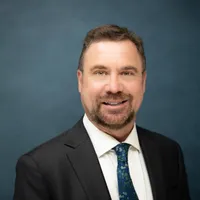
David Gaspin
Head of Human Resources, CodeGreen
Don't just scale processes: Intentional culture drives lasting company growth.
Episode 199 · May 15, 2025 · 18:54
Don't just scale processes: Intentional culture drives lasting company growth.
Key moments
In David's words
“What I came to understand, and I'm glad I came to understand this pretty early on in my startup life, was that most of the tension isn't about what people are doing, but it's about what they're saying and what they're not saying.”
“Culture and operations are not two distinct things. The way people feel at work and the way that work gets done are two sides of the same coin.”
“I used to take that personally, but I've learned to stop doing that and really instead look at resistance as a data point because usually it comes from one of three things. It's fear, it's misalignment about goals or outcomes, or it's a lack of trust.”
Transcript
Read the transcript2,661 words
SpeakerWelcome to the Built by People podcast, where we share the stories and insights of the world's top HR leaders. Join us as we dive deep into the minds of HR executives, uncovering their strategies, challenges, and triumphs in shaping today's workforce.
HostI'm excited to welcome David to the Built by People podcast. David, thank you so much for joining us. And as a starting question, I always have to ask if you could share a little bit more about your career journey.
GuestYeah, absolutely. Thanks for having me. I think like a lot of people in the HR and people field, I fell into my career by accident, right? So my, Undergraduate degree is in musical theater and first came here to New York with the big Broadway dreams. And after a few years of chasing that dream, I guess I just had an opportunity fall into my lap for a full-time job in an HR department. Figured why not see what it's like to live like a grownup for a change and kind of have a real job. And I guess it stuck. So I started out as an HR assistant in big magazine publishing company, got promoted a few times and figured I'd follow a pretty traditional career path in the media industry. But then probably 5 years in through a series of unexpected conversations, I found myself in my first startup and that was a game changer. So I felt like I'd really found my place there and never looked back. And since then, I've spent the last 15, 20 years or so building and scaling HR and people functions for these growth stage companies. Sometimes coming as the first HR hire and building things from scratch. Sometimes it's a little further along in the company's journey and I'm brought in to level up and scale a more mature, more sophisticated HR function that's robust enough to support a growing company, but still keeps that little special startup spark.
HostDavid, when was a time you faced a significant challenge in your field and how did you overcome it? What lessons did you learn from that experience that can benefit our listeners?
GuestYeah, this, I love this question, right? So in the kinds of growth stage companies that I work with, there's one challenge that seems to be universal that we've seen in every company. And that's about how do we scale our systems, our processes, operations, our culture without losing that magic that we had in the beginning? How do you go from 15 people in a room who have their hands in everything, who know everything that's going on to a well-oiled machine where people can focus on what they do best and really look at getting the best possible results. So the first time I came across that, I figured the answer is operational. It's better processes, clearer job descriptions, more structure, right? And those things are important, but What I came to understand, and I'm glad I came to understand this pretty early on in my startup life, was that most of the tension isn't about what people are doing, but it's about what they're saying and what they're not saying. Communication, collaboration that at one point earlier in the company was completely organic at some point it needs to become more intentional. We took a step back and really looked to invest time and effort into more of the culturally focused initiatives instead of the operational ones. So this is things like training managers on how to have real conversations about accountability, defining the norms for how we collaborate, how we share information, how we make sure that people know what's going on across the business, but just as importantly, people feel like they have a voice and they can safely voice those, their thoughts on what's working and what isn't working. So we combined a focus on communication with some more concrete process changes, right? So better project scoping, clearer, transparent goal setting so that we had culture and operations moving in parallel. And within a few months, we saw higher satisfaction levels, turnover went down, we got better at accurately forecasting the business. Just as importantly as those business outcomes, right? Maybe more importantly, we were able to create a space where people felt like they weren't just along for the ride on the company's growth., but they were actually a part of it. And so I think if there's a grand lesson here, it's that culture and operations are not two distinct things. The way people feel at work and the way that work gets done are two sides of the same coin.
HostDavid, how did you approach building a team or a project that was initially met with skepticism or resistance? Can you share a specific example where your strategy led to success?
SpeakerYeah.
GuestSo when you say things like skepticism or resistance, I used to take that personally, but I've learned to stop doing that and really instead look at resistance as a data point because usually it comes from one of three things. It's fear, it's misalignment about goals or outcomes, or it's a lack of trust. And each of those three things can be addressed on its own with the right approach. So One specific example that stands out for me is when I led the rollout of OKRs, which stands for Objectives and Key Results. It's a goal-setting framework. And so we were leading this rollout across the company. And we had grown to a point where a lot of the work was happening outside of the direct view of the leadership team, which was making them feel a little bit antsy, not being across everything like they used to be. So there was obviously a need for more alignment, more visibility, but there was also a lot of resistance from a lot of people. The leadership team was hesitant because they didn't want to come off as some sort of command and control entity. They were concerned about adding something that felt heavy-handed or bureaucratic or like big company. And on the other side, we had managers and employees that were worried it was just going to be another thing to do, right? Another layer of administration, something that they could fill out every quarter and then forget about. And I knew we had to bring the employees into the process. I went on a listening tour and asked people what clarity would look like for them. We focused our build-out on those answers, not just what the leadership team needed. We were having small group conversations communications with managers to understand the workflows in place, to understand where those managers were already trying to drive focus, and then went back to the rest of the leadership team and worked with them to reframe the intention of this thing and make sure that we were communicating it in the right way. This wasn't about control. It was about creating a shared language that we could use to describe what we're all working toward. And so once we had that intention set, that grounding, we rolled out the OKRs gradually and with very clear messaging. This is not about micromanaging. It's about focusing on what matters. It's about aligning our energy and our efforts and giving our teams the space to focus and deliver what's important. So a lot of training that included a ton of conversation about the why behind this whole thing. There were light-touch, easy templates that people could work with, so it wasn't super administratively burdensome. We had open office hours where we'd answer questions. We had real-world examples of how OKRs could be used to shape conversations in team meetings, in one-on-ones, in even company-wide town hall meetings. And so over time, what happened was really powerful. OKRs stopped at some point, and I wish I could put my finger on exactly what that moment was. They stopped being a quarterly task and started becoming the language of the business. So teams were using these to prioritize, using them to say no to distractions, to celebrate wins and milestones. Leaders were using them to ask better questions, digging into why things were on track or off track, and how can a leadership team help managers and help teams get rid of roadblocks. And across the company, we started having meatier conversations about what we were doing, why it mattered, and how we knew if we were making progress. So to me, that's a success, and that success wasn't about the OKRs. It was more about how that rollout happened. So starting from a place of curiosity and trust and empathy, And so I guess going back to the question about resistance, to me, the best way to overcome that resistance is to understand where it's coming from and make sure the people who in the end are going to be impacted by whatever this thing is you're doing have the chance to be a part of the solution.
HostDavid, tell me about a case study or a project where you implemented something that was considered to be innovative. What was the problem? How did you address it? And what were the results?
GuestSo you're going to hear this theme again in all my stories, which is about navigating company growth, because that's where I work, right? Navigating that growth from scrappy startup to a scaling business.
HostAnd
Guestso when you talk about innovation, it comes in different forms. One that might might not feel as obviously innovative, but still sticks with me was we were struggling with employee engagement in a company that had been growing really quickly. There was a lot of hiring, there was a lot of just new. And the engagement surveys we would send out, the conversations we were having showed that people were just feeling out of touch, especially across teams, across people they didn't work with and see every day. And so some of the traditional fixes, having more meetings, having— putting out a newsletter, they didn't seem like they were really going to scratch this itch because the issue wasn't, in my opinion, wasn't the quantity of communication. It was more about meaningful connection. And so we tried something a little different. And created a program that was, and I've seen this other places, right? I'm not going to say that I changed the world in this, but it was a coffee chats program where every 2 weeks employees were randomly matched up with somebody in a different department for a 30-minute conversation, which it could be in person, it could be virtual depending on where people were because we were a distributed company. No agenda, no managers, no action items, no tracking. And it sounds super simple, but for where we were in that moment, it felt almost radical. So how do you measure an impact on something like that? It's not an exact science, right? Correlation doesn't necessarily equal causation, but That said, we tied it to engagement survey results, project velocity, especially on cross-functional work, and we saw meaningful jumps in both of those areas. And so to me, that just goes back to, again, that feeling of connection. So again, this is not innovation in maybe a traditional sense because it's not about the latest tech or something reorganization, but it's just humanizing the workplace in these small consistent ways. It's always attractive to want to do something huge and revolutionary and get caught up in trying to design these big future of work initiative. But sometimes in my experience, the most powerful solutions are the simple ones that still find a way to have impact on culture in kind of a profound way.
HostDavid, can you share a story about a mentor or a leader who significantly impacted your professional development? How did their guidance influence your approach to leadership in your industry?
GuestSo I'm going to tell you about one of the worst bosses I ever had. This was pretty early in my career. She was hired, she came in to lead the department that I was already working in. And when I say that we didn't hit it off, that's an understatement, right? So I'm not going to go into all the details, every interaction, but let's say her management style did not work for me. And from conversations I had, this was a pretty universally held opinion across the team. A few years later, we had both moved on working for different companies and I was looking to make a move in my career. She reached out to me and offered me a role on her new team and against my better judgment, I took it and I could not be more glad that I took that role. The first real conversation we had when we decided we were going to work together again, she opened with a huge apology. It was apologizing for our first experience together. She opened up to me in a way that no manager I had ever had, had done before, telling me about this the horribly dark place she was in when she came into that first company, how she'd been working on herself and really putting in the effort to try to become the person she wanted to be. And that was a brand new experience for me, to have a supervisor or boss that talked to me like that. It was really powerful. And so during that by what I'll call our second tour of duty together, she challenged me professionally. She encouraged me to take on stretch projects. She gave me space to explore, space to fail, but never so much that I didn't feel supported. I didn't feel like there was a safety net there. And again, just modeled what a great manager, a great leader, a great mentor should be. And more importantly than the work stuff, she was fully human. She was authentic. She was vulnerable and just real while never backing away from her expertise, her power, her authority. I had never had a manager like that before, and I don't think that I've had one since. And it's one of those things where when I'm looking at myself as a leader and a manager of a team and of people, I try to emulate that. I try to think, all right, what would she do? And I really just hope that I can get close. I was thinking about this question and as I was coming up with this, I don't think that she has really any idea about the impact that she had on me at that time. And I think if nothing else comes out of this, I think I'm going to probably reach out and let her know.
HostDavid, what parting advice would you like to share with our community?
GuestI think don't wait for permission. Don't wait for permission to start leading. Maybe that's more specific. Just pay more attention. Right. The people who make the impact aren't always the ones with the fanciest titles or the big budgets. They're the ones who notice what's missing, the ones who think about what's broken and think about what could be possible and then make the choice to do something about it. So get in touch with your curiosity, pay attention to the friction around you, to what people avoid talking about. Because a lot of times that's where the opportunity lives. And then when you find it, speak up. Find your allies, invite them to come along that journey with you and make something happen.
HostDavid, thank you so much for joining us on the Built by People podcast. It was a pleasure to have you involved.
GuestYeah, thank you so much. It's my pleasure to be here.
More conversations like this