Episode 62 · January 24, 2025 · 16:28
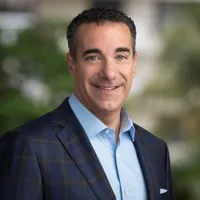
Crystal Boysen
Chief People Officer, Sprout Social, Inc.
Beyond Engagement: How Clarity and Behavior Build Effective Organizations
Episode 62 · January 24, 2025 · 16:28
Beyond Engagement: How Clarity and Behavior Build Effective Organizations
Key moments
In Crystal's words
“I think of culture being defined as how work gets done, and it's measured through collective behavior. So it's what people do, right?”
“I think the most important thing is values are often like these broad brush statements... but what brings values to life in my mind are the underlying behaviors underneath them.”
“I think we are the heartbeat of a company where we have the ability to transform an organization more than almost any other team in a company.”
Transcript
Read the transcript3,105 words
HostWelcome to the Built by People podcast, where we share the stories and insights of the world's top HR leaders. Join us as we dive deep into the minds of HR executives, uncovering their strategies, challenges, and triumphs in shaping today's workforce. I'm excited to welcome Crystal to the Built By People podcast. Crystal, thank you so much for joining us. And as a starting question, I always love to ask if you could share a little bit more about your career journey.
GuestThanks. Hi, Dave. Thanks for having me. Happy to be here. And happy to chat a little bit about my career journey. I've had a bit of an unconventional career path, especially for HR folks, where I actually started my career in IT consulting and possibly going down the path of being an IT auditor, if you can believe that. I started my career at Deloitte and had a nice career in IT consulting. As I started to climb the corporate ladder, I started to realize consulting was a great experience, but it wasn't like the technology itself or the role that I actually loved. What I loved most about my job at the time was leading a team, leading people, conducting some trainings, things like that. So I was really energized by mentoring the team and facilitating training and helping others grow. Luckily, Deloitte is a massive company, so they had opportunities within their HR, uh, team where I could make a, a nice transition from IT consulting into HR. So I got to kind of learn the best of the best in HR from Deloitte, and that's where I kind of launched my HR career. And a fun fact, as we were talking about this a little bit earlier, I actually was one of Deloitte's very first US-based employees to take part of their sabbatical program. And on that sabbatical program, I actually went over to Cambodia and lived and worked there for 6 months. That really was a transformational experience and turning point in my career where I saw firsthand the power of being in service to others. It really solidified my desire to build a career rooted in, in impact and growth. So HR felt like the logical place. Ever since then, I haven't looked back. So fast forward today, I'm, I'm now the Chief People Officer at Sprout Social. Been here almost a year, loving it. And prior to that, Chief People Officer at Vimeo, another public tech company in the US, and then led global head of people over at Canva in Sydney, Australia. So I, it's been a journey, it's been a ride, and one that I'm really, really happy with where I landed. I found like, I, I figured I, I found my spot.
HostHow does a culture survey provide deeper insights into an organization's values compared to a traditional engagement survey?
GuestI love that question because we went down an interesting path this year. So, as most companies, I'm sure you've seen all the data coming out of Gartner and other research firms around disengagement, not engagement, disengagement is at an absolute all-time high. So, we're, I've been really struggling with what is the right measurement, what's the right factor to be looking at to really get a good pulse on your employee base and your team and your culture? Uh, so when I think about culture, I think of culture being defined as how work gets done, and it's measured through collective behavior. So it's what people do, right? The culture that actually drives business performance, trust, engagement, or disengagement as outcomes. And so historically, I, like many others, probably have only measured engagement. And while that's really important, I think engagement data only tells us one part of the story. It tells us how people feel, while if you ask the right culture data, that can tell you what people actually do. I like that difference. And so we thought we, this year at Sprout, went out to kind of figure out how can we actually measure our culture. The other thing about engagement data, which I think is a bit of a gap, is it doesn't always connect with your strategy or correlate truly with business outcomes. And what I mean by that is you can actually have high employee engagement, yet low organizational performance, right? So, I don't find it as much of a driver of organizational performance as we sometimes originally thought. So, we set out to figure out a way, how do we actually measure culture that shows up in collective behaviors? So, we found a partner, a vendor called Culture15. I think there's probably more out there than them, but we found them. And unlike traditional engagement surveys, it actually helped us ask questions that measured how our employees viewed their day-to-day experiences at Sprout. And it ultimately gave us a couple key scores. It gave us a trust score, which I think is incredibly important for sentiment. It gave us an eNPS score, an employee net promoter score. So would they recommend us as a great place to work? And then it gave us a bunch of culture gaps. It gave us a score across all these dimensions, behavioral dimensions that our employees answered questions about around What's it like working here? What's it like working at Sprout? What do you see? What do you experience? And that was super tangible because it was based on actual behaviors they see and witnessed on a day-to-day experience. So we got this great amount of data from all of our employees, and then we looked at where we wanted to be on those behavioral spectrums. And then it gave us this culture gap, like, here's where your employees say you are today. For example, are you more consensus building or driving for results? Are you more cautious? Or ambitious in your approach? And so it was really interesting to see, here's where our employees think we are, here's where we want to be as a company, here's the gap, now how do we go bridge it? So that's what we went, we went all in on. So it's not like you get this tangible culture, uh, number, but you get this really insightful view of behaviors and how your employees are experiencing the culture. So we're doubling down on this culture gap, and our goal over the next year, instead of really focusing on engagement as the key factor, is how do we bridge the culture gap from where we are to where we wanna be, along with increasing, of course, trust and our NPS score too.
HostCrystal, in what ways can reimagining learning and development help reinforce an organization's core values across diverse teams?
GuestI love that. So we, as a result of this culture survey, we actually relaunched or reimagined and then launched brand new values just this, a few weeks ago at our company kickoff. We're all in on activating our culture through these new values, and of course, one place that they're going to show up is through L&D, through learning and development. I think the most important thing is values are often like these broad brush statements. They look beautiful, they're catchy, they're on the wall, they're on the website, but what brings values to life in my mind are the underlying behaviors underneath them. So, that's where in L&D you can actually teach and show the behaviors that underline those key behavior or those key values for you so that you, I embed them in Embedding your values in L&D brings those behaviors to life. I think outside of L&D, the other place I love to see values come to life is through all those major milestones in an employee life cycle. So of course they're gonna start to show up in recruiting and onboarding, performance reviews, actually, you know, L&D, all those places. So I think it's a culmination of bringing them to life in multiple places, not just L&D, but really bringing those behaviors. That's the meat of the value in my mind. To life.
HostCan you share some examples of how customizing learning and development programs for specific teams can enhance both team performance and alignment with the company's culture?
GuestYeah, so an interesting observation I had when I joined Sprout, and it's been about a year, we invested a lot of money, a lot of time, a lot of resources, like many HR teams, in traditional L&D, especially at those key manager stages or transitions, right? So new manager, maybe experienced manager, more of an executive, a leader. And so when I came in and started unpacking, like, what's the ROI of these programs? Tell me more. Help me understand what we're teaching people. How are their behaviors changing as a result of these programs? It was interesting because what we found is despite the money resources that we were throwing at L&D, it wasn't actually providing the outcomes we were looking for. We weren't seeing the ROI in terms of business impact and results in terms of managers like shifting their behaviors as a result of these programs. So our perspective is, and we're going to try a new approach this year, while we still— trust me, I grew up in L&D, I love, I think there's tons of value there, but it has to be applied in the right context. So where we've seen customizing it really work and where we're doubling down this year is we're going in at the team level. We're not going to do those big broad brush manager transition trainings. We've taken those off the curriculum. And what we're doing is we're going into targeted teams and working with the manager and that team. A model I really like is the Drexler-Sibbet team performance model. It's just like an easy one to kind of guide as a framework for newly formed teams. We go in and we focus on the first stages of the model, which are around orientation and team building and designing a workshop to help team members clarify their purpose, understand their role, build that psych safety and trust that's required of any high-performing team. Versus if we go in and look at an, another team that has maybe a really strong leader, they're a well-established team, they might be further along in this team performance model. So, we'd focus more on the top end of that model, which is around high performance and renewal. So, maybe it's around tailoring, you know, training on decision-making frameworks or retrospectives. And, you know, it depends what they're still struggling with, whether it's execution or they just need to take time to, recognize their contributions and renew. So what I love is it really gets in and, and with each team we do a survey or an assessment that gets to like, how's the manager and the leader of that team performing? And then where are the key areas that that team is struggling that's super unique to that team? So that's where we're going in, in terms of customization at the team level, where you still get the manager development element, but you're truly focusing in on the team level dynamics versus again, that broad brushed you're a manager, you must be having the same problem that the 10 other managers next to you are having, right? Which we know isn't the case.
HostCrystal, how can HR organizational design be optimized to not only prepare for future challenges, but also strengthen and perpetuate the company's culture and values?
GuestLook, I, I'm biased, I know, because I'm in my role as a chief people officer for, for HR, but, uh, I think we are the heartbeat of a company where we have the ability to transform an organization more than almost any other team in a company. I think when it comes to designing the, an HR team that is going to prepare us for future challenges, along with being the role models and guides for culture, which I absolutely think is our role as well, I think one is you've got to remember that we're here to be a people-first organization. Often we get so focused on either we're business-focused or people-focused, but I believe both can be true. You have to lead with trust, autonomy, and empowerment of your people, have this people-first mentality, but also know the impact and be able to tie your work back to the business results. So both can be true is number one. I think number two is really around flexibility and resilience. Like more than ever, you need an HR. Operating model and organizational design that is flexible for change. We see, we've seen so much change, that's not gonna stop, especially in our HR space. So how can we be nimble, more data-driven, and focused on hiring and continuing to bring people into the org that deeply understand and embody our culture and will be culture additions. So I think it's a bit of all those things combined. There's no silver bullet to this one, but it, it is really about we need to be at the forefront of leading transformation. Being adaptive to change, being resilient, being flexible. You know, I've talked a lot with my team around we're not the HR team of yesterday. We've got to be the HR team of tomorrow. What does that look like for us? Very tactically, it's getting away of like the traditional or moving away from the traditional COE structure. We don't have, you know, just HRBPs and all these COE centers of excellence doing the work. We're much more kind of integrated as a team where we even have recruiting onboarding and our entire employee experience team and workplace experience team under one team, 'cause it's that, therefore we own the complete end-to-end employee lifecycle, which most people always keep recruiting as that separate COE, not us. We're like, we want that, imagine it from a candidate or employee experience, having one owner and one team that brings you in the door, takes you through your, you know, complete journey at Sprout. So, that's one way we're really integrating teams. Um, we're also reimagining the, the traditional HRBP role. I think that role has not been successful for a really long time. And so we've really started to define the work between the tactical operations, sort of shared service employee relations work, and the more strategic, strategic business partner or strategic business coaches. So those are just a few things where we've really tried to think about our operating model and our org design very intentionally to future-proof us.
HostCrystal, as, as an architect of organizational change, how do you ensure that cultural values are maintained and evolved during periods of change and transformation?
GuestYeah, that's a great question. I mean, as I mentioned, we did just launch brand new values, so I think there can be a point in time where a company needs to say the values that got us here aren't the values that are gonna take us into the future. And I think being, um, aware of that and open to that is great. But I think also now that we have our new values and we're gonna continue to go through massive amounts of change like every other organization these days, storytelling, activation of those behaviors and the values, as I mentioned earlier, I think embedding it and embedding your values into every single part of the employee life cycle. As I mentioned, you'll see them here at Sprout in recruiting, in how we select our candidates or our employees, how we onboard them. You know, they show up in our performance reviews. Our performance reviews are 50/50, 50% what and the results and the impact you drive, and 50% how you show up at work based on our values. And so, I think it's really around continuing to check in and be honest with yourself around are your values serving you? Have you truly activated them? And, you know, storytelling is a great way to bring your values to life as well, especially during times of change and transformation when things are tough. Double down on those stories around how your values are are being brought to life through your employees. I think not always hearing from the executive team and hearing from your employees is a powerful way to keep those alive and going strong in those periods of, of change.
HostCrystal, any parting advice you'd like to share with our audience?
GuestOoh, yeah. I think, you know, for me, I, when I reflect on my career and, and advice that I found very helpful and that I still rely on today, I think one thing is that we often overlook because it's so simplistic, but I find myself coming back and back and back to it again, is the most effective teams and organizations are the ones that prioritize clarity. Clarity of purpose, clarity of expectations, clarity in your values. And I think that's it, you know. So we're actually launching company-wide goal setting for the first time at Sprout, which again seems so basic, but at the same time we found we had a disconnect between like we do, we have an OKR framework, an objective key result framework. So we had our company OKRs, we had our department and team OKRs, and then nothing else, right? And so we found that there was a lack, the further you went down in the organization, the more lack of clarity you saw on what, what should I be working on? Why am I working on what? How do I prioritize the work? Clarity, clarity, clarity. I can't say that enough is probably, it again seems so simple, but it is an undervalued and underrepresented factor. The only other thing I'd say, I'm a huge people and culture advocate and it's a focus on this. The small intentional actions. Culture isn't static, it's built every day. So remember, especially as a leader, to celebrate the moments where people embody those values. Listen to your teams and don't be afraid to raise your hand, admit when you're wrong, and, and course correct. So I think those would be some of the pieces of advice I'd want to pass along.
HostCrystal, thank you so much for joining us on the Built by People podcast. It was a pleasure having you involved.
GuestThanks, Dave. Appreciate it.
More conversations like this