
Guest · with Kimball · 20:30
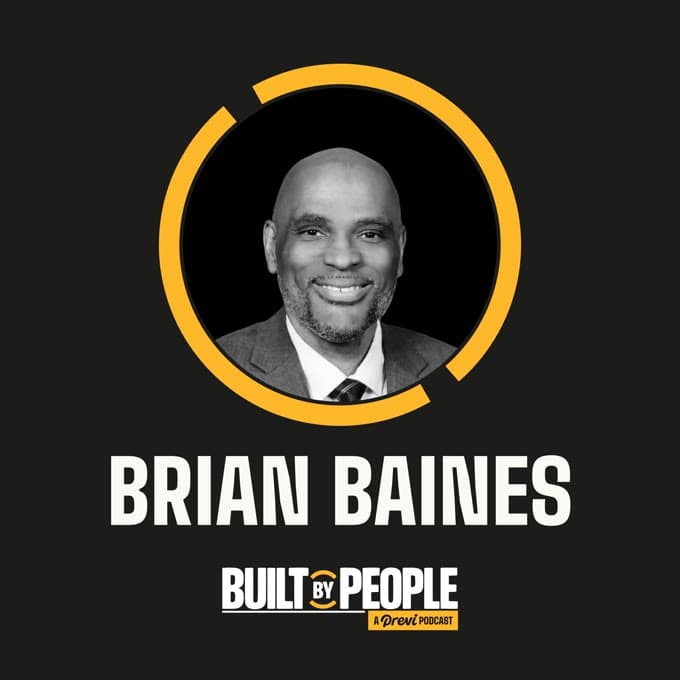
Brian Baines
Associate Vice President for Human Resources
HR Is Not the Party of No
Key moments
In Brian's words
“I am at the giving back phase of my life… Now I'm at the point where I'm trying to help others find their path.”
“Nobody wants to have a tough conversation with a person. I have to psych myself up for them even though I've been working in HR for over 20 years. It's never easy.”
“It's not about how much work it is for us. It's about how easy we can make it for the end user.”
About this conversation
Brian Baines has worked in HR for more than 20 years. After college he was managing a shoe store when he took a part-time payroll job, and he's stayed in HR ever since, including five years recruiting at Bon Secours, a stint at Newport News Shipbuilding, and a senior HR business partner role at William & Mary's business school. He's now Associate Vice President for Human Resources. He and Kimball talk about why he used to wait until Fridays to offer people jobs, why so many people still see HR as "the party of no," and how he gets ready for a hard conversation, including why he never has one in his own office.
Transcript
Read the transcript3,528 words
IntroI used to like to wait until Fridays to offer folks jobs. And I felt like, uh, I was helping people have a great weekend because they've been offered this opportunity to, uh, to come on board with a new organization.
HostAll right. Let's get going. Welcome, Brian. And so, what we'll do, yeah, we'll read this little blurb about you and then we'll get into it. So, Brian spent 5 years recruiting at Bon Secours, a healthcare organization with roughly 24,000 employees, then moved into a senior HR business partner role at William& Mary's Business School. He's now Associate Vice President for Human Resources, where he leads HR and works to attract talent in support of student education. So yeah, welcome, Brian. Uh, tell me through, talk me through your background. What made you choose this career path that you've been on?
GuestYeah, thanks for having me, Kimball. so HR kind of fell in my lap. Uh, you know, when I first graduated from undergrad at Christopher Newport University, I didn't really have a direction. I'd taken a few odd jobs here and there, ended up being a shoe store manager for a short period of time, and saw this job back at Christopher Newport that kind of interested me. It was a part-time job as a payroll fiscal technician or something like that. Can't remember the exact title now, but I originally turned the job— I was I applied for it, got offered the job, and I originally turned it down because I thought, you know, I'm moving from a full-time job to a part-time job. Doesn't make a lot of sense. Then I kind of did some soul searching and I figured out I didn't want to be a shoe store manager for the rest of my life. Not that there's anything wrong with it, just wasn't what I was guiding my career towards. So I ended up calling them back a couple of days later and they said, yeah, the job's still available. And that's where I got my start. Kind of quickly learned HR and moved through several roles there and then on to Newport News Public Schools, followed by a short stint at Newport News Shipbuilding, and then jumped back into education with Thomas Nelson Community College. And kind of how I figured out that I really liked the education atmosphere in HR. And I guess way back to when I first started, what I found out was that I liked helping people. So that's what really got me intrigued and kept me interested in the HR field.
HostYeah, and in what capacity do you feel like you You mentioned you love helping people. What capacity have you seen that fulfilled?
GuestSo I guess I kind of like to convince myself that I was doing something great. So, uh, when I was doing full-fledged recruiting, uh, having to talk to people, offering them jobs, I used to like to wait until Fridays to offer folks jobs. And I felt like, uh, I was helping people have a great weekend because they've been offered this opportunity to, uh, to come on board with a new organization. And a lot of times I always think that, you know, a person's applying for a job because one, it's something that they're interested in. And perhaps maybe they're not employed right now, or maybe it's a promotion for them in their career. So they're going to make more money or have more responsibility in their role. So I kind of felt like I was helping people in that aspect. Then I got more fully involved in employee relations and listening to the difficulties that people were having at work and helping them solve the problems or get a resolution to whatever issue they brought forward. And so I really felt like I was doing something grand at that point, or at those points, uh, when I was helping people to, uh, solve the problems, whether they were, with the organization or outside or personal matters that were affecting their ability to be successful at work.
HostYeah, I love that. Um, at Bon Secours, you were supporting roughly 30 department directors at once. How did you decide where to spend, spend your time?
GuestWell, luckily for me, a lot of the jobs were very similar, so I was able to kind of look at a bunch of different jobs in the different departments in one fell swoop. A lot of people would apply for the same job, so I didn't have to go back and have those conversations with the applicant again because I already knew that they were qualified and able to move forward to the next level. But a lot of times, to be honest, it was who was screaming the loudest. You know, so you wanted to make sure that you kept people happy. But I used to, you know, before I really figured out that, hey, I can just put tasks for myself in Outlook, I used to schedule time on my calendar to make sure that I looked at certain things. And it wouldn't be every day that I was looking at that specific job. But so maybe if I look at it on Monday, I'll look at it again on Wednesday. And that's kind of how I really got through my day, or days, I should say, to make sure that I was giving the most support I could to those managers.
HostSharing. Yeah, I love that. And I've, in a lot of my previous conversations on this podcast, I've talked to a lot of HR professionals and they all mentioned, yeah, I get to see the company from a very unique perspective where I'm kind of in the background on, on a lot of conversations. How do you feel like more people can take advantage of your position and level up their careers, even not being in the HR department, but just utilizing you as an asset?
GuestYeah. Yeah. Well, the unfortunate part about working in HR is people often see us as, um, the party of no. Or the termination department and things like that. But people should come talk to their HR professionals. We have insights on career progression, you know, constructing your resume in a way that will help you be successful. And for me, that's whether a person's trying to, you know, progress within the organization or if they want to go somewhere else and seek an opportunity. I'm always willing to help people out. with getting to where they want to be in their careers. Uh, but also just like I mentioned before, talking about the challenges that they have, uh, and helping them to, um, hopefully see a path forward that, uh, helps them to be more happy, more satisfied, more successful in the roles that they have. Uh, so lean on your HR professionals and ask us questions, you know? Uh, and I told someone recently that I am at the giving back phase of my life. You know, I'm not going to say that I'm rich or anything, but, you know, I've had a pretty good career and now I'm at the point where I'm trying to help others find their path and help them to get to where they want to be in their careers and their lives.
HostYeah, I love that response. Yeah, next question I have prepared here was Newport News Shipbuilding is a defense manufacturer, very different from a college or hospital. What did recruiting there teach you that still shows up in your work today?
GuestYeah. Well, recruiting felt very, very transactional and it's appropriate for that environment. but what I learned, uh, working there, and it was earlier on in my career, is that you have to make sure that you are, uh, reading between the lines on applications, meaning, um, making sure that you're able to pull out and draw the connection between, uh, between the job that a person applies for and the experiences that they have put forward for you to review. Sometimes it's not evidently clear, and sometimes that means you got to pick up the phone and call them and say, hey, can you talk to me a little bit more about this job and what you were doing in that role? Because it is a manufacturing environment, they use some terminology that's not well known, especially with the defense contractor who who primarily hires former military, excuse me, for a lot of their roles, a lot of us in the civilian world don't understand what a lot of the things mean that they present. You know, when someone says that they led a battalion, okay, what does that mean? And for some people, that means that they may have led 200 soldiers or more at 25 years of age run into high stress situations. That's not evident by looking at that I led a battalion, but, uh, understanding that and realizing that, hey, you have to find out what certain things mean in order to make sure that, uh, you consider a person appropriately for a role.
HostYeah, I love that. Yeah, next question I had here for you too is tell me about your top priorities right now. what do you work on on a day-to-day basis?
GuestRelationship building is always top of mind for me when it comes to priorities. Making sure again that people feel like they can come to HR and seek support and help with whatever they bring to the table. We are not just their employment assistance, we are also their personal life assistance to a limit. You know, if there is things that come up in their personal lives, we want to help out with those things. Recruitment is always, You know, one of those things that is at the top of the list as well, especially with the employment environment becoming a little bit more tense with more employers seeking the same folks that we are looking for to come on board. We're trying to develop some strategies that help us to be seen as an employer of choice so that people come to us more frequently. Then always looking at the market for compensation and making sure that we are paying people appropriately. Appropriately, which also ties into that recruitment priority as well, but from a different perspective. We want to keep the people here that we already have, so trying to retain them, getting them professional development, making sure that their salaries are in line with the market, things like that. So that's kind of what I am working on on a daily basis in addition to supporting management with their priorities as well.
HostYeah, I'd love to double-click on that a little bit more. What, what do you do to try and separate any company that, that you've been at, um, to where it's like, this is a place people want to come into work and they want to be here and, and make a career just here and they don't need to be looking anywhere else.
GuestYeah. Um, you know, so I'll take that from two perspectives. If you're trying to attract talent, it's the word of mouth. I mean, if people have a great experience, uh, whether they get hired here or not, that carries forward. I learned that, uh, while working at William& Mary, started a process of anybody who we actually talked to for an interview, meaning that we either met them through Zoom or, or some, online platform, or, uh, if we brought them in for a conversation, I made sure that I reached back out to them, uh, by phone, not just by email or some system-generated email to say, hey, thanks, but we decided to go in a different direction. I wanted to have a conversation with them, let them know that we appreciated their time. In some cases, asking people, you know, if they'd be interested in other opportunities with us, can I add their name to a list that I'll reach out to in the future? So that separates people. It shows people who don't even work here that we care about them. We want to see them do well in life. And for the people who are here already, it's the conversations that we have. It's the support that we try to put forward and show that we care about them, keeping them engaged, having them involved in decision points that sometimes they may not have a part in based on their role. Just providing that career progression and that growth opportunity for them to learn more kind of makes them feel as if the employer has their best interest in mind, which is always what we're trying to do. As HR professionals.
HostYeah. And it seems like in HR you're really good at having hard conversations, but how to have hard conversations and turn them into a positive and turn them into opportunities.
GuestYeah. Yeah. Yeah. It definitely is a science because to be honest, nobody wants to have a tough conversation with a person. You know, I have to psych myself up for them even though I've been working in HR for over 20 years. It's never easy. I think that, you know, back to what I said about people seeing us as a termination department, it's a real thing. People think that because, yes, that is part of our job, but it's the smaller part of our job. You know, we terminate very few people on a regular basis. You know, we hire way more people than we have to ask to lead the organization. So I hope that sometime in the near future, people will start to change that perspective and look at us as a support department, look at us as folks who have their best interest at hand or at mind, on their mind, and want to make sure that they are having a good time at work and are able to accomplish what they need to accomplish during, in their roles.
HostYeah, I love that. And I don't want to spend too much time on the termination side of things or anything, but I do think it is important for people. What advice would you give someone like you mentioned, you kind of have to hype yourself up. What you give that person that has to go through that? How do you prepare for that?
GuestYeah. Um, I think writing out what you want to say is always a good practice. Doesn't mean that you have to read from a script or anything like that. But making sure that you know the points that you need to speak about when you're talking to the person that's across the table from you. Also putting everybody in a comfortable environment. I never bring a person into my office to have a conversation or a negative conversation if I can help it. And the reason for that is because I want people to feel like we're on a level playing field. I don't, you If I'm sitting behind my desk, it may portray me as having an advantage over them in terms of a power dynamic, and I don't want that. They have the opportunity to talk and share what their thoughts are on the situation that's at hand. But just preparing before you have that conversation, and the time of day matters too. I tend to like to have those difficult those conversations in the morning because I don't want to have to think about it all day long. You get self-conscious about it. And I know that when I get self-conscious, I tend to make mistakes and doubt my own self and what I'm trying to put forward or what I'm trying to say. So I have those conversations in the morning. And if it is a true termination conversation, there are a lot of steps beforehand that you need to make sure. You need to make sure that the folks who need to know aware, hey, we need to turn off access, we need to make sure, depending on the situation, make sure that there is a safe environment for the person to return to so that they're not completely disrupting the office setting. And also taking into account the person's feelings. Again, I try to have those conversations away from large groups of folks and things like that. So I don't want to have it inside their office where they have to walk out and then see their colleagues and not feel as if they've been protected in the situation. You know, you want to make sure that they are as comfortable as possible. It's going to be an uncomfortable situation on both sides, but make sure they're as comfortable as possible, making sure that there's tissue for them. Because sometimes those conversations become emotional and people may shed a few tears over the loss of employment.
HostYeah, no, that, that is so powerful and so helpful. I appreciate you sharing that. Um, what kind of flipping, flipping it over a little bit. What's one initiative you've rolled out recently that you're, you're really proud of?
GuestRecently, so we were during a hybrid, uh, recruitment process where part of it was still, uh, paper. It was an Adobe form. I still call that paper because a lot of people print it out and send it forward that way. Uh, but we had a system, or we have a system that's in place that can handle all of that for us. So we're still in the middle stages of that. Uh, but it's been going well. So we've moved completely from a partial paper/system process to a full system process. Gives us a lot of ability to track progression of the request to fills and the time to hire, time to fill, and a little bit more of a fuller, fuller, fuller aspect. So we can look for points where we need to speed the process up and make it more fluid and some things that we can do in a more automated way or make sure that the things that we're sending forward make sense. In terms of approving them and who has to approve them and sign off on them and things like that. So that's one initiative that I've been working on that I'm, in conjunction with the team that I have here, that I'm pretty proud of because it's been going well. And the other is just trying to get our policies and procedures in line. You know, there's some old outdated policies and procedures that need to be updated. So trying to work through those along with the day-to-day stuff. So I'm pretty proud of that as well because it'll give us basis for streamlining processes and approaches, which is what HR should be doing on a regular basis, is making things easier for the people who are the consumers of information from us. You know, I kind of jokingly say to my team, it's not about how much work it is for us. It's about how easy we can make it for the end user. Although I do want it to be easy for us too, because we don't want to have to spend a lot of time shuffling through things and trying to figure out how to get things accomplished when we are trying to work.
HostSure. Yeah, I love that. All right, the last question I have for you here is if you could leave one piece of advice for our community. Something you wish you'd known earlier in your career, what, what would that be?
GuestWell, it actually is something that I think I did know earlier on in my career. I may not have taken a hold of it until later, but don't turn down opportunities. Uh, and what I mean by that is if your boss comes to you and says, hey, I need you to work on this. It may be something that's outside of your knowledge realm or understanding. but you should take that on, take it on as a learning opportunity, uh, take it on as a chance to show that you can do higher-level work outside of your normal day-to-day activities, because that's probably why they're giving it to you, because they want you to excel. They probably see something in you that they believe will make you— that will prepare you for the future and a longer career path in whatever the role is that you have or whatever the field is that you're in. So I think that's the piece of advice that I would leave. You know, turned down very few opportunities to do more.
HostI love it. Well, Brian, thank you again for, for being on the Built by People podcast. I loved our conversation and I hope all of our listeners can take advantage of it.
GuestThank you for having me, Kimball.
More conversations like this