Episode 26 · December 20, 2024 · 17:00
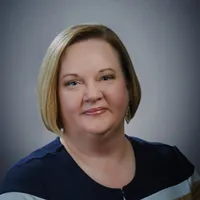
Beth King
Chief People Officer, Paytronix
The Strategic HR Edge in M&A: Culture & Data Make or Break Deals
Episode 26 · December 20, 2024 · 17:00
The Strategic HR Edge in M&A: Culture & Data Make or Break Deals
Key moments
In Beth's words
“from an HR perspective, I think first and foremost, one of the challenges that we face is that there's always an assumption by the employee base that we all know what's going on. And that the HR team is involved in everything. And in fact, surprise, surprise, HR is just like you. Like, we don't necessarily know everything either.”
“HR is becoming less and less soft and more and more about numbers, right? So we really have embraced, I think, as a part of business, letting the data tell the story.”
“This might not be how you operate today. It might not even be how we're going to ask you to operate in 6 months, but we're going to give you visibility into the end state so that we can understand what are the transitions that need to happen in order to get us from point A to point B.”
Transcript
Read the transcript2,557 words
HostWelcome to the Built by People podcast, where we share the stories and insights of the world's top HR leaders. Join us as we dive deep into the minds of HR executives, uncovering their strategies, challenges, and triumphs in shaping today's workforce. I'm excited to welcome Beth King to the Built By People podcast. Beth, thank you so much for joining us. And as a starting question, I always love to ask you to tell us a little bit more about your career journey.
GuestSure. Well, I'm really excited to be here today and talk to you about what I've done and where I'm going. But to start off, I actually started like I think a lot of people do, which is I graduated college and my parents looked at me lovingly and said, congratulations, get a job. And so I did. And I started off as a recruiting coordinator in a construction management firm in Boston, and that was easily the best job for me at that time. It was a very fast-paced environment. They were growing incredibly fast at that time. So this was way back in the day in 2002, and people were really excited to be there. It was a young company in terms of it had been around for about 20 years, and the average age of the, of the employee base was in the late 20s, early 30s at that time. So it was a whole bunch of people who were super excited to be working all at once and super excited to be growing something that they thought was really fun and really interesting. And one of the cool things about that company was that it was an ESOP-based company, which is Employee Stock Ownership Program. And so people really felt invested in making that company a success. And by all measures, it certainly was. From there, I moved into tech and began my, my love affair with my engineers, which I'm still in the midst of. And I worked for— I've worked in my career for both publicly traded companies privately held companies, I've worked for VC-backed, I'm currently working in the PE space. I think they all have their, their ups and downs, their pros and cons. The one thing that I, I've really learned that I enjoy is working for very high-growth environments. And I do think that's in part because that's where I started. So even though the industry was very different, working for a very high-growth, fast-paced a growth-based company really sort of set me up with, this is what working is, and this is what it's like to be a part of something cool and fun and worth your time. And so because of that, I've found that I tend to gravitate towards organizations that are looking to grow quite quickly and with, you know, 20-30% growth rates year over year.
HostI want to spend a little bit of time talking about mergers and acquisitions. From an HR perspective, what are some of the biggest challenges when transitioning from a small company to a large one during an M&A?
GuestSure. So as you can imagine, there are a lot of challenges when you are transitioning, and they're certainly not all limited to HR, right? There is, uh, two of the most challenging, uh, places to be in a company when you are part of an acquisition easily are finance and IT. And, and poor IT really bears the brunt of it if you're moving instances or tenants or anything like that. But from an HR perspective, I think first and foremost, one of the challenges that we face is that there's always an assumption by the employee base that we all know what's going on. And that the HR team is involved in everything. And in fact, surprise, surprise, HR is just like you. Like, we don't necessarily know everything either. And we're also going through this change and we're also learning these things. And often what happens with very large companies, which is very different from small companies, is that large companies tend to utilize a much more of a self-service model in terms of what they expect from their leaders and their managers. In terms of day-to-day communication and practical, you know, practical programs. And when you are part of a small company, it's very much a hypercare, high-touch environment, right? So you know the names of everyone, you know who manages who, you know that this person is probably going to be going out soon because their spouse is about to have a baby or something like that. And a lot of that goes away, not at the one-to-one manager level, but it does go away at, at the higher levels, right? And it, and in terms of what is HR's function and responsibility at a large company versus a small company. And you see things like ticketing systems be put in place for HR queries and things like that. Whereas when you're at a small company, Maybe the way that you engage with HR is you simply send them a Slack or an email, or you just walk over to their desk, right? Or call them on Zoom. And so it's a very different experience, and helping people manage through that experience and, and transition to, folks, this isn't better or worse, it's just different. It's just a different way of doing things. And by the way, Although it's great to have that one-on-one relationship with HR, when you are forced to do stuff yourself because you're now in a self-service environment, it will inherently make you a stronger and more prepared manager because you have to do things on your own a little bit, right? So it's not necessarily bad, but it is typically hard.
HostWhy is it essential for HR to have a seat at the table during M&A transactions, and what unique value does HR bring to that conversation?
GuestSo I think there's a few reasons I'm going to talk about too, that it's so important for HR to have a seat at the table really during diligence, right? And not just after the deal has been made, but, but while we're determining is this the right deal for us? Does this make sense on both sides of the table? And the, the first reason is because HR is becoming less and less soft and more and more about numbers, right? So we really have embraced, I think, as a part of business, letting the data tell the story. So many of us in HR are very interested in what can we measure, and what can those measurements tell us, right? And we really want to measure as much as we can. And so from that perspective, it's no different than looking at revenue numbers or financial numbers or any other data set, right? You want to be looking at what has been the growth of the organization over the past, you know, 12 months, 36 months, whatever span you're looking at. What does attrition look like? What have been the levers for those attrition numbers? What has internal mobility looked like? What's your philosophy on compensation? How does that tie into and impact your financial cycle? All of those things are really important things that are going to inform the decision that the acquisitive company makes. The other reason that I think it's so important for HR to be a seat at the table is because part of, a large part of our job is to be very close to the culture and the people within the organization. So we're going to have insights as to how does this company operate on a very practical level? How do we communicate with each other? How do we work together to make this organization successful, right? Like, what are the day-to-day things that are going on? And we may have a different perspective than a product or engineering lead or a CS lead or a PS lead. And I think that all of those perspectives are important, but HR certainly shouldn't be left out. And I think in terms of, you know, what value do we bring, again, we bring the same amount of value as when you review the diligence list with an IT org, with a finance org, with an ops org, et cetera. We have data to back up our findings. It is part of the story of the success of the overall organization. And that data is also going to inform how we will perform in the future and why we will perform this way or that way. And without that, you're not getting the full picture of what is the value that our company can create for yours over time.
HostHow do you approach integrating two different company cultures to create a unified, cohesive environment, especially in a post-merger environment?
GuestSure. So I think that that's one of the things that is most important in terms of the long-term success of any acquisition or merger. And I think there's a lot that needs to be done in terms of fleshing out what are the things that we want to continue to move forward with? What are the things that we wanna take with us? And what are the things that exist in the new company that we want to leverage, right? And are there things that we see in the new company that we're like, we don't think that's gonna work for us? I think identifying those early is really important. And then pulling teams into, the processes and the ways of doing things of the new company sooner rather than later so that folks can get a sense for this might not be how you operate today. It might not even be how we're going to ask you to operate in 6 months, but we're going to give you visibility into the end state so that we can understand what are the transitions that need to happen in order to get us from point A to point B.
HostAnd Beth, what strategies do you use to manage employee concerns, maintain morale, and ensure clear communication throughout the M&A process? Because there's obviously a lot of uncertainty and potential fear in the room as people embark on a cycle of dramatic change.
GuestYes. So I think that there's— the answer's twofold, right? So the first part is sort of the, like, the softer side of SEARS, as they say. And that would be the making sure that your leadership team is regularly present and available for your employee base, making sure that regular communications are being done, that folks can have one-off conversations, that if you have regular meetings set up already, whether they're team meetings, org meetings. At our company right now, we have biweekly all-hands meetings that we've had since the company's inception. Make sure you're really leveraging those to get key messages out and to get a pulse on how folks are feeling. I think the other side of that is you have to have a strong and rigorous communications plan that clearly outlines the milestones that you need to achieve, how you're going to achieve them, and who is in charge of those, all with respect to communication to your employee base. So in some areas, it may be appropriate for HR to be in charge of those. In other areas, it's going to be members, other members of the leadership team. In other areas, it may even be specific to IT migration or moving the sales organization to a different compensation structure or commission structure. Right? So, but you need to get really rigorous about building out those comms plans. If you have the opportunity to partner with someone who has experience in PR or employee communications, I strongly suggest doing that, uh, because it is a much more formal approach that needs to be taken, but it needs to feel really informal. So it's a little bit of a balancing act.
HostBeth, can you share an example of how HR's involvement early in the M&A planning process contributed to a smoother transition for employees?
GuestSure. So I was involved in a— this was many moons ago, but I was involved in an acquisition of a rather small company, under 50 folks, into a much larger organization. Our company at that time was about 7,000 employees, global org, and we were acquiring a company where everyone like sat together and, you know, did everything side by side all day, right? And one of the benefits of being on that diligence team upfront was that we were able to identify very early on in the process before the deal was even signed, What are the things that— what is the sort of zeitgeist of that culture? And what are the things that are going to make this really successful in terms of how to communicate and work with these folks? Who are the people that we really need to make sure we retain or maybe give a little bit more white glove service to? Not because they are necessarily like the largest revenue generators or architects or anything like that, but because they have the, the sort of, they're sort of a sounding board for a lot of people in the organization. So being able to identify those folks very early on, partner with them, get them on board, get them to see that, you know, we are leveraging them as leaders, even if, if it's in a very informal manner, We are leveraging them and asking them to help champion our message across the team. We were able to do that, and I think that really made a world of difference in able— being able to integrate the organization very cleanly. But also, many of those folks who were part of that organization are actually still at that company today. And it's— I'm trying to think, it's like 13 years later.
HostBeth, any parting advice you'd like to share with our audience?
GuestI think when you're building your career, and I realize that this is a little bit away from the topic of M&A, but when I'm asked for advice, I use, you know, I, I really go back to, and this is not limited to HR, but take every opportunity you can when you can. And what I mean by that is if you're given the opportunity, especially earlier in your career, to travel, to take on different projects, to be a part of teams that you wouldn't normally be able to be a part of, take advantage of all of those things, because that is what will give you a much more robust profile. It was something that will allow you to interact with other parts of the organization, And that will really help you understand how all of the different pieces of the org tie together to make the company successful, which will inherently make you a more useful and effective business partner down the road.
HostBeth, thank you so much for joining us on the Built by People podcast. It was great to have you involved.
GuestThanks so much. I really enjoyed this conversation.
More conversations like this