Episode 123 · March 19, 2025 · 14:55
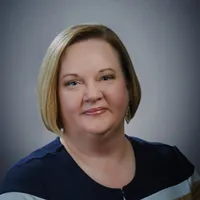
Brandon Sammut
Chief People Officer, Zapier
TRANSFORM EPISODE: Brandon Sammut, Chief People Officer at Zapier
Episode 123 · March 19, 2025 · 14:55
TRANSFORM EPISODE: Brandon Sammut, Chief People Officer at Zapier
Key moments
In Brandon's words
“My first job in HR was as a chief people officer.”
“Sometimes you think about automation or AI in people work. And you say, hey, that's probably great for efficiency, but doesn't that depersonalize the experience? Doesn't that make it cold and impersonal? And when I look at what the team has done building something like new hire onboarding on tools like Zapier, what I see is exactly the opposite.”
“If you want the whole team to row with you, you have to create the psychological safety and honestly just the job security conditions where folks feel like not only are they going to learn some stuff, but that there's something in it for them at the end of the day as well.”
Transcript
Read the transcript2,868 words
HostWelcome to the Built by People podcast, where we share the stories and insights of the world's top HR leaders. Join us as we dive deep into the minds of HR executives, uncovering their strategies, challenges, and triumphs in shaping today's workforce. I'm excited to welcome Brandon to the Built By People podcast. Brandon, thank you so much for joining us. And as a starting question, I always love to ask if you could share a little bit more about your career journey.
GuestOh, you bet. It's a bit of a random walk, but every page in the story has had a purpose. Maybe the most provocative thing I could start with is that my first job in HR was as a chief people officer. And I say that with a ton of respect and a ton of humility for the work that our teams do every day. Before I was a CPO, I did sales and BD for a B2B software company. And that was the second chapter of my career. The first half was not in software at all, or even in tech. It was in education. I've always been super curious about like, how do you build systems to better match potential to opportunity? And I started digging at that question in higher education with first-generation college students, and then ultimately at an organization called Teach for America, which is all about expanding opportunity in K-12 education. But that's also partly what got me into tech because I could start seeing even in my 20s, like a while ago now, that technology could, if used really well, transform our ability to put people in situations where they could thrive. And I think what's so cool about that kind of personal and professional mission is when we do that well, it means really good things for organizations, for economies, and what have you. But at the personal level, it also changes people's lives. So that's a little bit about my background and what brings me into the work that we do.
HostBrandon, what motivated you to join Zapier in 2021, and how has your perspective on automation and AI in HR evolved since that?
GuestAlmost exactly 4 years ago, I met Wade, the co-founder and CEO of Zapier, and he wanted to take a call because he was warming up a search for Zapier's first chief people officer. And I took that call because even though I didn't know a lot of people at Zapier, I knew of Zapier. In fact, a lot of us probably heard about Zapier in March of 2020 when all of our companies went remote and realized there are only a handful of scaled software companies that have operated remote for years, and Zapier was one of them. And so like a lot of CPOs, I read Zapier's Ultimate Guide to Remote Work, learned a lot, and then it just so happened a year later, got a chance to meet Wade. I ultimately came to Zapier after talking with Wade for months, probably 6 months. Poor guy, I put him through the wringer. I wasn't looking to make a move at the time. It was a really hard year, 2021, to consider switching companies and I was really happy where I was, but Zapier ended up being a magnet and there were really 3 reasons. One, honestly, it starts with Wade himself. This is a remarkable leader who's been able to scale with a company for 14 years, humble, curious, great talent partner, like cares a lot about talent and culture. So that's thing one. Thing two, um, was Zapier's product and mission. Zapier's product is a way without having to code to build software, to build automations, workflows, ways to get things done. And when I really looked at how folks were using Zapier inside of Zapier and also looked at how customers were using it, it was so clear that it was changing how people did their work in really positive ways, both for the company. You get more, more productive folks who can get more done in less time, but also for people. They're learning like incredibly valuable skills, future-proof skills, and abstracting a lot of the boring or tedious work out of jobs so that what's left are the things that they uniquely can do well as humans. And I found that really personally motivating, but I also wanted to learn how do I build on tools like Zapier? How do I scale a people organization on tools like Zapier? So that's the second thing. And then the third thing, Dave, was all about Zapier being remote. But I would be the first person to tell you that I don't think remote or all remote is the right the workforce model for every company. And I definitely know it's not the right model for every person, but I think it's really important that people have choices. And Zapier for 14 years, since its very first year, I had this point of conviction that for this company, it was a useful model and that there were enough folks in the world for whom it would be a great match that they could win and hold on to some really great talent all over the world. And I wanted to learn. As someone who grew up just outside of Detroit, a place that I learned when I moved to California, some people call flyover country. Right? I wanted to learn like, how do you scale a business that not only can hire talent anywhere in the country or anywhere in the world, but actively tries to do that? That I found motivating too.
HostBrandon, can you share specific examples of how Zapier has used automation to enhance both efficiency and personalization in the employee experience?
GuestOne of the first moments that matter in the employee experience, for example, new hire onboarding. Almost all of Zapier's new hire onboarding is built on Zapier. We commonly hear from folks, including folks who've worked at 3, 4, 5, 7 different companies, that this is the most effective new hire onboarding they have ever experienced. And so a lot of credit to our team for having built that. You know what's interesting about it though, and I think this is one of the big ideas with automation and AI, is sometimes you think about automation or AI in people work. And you say, hey, that's probably great for efficiency, but doesn't that depersonalize the experience? Doesn't that make it cold and impersonal? And when I look at what the team has done building something like new hire onboarding on tools like Zapier, what I see is exactly the opposite, right? I see a small but mighty team who's able to provide a basically 6-month, like, nudge, like just-in-time kind of drip. Style onboarding experience that no business of this size could pull off with purely human effort. And to do it in a way that is unusually personalized for each person's job, where they are in their first 6 months at the company. And so I think that is one of the big ideas in automation is not only can it increase personalization, but sometimes being able to automate something is the difference between doing it and not doing it at all.
HostBrandon, you mentioned in the past an interesting case study about your customer support team's transformation. Could you walk us through how you balanced implementing AI automation while maintaining team engagement and managing cultural change?
GuestYes, this case study is remarkable, and I'll give a lot of credit to Lauren Fern, our support leader, and as a team of about 80 folks at Zapier customer support supporting hundreds of thousands of Zapier users, it was very clear to us as the organization's been growing that we couldn't keep providing a high level of support to our customers scaling the way that we were up until that point. The team's always been very technically savvy. The team had always been building on Zapier. They were never starting from scratch. About 18 months ago, the team sat down and said, our staffing scale metric, it's going to break the economics of this part of the business. We have to find that next wave of ways of working, including through AI and automation, so that each of us as a customer support rep can support meaningfully more, not just like 10%, 20% more customers, meaningfully more in the years to come than we do today. And what Lauren and the team did, I thought was really remarkable. It wasn't just about tooling. To your point, this is also about culture and leadership. Sat down with the team and it started with a lot of real talk. Lauren and team laid out the fact that the way we're working isn't going to work for the long term and we need to start making some changes. They also got really clear that they wanted to do that together, saying that our customer support team may not grow meaningfully in the future. Because the technology that's available now means that we don't have to. But what the team also agreed on is that it also doesn't mean we're going to shrink the size of the team either, right? Like it's a growing business. What we're really talking about here is being able to support more customers better with the team that we have today. And I think that created an important type of clarity because ultimately, if you want to figure out new ways of working, especially using new technology, usually the folks that have the best ideas for that, it's not leadership of that part of the organization. It's the folks doing the work with customers or work working with the product. Like those are the folks who really understand like, hey, if we could do this this way, like that could make a big difference. But if you want the whole team to row with you, you have to create the psychological safety and honestly just the job security conditions where folks feel like not only are they going to learn some stuff, but that there's something in it for them at the end of the day as well. And I just thought Lauren and the team did a brilliant job of aligning something that was really important for the company and customers with something that was really attractive for the members of the team. Doing the work. Practically speaking, the other thing you might think is, okay, that sounds interesting, but isn't that just management turning the screws on the support team? What did that do for engagement? Because the team is showing some really amazing gains in productivity, like per-person productivity. So they are absolutely climbing that mountain together. And the thing that's true along with that, because of how they've been doing it, their engagement's gone up too. Both of those things are working in parallel in a virtuous cycle because of, first the narrative, right? Like we have to make a change, but here's what's in it for us as well. Zapier is going to be the place if you're a customer support person where you really learn how to use automation and AI to supercharge your work. And anyone who does any of these jobs, including customer support, can look at them and be like, that's a big deal for me. Like I would like to learn those skills and my current employer is going to invest in me and help me learn those skills. And then team's been rowing together now and producing some pretty incredible results. But I think that's an interesting story because it does show how like good leadership and change management can take two things that sometimes can seem at odds with each other, like increasing productivity and engagement, and show that they can actually grow in tandem.
HostBrandon, many organizations struggle with the cultural aspects of AI adoption. What strategies have you found effective in helping teams embrace new technologies while addressing concerns about things like job security?
GuestI think this one starts with management alignment. If as a leadership team, we, all of us as people leaders, we sit on leadership teams, if our, if we and our leadership teams aren't aligned on like why AI or any new technology, automation, AI, whatever it might be, like how does that fit in with what we're trying to do as a business, like our mission, our strategy, the business outcomes we're trying to produce. And also, where are the guardrails? What are the implications of that? So for example, for our support team to be able to say that we'd like to maintain the team we have today, but we need to start working differently if we're going to do that, that's a management alignment. There has to be some degree of management alignment for that team to turn around and be able to say that, look each other in the eyes and really believe that. So I think that's where it starts. And it's not, that's not easily done, but you have to start there because if you are able to get that alignment, then you can be very clear. And that's probably point number 2, like being candid and being clear about the so what of something like AI for the business and the implications, because that's what people really want to know. Like the, like, why does it matter for the business is in the absence of the implications layer, it sounds a lot like platitudes, you know, to the team. They want to know, are you going to invest in me? Am I part of the company's future? Is my job going away? Are you just asking me to work more hours? What do you, what exactly are you asking of me? That management alignment is really the only way that you can actually be clear on implications. And the implications is where a lot of the confidence with the team gets built. Once you create that kind of foundational condition, you've got the clarity, the confidence of the team, you've mitigated some of the base of the pyramid concerns about job security or what's in it for me, then the fun begins. Because the neat thing about a technology, any technology, is that it's really a tool, right? It's not an outcome unto itself. And so none of these teams are starting from scratch in that sense. It's what is AI for? It's not an outcome for most all businesses. It's a way of supercharging The things that we've already said, we've already agreed matter. Our mission, our business goals, my goals, the product that I'm accountable for, how can AI or automation help me, help my team, help us, right? Get that done smarter, faster, better, higher quality. And I think the last thing I would say on this is just a reminder that none of our teams are starting from scratch because AI, for example, is a tool. All the same mindsets or frameworks we use to understand customer needs, whether that's employees or external-facing customers, to design like really elegant ways of solving those problems for our people and with our people. All that still applies. There's still plenty to learn. A new tool or new technology is still a learning curve. So I don't want to minimize that, but it's just a piece of a broader puzzle. If organizations that I find are having a hard time with AI adoption, it usually comes back to some of the things we just talked about. It's a lack of management alignment. And/or a lack of clear communication of that alignment on what it means and the implications. Or a new technology can also put a bit of a spotlight on some like thinness or weakness in some of these other things. Do we really understand what our goals are? Do we really understand how to build talent products or practices? And then the introduction of a new technology can exacerbate that.
HostBrandon, what parting advice would you like to share with our community?
GuestOh, just that I think this is a remarkable time to be doing people work because of automation and AI, like the types of programs that you can bring to bear, even if you're a very small and very lean people team are remarkable. And the degree to which we can personalize those experiences and make them that much more effective for folks, also remarkable. And then on top of all of that, the cost of a lot of these tools and technologies are coming down too. So That's what part of it gets me excited about this work is I think we've got an opportunity to really level up how we show up for teams and help people thrive in our organization.
HostBrandon, thank you so much for joining us on the Built by People, uh, podcast in partnership with Transform. It was a pleasure to have you involved.
GuestSame, Dave. Good conversation.
More conversations like this