Episode 38 · January 7, 2025 · 13:28
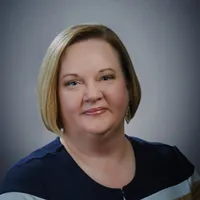
Todd Cunningham
Chief People Officer, AvidXchange, Inc.
Care and Candor: The Unexpected Equation for High-Performance Culture in HR
Episode 38 · January 7, 2025 · 13:28
Care and Candor: The Unexpected Equation for High-Performance Culture in HR
Key moments
In Todd's words
“the value and the impact of aligning performance goals really occurs the step before. Those goals need to swim in a pool of the culture. And so we've worked hard over the last 10 years around a performance culture.”
“most of my career I bought into a pretty common myth that relationships should be one way at work and a different way away from work... what we've really embraced is performance is about deeply connected relationships, and there should be no difference whether you're at work or you're not.”
“our processes around teammate development, most of our development opportunities are by invitation only. And so what we do is we invite people based on your performance to date and based on your commitment and how you're demonstrating your curiosity and commitment to personal growth.”
Transcript
Read the transcript2,030 words
HostWelcome to the Built by People podcast, where we share the stories and insights of the world's top HR leaders. Join us as we dive deep into the minds of HR executives, uncovering their strategies, challenges, and triumphs in shaping today's workforce. I'd like to welcome Todd Cunningham to the Built By People podcast. Todd, thank you so much for joining. And as a first question, I always love to ask if you could tell us a little bit more about your career journey.
GuestGreat. Thanks, Dave. And by the way, thanks for having me on. I love your podcast. So my career journey spans 37 years in HR. I'm one of those maybe handful of folks that always knew that HR was what I wanted to do. And over those 37 years, I've been in small and large companies, private and public, across multiple industries, companies like Owens Corning, Bank of America, Bose Corporation, and my last 10 years with AvidXchange, which is a recently public company headquartered here in Charlotte, North Carolina.
HostTodd, I want to talk about aligning performance goals at the individual, team, and organizational levels to ensure a cohesive approach to success. How do you approach that at AvidXchange?
GuestWell, I love that you said performance goals, because one of the things we're really passionate about here, Dave, is everything's about performance. So what I would say is, is the value and the impact of aligning performance goals really occurs the step before. Those goals need to swim in a pool of the culture. And so we've worked hard over the last 10 years around a performance culture. And so What that means to us, Dave, is deeply connected relationships. And, you know, for your listeners out there, if we think about any relationship we have, quite frankly, even outside of work. So if you think about a close relationship, whether it's family, a friend, what have you, the— I would bet a lot of money that that relationship is founded on trust. That's built over time. It's, it's got a great deal of candor in it. I bet you there's been some battles and people have gone through some struggles and somehow then you make it out on the other side stronger together. And so the way we think about performance are those deep relationships. And honestly, Dave, most of my career I bought into a pretty common myth that relationships should be one way at work and a different way away from work. And of course, there's boundaries. We all have boundaries. We know what those are. But what we've really embraced is performance is about deeply connected relationships, and there should be no difference whether you're at work or you're not. I mean, the same elements occur, and we don't think about our private relationships as performance. But in fact, that's what they are, right? And, and so a long way of saying, if you've got a culture of deeply connected relationships, then when you go about the task of aligning performance goals, you're doing that already coming from a strong foundation. And those goals are coming from top down, bottom up, and you've got people aligning around those relationships.
HostSo you talked about leveraging culture to drive performance. In fact, performance is a core part of the culture at Avid Exchange. I'm curious beyond that, how your focus on performance differs from approaches that other organizations are taking and what they can learn from that.
GuestYeah, I think, well, certainly one key way is the way we even define performance, which is the, are the relationships. But like any culture, the way a culture emerges, whether it's an intentional culture or a default culture, is it finds its, its way through your processes and systems, right? So when I think about a variety of things we do just naturally, when we hire, we, we work really hard and our questions are all geared around somebody's mindset, somebody's point of view about their own performance journey. When I think about development, so our processes around teammate development, most of our development opportunities are by invitation only. And so what we do is we invite people based on your performance to date and based on your commitment and how you're demonstrating your curiosity and commitment to personal growth. You then get invited to a lot of cool development opportunities. And so taking those kinds of approaches inherently then starts to grow culture where that's just kind of who we are. You know, lastly, I think about even compensation. I mean, a lot of, you know, companies have variable compensation, bonus plans and so forth. Most have a target and you kind of in a good year, you're a little bit above target. In a bad year, you're kind of below target. You know, ours are anywhere from 0% to 200%. Because we want a wide open pathway for a leader to decide how to align comp to performance. So, so I think it's those ways through process and systems that you make it come to life. And in this case, that's how we differentiate performance.
HostBut I want to switch gears a little bit and talk about both talent acquisition and retention. Curious to get your thoughts on how you design a talent funnel that not only attracts the right people to the organization, but also enables the development and retention of diverse talent over time.
GuestYeah, so, you know, when you, when you come at everything from a performance standpoint, what occurs to you immediately is you need the widest net for a talent pipeline because you just absolutely have to find the best and brightest folks that you can find. And so it doesn't occur to you that you'd be willing to even think about a scenario where there might be segments of the talent pool that don't have an interest in you. And it's, you know, and so when I think about even diversity inclusion, you know, our approach to diversity inclusion at Avid Exchange is that too, surprise, surprise, it's all about performance. So our commitment to diversity swims in performance. And so we have got to be able to attract anybody and everybody, regardless of your experiences and the broadest definition of diversity, you, you need to feel comfortable and confident that this is a place you can be who you are and you can have every opportunity to thrive and perform. And so, you know, it begins on the front end, as you said, Dave, on the pipeline. And then when it comes to retention, you know, it's a lot of what I said around those processes, you know, Once, once you're a teammate, you've got to feel like you've had an opportunity to like onboard quickly and develop those relationships that I shared, and then the opportunity to grow and develop. And so retention really comes as an outcome of all of those experiences that, you know, we try to create for a teammate, those moments that matter as the outcome. For retention.
HostTodd, you talked about kind of the fundamentals of a relationship within an organization to peers and leaders and managers. How do you foster relationships within teams that encourage authenticity, trust, and the ability to challenge one another constructively?
GuestYeah, there was a book some years ago. I'm sure your listeners are perhaps aware of it, called Radical Candor. And really, that kind of began a journey for us in our performance culture that we came up with a mathematical equation that if you want performance, it's care plus candor equals desired performance. And so I've been in a lot of cultures over the years, and you can have a caring culture But without that candor, you're not going to get full performance. You're going to get, you know, what feels like a pretty, pretty nice place to work, but at times superficial. And you're not going to get people performing at their best. The reverse I've also worked in where you've got a whole lot of candor, but very little care. And I think we, we probably all can relate to that. And so you've got an environment where You know, you question the motives of people's comments and, quote, candor that they are sharing. And again, you're not going to get the performance. So I do think one begets the other. So you can't, you can't have a strong candor-based relationship and grow your way into care. I think you start with care. And what you quickly find is if you truly care about your teammate, or anybody in your life, then the best expression of that care is to be all in with them. And to be all in is to in fact have difficult conversations, but it comes from the place of care. It doesn't come from a place of me one-upping you or me trying to get something else that I desire, those kinds of things. So, so we definitely see the way to grow the performance culture is through this care plus candor. Equation.
HostTom, what role does staying true to your personal and organizational values play in achieving performance, and how do you recommend we balance those two things?
GuestYeah, it's really, uh, honestly, it's really one of those core ingredients that you have to have. So being true to your own goals and values along with the organization's really starts with You know, what's the process of the candidate to explore and find an organization that, that fits their values and mindset? And then the opposite is true. I mentioned that we work really hard to make sure that we're finding that synergy as well. We're not looking for everyone to think the same, you know, or to be the same, but we are looking for people that share a common mindset and kind of value-based view of the world. So that then you've got that shared synergy. You know, what I find is the actions people take each and every day comes from who you are being. It comes from who you are, who you are being. And so who you are being is your life's experiences around values and mindsets. So you can't really have an organization or performance where people are acting in a high-performance way together unless they share some level of common being together of who they are as individuals. And as, as your question kind of teed up, the best expression is when you find that synergy, you've got people who are just absolutely performing kind of free at their highest level and growing each and every day to a new level.
HostTodd, any parting advice you'd like to share with our audience?
GuestYou know, I was telling somebody just the other day, I think my advice as somebody who's been in HR for 37 years is not to talk about HR. And what I mean by that is nearly every conversation I have throughout the day, particularly with business leaders, is about the business. And so I think being curious and making your conversations about You know, where are you struggling these days? You know, here we are in Q4. What's your biggest concern as we round out the year, business leader? What kind of data are you looking at that surprises you this year? How are you thinking about next year? As you get into that curiosity and that conversation, you will know everything you need to know from that around people implications, ways that an HR professional can then help that leader. Get to another level of performance, and, uh, and that business leader's teammates can get to another level of performance. So I, I would suggest that, that your listeners, uh, kind of scrap the HR talk and let's, let's explore and be curious every day around the business. And from that will be, will be some really good outcomes.
HostTodd, thanks so much for joining us on the Built by People podcast. It was a pleasure having you on.
GuestThank you, David. Appreciated it.
More conversations like this