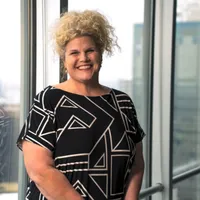
Terry Chace
Director of Total Rewards: Benefits
Vail Resorts
The new benefits playbook: Data, flexibility, and mental health for diverse teams.
Thesis
“Designing effective total rewards and benefits, especially for diverse and transient workforces, requires a data-driven approach, flexibility beyond traditional offerings, and a deep understanding of unique employee needs and location-specific challenges.”
What you'll take away
- 01Benefit programs for diverse populations should avoid a 'one-size-fits-all' approach, tailoring offerings to different employee categories and locations.
- 02For transient or seasonal workforces, benefits should extend beyond traditional offerings to include perks, discounts, and adjusted plan years to incentivize returns.
- 03Providing robust mental health coverage, including free sessions and expanded access to household members, can be a competitive advantage and a critical employee support.
- 04Gathering feedback from a varied and geographically dispersed workforce relies heavily on on-the-ground business partners who understand regional and specific employee needs.
- 05Embracing new and uncomfortable opportunities by saying 'yes' is crucial for career growth, even when initially uncertain.


What most organizations get wrong
- One size does not fit all for benefit programs; offerings should be differentiated by employee category and location.
- Benefits for transient workforces must go 'beyond the traditional' to include perks and discounts to be effective.
- Mental health support should extend beyond immediate family to all household members, regardless of relationship.
In Terry's words
“I am one of those people that fell into HR. Never in a million years would I have thought that my career would have taken a turn toward human resources.”
Highlights an unexpected entry into HR, a common path for many professionals.
“I think it really is about using the data to drive your decision-making, determining really what employees need and what the specific challenges are, and then putting your thinking cap on and trying to design what's best.”
Emphasizes a strategic, data-driven approach to benefits design for diverse populations.
“Being able to offer benefits that go beyond the traditional benefits, such as perks and discounts, et cetera, things like that is definitely something we lean into and need to lean into more.”
Stresses the importance of a holistic total rewards approach, moving beyond standard benefit packages.
“We've enabled a mechanism where all of our employees actually get free mental health sessions... We've actually expanded that access to not only employees, but their immediate family, as well as people that possibly live with them.”
Details an innovative and inclusive approach to mental health support for a broad employee ecosystem.
“saying yes to an opportunity is what sparked my career in HR and people space, and definitely something that I would give advice to. It's easy for us to stay in our comfort zone or to just say, no, no, I don't know anything about that.”
Offers a personal philosophy on career development, advocating for embracing uncomfortable challenges.
The problems this episode addresses
- Employees' number one concern is covering monthly expenses, indicating a need for financial wellness solutions (Previ's offering).
- Difficulty in administering complex HR laws like FMLA without prior experience or clear guidelines.
- Challenges in designing total reward and benefit programs that effectively meet the diverse needs of employees across various demographics, job types, and geographical locations.
- Ensuring consistency and incentivizing returns for a transient, seasonal workforce while balancing the needs of long-term employees.
- Gathering effective feedback from a geographically dispersed workforce (e.g., mountain resorts) where access to care and local needs vary significantly.
- Addressing the widespread issue of mental health among employees, regardless of job role or tenure, and providing accessible support.
In this episode
Intro
Your career took a turn toward human resources early on in your career
Analyst and Human Resources Professional
How do you design reward and benefit programs that meet diverse needs of employees
Employee Benefits: Season-to-Season, Long-Term
Tara says gathering and incorporating feedback from transient workforce helps improve benefit offerings
The Guide to Resort Benefit Changes
Vail is offering free mental health sessions to all employees
Vail Resorts' Mental Health Initiative
Terry says saying yes to opportunities is what sparked his career in HR
Terry on Saying Yes to Opportunities
Topics covered
Organizations and entities mentioned
Full transcript
Expand transcript (1824 words)
Welcome to the Built by People podcast, where we share the stories and insights of the world's top HR leaders. Join us as we dive deep into the minds of HR executives, uncovering their strategies, challenges, and triumphs in shaping today's workforce. I'm excited to welcome Terry to the Built By People podcast. Terry, thank you so much for joining us. And as a starting question, I always love to ask if you could share a little bit more about your career journey.
Sure. Well, thanks for having me. I am one of those people that fell into HR. Never in a million years would I have thought that my career would have taken a turn toward human resources. It started for me a long, long time ago. I worked at UPS in kind of a finance slash office manager hybrid type of role early on in my career, my very first job, I would say. But I happened to have access to our payroll system where in the FMLA law was enacted and within our division, nobody knew how to administer that and run that in our organization. And I was asked to take it on. And even though I had no idea what I was doing, I had no clue how to do it. I figured it out. And I think that's where HR kind of sparked for me. And I've always leaned into that, even though I've worked in many different functions within HR, if you name a function in HR, I've probably done it. But I've always hearkened back to that first opportunity I had to be in that HR operations type of role, whether it's benefits or operations policies, that sort of thing. It's always been something I've really enjoyed and it's gotten me to where I'm at now. And I just landed a couple months ago in my role here at Vail overseeing benefits.
Carrie, how do you— total reward and benefit programs that meet the diverse needs of employees across different demographics and job types?
You know, it's a good question, and I, candidly, I'm not sure we've figured it all out yet. I think it really is about using the data to drive your decision-making, determining really what employees need and what the specific challenges are, and then putting your thinking cap on and trying to design what's best. I think at this point, I would just acknowledge that in such a large company with such a diverse population, it's about designing a benefit program that really is different and that one size probably doesn't fit all, that every different category of employee, every different location may not need the exact same thing as another group or another part of our organization. So that's something that definitely I'll be leaning into as we design kind of new programs and benefit offerings for our employees.
What unique challenges do you face in offering benefits to a transient workforce, and how do you ensure consistency for seasonal or short-term employees?
Yeah, that's a good question. Consistency in access to benefits is certainly top of mind for us. Being able to offer benefits that go beyond the traditional benefits, such as perks and discounts, et cetera, things like that is definitely something we lean into and need to lean into more. We've also been able to do a couple of things uniquely here, and that is to adjust our benefit plan year to align with our fiscal year, which given we're an outdoor company, we actually end up with 2 plan years in 1 calendar year. So we've leaned into focusing on things like service hours for people to be able to qualify for benefits. And that's worked really well. One of the key metrics we track in our industry, and I assume it's probably similar in other workplaces that have this type of a workforce, is we track returns. So for us, it's really about having employees return season after season. And we're lucky enough to be in an industry that really is fueled by passion, people that have passion for what they do. You don't just typically become a ski instructor by happenstance, right? Or something like that. It's because you really enjoy that as either a hobby or definitely something that you have a passion for. And so people come back year after year. So really designing benefit plans that incentivize people to want to come back to us and not our competitor, for example, are really something we lean into. And we've done that by, again, kind of continuing that benefit plan here for people. Season to season. In fact, it's a category we call a group of our employees a season to season so they can actually qualify for benefits using their past years of service or time with us. So that seemed to be pretty successful and we have a pretty high track record of people coming back to us year after year.
How do you prioritize and balance benefits for long-term retention while accommodating employees who may only be with the company temporarily?
Yeah, again, I think it's about the data and understanding that someone who isn't going to be with you on a long-term basis has very different needs than someone who is. The majority of our employees are not with us on a long-term basis. The majority of our employees are that season-to-season or joining during seasonal time of year. For long-term employees, it's similar to any other company. We're looking at things that you're incentivizing employees to stay with you long-term. Incentivizing people that are going to want to stay working for you and determining why they want to come back is really why or how we focus on our seasonal employees is, again, getting them back is a big piece of that.
Tara, curious to get your perspective on how you're gathering and incorporating feedback from such a varied transient workforce to refine and improve your benefit offerings.
Yeah, like most companies, we obviously do the traditional things like doing surveys and that sort of thing, but we really, in our industry, rely heavily on our business partners to have their ear to the ground to help us as well. Our industry, our leaders in the resorts and that sort of thing in our industry are definitely the, the eyes and ears for us. By pure nature of what we do, most of our employees are in the mountains, right? They're possibly in remote areas of the country. Access to care may be a very big deal for them. They may already have access to one provider group or, you know, group of dentists or something like that. So really understanding what the important needs are and how unique they are based on the resort and the location part of the country is really important to us. And again, the people in resort and people leading those folks are crucial to helping us understand what is needed in those specific regions.
Any innovative strategies that you've implemented to make total rewards a competitive advantage in the resort industry? I know you're kind of a couple months in, so either something that Vail has done in the past or something you're thinking about implementing in the future to set yourselves apart.
Yeah, good question. I don't want to take credit for it because I, as you mentioned, I've been here only just a couple of months. But what we've done at Vail that I'm really proud of and I think we can continue to be innovative in this space is really about offering really strong mental health coverage to our employees. Mental health here and at most companies is a really big issue for employees and for all of us, regardless of your job. So we've done a couple of things. One is that we've enabled a mechanism where all of our employees actually get free mental health sessions. And again, leaning into the fact that we have two benefit plan years, in one calendar year really works out to about one session a month per employees for free. The other thing along with that is understanding that mental health isn't just— it's not just you, it's all in your ecosystem. We've actually expanded that access to not only employees, but their immediate family, as well as people that possibly live with them. In the world that we live in, there's a lot of folks that are living with roommates, or in situations with extended family, that sort of thing. And we've actually extended this benefit to everybody living in your household regardless of the relationship. We really feel that that's a really strong benefit to our employees. And that's again, regardless of whether or not you're taking our big 3, the medical, dental, vision, or not, that just, that goes across the board for all of our employees. And I think focusing on that, focusing on mental health is something we really bring into. In fact, we have a clinical psychologist that oversees all of this that's on staff, that's a peer of mine. We also have programs within our resorts, people in our resorts focused on this as well. It's really something we bring into, and I, I, I think our company's very proud of that, and I think it's again something we'll continue to lean into going forward.
What a cool initiative. Thank you for sharing that, Terry. My last question is, do you have any parting advice that you'd like to share with our community?
Sure. So as I mentioned early on, what sparked me to even end up in HR was I said yes. And that is something that I've just kind of lived by throughout my entire career is to say yes, even if you're scared, even if you're not sure of what you're about to embark on, saying yes to an opportunity is what sparked my career in HR and people space, and definitely something that I would give advice to. It's easy for us to stay in our comfort zone or to just say, no, no, I don't know anything about that. I was sharing with you prior to starting this that starting as a new company, it's really hard to be the new guy and to know how things are working at the organization. And that's a scary place to be. And I've always just found that you always learn more in those scary spaces and those scary places that don't feel very comfortable that you lean into. So saying yes is something I would definitely give that advice. Say yes when you don't, may not feel like that. The thing you want to do.
Terry, thank you so much for joining us on the Built by People podcast. It was a pleasure having you involved.
Thanks for having me.