Episode 103 · February 21, 2025 · 17:29
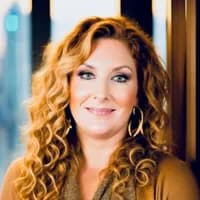
Teresa Roche
CHRO, City of Fort Collins
The Inner Game of Leadership: Self-Insight Transforms Your Impact
Episode 103 · February 21, 2025 · 17:29
The Inner Game of Leadership: Self-Insight Transforms Your Impact
Key moments
In Teresa's words
“Self-insight Being foundational for leading one's life is a teaching point of view.”
“I think of leadership as an approach to one's life, not a position you hold.”
“I do think that those of us that are privileged and blessed to lead others I hold us to a higher standard because who we are can either cast a ray of sunshine or a dark cloud over the people that we're accountable for or those that we serve.”
Transcript
Read the transcript2,331 words
IntroWelcome to the Built by People podcast, where we share the stories and insights of the world's top HR leaders. Join us as we dive deep into the minds of HR executives, uncovering their strategies, challenges, and triumphs in shaping today's workforce.
Guestwell-being. Deep, first I just have to thank you for inviting me to be on your podcast. I've listened to a couple of them already, and I hope that I can offer something to share with the people that listen, but thank you again. So gosh, my career journey, let me just hit some highlights. I graduated with my master's from Purdue in '81. I was hired by Hewlett-Packard and moved to the Bay Area from Purdue University. Was at several high-tech companies, moved to another part of California to be the first time as a CHRO for a global company up in Nevada City, California. At the age of 39, brought a wonderful child into the world, and my husband and I went back to pursue our doctorates simultaneously, living off of all of our savings for 5 and a half years. HP rehired me, and I had not been with them since 1989. And I was moved with my family to Fort Collins, Colorado. Agilent, which had split from HP in 1999 when I wasn't there, asked me to come home. That's what the subject of the email said. And so I went from HP to Agilent in 2002, was there for 12 more years. And then took a break that I called my liminal phase, which I can share more about if there's interest. And in 2016 made a turn that made sense to me, and that was to become a public servant for the city I'd lived in since 2001. And there's more to that statement, but I wanna just hit the highlights, Dave, and we can drop down in anything that you feel you want to, but I've always been in the field of Human resources, individual contributor, executive, the whole, whole field that I just really love. Yeah, I'd love to. Um, Dave, I was at a leadership program at West Point years ago, and Noel Tichy was one of the presenters, and he talked about a teachable point of view, a TPOV, and it really affected me, and I thought, what is mine? And as I reflected, I realized that self-insight Being foundational for leading one's life is a teaching point of view. I've brought it everywhere I've been, home, family, work, every setting. And think about it this way, Dave, I think of leadership as an approach to one's life, not a position you hold. And often I ask myself, who am I to lead? And so that requires discovery along the way to answer that question. And I've also come to believe, Dave, that the most extraordinary discovery in the journey, as you talk about when you asked about my career journey, is that of self, like to go within. So when you know yourself, when you know what motivates you, what your abilities are, you tend to have a more accurate perception of who you are. And I think research bears out that leaders who know themselves tend to be better coaches and mentors and open to feedback from others. And doing that, Dave, requires a level of self-acceptance and compassion. And I believe when we have that within ourselves, we can offer it to others. So knowing who we are, I think, is foundational to life. And I do think that those of us that are privileged and blessed to lead others I hold us to a higher standard because who we are can either cast a ray of sunshine or a dark cloud over the people that we're accountable for or those that we serve. Long ago, I read the book by Mary Catherine Bateson, Composing a Life, and it came out a long time ago. There have been times in my life where people see the changes that I've made, organizations I've gone to, places I have been to leaving, being an executive at the age of 40 to go back to school with our baby. If you were to turn over the threads that I've been weaving at a loom and looked at the pattern, there's been a line of service. So even though it's been manifesting in different ways, the underlying thing for me is service. And a couple of years ago, actually probably 10 now, I got to do a workshop with Richard Leider, who's done a lot of work on purpose. Similar to my TPOV, I thought about what is the purpose I was born to give. And so it is be present one heart at a time. And Dave, whether I'm navigating a playgroup with little kids when I was at home with my daughter or being at work in the public or private sector, nonprofit, whatever it is, that has helped define me. And it's the thread or the river that runs through my career. Yeah. Yeah. Yeah. Dave, I am a reflection of so many that have given to me. Mentors, teachers, coaches, friends, family members, colleagues. And this term, leadership as practice, not as performance, I want to share the thought leaders that gave me those words long ago. Robert Keegan and Lisa Leahy, they wrote a book, An Everyone Culture. The subtitle's Becoming a Deliberately Development Organization. And it was through their work and Joe Raylan, who talked about leadership as a practice. I think if we assume that we know everything, or yet it always has to be done a certain way, and make it about our performance, we miss being agile and adaptive to what's being called for at any moment. And the article that Lisa and Bob Keegan wrote with some others was called Making Business Personal, I think. They talked about if we did not expend the energy to navigate how people feel about us, like how we're performing, how we look, are we being correct? Are we right? If we took that energy to navigate people's interpretation of us and expended it into other things, there'd be so much more value. So it's just really been a pithy mantra for me. Trust me, if you talk to the team that I've been leading here at the City of Fort Collins, they would tell you I'm definitely in practice as a leader. Yeah. Well, yeah. So Dave, let me just zoom out a bit and give a little bit of context. When I was rehired by HP and moved to Fort Collins in 2001, I was co-located with most of the colleagues. The business president that hired me was there and all of my executive peers were. When Agilent asked me to come home, I spoke to the man who was going to be the CEO and another colleague, and they assured me that the role I was going to have, which was for the whole company, could always be done in Fort Collins because I had said to them, if you ever need me to move, with integrity, I have to say no, because I knew that the temperament of my wonderful child would be best. And we just fell in love with Fort Collins. So Agilent hires me and Dave, everyone that worked for me wasn't co-located with me. And it was the first time that I encountered, by request of the company, and this was 2002, to lead a global team. And I remember going to the facility that Agilent had me go to, and I have a terminal in front of me, and this was before video because it Video was not going to the desktop, so everything was auditory only. And I thought, how the heck am I going to love my team? Because a driving energy for me, Dave, is love. And I looked at the screen and I thought, I've got to figure this out. And I was motivated not only because I cared about this company and the colleagues, but I looked over and I saw my 7-year-old child and I thought, virtual, global, multi-online gaming players was going to be the future. And so I took it as a curious, complex challenge. And I looked at how could I lead with who I was in this new format. So among the things that I learned is love is possible no matter what the format. It matured me in ways Dave, that I am abundantly grateful for because when you have colleagues in China, India, over in Scotland, and they're on a different time zone than you, it forced me to think deeply what a meeting agenda might be because I didn't have the benefit of going down the hall and saying, hey Dave, I forgot to tell you. It helped me mature in terms of really being clear about having a a plan that everyone could lead themselves under. And then when things changed, how to have quick adaptation. The team that I led, we were the first to use instant messaging because when we had an acquisition at Agilent and we were doing a development program for all the new leaders worldwide that were joining us, we were chatting really quickly. And hey, just want you to know the session in Germany went really well. But I modified the exercise. We were asynchronous, which means that we were like 24/7, even though we weren't working 24/7. So it really shaped me as a leader. And the team that I led, we were often asked to share how we were able to create the work we did and have such deep community in a virtual format. Now it's just the way to— way to be. You know, the other thing, Dave, it was precious when we got to be face to face. That was precious time and we used it wisely. And the fact that I had a global team where I was going to be traveling a lot more outside the United States when we could travel, it deepened my— what word do I want to use? It deepened my understanding of people that come from different walks of life in every demographic possible. Yeah. Mm-hmm. Yeah. Dave, I think every leader at every level is a signal generator. How we lead in terms of the questions we ask, how we give feedback, the way we attend to our employees generates a signal for what matters and who are we. And so I think every leader plays that role. And I do think the higher you go with more people that you're accountable for, your signals are watched even more than you realize. And it's not what you always say. About how you're going to lead. It's like I said, the questions you ask, the meetings you hold, how you respond to crises that may happen, that reveals a lot. And I think HR in particular are some of the biggest signal generators. And we co-create with our employees and our leaders the culture. And again, because of what HR provides and enables and supports through our policies, our programs, our processes, how we coach, how we consult, that reflects the culture that you're trying to either create and sustain that matches the organization you're serving. Yeah. Hmm. So Dave, there's so much I could say, but I'm going to just choose one thing. I am very fortunate to be part of a learning cohort. It happened for 15 years, Harvard's Learning Innovation Laboratory, known as LILO. And we have been looking at AI and technology for a long time. And a couple of years ago at the end, we do this exercise. I used to think, and now I think, I said, I used to think technology was a part of me. Now I realize it's a part of me. So I used to think it was apart from me because it is becoming so embedded. But the one thing I want to say is this. There have been some researchers that have been doing practical applications. The possibility that AI will be a colleague of ours is going to bring a whole new way of working. So if you have an AI colleague, an avatar, what is the relationship to them? So I actually think AI is going to be a colleague, and in some places it already is. What does that mean for teams, the organization, the culture? It blows my mind, but I'm very excited to be thinking about that possibility. Yeah. So if I were going to go back to the comments when you asked me about self-insight as foundational to life, I did not share that there's many ways that I continue to understand myself, and two that I use deeply are the Enneagram and Hogan. But I wanna say through insight, what I've learned is the beautiful quote of Francis LaSalle, I think it was, be who you are and be that perfectly well. And Dave, why I love that is you're a remarkable person. The speakers that I've heard on your podcast are equally remarkable. So I say, oh, I wish I could be as brilliant as X or as funny as Y. And I'm the youngest of 7 children. So I had lots of opportunity to, to want what I saw others have. And what I realized is me being me and doing that perfectly well is the best piece of advice I give for anyone. And perfectly well, Dave, is not the standard that we tend to hold ourselves to that actually can become suppressive. I was told once that its original meaning in Hebrew meant to come round, to integrate. So my piece of advice is be who you are and be that perfectly well. Yeah, thank you, David. I'm very grateful.
More conversations like this