Episode 210 · May 23, 2025 · 8:59
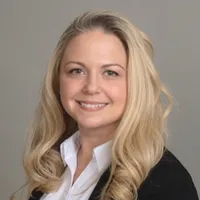
Stacey Nordwall
VP of People Strategy, Fyn
Beyond Lip Service: Why True Employee Well-being Demands Clear Boundaries
Episode 210 · May 23, 2025 · 8:59
Beyond Lip Service: Why True Employee Well-being Demands Clear Boundaries
Key moments
In Stacey's words
“If ever I feel like I'm moving into those territories [of being a therapist], then I know that's something I need to step back from because that's not something as HR people that we're trained for.”
“This is not one that I've seen many organizations do well or heard from my colleagues in my community. That they feel really supported.”
“If an organization can create that HR for HR or provide external coaching, that's what I would— the first and foremost thing I would recommend, because that is ultimately the place where that coach is there for you and you alone.”
Transcript
Read the transcript1,552 words
HostWelcome to the Built by People podcast, where we share the stories and insights of the world's top HR leaders. Join us as we dive deep into the minds of HR executives, uncovering their strategies, challenges, and triumphs in shaping today's workforce. I'm excited to welcome Stacy to the Built by People podcast. Stacy, thank you so much for joining us. And as a starting question, I always love to ask if you could share a little bit more about your career journey.
GuestYeah, one of the pivotal kind of moments for me in my career journey is early to mid-career. I wasn't really sure what I wanted to be doing. I had a background in psychology and communication from undergrad, and so I thought, okay, I'm going to go, I'm going to be a therapist, I'm going to get my master's in counseling psychology. And while I found it really fascinating, the learning part, the actual doing part was a lot more challenging than I had anticipated. And so I graduated with this degree in master's in counseling psychology and was really trying to figure out what were some other avenues to apply it. And that kind of led me into early-stage startups into doing HR there and really thinking about how I could marry all of this wellbeing knowledge that I had into the workplace. And so, that's really grounded me a lot in the work that I've been doing over the past however many years. If people have seen me on LinkedIn, know that I talk a lot about wellbeing in the workplace, it's because of that foundational decision.
HostStacy, when was a time you had to help a team set clear boundaries between personal support and professional responsibility? How did you navigate that and what were the key results?
GuestYeah, I think this is really interesting, especially once I started working for Culture Amp, and this was back in 2015, and I was working in a place where we had employees in the US and Australia and England. The thing about that is that in 3 different countries, the employment laws are different, the expectations are different, the understanding that employers have in regards to duty of care for employees is different. Trying to, in that kind of situation, navigate and establish clear boundaries to provide a consistent employee experience is really a learning experience and pretty challenging because all of these things, if you think about it, there are cultural components, individual components, legal components, so it can all be very unclear. And I think the guideline that I tried to follow and that we tried to follow as a team as best as possible for me was, I know what the experience is of being a therapist and kind of having those boundaries and responsibilities. If ever I feel like I'm moving into those territories, then I know that's something I need to step back from because that's not something as HR people that we're trained for. We try to do good by our employees. So what does that look like? And so that's really how I've tried to navigate it, but is a challenge, especially if you're working in an organization where there are a lot of different cultural expectations.
HostHow did you or your team respond when you noticed signs of burnout among HR professionals in your organization? What changes did you implement that made a real difference?
GuestLet's— I'm going to be honest. This is not one that I've seen many organizations do well or heard from my colleagues in my community. That they feel really supported. And that's why I think we have so many conversations about burnout in HR and about HR for HR, because a lot of times we're on smaller teams, we're experiencing this emotional burden that we're carrying that we can't even necessarily talk to other members of our team about. And so we're out there trying to find that relief within the community. And I, myself included, I know many folks within HR who essentially have had to take leaves of absence because there just wasn't that support, or they've left the profession or taken a break because they were burnt out and weren't getting that support. So that's why you'll hear me talk a lot about mental health, about boundaries, about avoiding burnout and what you can do, because I've had that experience and I've seen that from so many of my community members. The thing that I would say is really helpful— obviously community is really helpful— but if an organization can create that HR for HR or provide external coaching, that's what I would— the first and foremost thing I would recommend, because that is ultimately the place where that coach is there for you and you alone. You can take some of those things that you maybe can't talk with other people on your team about. That person is really there to listen to you and prioritize you and your growth and your development and your well-being. So, that is my number one recommendation.
HostStacey, tell me about a specific moment in the employee journey whether that be onboarding, promotion, conflict, or even exit, where you were able to create a standout supportive experience. What made it work?
GuestYeah, I think as much as I feel like I've been talking about onboarding, it still is the thing that is often not done well, but has such a huge impact. And so that's the thing that I will keep going into any organization that I'm in and really focusing on and building. I did that at Culture Amp. I've done that at Pin, especially through our product, through the communication templates, through the employee journey map templates. So I've done that as much as possible so other organizations can leverage what I've built to use it within their own orgs. And the thing is like, it can, you start wherever you can start. I find that there are a lot of different levers that you can pull. So you can create 30, 60, 90-day plans, buddy programs, being as clear as you can throughout the entire hiring process and onboarding about what the expectations and responsibilities of a role are, getting people in and really helping them immediately connect to the values and the mission. Make the ways that you work and your norms explicit and clear, not the unspoken norms, but make that as explicit as you can. That is gonna be a good experience for people because then that's that kind of cognitive load off of them. They don't have to guess what it's like to be at your organization or work at your organization.
HostWhen have you seen a company successfully shift its culture around wellbeing or boundaries, and what practical steps made the biggest impact in making that stick?
GuestI wanna start by saying culture change is incredibly hard, and it cannot really be achieved without the senior leaders in the organization having buy-in. I also think we have this expectation that change happens right away. Doesn't. Like, it's incremental. It's often quite slow. And so I think having some kind of expectations about that is important when you're trying to do something that requires some change management. At Coltramp, one of the things that I did there, I helped the team create our wellbeing guide, and that was really part of this process of us having that self-reflective moment of what maybe are our bad habits, what are our unspoken norms that we need to take a look at and make clear and make explicit and really go around to all of the senior leaders and have them talk about what it was that they did for their own wellbeing and then get that basically in their words in print and put that out to the company because then you had this very explicit thing of this is what we believe wellbeing is. And you can see in this guide senior leaders talking about what it means to them and what they do and what they prioritize. So it really sent that message out and then also helps keep them to their word, right? Because it's in print.
HostStacy, what parting advice would you like to share with our community?
GuestI would say everyone will tell you this, you cannot pour from an empty cup, right? So take your vacation. If you can't get a coach or you don't have a learning stipend or something that you can access, there are communities for HR folks that you can join. I would say accept that the to-do list will never be done. You will always have folks who want you to do more or add more onto your kind of HR list. And it's important to, if you can't say no or don't feel comfortable saying no, at least engage in a conversation and start talking about what are the trade-offs, what are the things that are gonna best drive the organization forward so you're just not collecting more and more onto that to-do list.
HostThanks so much for joining us today on the Built by People podcast. It was a pleasure to have you involved.
GuestThank you so much.
More conversations like this