Episode 171 · April 24, 2025 · 18:58
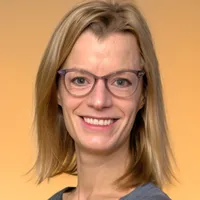
Shelley Wells
VP (Visionary of People), PeopleInk
Culture is Not HR's Job: How Leaders Build High-Performing, Values-Driven Teams
Episode 171 · April 24, 2025 · 18:58
Culture is Not HR's Job: How Leaders Build High-Performing, Values-Driven Teams
Key moments
In Shelley's words
“people need to be treated fairly, not necessarily equally. We need to insert gray into HR”
“you are on the outside what you are on the inside first.”
“when you think you're hot, you're not.”
Transcript
Read the transcript2,736 words
HostWelcome to the Built by People podcast, where we share the stories and insights of the world's top HR leaders. Join us as we dive deep into the minds of HR executives, uncovering their strategies, challenges, and triumphs in shaping today's workforce. I'm excited to welcome Shelley to the Built by People Podcast. Shelley, thank you so much for joining us. And as a starting question, I always love to ask if you could share a little bit more about your career journey.
GuestAbsolutely. Thanks for having me, Dave. I'm thrilled to be a part of this. I actually started as an HR admin. Back in 1982 in the hotel industry, just pestered the senior vice president of HR at corporate to get me onto the management training program. And after much pestering, he finally gave in. I went on, did the management training program where I went into every single position within the hotel and spent 2 to 3 weeks in every role, every shift. For about 18 months. When I was done with that, they actually offered me a role at corporate to help start a new division of hotels as the head of HR for that. Did the final property that we opened. I went in as director of operations so that I could get some operational experience, went back to corporate, opened a few more hotels, and then had never been a director of HR in the field. So went back into the field, did that for about 4 years in Arizona and California, became the regional for California, and then came back to corporate. Went through much growth, 2 acquisitions, a merger with Promise Hotels. The corporate office was moving to Memphis and we had 1 year to decide whether we were going to go to Memphis or not. My boss at the time said, Hey, wouldn't it be cool if we started our own company and did something we really loved? And that is going into organizations, helping them create values-based, people-centric, high-performing organizations. And we said, are you kidding? Because if you aren't, we're all in. There was one other colleague and me, and now 26 years later, we are going strong with People Inc.
HostExcellent. And can you talk to us about how you became passionate about creating values-based, people-centric, high-performing cultures?
GuestYes. So with the 16 and a half years that I was at DoubleTree, I lived it. I lived in this great culture. The COO of the company got it. He was passionate about employees. He sent handwritten birthday cards to every employee when there were 8 hotels. And then toward the end of the 16 years, Anne Rhodes joined from Southwest Airlines and she flipped HR upside down and did things that I really had already been doing, but was so excited that no more policy books, let's do guidelines because people need to be treated fairly, not necessarily equally. We need to insert gray. Into HR and no longer called HR because it has such a bad stigma sometimes, human remains, because you go there to get fired. And so we started calling it team services. From the experiences of being and living in those kinds of environments, I became really passionate about making sure that when we went into organizations with PeopleLink, we did the same and helped them do the same.
HostCan you share a specific case where you implemented your 360 systematic approach in an organization and what the outcomes were?
GuestYes, thanks. And so for the listeners, I want to explain first what that 360 approach is and then go into how we did that. And so it, if you think about a square puzzle into different pieces, the first piece of that puzzle is values and consciously designing what you want your values to be with a definition of what that value means. And then further defining those values by behaviors that are expected of every single person in the organization. Once that is done, that becomes foundational for everything else that you build and innovate, including business decisions. And so from that, the next most important part is Hiring A-players that fit the values and the competencies. You then create interview guides and competencies for every role so that you hire A-players. From there is the accountability, rewards, and recognition piece. Um, making sure that you build everything around accountability, results, and doing it the right way and rewarding and recognizing people for living the values. From that, there's the customer branding piece because what a lot of HR people folks don't understand is that values are the brand, become the brand of the company. People are the brand. And so we are really brand ambassadors and creating, helping to create the brand for the company from the inside out. And then the piece that connects everything together is continuous improve, continuous discipline. Because it's not a one and done. This is something that you have to nurture every day, all the time. And so that's the 360 approach. So I'm gonna give two really quick examples. One is a startup and then one is an established company. And so JetBlue was our first client and we went inside for 3 years to really help build that culture and make sure that it stuck. And so it was ground up. It was very deliberate about aligning to the purpose statement of bringing humanity back to air travel. It was in 2000 when unemployment rate in New York was 3%. Very difficult market, New York, very difficult to find friendly people. There were 15 of us. We sat in a room, we designed those Values very deliberately and consciously. We further defined those by behaviors that we all agreed that they, we would live by them and expected others to live by them. Then for another half day, we did nothing but put every role on a flip chart and say, what are the competencies and characteristics that we want in each of these roles? And what were the differentiators between us and any other airline out there? And would these, again, align to bringing humanity back to air travel? We then created custom interview guides. We included peers in the hiring process. We used behavioral-based interviewing, which we know creates a greater commitment by those peers to help the people they help hire succeed and be successful. From there. The accountability and rewards piece, we designed a performance management process called our Flight Plan around the results, which is what you accomplish, and the values, how you accomplish those. We also included peer input around the values and behaviors. We made sure that all the metrics were transparent, and in fact, every crew member attended orientation before they even started on the job. And either the CEO or the COO did a full session on Airline 101 to make sure that everyone knew what the metrics were. Everyone knew, no matter what their role, how they could contribute to the success of the company and those metrics. On the reward side of things, there was profit sharing for all. So everyone made sure that they were doing their part. To make sure that the company was successful. We had stock options that we gave to leaders, pilots, maintenance. We offered to flight attendants, but they preferred the higher base salary versus the stock. Rewards and recognition around living the values, contests for naming the planes. And then if they won, it was them plus one who were invited to Toulouse, France to go pick up that plane. Which was really fun for them. And then telling the stories. We told the stories over and over again, not just generic stories, but very specific stories around people living the values and those behaviors that became impactful and motivational so that people said, oh my gosh, okay, that's what it looks like to live the values. And then on the customer branding piece, Again, we had a plane that had the values on it. We had the crew lounge painted with the values. It was on the website, consistently talked about and modeled by the leaders. We lived by that notion of you are on the outside what you are on the inside first. And JetBlue took that to heart. They had monthly chat sessions. We flew in the cockpit as much as possible before 9/11 so that we could really hear from people what was going on. There was a monthly Blue Note focused on a value per month, what business decisions were made around that value that month, and then all external communications, press releases, et cetera, were presented to crew members first before it went out to the public. Then on the continuous discipline side of things, like I said, never a one and done, constant discipline to be vigilant about nurturing that culture every day, even when we were happy with where we were. And we live by that notion of when you think you're hot, you're not. And so it really kept us motivated. And then we measured that through engagement surveys, through pocket sessions, new hire surveys, annual reviews of all the programs with crew member feedback, and then values committees who helped ambassador and nurture and guard those values. The outcomes of that for JetBlue was that it's the 6th largest airline in the US right now. They were 6 years in a row best US airline by Condé Nast, 12 consecutive years JD Power Award for customer service. They maintained an overall turnover rate of between 10 and 12%, and people stayed because they loved the culture, they loved the values, and they loved the way that they were treated.
HostShelley, what were some of the key challenges around implementing that approach and how did you overcome them?
GuestYes, thank you. So the biggest challenge, because we were growing and we were growing very quickly, was maintaining the values and that culture across the United States as we opened new stations. And so quickly divided and conquered, we made sure that all leaders were out there in the field visiting people after orientation and after that honeymoon period wore off to make sure that we were listening. Again, we had those listening tours so that we could hear what they were saying, hear where the potential issues were, come back and address them immediately. The other thing was making sure that if we knew we'd made a hiring mistake, we made the decision quickly. To release that person with the same dignity and respect as we brought them in, but we did it very quickly. There was another company that we worked with where, when we went in, the notion and the comments that I received were, oh, this is just a flavor of the month. It's never going to stick. It was a very sales-oriented organization on the insurance side of things. And so I spoke to the CEO because this was a family-run business, had been in business for 90 years. And so he said, oh gosh, I'm going to have to address that. And so when we rolled those values out, he addressed them right away, drew the line in the sand, what behaviors were acceptable before are not going to be acceptable in the future. And because of that, now they had just celebrated their 10 years. Of working through doing this program, and they have been New York's Fortune Best Company to Work For since 2020.
HostShelley, tell me about a time when defining specific behaviors around a company's values had a significant impact on team dynamics and performance, and how did this approach change the organizational culture?
GuestAll right. So for this one, I'm going to use another client that was a large healthcare company that had been in business for 100 years, faith-based. They had a good culture, but it was not clearly defined. When we went in and did the value session, again, the CEO was all in on this. And so when we rolled these values out, the CEO again addressed line in the sand, what was acceptable in the past is no longer accepted. And we defined, again, those by behaviors, which we held everyone accountable to. They put in a performance management process where 50% of compensation was based on the what you accomplished and 50% of that compensation was based on the how, through the values and the behaviors. And that was a big wake-up call for a lot of people. There was initial cynicism in implementing the hiring model and that peer-based interviewing. So we selected a department with an exceptional leader, high turnover, 66%. We put that in place. Within the first 6 months, that went from 66% to 31%, and after a year was at 19%. And so that just really started the flame of everyone wanting to be part of it because they saw the caliber of the employees that were being hired under that program. And it really changed the way that they were doing things. Their first year in their cardiac hospital, they had a 99% Gallup score for patient satisfaction. So it really changed the trajectory of performance of the organization.
HostShelley, could you describe a real-world example of how integrating frontline employees in the values creation process led to meaningful change within a company?
GuestYes. So in about 90% of our clients, when we bring the employees in to do that values session, and we use 60 to 70% frontline employees. And 30 to 40% leaders. So they come in and they're nervous. They don't know what to expect. And when they sit at the table with a CEO or a COO or a CFO, and they are part of something that is changing the legacy of that organization, by the end of that 1.5 days, their whole attitude has changed. We get comments like, it's the best experience I've ever had in my life. They cry. It's just amazing. And then what happens is during the rollout, the entire organization, they're highly involved. They are, they become the best ambassadors for those values and the success of sustaining them. They hold themselves and others accountable. We've seen where it changed engagement scores to a recent organization, 90% engagement survey scores, 90% customer NPS scores. They're not afraid to raise the red flag if they see something going sideways.
HostShelley, what parting advice would you like to share with our community?
GuestI have a few. The things that I would say to the community would be, if you're really serious about wanting this kind of culture, to present a strong business case to the CEO. And get their buy-in because without the CEO and senior leaders, it's not going to work. It can't be an HR program. It has to be a business initiative led by the CEO and then partnered with people. This day and age, I would also say focus on retaining your A-players versus just the recruiting side of things. Re-recruiting them every day, encouraging all leaders and yourself to build Personal relationships, meaning not just via Zoom, but go to lunch, have a coffee date, have a walk and talk, but really get to know your people. Leverage technology, especially AI, to assist in the recruiting so that you can focus on retention. And remember that you're critical to helping build brand of the organization. Learn the business, go into ops for a bit if you can. Think gray. It's no longer black and white. Find a way to yes for both employees and leaders, which really helps you become a stronger, better business partner. Be open to leaders who challenge you to do things that you're uncomfortable with and say yes. Make yourself valuable to the organization. Create scorecards and present those monthly. Hire people with leader mentality at all levels who will inspire and motivate others. And that really just equals greater productivity, greater innovation. Never compromise the values. In closing, I would say it's the small things that you do every day that have the greatest impact.
HostShelly, thank you so much for joining us on the Built By People podcast. It was a pleasure to have you involved.
GuestYou too. Thank you so much.
More conversations like this