Episode 339 · September 30, 2025 · 13:26
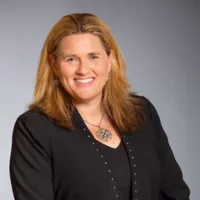
Sharon John
Vice President - Global Total Rewards and Mobility, Thoughtworks Inc.
Culture by Design: Total Rewards Signals Guide Organizations Through Change.
Episode 339 · September 30, 2025 · 13:26
Culture by Design: Total Rewards Signals Guide Organizations Through Change.
Key moments
In Sharon's words
“At the time, I was equally drawn to finance and HR, and I've always seen myself at the intersection of numbers and people. How powerful storytelling with numbers could be and That's what tugged me into a career in total rewards.”
“What I've learned along the way is that total rewards isn't just about numbers. If rewards were just numbers, they would fail. And if they are signals of what we value, then they sure have the propensity to transform. And that is what really excites me the most, the chance to shape culture at scale through something as powerful as rewards.”
“For the first time, traditional compensation playbooks had to be thrown out or at least flipped. Remote work blurred the boundaries, benchmarks stopped making sense and locational differences came under the spotlight. Suddenly, rewards wasn't just about pay. It was more about fairness, belonging, and keeping pace with an entirely new social contract to work.”
Transcript
Read the transcript2,007 words
IntroWelcome to the Built by People podcast, where we share the stories and insights of the world's top HR leaders. Join us as we dive deep into the minds of HR executives, uncovering their strategies, challenges, and triumphs in shaping today's workforce.
HostWell, Sharon, thank you so much for joining the Built by People podcast. It's so important for us to be able to bring people like you into this call that can have so much experience and share their experiences with the other HR team members and world that are all in this space. And really appreciate you joining this call today.
GuestOh, thank you, James. It's good to be on and please do convey my thanks to Dave, who I know is not here today as well.
HostYep. No, I appreciate that. Well, okay. As a starting question, what we love to hear is, you know, tell us more about your career journey, how you got to where you are.
GuestSure. And I'm sure by now you've got so many responses to these questions. So, you know, I might pose a question back to you and say, which ones were the most interesting? No, but I'm not going to do that. I'm quite happy to share my journey so far. So I started off with a degree in commerce and then went on to do my master's in business administration, specializing in human resources. At the time, I was equally drawn to finance and HR, and I've always seen myself at the intersection of numbers and people. How powerful storytelling with numbers could be and That's what tugged me into a career in total rewards. Over the last 20 years or so, this path has taken me through engineering, financial services, fintech, and now technology. I've led both public and private equity reward programs, navigated complex mergers and acquisitions, advised senior leadership, and built total rewards and mobility into global centers of excellence. What I've learned along the way is that total rewards isn't just about numbers. If rewards were just numbers, they would fail. And if they are signals of what we value, then they sure have the propensity to transform. And that is what really excites me the most, the chance to shape culture at scale through something as powerful as rewards. And today in my role at Thoughtworks, I lead our global total rewards and mobility functions. With more than 10,000 ThoughtWorkers across 19 countries. No two days are ever the same, and that really drives me.
HostThat's amazing. Well, that actually lines up really well to my next question for you, which is, then again, you've had so many different verticals, right, that you've been part of. Can you tell us a little bit about a career-defining moment in your HR space in your career, right? What defined that?
GuestThat's a thoughtful question, and two moments really stand out for me. The first were the years in the aftermath of COVID and those were surely a game changer. For the first time, traditional compensation playbooks had to be thrown out or at least flipped. Remote work blurred the boundaries, benchmarks stopped making sense and locational differences came under the spotlight. Suddenly, rewards wasn't just about pay. It was more about fairness, belonging, and keeping pace with an entirely new social contract to work. So leading through that forced me to be agile, to question long-held practices, and to design for resilience rather than rely on routine. The second moment was a leap of faith, moving from a large global organization of 20,000+ people into a much smaller private equity-backed tech firm of just under 2,000. It was high energy and fast-paced, and my challenge was to really bring governance and frameworks without stifling the entrepreneurial culture. The real test was to achieve the perfect coexistence of both the agile mindset along with the essential reward frameworks that allowed for equitable implementation of our pay-related decision-making. Both these experiences reshaped how I lead. They reminded me that leadership isn't purely about repeating best practices, but it's also about knowing those opportune times to rewrite those.
HostThat's amazing. Yeah, I think through, I mean, the next question that we typically ask, right, is how did that career-defining moment affect the company and its employees? Obviously you hit on a few of those, but I get, I might dig into that a little bit more because I, it sounded a little bit like COVID was a big one that redefined how you had to manage people, but manage expectations and manage performance. From what it sounds like, right? It sounds like there was a big change in how that worked. So, for you, when, when that happened, how did the company respond as you were trying to make those adjustments and changes?
GuestYeah, sure, James. I mean, it, it was something like we had never seen before. Of course, we hadn't seen things the way they panned out before. For starters, the compensation playbooks no longer worked. We had to absolutely start from scratch and rebuild our approach to fairness and belonging and restore trust and credibility in times that were already very uncertain. And this was critical for retention during the Great Resignation, especially. And employees had to feel seen. They needed to build those communities in a safe space, knowing that their skills were still valued by the organizations they were part of. So that was critical, and it almost involved compensation and reward professionals rethinking everything they'd been taught at school. So I'd say that was quite the career-defining moment, having spent as long in the profession. And none of us did see that coming from a million miles, for sure. And the second I would say a moment for me that was also, when I look back, it shaped me quite a bit, was at Riverbed Tech, the private equity tech firm that I spoke to you about. The impact here was different. Introducing structure gave leaders credibility. It created clarity for employees, but we were careful not to lose the energy of the entrepreneurial culture that smaller organizations typically have. They cherish and they hold on to it for dear life. So this balance helped the organization scale quickly while keeping people still engaged. I think in both these cases, the effect was quite the same, is that when you translate complexity into clarity, employees don't just feel managed, they also feel anchored. And that sense of anchoring, although is sometimes downplayed, but it remains ever so crucial in navigating tough times and seasons.
HostYeah. Well, I'm actually gonna skip our next question cuz you kind of hit on all of it. I, but one of the things I am curious about, or you just talked about, I mean, that's, again, you've had some massive organizations that you've had to help, right? And, and work for. I imagine one of those key pieces, especially in, right, the COVID time, the resignation time and all that, how was the communication overall? Like how were you getting these messages out to these employees? That's a very wide variety, right? 19 different countries. There's lots of languages in between all that. But then there's also the individual, like each, each one of those countries reads things a little bit differently, right? Each communication point has to be a little bit different. How were you guys able to get that communication out to the employees and get them to ultimately, ultimately engage with you? Because that's, at the end of the day, that's what you're hoping for. I want them to engage back because then I know they're part of this organization that they're feeling wanted and needed.
GuestYeah, that's spot on, James, and one that we all strive towards. I don't think we have the answers just yet. I think certainly something's quite certain is that transparent communication is really the name of the game. And if you do nail it, then there's immediate outcomes and just fruitful discussions at the back end of it. But to be able to be confident to get into those discussions, You need to be clear with your raison d'être. You need to know what is it that you're going to lead with. What's the science behind what you're doing? Is there a methodology tried and tested? Do we have frameworks that support transparency about sharing career progression for our individuals? Is sort of our thinking thorough? And how much have we educated and worked with our leaders in equipping them to have those conversations? Sometimes honest, sometimes tough. We want them to be honest as much as possible, as long as they have the playbook in place. And so this is critical before we're ready to communicate. But essentially, it's having almost having the philosophy and then working your way back. And you need to have that blueprint, especially when you manage it in a global context, that blueprint ready before you can then plug and play as needs be across the different markets that you find yourselves.
HostYeah. Oh, I can't, I can't imagine the challenge and time spent answering a lot of questions. And I'm sure you maybe didn't sleep for a while as you had literally every time zone to probably have to cover at that point in your life. So, that's amazing. Well, you know, my next question is, what's a legacy that you hope to leave as an HR leader and why?
GuestOh, legacy feels, um, colossal. I'd hope to contribute and make an impact enough to leave things better than when I took them on. Whether it be scaling total rewards and HR, fearless partnerships with the business, building high-performing teams, or setting up center of excellence in, in-house. The key questions to ask is, how is the business better off? How did we do on our key goals of HR design and delivery? And how has this helped achieve a superior world-class experience for our talent? I see these as the plumb line for how strong the anchor has been. And if rewards were just numbers, they'd feel we need rewards to be valued. And therein lies its propensity to transform. And if this transformation can be achieved, I will consider my work done then.
HostI love it. Yeah, it's a big task, especially when we use the word legacy. Makes you think very big. So I appreciate you bringing all that in. Well, as, as a parting question, right, what parting advice would you like to share with the community?
GuestSure. I think for HR, the proverbial seat at the table has never been more critical. In a world that will be shaped by AI, it won't be the order takers who thrive. It will be thought leaders, in-house consultants, subject matter experts, and the influencers. Building these competencies, sharpening our craft in education will be the key to staying relevant. And relevance in this new area won't come from the process, but rather from a fresh perspective. If we show up consistently as credible and resilient partners who shape strategy, not just execute it, HR and rewards won't be asking for a seat at the table. We'll be designing the top table itself.
HostI love that. I love that. Well, Sharon, thank you so much for joining us today on the Built by People podcast. It's been a pleasure. And thank you for bringing so much insight to the community. I know we have leaders of all different organizations and sizes and different levels. And so I think this is super valuable for them to hear. That there is a very clear path of what we need to do in order to be successful and hopefully help engage with those employees and build a great culture inside that organization. So Sharon, thank you so much.
GuestWell, thank you, James, for having me, and I do hope your listeners enjoy chiming in.
HostThank you.
GuestThank you. Bye-bye.
More conversations like this