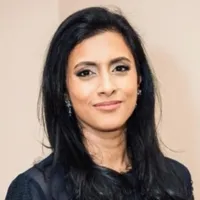
Sara Schrage
Chief People Officer
Professional Services in Autism Field
You don't see a lot of clinicians on LinkedIn
Thesis
“Sara Schrage, a Chief People Officer, emphasizes the critical role of strategic talent acquisition and retention, particularly in niche and high-turnover markets, by leveraging technology and data to build relationships and drive effective internal communication. She advocates for HR leaders to operate with conviction, prioritizing ethical decisions over fear.”
Show notes
Summary
Sara Schrage shares her journey from recruiting to leading in the ABA industry, focusing on talent acquisition, technology integration, and leadership advice. Discover how she leverages data, builds relationships, and navigates organizational growth.
Takeaways
- Always focus on building trust and relationships, especially in remote settings.
- Leverage technology and data to create targeted, effective communication campaigns.
- Maintain core organizational principles while embracing growth.
- Support your team and operate without fear, advocating for what is right.
- Use innovative tools like ATS and Power BI to optimize talent management.
What you'll take away
- 01Proactively build robust talent databases and leverage ATS/CRM for targeted, relationship-driven recruiting campaigns in niche markets.
- 02Tailor internal communication strategies to diverse employee segments, utilizing various channels like HRIS for frontline workers who may not engage with traditional platforms.
- 03Address technology gaps by integrating data from disparate systems (e.g., using Power BI) to enable strategic storytelling and motivate stakeholders for change.
- 04Develop retention strategies that acknowledge and maximize the impact of employees in roles with naturally shorter career lifespans.
- 05HR leaders should prioritize ethical decision-making and personal integrity, seeking new opportunities if current roles compromise their values.


What most organizations get wrong
- You don't see a lot of clinicians on LinkedIn kind of have to find creative ways to initially meet them and then build trust and relationships.
- Clinicians don't stay in this role long... how do you get the most out of somebody that you know is only going to stay in this career for seven years?
- Don't find yourself operating in a place of fear... There's always going to be a great company out there to hire you.
In Sara's words
“So I started my career in recruiting. I started as an agency recruiter and the guy that hired me kind of led me to believe that I was signing up for a software sales job.”
Highlights an unexpected start to her HR career, framing recruiting as sales.
“You don't see a lot of clinicians on LinkedIn kind of have to find creative ways to initially meet them and then build trust and relationships.”
Illustrates the unique challenges of recruiting in niche, relationship-driven fields.
“Clinicians don't stay in this role long. It's a role that you usually see people cycle out of five to seven years into the job and that has kind of its own unique set of, you know, I guess, challenges and interests, like how do you get the most out of somebody that you know is only going to stay in this career for seven years?”
Presents a specific, challenging retention scenario and the strategic thinking required.
“We can confidently say that we have 90% of the clinicians that are out there in the United States in our marketplaces, and then have been able to build some really, I think, thoughtful campaigns to start to build relationships with these individuals...”
Demonstrates a highly successful, data-driven approach to building a talent pipeline.
“Don't find yourself operating in a place of fear. I think that one of the most challenging roles is the HR role... Don't settle for less than you deserve would be my biggest piece of advice.”
Offers powerful, personal advice on integrity and self-worth for HR leaders.
The problems this episode addresses
- Extremely tight talent market for specialized roles (e.g., BCBA clinicians).
- High turnover and short career lifespans for certain frontline roles.
- Lack of seamless integration between various HR technologies, leading to data silos.
- Difficulty in engaging diverse stakeholders with data and motivating them for change.
- Ensuring critical information reaches all employee segments, especially non-desk/frontline workers.
- The pressure on HR executives to compromise their values in challenging situations.
- Maintaining organizational culture and unique attributes during rapid growth.
In this episode
Intro
Sara Schrage's path from agency recruiting to the autism services field
Your focus is always on recruiting and retention
So my next question is probably going to be a technology forward answer
You've rolled out a recruiting solution that's working well for your company
Employee communication is becoming harder and harder across every organization
If we sat down again 12 months from now, what would you have hoped has changed most
Topics covered
Organizations and entities mentioned
Full transcript
Expand transcript (1617 words)
Welcome to the Built by People podcast where we share the stories and insights of the world's top executive leaders. Join us as we dive deep into the minds of executives, uncovering their strategies, challenges and triumphs in shaping today's workforce. That's crappy. Now let's jump in and get started with our next guest.
Welcome to the Build by People podcast. Today I'm joined with Sarah Schreg. Sarah, thanks for joining me today.
Thanks for having me.
Absolutely. Tell us a little bit about your career journey. Unexpected turns, you know, what ultimately led you to where you are today.
So I started my career in recruiting. I started as an agency recruiter and the guy that hired me kind of led me to believe that I was signing up for a software sales job. And he was like, oh, recruiting is just like software sales. You're just selling an opportunity in software sales versus actually the deal itself. And I was like, okay, so got sucked into that and it just kind of led to learning more about the HR side of things and quickly leading small companies. The majority of my career has been early stage high tech startups. Originally in Austin and then migrated out to San Francisco. And a couple of years ago I started consulting, joined a fractional firm and built a recruiting people ops, compensation and coaching type of organizations. And that introduced me to one of my clients who I'm now working for full time. And I did a real industry change and now I'm in the world of autism. And we provide professional services in aba, speech and ot. So so a whole new set of people challenges, but it's always been very people oriented.
I love that. That's great. Tell me about your top priorities right now.
So probably like most listeners, my focus is always on recruiting and retention. You know, when I moved into the world of aba, I found it to be an even tighter market of talent than software. There's probably about 12,000 BCBA clinicians and about 60,000 job openings right now just to kind of give the listeners an idea of the ratio there. And that's been really kind of exciting challenge. I've always enjoyed the this particular journey has been very focused on technology. Like how do we use technology to create a Stronger connection with people. And in this space it's very relationships oriented. You don't see a lot of clinicians on LinkedIn kind of have to find creative ways to initially meet them and then build trust and relationships. So the recruiting initiative has been like a really good one and the team has introduced a lot of new tools to get smarter about what we're doing. And then on the retention side of things, another thing that's kind of interesting about ABA is that clinicians don't stay in this role long. It's a role that you usually see people cycle out of five to seven years into the job and that has kind of its own unique set of, you know, I guess, challenges and interests, like how do you get the most out of somebody that you know is only going to stay in this career for seven years? So that's kind of what's keeping me up at night these days. People wise.
That makes sense. You know, with the evolution of technology too, it kind of keeps us on our toes. So my next question is probably going to be a technology forward answer. If I shadowed you for a week, where would you, where would I see you spending most time on things that don't feel strategic?
It's trying to kind of piecemeal the gaps in the technology that aren't really kind of working together right now. We, we've adopted a lot of technology and a lot of it's early stage, so it integrates better with some of the more kind of legacy enterprise types of solutions. But it's still challenging. And so we've partnered with a couple of really talented consultants that are helping us use tools like Power BI to bring some of this data together. But then there's still this storytelling component that is challenging and then what actions do you take with that data? We have an organization that has a lot of spokes to the hub of the wheel and trying to like get different individuals that are stakeholders invested in change and using data to help motivate them and also to measure progress. So that's kind of how I'm spending. That's how you'll see me when I'm not being super strategic, which feels more often than not right now.
What's one initiative you've rolled out recently that you're really proud of?
I think our recruiting solution is pretty cool. So I have a love hate relationship with LinkedIn like a lot of people probably do. And I've always worked for early stage companies that don't have deep pockets. And so one of the things that our team did right out of the gate was to implement a robust ats. I'm a big fan of Ashby. So we implemented Ashby and then we spent a good part of the first year pulling in profiles and finding emails for these. So we basically built a very robust database of talent. We can confidently say that we have 90% of the clinicians that are out there in the United States in our marketplaces, and then have been able to build some really, I think, thoughtful campaigns to start to build relationships with these individuals and focus on topics that we think are really interesting to them so that they'll look forward to seeing communication from us, whether it's an update or a did you know or you know, maybe some sort of white paper, and are able to do this through the ATS because of a really robust CRM solution that gives us a lot of marketing data to let us know, like how these campaigns are landing and who's reading what we're sending out. So that's been a pretty significant undertaking that is now showing that it's working.
I love that. And that's one thing that we've seen as well, that employee communication is just becoming harder and harder across every organization. Right. So what's an area where you're really trying to improve engagement through better communication? Or how are you approaching making sure employees actually see, understand and act on the information that's sent out to them?
So we're a Google Spaces company versus a Slack, but same principle. And I've been working in remote first organizations pre Covid and so I've been really, I work hard to introduce those principles in most of the companies that I've worked with, worked for in the past. And so that's, you know, effectively, you know, using Spaces or some sort of group making sure the right people that are in those so that we've got asynchronous communication set up that has all the right people involved in those conversations. For our particular group, like our behavior technicians, they don't have a lot of need to get into email or to look at Google Spaces. And so one of the things that we've been leveraging for that particular subgroup to ensure that they're seeing critical emails is leveraging our HRIS system, which ties to their clock in, clock out and using communication methodology to get important brief messages up to them that way.
That's great. If we sat down again 12 months from now. Sarah, you know, what would you have hoped has changed most within your organization?
I think that just seeing us be able to kind of keep what we've got Going on as far as the core focus, as far as our mission and vision and the principles that are important to us, we're growing a lot and sometimes that's a big challenge of going from mid to size tween company to larger size company. And so really just, you know, holding onto the things that are working for the organization and embracing growth and change that 12 months from now we're maybe double our size, but we still have a lot of the unique attributes that make us. Maybe
if you could leave one piece of advice for our community, maybe something you wish you had known earlier in your career or for an aspiring leader or someone that's been in seat, you know, what would be that, that lasting advice that you would leave?
I would say don't find yourself operating in a place of fear. I think that one of the most challenging roles is the HR role, particularly when you're in an executive position, whether it's an experienced CEO or an inexperienced CEO. I think we've all found ourselves in situations where we're kind of backed into a corner to do something that we don't feel is the right thing to do. And I think that there's a lot more support in today's space to go out and do what you think is right. There's always going to be a great company out there to hire you. And if you're just not in a good place that you don't want to be in, get out of it and find a better place for yourself. You know, don't settle for less than you deserve would be my biggest piece of advice.
That's great advice. Great perspective as well. Well, Sarah, thank you so much for joining us today on the Built By People podcast. It was a pleasure having you.
Thank you for having me. It was fun.