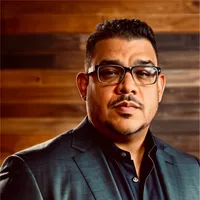
Episode 330 · September 23, 2025 · 23:26
Michael O'Neill
Chief Human Resources Officer, Major League Baseball Players Association
Michael ONeill, Chief Human Resources Officer at Major League Baseball Players Association
Episode 330 · September 23, 2025 · 23:26
Michael ONeill, Chief Human Resources Officer at Major League Baseball Players Association
Key moments
In Michael's words
“So, you know, working for the players union like the, like I do, it's a bit interesting being a part of the union and the players are the union members. And so we have around 5,500 members... I kind of was thinking about why I joined the union in the first place and was just trying to go someplace and be someplace where there was a purpose and there was a goal.”
“When we went and unionized the minor leaguers about 3 years ago... it was also taking our union size from about 1,300 to 1,500 people all the way up to 5,500-plus people. So that's a gigantic movement in union. So as you could imagine, some of the biggest things are understanding... I had to build it. I'm in the middle of building an HR structure and we tripled the size of the union, quadrupled the size of the union at that point.”
“I really do want to make HR a strategic partner with the organization. And I can do that here because, you know, it's a respected function within the organization. But if it loses that respect, it sort of keeps me up at night.”
Transcript
Read the transcript4,330 words
IntroWelcome to the Built by People podcast, where we share the stories and insights of the world's top HR leaders. Join us as we dive deep into the minds of HR executives, uncovering their strategies, challenges, and triumphs in shaping today's workforce.
HostWell, Michael, I'm super excited to have you join us here on the Built By People podcast. Again, thank you so much for joining us today and taking time out of your day to be able to help learn and, and teach others that have been in your position, help them grow in their own career path. Number one, I love to start out with the question of, you know, share a little bit about your career journey of getting to where you're at today with the MLB.
GuestSo thanks, James, and thanks for having me today, and I, I really appreciate it, and I'm happy to be here. So, you know, uh, I started out in accounting and got out of school and thought, what am I going to do with life? And sort of, I was a bit of a kid of the '80s and, and who grew up watching LA Law and said, let me go to law school, and Of course, that's what everyone's supposed to do. Right. And went to law school and got out and I practiced a couple of years. And then this position opened up. I'd always done a little bit of back office stuff as well as the legal work. And a position opened up in HR. And I remember during the interview, my future boss would say to me like, well, what's going to happen? Are you going to go back to being a lawyer? I said, well, not if HR is a good career for me. And so. 25+ years later, I'm still here. So it must've been a good career for me. So yeah, that's, that's, that's kind of how I got started in HR. And I worked in a lot of finance companies throughout my career, a law firm here and there. And then I got to the point where about 5 years ago, I moved over to the Major League Baseball Players Association, which is the baseball players union.
HostThat's awesome. No, and it definitely, definitely a career change there, right? Moving from law to MLB HR, which is obviously a very big difference into what people usually think of, right? When they think of HR, they don't usually think of legal. So that's amazing. Well, this is going to be a very kind of an interesting question, and I'd love to get your insight because you are in a unique field, right? A lot of HR leaders, they're kind of used to the normal structure, right? Inside of a business. MLB is a little bit different. So I'd love to know, like, for you personally, what is kind of a top priority for the quarter for the HR leaders of the MLB like yourself?
GuestYeah. So, you know, working for the players union like the, like I do, it's a bit interesting being a part of the union and the players are the union members. And so we have around 5,500 members, including both the major leaguers. And then recently, a few years ago, we brought the minor leaguers in as part of, as part of the union in itself, we all try and do as much as we possibly can. I kind of was thinking about why I joined the union in the first place and was just trying to go someplace and be someplace where there was a purpose and there was a goal. And so, and everyone was sort of moving in the right direction or the same direction at least. And, you know, I got a little bit tired of working in places where the biggest goal was to get the CEO the biggest yacht or mansion. In the United States. So it was time for me certainly to make a move. And I made that move and I've been happy since then. And we do have a purpose. And I think a lot of, a lot of what we do is pitch in and fill in a lot of different places. So if you're looking for that sort of HR environment where your job is very structured and you do everything the same thing every day in and day out, that's just not what, what I have anymore. And that works really well for my personality. I could be working with my legal background. I do some legal work as well that, you know, contract reviews and things like that. But on the HR front, I could be doing sort of everything and anything as that comes up. So it's a terrific environment for a person like me who likes that constant motion going on.
HostYeah. No, that's amazing. Well, and I can imagine, I'm just thinking of the union, right? I mean, you have so many different people with so many different backgrounds. One common thread of baseball. But I mean, these are every type of ethnicity, right? Every type of different cultural background possible, especially in, in that baseball field. So a question I'd be asking is, you know, what is maybe the biggest challenge you're currently facing in that HR role, uh, to help provide for all these different sections and subsets of these players and athletes?
GuestYeah, for, for me, uh, it's, it's a really good question. I think for me, When we went and unionized the minor leaguers about 3 years ago, almost exactly 3 years ago, it was a big moment, but it was also taking our union size from about 1,300 to 1,500 people all the way up to 5,500-plus people. So that's a gigantic movement in union. So as you could imagine, some of the biggest things are understanding I come in 5 years ago, there was not really an HR structure at the time, so I had to build it. I'm in the middle of building an HR structure and we tripled the size of the union, quadrupled the size of the union at that point. There's a lot of recruiting that has to get done to fill positions that are going to be needed to incorporate the minor leaguers. There's definitely a lot of structure that needs to be done, understanding how to get the work done, making policies and procedures that, even though we had some policies and procedures, it was really kind of consolidating them to ones that make sense and allowing us to be able to function day in and day out with a bit of a strong HR presence in the organization.
HostYeah. Interesting. Yeah, that's a, I mean, that's a huge growth number.
GuestYeah.
HostMore than, right? Tripling what you have and what you're trying to be responsible of. That's a lot.
GuestSure.
HostI get, you know, thinking of like the future generation, right? Those coming into HR. Let's say I were to shadow you for a week. Where would you have me spend most of my time and things that you feel would be, let's see, let's say strategic in that sense, right? So where would you have me spend that time and most things that you would feel that would be strategic for us to actually focus on?
GuestSo first and foremost is recruiting. And I think that that's a, um, understanding the roles that we need. That's very important strategically, but more or less understanding the type of people we need to be here, the type that will fit into each group that we have, because we have very different— So as part of the union, we have 3 different organizations, and that makes things a little tricky. The first one is the union, and think of that as almost like a labor law firm. It's lots of lawyers and other people who are trying to move forward the union objectives that we have. And as we come up to our collective bargaining agreement, we have that coming up next year. So that's a big part of what we do. Then we have a for-profit business, which is we license the name, image, and likeness of our players. And that's a really important business. And that has gone from a few years ago, it was a $40 million business. Now it's up over $170 million. In annual revenue. So that grew exponentially, and not just because of the minor league players. That's a part of it, and we're finding ways to market the minor leaguers as well. And as we do that, that's going to grow the complexity of that business. And then we have the Players Trust, which is our charitable unit, and that charitable unit is meant to try and broaden the game of baseball, especially to youth and inner-city youth. So there's a lot of different objectives within that. So knowing the business, knowing the groups and hiring the right people for that group is important. But on a strategic level, we have a number of different departments within those groups. And my day-to-day is trying to strategically guide those groups to the, to the best possible outcomes. What, what do they need in terms of training? What do they need in terms of support? How are we going to handle compensation planning and, and And, um, so day to day it's, it's not really the same, but it's, but year to year it's the same elements that, that happen.
HostYeah. Well, okay. I love that. Cause there's obviously some very strategic goals that have to happen in order to succeed and provide what the, what the union's looking for, right? For, for each athlete to be part of that. Uh, how about a reverse on that question? What are things that are not strategic that are taking up your time?
GuestOf the many questions of payroll and benefits and things like that, that are, that, you know, they're not strategic, but they are so valuable to people to be able to do their functional day-to-day work and get through the day. But it, but they are time-consuming at times. And, you know, I would love it if we had a world where everyone loved their coworkers and bosses, but that doesn't always happen. So employee relations takes a big part of any role. Here, thankfully it's not, it's not as bad as I've had in other places. But there's always things that come up and, you know, as you know, the nature of HR is you never know what's going to happen day to day. So, all of a sudden you planned out your day and someone says at 9 o'clock, here's something that happened and now I have to deal with that, right?
HostSo, yeah, yeah, there's always the personal issue that has to be taken over and prioritize and unfortunately disrupt your day. Quite a bit. So no, and that you said something very key that I, you know, we've kind of heard a similar thread where it's like I get maybe bombarded with questions and maybe it's around communication or they're just understanding payroll or how do I add a dependent or how do I, you know, all these little things that seem to kind of creep into your day that end up filling time that you're like, gosh, I would love to not deal with that. Or maybe you have something that could maybe outsource that to a degree or, you know, we've heard a lot about AI recently and maybe that capacity to be able to help maybe field some of those things. And so, yeah, those are some of the pieces we keep hearing back. And I would be curious, this is not, you know, a question that we usually ask, but I'm curious because it is, it's a large org you're trying to manage. Are you guys implementing AI solutions or things in that AI sense to help with some of those less strategic things you're having to take care of?
GuestYeah, I think you're going to find, I'm sure everyone has told you this, there's this balance between AI and personal interactions. And we're the type of organization that really needs to have that personal interaction, whether it's with the player or the individual within our organization, the employees within our organization. And we're not ready necessarily to shift that burden to AI because it's just impersonal. And I don't know when we will or if we will, but I think it, I think we would be less of an early adopter of that. And so as we move through things, I try and find ways to use AI, but it's generally in a background sense more than it is in the frontline sense.
HostYeah, totally. Well, and with your legal background, right, it kind of makes sense because you're looking at contracts, reviews, and things like that. And definitely some really big enhancements. From AI in that space. So, no, that totally makes sense. Well, here's the age-old question, right? Right now, what keeps you up at night?
GuestYou know, I— From an HR perspective, we don't want to go the other way. Sure. Just the HR. Yeah, the other stuff is that you don't want to get into that. But no, from an HR perspective, it's really just sort of understanding where the HR world is going and how we're going to to really be a part of it. So you had mentioned before the difference between sort of the tactical work, which is what I call it, and the strategic work. And I really do want to make HR a strategic partner with the organization. And I can do that here because, you know, it's a respected function within the organization. But if it loses that respect, it sort of keeps me up at night. So So I feel like I had a boss once who used to play basketball and I'm fairly competitive in a fairly competitive way. And I would ask him, so how good are you at basketball? And so he said to me once, it's not that I'm really good. It's really that I just work the hardest and no one's going to outwork me on the court. And that's sort of the Michael Jordan line on that. Right. But if you're going to be in an organization, you have to constantly be looking to outwork, outwork the needs of the organization. So that, so that keeps me up at night. It's like just this idea that, that can I sustain that, that continual level over, you know, a substantial period of time and still manage to keep control of the tactical, but provide valuable resources into the strategic.
HostI love it. I grew up in the sports world, so that analogy works just perfectly for me, right? It's— you can be the most talented person in the world, but if you're not willing to put the work in and the effort and you're not willing to outwork that other person, you probably won't beat them at the end if they're outworking you. So I love that. That resonates really well for me, and I think it'll resonate for a lot of people. But, you know, especially coming from your sports world, from MLB, it just fits that mold really well for, for what we're talking about. This one becomes a little bit more difficult to answer, but what's a recent situation where maybe something broke down, whether that was like benefits or an engagement, communication, turnover, right? Even, or compliance issues. Is there, has there been one? And maybe how was that resolved for you guys?
GuestYou know, there are always things that kind of break down on, and they break down because of communication issues. So anything, anything we try and Anything we try and do in HR is really looked at as, what are they trying to change, right? I mean, I could tell you something benign and easy, like, oh, we sent out a revised version of the handbook. And so people get a little worried about that. There's sometimes we have to do things like changing a policy that will have an effect on people, but they don't even know what that effect will be. And, and they're— they have issues with them. So I can't really go into the individual specifics of it, but we changed the policy. We changed the policy that affected a, a smallish number of people, but a very vocal small number of people. Yeah. And, and it was actually for their— for their benefit, but they didn't understand the benefit. And so they didn't understand why the change happened and how they would benefit from it. And they thought they were being treated badly, wrongly, maybe differently. A lot of the words that were being thrown around. And what it really turns out is, is sometimes, sometimes the best way to do that is by, is by bringing people into a room and talking it out with them versus sending them that email. And so communication's super important and how you communicate to them, communicating them on their wavelength and in their, how they want to be communicated to and and having those discussions and trying to really understand from their point of view what they're looking at, because they're looking at things from maybe a different perspective, but from years of following a certain procedure and then it's just changing on them on the fly. And so I get it. I, you know, I try and one of the things I do is I have a little Post-it note that I keep on. I've always kept this for some reason, but I keep it on my, uh, on my monitor and it says why. And so it's just a simple question. Ask why, why are they reacting that way? Why did they take what I said that way? Why, why are they rejecting this? And what can I do to help that? The whys are important. Why did someone do something? Why did someone think something? And, and, uh, it's just a helpful reminder to me to, to, to really get into the fact that people have reasons for what they're doing very often. Very often I fall into the pattern. Why did that person do that? Like, what, what, what were they thinking? Like, how could they not understand? They always have a reason. They always have something that makes some sense to, to them, to me later on. Understanding that why from them and, and, and asking questions is always more important than dictating.
HostYeah, I love it. This is a big thing we talk a lot about where Communication, even though, right, you could have everything dialed in really well, people just hear things differently. They, for whatever reason, they perceived it or heard it differently than what you wanted that message to be. And it's not a fault. It's just one, you could have 10 people, 3 might've heard it the way you were intended, 4 did not. And the other ones are just kind of like, I'm not sure. Right. And it's like, unfortunately it's hard to do that in an email, like you mentioned, right? Getting them into. A room, talking through it, seeing if we're getting the head nod or if we're getting the, I'm confused, right? And then having that one-off conversation. So no, I, we completely agree in that setting that unfortunately, I, you know, for those that are married, we've probably all felt that. I thought I communicated a certain way. Somehow somebody's mad at me at the end of the day, and I'm not sure why.
GuestI've just figured out I'm always wrong in that communication. So it's easy that way. It's just simple. I'm always wrong. Oh yeah.
HostThere, you know, hopefully we can all get around that one at some point, but I don't know if there's a, we don't have enough time to dig into that one too deep. So, well, my next question for you would be for, for you in, in your role, what tools or say partners are the most critical for you today in your role?
GuestSo obviously I said, it sounds like it's recruiting, but you know, we've had to recruit a lot more than I expected to recruit. Recruit. So recruiting has been a big thing. So obviously the relationships with LinkedIn and some other recruiters has been a big deal for us, but that and a partnership with a third-party HR administrator has been really important to us because they take the brunt away from certain things that are the tactical parts of what we do. And in particular, payroll concerns and some some benefits concerns that we would have to deal with day in and day out. So they free up some time for that. So they're worth what we do in terms of tools. I think we utilize as much as we can in terms of tools for surveys and other things internally as well to get, to get kind of a sense and a pulse of what's going on with the workplace. So those are the new ones for us.
HostYeah, I love it. And I love the way you've put that so far that it's How do we move ourselves from maybe just the tactical things that can take up a lot of our time to actually go into the strategic things that we are trying to accomplish for the organization and actually help it grow and empower our, you know, those employees, my members, right? And all of that. And so, I love that. You know, in kind of a closing couple of questions, so if I came back to you in 12 months, what would you hope has changed in your current HR org?
GuestI think I'm pretty consistent with what, with the HR org that I have. I like what we do where, you know, it's probably, if you asked me 12 months ago, I would talk a lot more about being, being seen more as a strategic partner and being able to, to, to, uh, help guide the business in a way, you know, both the for-profit business as well as the other. The other organization pieces. And so I, so I'm really happy with the way things have developed for me, but in 12 months, I, you know, I do hope we can, we continue that growth. We have a collective bargaining agreement to negotiate in about a little over a year, and that is going to be a very big deal. So, so being able to be a big part of that and handling things on the background of that to make sure that, that our teams are prepared to do what they need to do. As it comes to collective bargaining is really a key priority for me in 2026.
HostThat's awesome. Well, okay, now the big question. What parting advice would you like to share with our community?
GuestSo parting advice, it's, you know, I think this is a little bit off topic for most HR people, but I think that financial well-being for both the individual HR person as well as the people within your organization is so important. And I think I'll take it on two levels. The first, as an HR person, when you're finding it, when you figure out how to be financially independent, when you really take the time to save and start putting away money for rainy days and stuff, I believe that that makes you not only in HR, but in all, in all roles, I believe that makes you a better employee or a better, a better executive in ways. I used to think of it as like, it just gave me the ability to say no to things. And that's not exactly right. It's more, it just gives me the ability to not fear the inevitable, the unknown, or fear, you know, the rejection of something because I felt like, okay, I can either, I'll be okay either way. So that's, So that financial wellbeing will help you in your job every day. Now, on an employee front, that financial wellbeing and programs and things that could give them that financial wellbeing will help them not have to worry day in and day out and make them more effective employees. So if they're not worried about where this bill is gonna be paid or how that's gonna be paid or where the money's coming from for that, it just, it takes away from their daily work to the extent that you don't want that happening And it lowers productivity when it does happen.
HostYeah, I love that. I think the financial, financial wellbeing and taking the financial or helping remove the financial stress does allow you to open up your mind a little bit more because there's not that constant weight hanging on you of saying, crap, I don't know if the next 6 months what happens in that case where I can truly kind of, I think it all ties back to what you said. That's the tactical component. Right? So that I can focus on the strategic component. If I can help manage this piece, it allows me to actually focus up here. So I love it. That is incredible insight. Well, Michael, that's it. I really, really appreciate you joining our Built by People podcast today. It's been a pleasure and we're so happy that you're involved with this.
GuestJames, thank you so much. I appreciate it. Have a great day.
HostHey, you too.
More conversations like this