Episode 303 · August 12, 2025 · 12:11
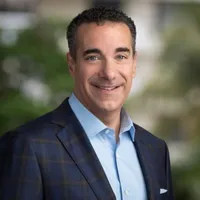
Kristen Gradney
Chief Wellness Officer, VP of Total Rewards, LCMC
Beyond Perks: Leaders Must Weave Wellbeing into the Fabric of Culture
Episode 303 · August 12, 2025 · 12:11
Beyond Perks: Leaders Must Weave Wellbeing into the Fabric of Culture
Key moments
In Kristen's words
“culturally, it felt like, hey, I'm here to do a certain job, but the wellbeing of my employees and the environment that they work in wasn't for them to be responsible for.”
“give people what they want, not what we think they need.”
“creating a culture of well-being is not just You know, it's not just about having Code Lavenders and yoga and pizza, and we do a lot of those things, right? But it's really that weaving it into the culture of every moment, every day, every task.”
Transcript
Read the transcript2,182 words
HostWelcome to the Built by People podcast, where we share the stories and insights of the world's top HR leaders. Join us as we dive deep into the minds of HR executives, uncovering their strategies, challenges, and triumphs in shaping today's workforce. I'm excited to welcome Kristen to the Built By People Podcast. Kristen, thank you so much for joining us today. And as a starting question, I always love to ask if you could share a little bit more about your career journey.
GuestSure. Thank you so much for having me. I have a little bit of a non-traditional pathway into HR. So I am a registered dietitian by trade, entered into healthcare about 17 years ago and started out seeing patients in diabetes clinics and dialysis clinics, and then went on to be a clinical nutrition manager in an inpatient setting in one of our regional medical centers. And that was kind of my really— my first experience with leadership and recognized that I was really attracted to helping people just broadly in lots of different ways, from the team that I supported to the patients that were on the other end of that. And so really just started to expand my leadership roles, went on to be a director in the ambulatory care setting, and really worked in operations for the past 10 years in different areas, including like payer relations, population health. And so when this chief wellness officer role came available here at LCMC Health, it really became for me a culmination of all of my experiences and gave me an opportunity to kind of look through the population health that leadership lens, but for kind of our inward population, looking at employees. And so it's been a really exciting journey along the way. And so, you know, here I am today, now Chief Wellness Officer, but also Vice President of Total Rewards, and really looking at that wellness through every lens, the physical, mental, emotional, professional aspects. So it's been a really exciting journey, and, you know, really excited about what— as it evolves to the next steps.
HostCan you share a specific example of a cultural challenge you encountered at your organization? What made it a significant issue and why it was so critical to address?
GuestYes. So I think that this example is not going to be, you know, really novel to LCNC or to this area, but when I got here, I really recognized that wellbeing really felt like something leaders thought existed kind of on the periphery in a committee. Our isolated initiatives, that it wasn't really their responsibility. So culturally, it felt like, hey, I'm here to do a certain job, but the wellbeing of my employees and the environment that they work in wasn't for them to be responsible for. So really trying to shift that and help people understand that the environment that employees worked in are oftentimes directly related to the leader. So we really worked and we're still working, honestly, it's a journey. So culture shift is not something that happens overnight, but How do we connect leaders to that responsibility, that really, that movement, that as a leader, I'm really the first line of what people envision the organization and their commitment to me and my wellbeing to be?
HostWhat steps did you and your team take to tackle that challenge? And can you walk us through the actions, setbacks, and how you navigated those?
GuestSure. So really the first step was was almost to take a step back and to figure out how do we hear the voice of the employees? I'm really big on, you know, give people what they want, not what we think they need. And so we did our first wellbeing survey for the entire population. So in healthcare, we normally survey wellbeing of providers, so physicians and nurse practitioners, but I said, you know, that's a relatively small population, a very important one, but a relatively small population. So how do we hear the voice and make sure that we're not just generalizing what we're seeing So we did a wellbeing survey and we did start to hear feedback from our employees that leaders weren't as in touch, that the environment didn't feel as welcoming, you know, that they felt that they were getting to the point of being burned out. So we heard the voice of our employees and truly used that kind of as our springboard to figure out, okay, how do we equip leaders now to truly understand what it means to create a wellbeing-informed environment? So coming from operations and having been in healthcare operations for 10 years, I really thought, you know, Hey, this is really an area that impacts people's wellbeing. The day-to-day that you show up for is what could burn you out or fill you up. So we created a leader course on operational wellbeing, which meant how do you look at the space, the work, everything that you do every single day, and how does that impact employee wellbeing? And then, you know, directly from that, the patient experience and all the other things. So we really provided Lean Six Sigma-based tools for leaders to look at every aspect of work and how it impacted an employee wellbeing from where the printer is located to how you have a tough conversation to if there's post-traumatic event, how do you support employees? So really looking at it, it wasn't a singular approach. We just equipped them with tools and we helped them to see that every single thing that you do can be wellbeing informed. And we use that term a lot, looking at every opportunity through the wellbeing lens. Something else we also did was we hired social workers, licensed clinical social workers, to be a part of my team so that we could support people through change, through events that were challenging. We even offered heart huddles, which we call healing experiences and restorative talks, where we actually would go into a department or we would go out if there was a need and really help support this transition, you know, recognizing that creating a culture of well-being is not just You know, it's not just about having Code Lavenders and yoga and pizza, and we do a lot of those things, right? But it's really that weaving it into the culture of every moment, every day, every task. And so we really tried to do that. We've, and since we've done that, we've really gotten a response from leaders who reach out to us a lot and say, hey, we have this going on, how can we do it better? Hey, we have this situation, can we get a social worker to come and help us? So that's really the feedback that we're receiving, and that's how we're really measuring the traction is now we are getting an overwhelming a response and desire to continue this journey, but it's coming from leaders, which tells me that they're more in tune to their teams and what they need.
HostLooking back, why was addressing this challenge so important to the organization and what were some of the most impactful outcomes or changes that resulted from it?
GuestYeah, you know, this was really where to start because it went beyond just the traditional wellbeing initiatives and, and there's lots of great initiatives out there, the peer support model, having access to gym memberships, to having mental health EAP resources. There are all those base layers. But when we talked about really shifting the culture, those point solutions weren't going to do it for us. So really creating a shared understanding was so important because that created a collective responsibility and a collective, really, interest in what does wellbeing look like. For our organization, the vision is actually creating a culture of wellbeing. So, it was really important to have some accountability from everyone and not just really that accountability standpoint, but a shared interest, right? That shared vision that, hey, this is who we want to be. This is how we are going to be. This is who we're going to, you know, live and breathe to be as an organization. So, it was so important for us to really equip leaders and educate them on what this means. You know, we can't just throw solutions at things anymore. We're well beyond that, or we hope to be well beyond that. And like I said, you know, the outcomes that we're seeing are, you know, we see more engagement in our survey, but also more engagement in, you know, leaders just reaching out to say, hey, can you come and talk to my team? Hey, do we have a resource for this? I really want to make sure my team is equipped. How do we have more conversations? You know, we led a mindfulness moment for over 200 leaders at one of our largest facilities at their request. So just recognizing that people are now valuing wellbeing and taking some commitment and ownership to offering it and promoting it and being the face of it, that, that's really the traction that we're starting to see and how we're measuring our impactful outcome.
HostBased on this experience, what key lessons did you learn and what would you have done differently if faced with a similar situation?
GuestWell, I think, you know, one thing that we all know, but was definitely reinforced time and time again through this journey, is that culture change takes time. It takes real intention. It's not something that we can talk about, set goals on a paper. You know, I have this great 3-year strategic plan that's on my wall, but it's beyond that, right? It takes time, it takes attention, it takes consistent reinforcement, consistent education, and consistently listening to those who are really on the other end of this work, the frontline, those people who feel it, who make the decision every day to continue to show up in our organization. So being really mindful of the work, not just in a vacuum, but how it impacts the people day to day. And, you know, when I think about like what I would do again and, you know, some of the pitfalls I would have hoped to avoid, it would have been, I think, really engagement at the top level. Initially, I was really focused on a groundswell approach and making sure that the people felt it. And really, we had this groundswell where it became impossible to ignore. And that worked, you know, for a good while, but I think having that top-down support from the very beginning may have taken us further more quickly. You know, and also I think assuming education and awareness equaled ownership, you know, I thought, oh, if I can educate everybody and really help them understand what wellbeing-informed environments look like, what it means to be a wellbeing-informed leader, how do we impact people through our leadership? You know, it wasn't just awareness, right? We had to really help people understand the ownership and what that means. You know, it required much more engagement, transparency, more individual connections. So having more of that wellbeing rounding, more of that presence at leadership meetings and developing those relationships as we go, I think could have taken us a little further early on. But, but nonetheless, we're here now and I think we understand that. So we're continuing to do that work now.
HostWhat parting advice would you like to share with our community?
GuestYeah, you know, there's so many, I think, valuable pieces here, but one thing that I also learned was don't assume that what worked everywhere else will automatically work for your organization. You know, and I had to learn that. There were certain things that we tried to implement that just weren't successful here. So I've really, you know, the advice is use evidence-based practice as a starting point, learn what other people are doing, and let that be your starting point, your base. Seek out employee feedback. Seek out what are the real challenges in my organization, really have your ear to the ground and kind of build upon that base of evidence-based research and what's happening and what's working elsewhere, but let it be tailored to your organization. Keep an ongoing dialogue open with, you know, your leaders, with those on the front lines so that your wellbeing efforts are really relevant. And that culture shift is really about creating your culture. You don't want to replicate someone else's, you really want to make it your own. So, I think that's really important and that's really the takeaway here. Each of us is going to be shifting our culture in our own way and creating that special culture for us.
HostKristen, thank you so much for joining us today on the Built By People Podcast. It was a pleasure to have you involved.
GuestThank you so much.
More conversations like this