Episode 184 · May 5, 2025 · 11:08
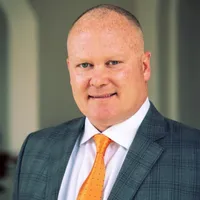
Katy Conway
Former Chief People Officer, RGP
What Marketers Know: Treating Employees Like Customers in Business-First HR
Episode 184 · May 5, 2025 · 11:08
What Marketers Know: Treating Employees Like Customers in Business-First HR
Key moments
In Katy's words
“I call myself a bit of an accidental HR person... I really maintained first and foremost a strong interest in business, whatever the focus of that business was, growing it, helping to cultivate it. I happen to be doing that through a people lens, but I think that's been an approach that's really served me in my experience.”
“the thing that helped me most was approaching it or thinking about it a little bit more like a marketer. Than a typical HR person. So starting with what is the employee experience that we're trying to create”
“much like in our own households, you can handle bad news when you have a little bit of sense of how you're going to tackle it. But getting that context and knowing where things are and what markers you need to see to add things back in and for them to start to improve really gives you a sense of your bearings again and helps people.”
Transcript
Read the transcript1,827 words
HostWelcome to the Built by People podcast, where we share the stories and insights of the world's top HR leaders. Join us as we dive deep into the minds of HR executives, uncovering their strategies, challenges, and triumphs in shaping today's workforce. I'm excited to welcome Katie to the Built by People podcast. Katie, thank you so much for joining us. And as a starting question, I always love to ask if you could share a little bit more about your career journey.
GuestFor sure. Thanks, Dave. It's great to be here with you. My career journey has spanned about 30 years, predominantly in HR. I call myself a bit of an accidental HR person. I jumped into business right out of school, really with the intent of just working with a startup and helping them grow, which I did and enjoyed that. And I got lucky because I worked for a group of people who I knew from school and they asked me to lead HR for their startup. And so I could spell it at the time and I jumped in and just did a lot of learning on the side. But through my career following that, the next 20 years, I really focused on professional services and consulting groups, always in either the talent acquisition, talent management, or more broad HR space. And most recently worked as RGP's Chief People Officer for the last 5 years. And I say one thing that served me by that not being such a deliberate focus right out of the gate is that Through those 30 years, I really maintained first and foremost a strong interest in business, whatever the focus of that business was, growing it, helping to cultivate it. I happen to be doing that through a people lens, but I think that's been an approach that's really served me in my experience.
HostCan you share a specific example of a time when you successfully transformed an organization's culture to enhance employee engagement and retention? What are some of the strategies that you implemented and what were the outcomes?
GuestYes, probably the most drastic one and fun one, honestly, was in the last 5 years at RGP. And so I, having been with the company for a long time in a variety of people-focused roles, jumped into their first chief people officer role. And so the transition that was being made was really moving from what I will call a traditional transactional lean kind of HR focus to one that was really going to be very experience-focused, critical to the strategy as a professional services consulting firm. Hiring and building and maintaining top talent was paramount for them. It was really tackling HR in a different light within the organization. And I would say the thing that helped me most was approaching it or thinking about it a little bit more like a marketer. Than a typical HR person. So starting with what is the employee experience that we're trying to create and really using a lot of different inputs to inform that. So becoming a listening organization, really talking to people in a variety of ways or soliciting their input around what was most important to the workforce. Also looking at a lot of external data and benchmarking to understand competitive set and what peers were doing around it. To things like journey mapping and really thinking about what the experience through the employee lifecycle is like for a person at the organization. And that for us opened up what was working really well. And it's fun to build on those successes. There's a lot of low-hanging fruit there, which is fantastic, and what's not. And that informs an agenda where you can really say, okay, here are the things we need to tackle, maybe in this priority order, and start to build that in.
HostKatie, can you tell us about a challenging situation where you had to balance business objectives with HR priorities? How did you navigate this and what did you learn from the experience?
GuestYeah, great question. That's— I'm sure everybody listening to this has had that same experience and it's not easy. So the one that comes to mind for me is that I'll use really going back to COVID when our business took a big downturn like most people's businesses did, not everybody's, but most. And for RGP, we just weren't hitting at that point in time our growth goals or annual growth goals. We had a lot of scared people concerned about their roles and the security of their jobs, etc. So it was a pretty challenging time. And what I found to be most instrumental in that was just really clear messaging, transparent messaging, sharing with people how we were going to— our people agenda, we weren't going to be able to do everything that we had set out to do to continue building our experience in the same time frame that we thought we were going to be able to do it. So when the results changed, obviously we had to look across the organization at people agenda, technology agendas, lots of different things and say, how do we sequence these a little bit differently and more conservatively so that we can continue to make forward progress, but also do that appropriately for where the business was and business results were. And again, the key to that was just talking to people through it and sharing with them, hey, some of our priorities have changed. Some of these things are going to be postponed or sidelined for a moment, and then we're going to come back to them as soon as the business starts to show some recovery. And telling them why we felt those decisions were the right ones, because perhaps they protected more jobs or because they enabled us to do, to put some things in a higher priority and other things were going to have to be a not now. So not never, but also share candidly, it's going to be not now. And then as those things came back online, when we saw enough recovery that we could start to put objectives back in place for our workforce, sharing that with them and making sure we were being really explicit about that, I think it just helped people to orient. And I learned that much like in our own households, you can handle bad news when you have a little bit of sense of how you're going to tackle it. But getting that context and knowing where things are and what markers you need to see to add things back in and for them to start to improve really gives you a sense of your bearings again and helps people. And so we found a lot of trust and unity through that clear, consistent messaging.
HostCan you describe a case where analytics and insights played a critical role in shaping your HR strategy? How did you leverage data to drive meaningful change within the organization?
GuestYeah, we leveraged that quite a bit. I learned about myself that data became my best friend. It's so very helpful, and I'm a big believer in leveraging and always looking at both quantitative and qualitative data. I think one without the other can be misleading. And together they can be really powerful. So we dug deeply into our retention and attrition statistics, and that meant first and foremost asking for some of that data differently and gathering inputs that were a bit different than what we had historically captured. I think it's easy to rely on assumptions, and if you're experienced, for example, experiencing some blips with attrition, to think easy button, right? The usual villain that we all go to is compensation. But in fact, what I learned as I dug into things is that in external benchmarking, there are a lot of longstanding data inputs that are really reliable that show rarely is compensation— I dare to say ever has compensation been in the top 3 reasons for people leaving an organization. And we found that to be true as well. We also really wanted to dig into why are people staying? For those people that remain with the organization and are thriving in the organization, why is that and what's their experience been? So asking both sides of that question were really important when gathering the data, and it changed drastically the things we did. You know, what we learned is that some of the things that were most impactful to both people who left and people who stayed with the organization were internal mobility, Underneath, did they feel like somebody was personally invested in developing them and helping them learn, making them more marketable year over year, having trust with a manager? You know, you don't get that development only with coaching. It also means sharing some of the hard feedback, and that typically goes better if you trust the person and have a good relationship. So those were some of the things as we dug into that particular topic that we learned. And were able to really, again, build off some successes of things that were working well, but also tackle some things that weren't. And as I said in the earlier commentary, telling people that story while we were in it of what was happening and what we were learning and what we were doing about it was one of the most impactful and helpful things, ironically, to our retention that we did.
HostKatie, what parting advice would you like to share with our audience?
GuestOh, that's a great question. I would say first and foremost, to really dig into whatever the purpose, value, mission of the business you're supporting is and think about how you personally can drive value from that. And it will happen to be, I'm assuming from the audience of this podcast, from a people lens. But I think I say that with the cautionary tale of not doing HR for the sake of HR, but really performing HR and setting an agenda and executing it from the lens of If my major goal and what I think could be most helpful to my organization is attracting and retaining top talent, am I creating an experience that does that? And I think that lens really helps all of us prioritize things in a way that's helpful, whether it's total rewards, the benefits agenda, people approach, any piece of the HR agenda, learning and development that we all have responsibility for. It's hard to tackle all of that at once. So if you're really thinking through what is the experience, it will help prioritize what you're pushing on at any given point in time.
HostKatie, thank you so much for joining us on the Built by People podcast. It was a pleasure to have you involved.
GuestThanks, Dave.
More conversations like this