Episode 368 · January 26, 2026 · 11:11
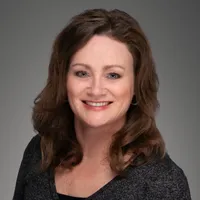
Juliette Dupré
Chief People Officer and Interim COO, OtherSide Entertainment
Unlock Your Company's Potential: Why Employee Well-being Isn't a Soft Skill.
Episode 368 · January 26, 2026 · 11:11
Unlock Your Company's Potential: Why Employee Well-being Isn't a Soft Skill.
Key moments
In Juliette's words
“I just found that I was looking for an environment culturally that was more progressive than a law firm is able to offer.”
“Right now, keeping the focus on the employees and thinking about what they need, our focus has to be on trying to help the employees find some semblance of calm and manage whatever their situations are...”
“So wellness has been important to that priority that I mentioned, giving our employees resources and methods and tools to manage change, not only at work, but in their lives. And so we've been able to offer at the moment free therapy for our employees on a short-term basis.”
Transcript
Read the transcript2,075 words
IntroWelcome to the Built by People podcast, where we highlight the stories and insights of the world's top HR leaders. Now, let's Let's get started and welcome our next guest.
HostWelcome to the Build by People Podcast. I'm excited to have Juliette Dupré on with us today. Juliette, thanks for your time.
GuestOh, I'm glad to be here. Thanks for having me. It's a pleasure to be here.
HostAbsolutely. We always like to start out by talking about your career journey, maybe the unexpected turns, what ultimately led you to leadership.
GuestRight. So, I started out working as a litigation paralegal in a law firm in product liability, as well as doing some maritime. Work and other various and sundry things and ended up helping out with employment law arbitration. So that was kind of my first exposure to employment law. I ultimately became the legal recruiting director for that firm. It was a small to mid-sized firm of about 500 attorneys at the time nationwide. I really enjoyed it. I just found that I was looking for an environment culturally that was more progressive than a law firm is able to offer. I loved my time there. I was there for about 7 years. So, I moved into tech, which is a lot more fast-paced, a lot more volatile as well, but I love it. Particularly, I'm in entertainment technology, so video games and ad tech and things like that is kind of where I've been, esports as well. And as a lot of people do in the business of caring about workplaces and people and trying to figure out how to make them better, you realize that you have ideas maybe that are possible to try and to do, and they're vacuums that you can fill in. And so, it was really a process of sort of filling in gaps and vacuums in other organizations that led me to leadership roles. And then that sort of had a domino effect on my career, and I enjoy it very much. I feel very proud of sort of the different roles that I've taken on and jumped into different organizations and been able to make, I think, a lot of impact, which matters to me.
HostNo, that's great. And congratulations. That's an awesome path.
GuestThanks.
HostTell me about some of your top priorities right now.
GuestYeah, well, the world is a volatile place. As much as our industry is, as I just mentioned, in entertainment and digital technology, the the world is in general. There are so many things that have happened over the course of the last 5 or 10 years. Really, priorities have really had to change on a regular basis. And I think it's very of the moment at any given time. Right now, keeping the focus on the employees and thinking about what they need, our focus has to be on trying to help the employees find some semblance of calm and manage whatever their situations are, whether it's a financial situation or a family situation, so they can focus on having a life that they kind of want, you know, between work and personal and everything like that. So that's really the focus is trying to help our people.
HostJulia, as we look at one initiative you rolled out recently, what are you most proud of?
GuestYeah, so wellness has been important to that priority that I mentioned, giving our employees resources and methods and tools to manage change, not only at work, but in their lives. And so we've been able to offer at the moment free therapy for our employees on a short-term basis. And that's a pretty spectacular benefit that we're very proud to partner with Onward Care Therapy through Carrie Wang. And I think that's really had a major impact on some of our employees, those who are able to kind of break through the social barriers that are presented by any, you know, sort of like mental health stigmas and things like that. Which we've also worked to push through, they really benefit a lot from that experience, whether it's just a short-term stressful situation or discovery of something larger that they can then go pursue on a more long-term basis.
HostI love that. That's great. And as you talk about benefits, one thing that we've noticed is employee communication is becoming harder and harder across every organization. So what's one area where you're trying to improve engagement through better communication, or how do you approach making sure employees actually understand and act on the information that's sent out?
GuestYeah, it's incredibly difficult. It's something I think about all the time. We are always trying different ways and testing out different methods of communicating with employees. For example, last year during open enrollment, I did a whole Douglas Adams-themed enrollment guide, Hitchhiker's Guide to Open Enrollment, because I think that we have to also entertain people, and I'm in the entertainment business. So I try to where I can, you know, I don't have a lot of budget. There are companies out there who will make you whole sitcoms around your open enrollment just to get capture people's attention. I love that, but we don't have budget for that kind of thing. So anything that we do, it's just me and my team of one, Andrew, we come up with it ourselves. We create it ourselves. So doing unusual things like that, that kind of catch people off guard and give them a little bit of a smile is always useful. If you're trying to relay what is otherwise rather bureaucratic and boring information to most people, unless they are in a position where they're all of a sudden focused on it for some reason, which all of a sudden does happen to people, trying to make it entertaining, trying to have a sense of humor about it, and also being really selective when and how we reach out. Something that really pains me is that a lot of our vendors will spam people with information that they don't need. It's not timely, it's not well structured. And so we try to jump in front of that and kind of you know, prevent that kind of thing, structure things more thoughtfully, give people the information they need when they need it in a form that they can really engage with. For most of our people, that's Slack. We're a fully remote team. We're always on Slack. So we try to communicate a lot there and keep it brief and to the point while also getting all the information that people need. And if we can be engaging with a little bit of entertainment at the same time.
HostLove that. You mentioned Slack. What other tools or platforms are most essential for your operations today?
GuestSlack is definitely high on the list. I don't always love it. I think like a lot of people, I have my challenges with, you know, some of the things that they do, but it is where we are all the time and communicating with employees. Also, you know, I keep a Trello Kanban board of our HR projects that's open to the company. If anyone wants to know what is it that we're putting our time on and what is it that we're actually doing all day long and prioritizing. And if they have comments, they can actually say, oh, this project looks great, or why are we doing this project? I want to understand more about it and see how it's progressing. And that includes anything from like employee review cycle to a new benefits administration situation, new benefits investment. So Kanban is always important. What else do we use? Change Engine is a tool that I use for creating communications. Since we were just talking about that, it's a great tool and they have a free communication generator if anyone's looking to try that. Out. I find that very useful. Just creating graphics. It's way easier than like a Canva or something like that. I don't have those skills. It just can generate stuff with your, using your logo and colors and create a flyer or something like that. That's really, really useful. And the usual suspects, you know, we're a G Suite based company. So I do work a lot in spreadsheets. We also use Microsoft Excel. That's always fun. So the usual suspects there for day to day.
HostIf we sat down again 12 months from now, what would you hope has changed most in your org or just within your company in general?
GuestYeah, I think I always have the same goal no matter where I go. There are different barriers that are getting in the way of it everywhere you go and depending on what's going on in the world, but it's always kind of hearkening back to what I said before, peace for the employees, like a peaceful, nice life. You know, like that sounds like really kind of like a lame answer, but that is the goal. The goal is we're all working, we're all creating We're creating products that we're proud of, putting those products out into the world. And along the way, the employees feel really good about their lives with us, with whatever else they have going on outside of work. And however we can support that is really, I think, the most important thing. I am not someone who believes that the employees, you know, have their priorities and the company has its priorities and never the the twain shall meet, and they're always forever in this, you know, this friction. I really believe that in order for a company to succeed, the people need to be in a good place. In order for the people to be in a good place, the company has to be successful, and they have to contribute to that in a way that's impactful. So, they are really hand in hand, and I think the more we can focus both employees and company leaders on that truth, the closer we can get to environments and workplaces that are healthy and productive and successful and make money and also make people happy to be there. I don't think that that's something we can't do. I think that we can do that. That's the goal.
HostIf you could leave one piece of advice for our community, maybe something you wish you had known earlier in your career, or just how to navigate the waters of leadership, what would it be?
GuestIt would be to learn more about finance. I think that's an area where I always feel like I have more to learn. I have, you know, I did have some quantitative background from my master's program. I was a TA. For that class, and yet there's still so much more when you're talking to a CFO or talking to a CEO. And there's— we manage as HR the biggest investment that most companies make, which is their payroll. And so we really need that financial acumen and background and ability to talk comfortably in those discussions and have a point of view and understand why we should take a certain path or not and have a valuable input to that discussion. And I think we get a little bit short shrift. HR education, you look at, you know, SHRM and HRCI and all these programs, they really focus a lot more on also valuable compliance, soft skills, the things that have absolutely, they are essential to the work, but you don't see them saying, you know, talk about a P&L. Let's talk about how HR is responsible for these pieces or how to have that conversation. And I don't really understand why that is because we are incredibly important to the financial health of the organization and our decisions should be really integrated. But if we aren't, as a class of professionals, educated in that way, then we don't belong in that conversation. And I think that's, over the years, really heavily negatively impacted what we can do and how we can influence companies for the greater good, for the company's benefit and the employees.
HostWell, thank you, Juliette, for your perspective, your insight today, and just joining us on the Built by People podcast.
GuestSure. Thank you so much for having me.
More conversations like this