Episode 340 · September 30, 2025 · 14:55
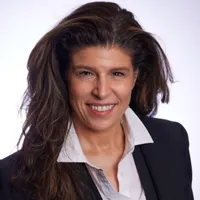
Jill Wrobel
EVP & Chief HR Officer, Brunswick Corporation
Beyond Buzzwords: Embedding Continuous Improvement into Your Company's DNA
Episode 340 · September 30, 2025 · 14:55
Beyond Buzzwords: Embedding Continuous Improvement into Your Company's DNA
Key moments
In Jill's words
“Did you Did you find HR or did HR find you? And I was definitely in the latter camp.”
“At the core is connecting your initiatives and your culture to what wins with your customer.”
“Define what you mean and don't assume because it's an obvious word like innovation or improvement that it means the same to all the constituents that you're managing.”
Transcript
Read the transcript2,456 words
HostWelcome to the Built by People podcast, where we share the stories and insights of the world's top HR leaders. Join us as we dive deep into the minds of HR executives, uncovering their strategies, challenges, and triumphs in shaping today's workforce. Jill, thank you so much for joining us today. And as a starting question, I always love to ask if you could share a little bit more about your career journey.
GuestWill do. And David, thanks so much for having me and for hosting this podcast for HR leaders. So, as my mentor, Mark Watley, used to say to me, did you Did you find HR or did HR find you? And I was definitely in the latter camp. I graduated from the University of Illinois in Urbana-Champaign with a dual degree in math and finance and found my way in the first part of my career journey as an employee benefits actuary working for PwC here in Chicago. I didn't go far from the University of Illinois for that first job, and my area of focus was how to think about employee benefits within mergers and acquisitions or transactions. Incredible training, really great people, and, um, usually had some fun deal names like Project Unicorn or Project Putter to make sure that we kept confidentiality associated with them. But the career there was really focused on honing critical thinking and attention to detail, but most importantly, how to think about how employee benefits were valued from an organizational and business context. That then translated into a career at Walgreens where I led the HR M&A team. Walgreens is headquartered also here in the Chicagoland area in the northern suburbs. And what I did there was help manage hundreds of deals a year from small pharmacy buyouts to large transactions, and then expanded my scope into an HR business partner role, which is where I met Mark Watley. And he said, how did you end up here? And I said, well, I think HR really found me. The last bit is after some time at Walgreens, I moved 2 exits north on the I-294 highway here in Chicago to take on a role at Brunswick Corporation. I've been the CHRO there now going on 4 years. And Brunswick is manufacturing and technology. It's all things marine. It's the largest marine company in the world. We have 60+ brands. For those listeners that might be familiar with marine, our largest division is Mercury Engines. That are manufactured for the— all over the world, but in Wisconsin, Fond du Lac, Wisconsin. We have 17 boat brands. Most popular are Boston Whalers, Sea Rays, and a great fishing boat called Lund. We have a great electronics business, anything from cartography to multifunctional displays. And also to continue on the fishing reference, we have electronic products that help you find fish under the Lowrance Fish brand headquartered there in Tulsa, Oklahoma. And then a services business. I'm a proud member of Freedom Boat Club. Which is one of the things that we acquired to democratize boating, getting more people involved. 400 locations across the globe, including here in Chicago. And our most recent one, we welcomed our newest club in Dubai. And takes a lot of the pain points out of boating because it's just ready for you to rent, get out on the water, and you don't have to worry about cleaning it, fueling it, and you get some help with docking, which is always one of my favorite parts.
HostJill, thanks so much for that great introduction. Can you share a specific example of a time when Brunswick faced a challenge in fostering a culture of continuous improvement?
GuestAbsolutely. And I think that the context here, given the introduction to Brunswick, really is important. Continuous improvement is super critical for manufacturing companies, particularly those that are in the leisure sector. So over the last couple of years, we've had rapid growth with COVID Everybody wanted to get outside and on the water. And so from an HR standpoint, that was focused on getting enough people and enough parts to manufacture and meet demand. Then we had supply chain and inflation-related considerations. Tariffs now are top of mind for us. And with the complexity of our 60-plus brands, we really have to make sure that we are all on the same page as it relates to continuously moving forward how we produce and manufacture the products that fit together. So one of the things that we heard in our annual engagement survey from our employees was, as we scale and work more closely together between all the divisions, senior leadership team, both Jill in your CHRO role and our CEO, Dave Folks, can you just help us with removing barriers to getting work done? We love our products. We're always focused on, uh, safety. It's complicated externally and internally. And so one of the things that we've really been focused on, Dave, is defining how critical continuous improvement culture is, not only for our internal workforce, but how that connects to what we need to be able to respond to externally, whether for our customers—those could be anywhere from boat builders to boat dealers, engine dealers, and the like—but then also each other as we bring these incredible products to market across our various lines of business.
HostJoe, could you talk a little bit more about some of the concrete steps that you and your team took to tackle some of these challenges that you faced and what were some of the unexpected obstacles or lessons learned during the process? Yeah, absolutely.
GuestI think at the core is connecting your initiatives and your culture to what wins with your customer. So a couple of years ago, we decided to do a Brunswick brand refresh, and we came up with the tagline, Next Never Rests, because we felt like it was so critical to convey to all of our stakeholders this idea of continuous improvement. Both externally and internally. I would start the concrete step for everybody out there who's looking to address whether it's continuous improvement culture is just making sure it fits your unique culture and the mission and the purpose of what you're trying to deliver for your organization with the end consumer. The second thing that, that we did was we were really intentional with language. Define what you mean and don't assume because it's an obvious word like innovation or improvement that it means the same to all the constituents that you're managing. So for example, when we came up with the refresh of the tagline and we had people describe our culture, it was kind of interesting to me that most people had— would always— we have an incredible culture at Brunswick. They would use mostly the same words. There were subtle and important differences. So that actually led us to doing a refresh of our corporate values and our behaviors and making sure that each word was thoughtfully defined. Not only in terms of what word we chose, but then also the behaviors that backed up to it. That also led to what we're doing now, and we're in the midst of, is building a Brunswick business system. Super popular at other manufacturers like Danaher, for example, has a, a well-known and incredible business system. We're doing that here at Brunswick. We're calling it the Brunswick Blueprint, but the same thing that we did with the tagline, as well as the values we're doing with our common business processes. Are they the same for each of the divisions and each of the employees that we expect to execute them? And then last, I would say, just executing all of this with simple but super strategic change management. Collaborate, make sure you're listening, commit to the change, and make sure everybody's clear on what success looks like. And then of course, communicate, communicate, and you can never over-communicate. And we embedded a lot of those ways of new definitions of continuous improvement in how we do work. So who we hire, who we promote, who we celebrate through different types of recognition awards, and then even how we exit employees. We've had to have, you know, some difficult conversations, but we're always thinking about and looking at that through the lens of, is it consistent with our values and is it consistent with our business processes? So by definition, you're never, you're never done with, with this. And so that's also important to communicate to the organization that by the nature of what we're doing, We are always reiterating and looking at ways to continuously improve, not only for our business, for ourselves too.
HostJoe, looking back, why was it so important for Brunswick to carry out this work, and what were some of the most impactful outcomes or changes that materialized from these efforts?
GuestYeah, I will start with workplace safety. It's not the most exciting topic, but my goodness, is it so critical. We needed to have exceptional ways of working and behaving to make sure that we kept everyone safe. Many of the things that we manufacture and produce are with advanced methods. And so ensuring that we had a culture of responsibility of not only thinking of ways to improve that, but also ways that we keep each other safe, whether that's on a day-to-day basis or even in much of what we've honed is a great way to address challenges. I'll call them mini crises, if you could think about whether it's tariffs or inflation or some of the geopolitical and regulatory topics we have to address together as a team. That was a great outcome from a lot of this work. Workplace safety records are exceptional, and anything it feels like the external or internal environments throw at us, we've been able to tackle successfully together as a team. The second outcome that I'm really proud about is, and I'll use a water pun or a marine pun here, is the cultural anchors that we have for the organization that's been helping us win, attracting new talent, retaining new talent, or even winning awards for our workplace. Our turnover is improving, meaning it's going down, and we've been awarded recognition for our culture from some really prominent publications and external bodies of, yeah, I guess recognition to use it again. So Time, Newsweek, Fortune Magazine, whether that's for manufacturing employees or a recent one that we won for parents and care, great place to work for parents and caregivers. That's always a nice bolster of confidence that when we're in the rooms and other external groups are asking our employees, you know, what they like about working here, it's at a level where we can compete with anybody for having exceptional culture. And last, I would say just, you know, continuously improving how and what way we thread that through every, every aspect of work, giving people the space to navigate their careers here. We've got some incredible stories of people who have taken a step to do something new or something different in different aspects of the business that's really driven value, not only for, for them and their passions, but for Brunswick. We tell a ton of stories. I cannot underestimate the power of storytelling as it relates to driving a culture of continuous improvement. And that's from standard things like regular email updates from the CEO or from our Wednesday Brunswick Brief, intranet announcements, town halls, and a fun podcast that I launched with our chief communications officer a year ago called Propelling Perspectives, where we share continuous improvement stories about leadership with inspirational perspectives to propel the workplace forward. And Maybe again, we try not to overuse the water puns at Brunswick, but sometimes they're just too hard to pass up.
HostJoe, based on your experience with continuous improvement, what strategies or approaches would you recommend others to replicate? And are there any pitfalls or mistakes you would advise them to avoid when driving continuous improvement and talent mobility?
GuestYes, I think I'd start with really using— I'll use a head, feet, and kind of heart analogy for this. If you start with the head, how do you define, listen, and share what you want to replicate with a continuous improvement culture? For the feet aspect is walking the walk. You need to make sure everybody is modeling the behaviors, including not only the senior management. So for the CHROs that are out there, asking your senior leaders what they're doing to continuously improve not only the business and themselves, But then also you, you know, you as a, as a, as a person too. And then tell people that you're doing that. Lead out loud. So, you know, we had a couple of examples for talent mobility and, you know, career progression that we did here at Brunswick last summer where 3 out of our 4 division presidents rotated jobs, took a different angle and a different view to how they wanted to add value to Brunswick. Me personally, I have, you know, a huge interest in artificial intelligence. And given my math background, I specifically wanted to dive into some of the specifics of how those solutions really work and took a course, a business course in Q1. And then, you know, we share those stories and connect the dots for people. Like, the reason that we're doing this as a business is because we want to lead by example. The reason that I'm doing this in my C-suite role is because I also want to lead by example. And then last, I'd say the pitfall is just don't lose the heart. If you can get the head and the feet right, our role in HR leaders and our role in not only in our companies, but in the markets in the world in which we operate is to recognize that change is hard. It doesn't mean that you're doing anything wrong. It's scary for a lot of folks. Celebrate the wins, celebrate the near misses and the failures, and make that part of the process. And just show up with true authenticity, listening, and care. Everyone out there is doing the best they can. We've got a story outside of work as well as inside of work. And it's really, um, an obligation of all of us to make sure that we're leading with the heart too.
HostJill, thanks so much for joining us on the Built by People podcast. It was a pleasure to have you involved.
GuestIt was wonderful to be here, and thanks for the invitation.
More conversations like this