Episode 259 · June 27, 2025 · 8:16
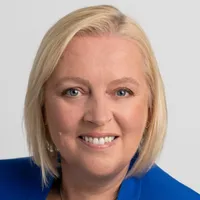
Elizabeth Schmidt
CHRO, Jewish Family Service of Colorado
Beyond Buzzwords: How People-First Leadership Thrives Amidst Rapid Organizational Change
Episode 259 · June 27, 2025 · 8:16
Beyond Buzzwords: How People-First Leadership Thrives Amidst Rapid Organizational Change
Key moments
In Elizabeth's words
“I learned quite a bit about how to treat people well. How to manage uncertainty, and how to have important conversations that need to be had.”
“What I found most effective in this situation has been transparent communication. And often JFS has a hybrid work environment, so we usually have quite a few employees that are physically at the location, and I still use that management by walking around.”
“The focus here at JFS, Jewish Family Service, is maximizing our reach to support the communities we serve. That in turn required our leadership to make sure that our employees are able to see the effects of their work and the impact that they're making on the people that we serve.”
Transcript
Read the transcript1,375 words
HostWelcome to the Built by People podcast, where we share the stories and insights of the world's top HR leaders. Join us as we dive deep into the minds of HR executives, uncovering their strategies, challenges, and triumphs in shaping today's workforce. I'm excited to welcome Liz to the Built by People podcast. Liz, thank you so much for joining us today. And as a starting question, I always love to ask if you could share a little bit more about your career journey.
GuestHi, Dave. Thanks so much for having me. So I've been in human resources for about 25+ years, and before that, I'd had always enjoyed jobs working with people in retail and restaurants and travel and tourism. And then that combined with my academic journey in psychology, I really became passionate about industrial organizational psychology, which is the study of people at work. I started like a lot of people do in HR as an assistant and worked my way up. I acted as a specialist at times in recruiting and HR analytics, and also as a generalist. I spent a lot of times as a generalist or an HR business partner. For the majority of my career. And then more than once, I have been an HR department of one, managing HR in this capacity at a security company, at a golf course, and at another resort. You learn a lot by being the sole HR. You learn how to reach out to other professionals in the field for advice. So that was a great learning opportunity and pushed me into HR. After that, I ended up as an HR business partner in a larger company in real estate. I worked in adjacent industries for about 7 years. I was then recruited back to travel and tourism, again, always in the HR capacity. And then that's when COVID hit. At that time, I was with Avis Budget as their regional HR leader here in Denver, Colorado, which is one of the top-performing locations in the world. I loved my work community here. I was very thankful to be there when COVID hit because I learned quite a bit about how to treat people well. How to manage uncertainty, and how to have important conversations that need to be had. After several rounds of furloughs without really seeing the end of that cycle, I did decide to move to HR management in telecom. That was my first bout with that industry, and I'm glad I did it because you really don't know until you try something. It wasn't necessarily for me. So after that, I was recruited to work for a nonprofit in the Denver community as their chief people officer. And first of all, I realized how much I really enjoyed working in human services. And then second, I had to learn to adjust working in the nonprofit environment, which was a new challenge for me and something that I could really get excited and passionate about. Currently, I'm now with Jewish Family Service of Colorado, which is a nonprofit that has been in existence for over 150 years, serving the Colorado community based on Jewish values, but serving everybody in need. For mental health and aging care, we have over 30 programs that serve those in need.
HostLiz, can you share a specific case where Jewish Family Services had to overcome a significant challenge and what strategies proved most effective?
GuestYeah, I, I can really speak to the challenges that we're facing now, and I'm thinking that many of our peers in the nonprofit space are facing this challenge of ambiguity and rapid change, specifically in funding sources. One example is we have a refugee resettlement program that stopped receiving funding at the beginning of the year. Jewish support of refugees is cultural, embedded in our values, with roots of supporting Jews fleeing persecution and poverty in Eastern Europe and in the history of oppression and displacement. So this program is really central to who we are as an agency. At the beginning of the year, this program came to an abrupt halt. And we had to communicate to our employees the effects on our business. And what I found most effective in this situation has been transparent communication. And often JFS has a hybrid work environment, so we usually have quite a few employees that are physically at the location, and I still use that management by walking around. I still find that to be one of the most impactful for me because I get to walk around our agency, see our employees in their work, and find out how they're doing as an individual. So I still use that. At the same time, we have had to make people changes, and we have gotten through that by putting our people first. Our people, our employees give a lot of themselves in serving our community. So it just makes sense that we show them the same respect that they share the communities that we serve. This means a lot of individual conversations and really prioritizing the needs of our employees.
HostLiz, I'm curious about a time when you had to pivot your leadership approach to meet changing community needs. What was that experience like?
GuestIt's a great question. For me personally, I think one of the biggest shifts I had to do was moving from the for-profit to nonprofit. That required me as a leader to change. I think many might think that it's because the nonprofit focus may not necessarily be on competitive advantage or revenue, but I'm not quite sure that's it because there is an element of both in the nonprofit sector. So for me, I think that it's the industries or what the business is focusing on. The focus here at JFS, Jewish Family Service, is maximizing our reach to support the communities we serve. That in turn required our leadership to make sure that our employees are able to see the effects of their work and the impact that they're making on the people that we serve.
HostLiz, could you walk us through an example of how your organization has successfully collaborated with other community partners to create greater impact?
GuestYeah, that's something that Jewish Family Service does really well. Most recently, I think many of us have heard about the attack on the Jewish community in Boulder, Colorado, engaging in the peaceful awareness and gathering. The Jewish community is really strong and so connected and supportive of each other that when events like this happen, several partners come together to best serve the people who need it. And I think that the shared vision and the shared values of these organizations really make that possible and really make it so we are all working towards a common goal.
HostLiz, could you tell me about a moment when you faced resistance to change within your organization and how you navigated that situation to achieve positive results?
GuestYeah, absolutely. So coming into Jewish Family Service, I was actually replacing a CHRO of 20 years. She was— she's an amazing human and led the agency excellent in her HR capacity. But obviously I have been coming in from a different location, having a different HR view and view it from a different lens. What I know is that people need different things during times of change, whether it be individual support, more information, training, a greater understanding of the why. And I often keep the ADKAR model of change in mind and stay guided by the awareness, desire, knowledge, ability. And reinforcement of the change for my people. So really being aware of what my people are needing during that time of change.
HostWhat parting advice would you like to share with our community?
GuestFor me, it's people first. I have worked with and studied people for most of my life. This may be anecdotal, but I have noticed when I prioritize my relationships, it comes back to me tenfold. So really making sure that I stay connected with my community, learning and giving as often as I can.
HostLiz, thanks so much for joining us today on the Built by People podcast.
GuestThanks, David.
More conversations like this