Episode 232 · June 9, 2025 · 11:35
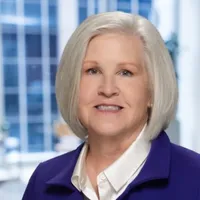
Denise Grode
Chief Human Resources Officer, Cirrus Logic
Tomorrow's HR: Data, Agility, and the AI Revolution in Talent Management
Episode 232 · June 9, 2025 · 11:35
Tomorrow's HR: Data, Agility, and the AI Revolution in Talent Management
Key moments
In Denise's words
“don't let the role or the title of the role define you because I didn't even know what that role was. I moved into it 6 months later. I had a role as a compensation analyst, and from there my career went off.”
“you have to have a plan or roadmap... but you also have to be willing to pivot and be agile... if you know something's not working, You need to be willing to say that, fail fast, learn from that, move forward versus just continuing to force something to work if it's not going to, because it's going to be harder in the end if you do that.”
“I always say, let's go to the data, right? So there's two types of data. There's the hard data, and then there's like the human side of the data, right? But I do think in HR, sometimes the data is underutilized...”
Transcript
Read the transcript2,437 words
HostWelcome to the Built by People podcast, where we share the stories and insights of the world's top HR leaders. Join us as we dive deep into the minds of HR executives, uncovering their strategies, challenges, and triumphs in shaping today's workforce. Okay, welcome everyone to the Built by People podcast. My name is Tanner. I'm your host for just today because a couple episodes here while the real host Dave is outside of the country doing some traveling. We have a wonderful guest today, Denise, and I'm really excited to welcome her and really just I'm super excited for this episode and thanks so much for joining us, Denise. And as a starting question, I always love to ask if you could tell us a little bit about yourself and your career journey, we'd love to hear it.
GuestYeah, thanks. I'm excited to be here. I did not plan a career in HR. In fact, when I started Micronutchar, it was still very much a transactional type role. I fell into it. So I started in college, I was working in sales, MCI, WorldCom, and Basically, through that network, I happened to stumble into this role or opportunity, moved from where I went to college in Springfield, Missouri, out to Denver, Colorado, and working for MCI in the regional headquarters. And in fact, I didn't even know what the job was. I just was like, oh, that sounds cool. Yeah, I'm happy to do that. And that's what started my career in HR. Quickly moved into a compensation role, and then over the years, I moved into training, and I could talk about that. Which is really my deep functional expertise. And then as HR evolved through the years, so did my career. So I moved into things like organizational development, then into an HR business partner role, and then talent management became very popular. So I grew up in that space, ultimately in HR business partner roles, more senior level roles today as a chief HR officer. You know, it's funny, I mentor a lot of young folks and I told them one of the moves I made, I made a lot of corporate moves. We were packing up some stuff and I found this old paperwork and it was my job offer for that very first role. And what I didn't know was that my title was actually the executive admin role, which is great. That's where I started my career. But what I tell people is don't let the role or the title of the role define you because I didn't even know what that role was. I moved into it 6 months later. I had a role as a compensation analyst, and from there my career went off. So I tell people, take opportunities, don't let labels define you, and you never know where your career might end up.
HostAmazing. Thanks, Denise. Appreciate it. Can you share a specific story about a time when you successfully transformed an HR organization, and what challenges were you facing, and how did you overcome them?
GuestThinking about my prior role and the 5 years I was with Centene, it was probably the hardest and most rewarding role in my career. In that job, we were tasked with a major HR transformation in addition to growing the business. In the time that I was there, we went from 40,000 employees to 70,000 employees, and from $40 billion in revenue to $120 billion in revenue. And so, it was amazing work with some amazing leaders and teammates, but it was really hard too. And what I tell people when you transform in HR, and what I learned from that opportunity was, you have to have a plan or roadmap, right? So, you have to be able to lay out what you want to accomplish, have goals and metrics to do that, but you also have to be willing to pivot and be agile, because we don't know what— we don't have a crystal ball. We don't know what's going to happen in 6 months or 3 years. So you have to have a roadmap, but then you have to be willing to adjust that along the way. Now, remember, we had one challenge. We were implementing one of our learning management systems. I ran their corporate university, and we'd put a lot of money and time and resources into this one particular partner. We were building out these systems and processes, and what we found was we were chasing bad with bad. And what I mean by that was we kept putting all these workarounds. So I don't know if anybody's ever had that salesperson that sold you something, but then it, they actually can't deliver on all of it. So we were told one thing, we were trying to make that work, but it wasn't working. We were like forcing it, right? We were like, oh, we'll do this workaround or that workaround. And finally I had this aha, this is not working. We are chasing bad with bad. And so I actually was scary. I had to go back to our leadership and say, we made a mistake here. I think we should pull the plug, which we did. And we ended up having a better solution. But what I tell people is if you know something's not working, You need to be willing to say that, fail fast, learn from that, move forward versus just continuing to force something to work if it's not going to, because it's going to be harder in the end if you do that. So I like to tell my team, hey, let's sometimes pause, evaluate, and if we made a bad decision, that's okay, but let's fix it and move forward. So that was kind of one of the obstacles that I faced. It was scary for me, and, but in the end it worked out.
HostYeah, totally. Love it. Thanks for sharing. And I'm curious to get your thoughts on any sort of integrated data analytics and HR practices, or in your previous roles or anything you've done currently, and maybe provide an example of how this has driven positive outcomes for the organization?
GuestYeah, great question. I love data. My team will— I always say, let's go to the data, right? So there's two types of data. There's the hard data, and then there's like the human side of the data, right? But I do think in HR, sometimes the data is underutilized, because there's so many great metrics that you can use to inform the business. And one that I like to spend time on is what we call our new hire failure factor.. And so if you think about all of the time and investment that you put into hiring somebody, right? So you've lost somebody, the business is having to pick up that productivity, takes you maybe 3 months to find somebody, then they gotta quit and get started and onboard. And I recall this stat, I don't know if it's still true, but I heard it one time that most people decide within 6 months whether they're gonna stay or leave an organization. So that new hire, are they productive in that first year? Do they stay in that first year? How have we assimilated them to the business? Are they brand ambassadors for us? I think that's so important. So we evaluate, for us, our new hire failure factor, which is anybody who leaves the organization within their first year, and then we drill down into why, and then we take that and we apply it back to our hiring process. We look at manager assimilation. What is the manager doing to make that employee feel productive? So there's a lot of things that go into that new hire failure factor that we look at from a metrics perspective. So that's one of my
Hostfavorites. Cool. Thanks, Denise. I appreciate it. And so reflecting on some of your changes that you've, that have been in HR since the pandemic, can you describe a situation where you had to adapt your approach to meet the evolving expectations of HR leadership?
GuestYeah, the pandemic seems like a long time ago, but it really wasn't. It was a very hard time for HR. Any HR leader will tell you that was, we still have scars from that. But it was also a good learning opportunity. And I think for me, probably there were so many lessons learned because there was no playbook for a lot of us coming out of the pandemic or into the pandemic. But when I think about probably the biggest change that we're continuing to address, and you see this in all the articles today, is this concept of return to office, right? So there's this debate whether or not you come back to the office, do you have hybrid, do you stay fully remote? And I don't think there's a black and white answer for that. We currently have a hybrid work environment where you're 2 days in the office, 3 days off. There's so many opinions whether or not you should be in the office. Is there value in the office? And I believe, as does many of our leadership here, it's so important to at least have that connectivity, right? That's where innovation happens. That's where you collaborate with your peers and learning happens. There's that human connectivity piece, right? There's knowledge sharing. So finding that right balance about coming into the office versus work from home, and not just coming in for the sake of coming in and sitting in your office on a Zoom call, But where do you have opportunities to create experiences that when people are in their office, they're doing things like training, learning, collaborating events, so that they feel like there's a reason to come in and they're not just sitting in their cube on a Zoom call, which they could be doing from home. So I think it's interesting, and I think there's still a lot to be said around what's going to happen around this whole return to office hybrid and how that's going to play out and how that's going to be a competitive advantage for a lot of companies moving forward.
HostTotally. Thanks for sharing, Denise. That's awesome. When was the time you had to balance the multiple roles HR professionals play today, such as mentor, therapist, and leader? And how do you manage these responsibilities effectively?
GuestIt's a great question. I remember when, back in the good old days, HR was pretty simple, right? Like, you started to make sure people followed code of conduct, they got paid on time, they got benefits. And today, like, we are mother, therapist, All these things, right? I think our jobs continue to get more complex, and I think it's a positive thing. I don't think it's a negative thing, but there's so many things that we get looked to within the HR space, which is culture, like the champions for the culture of an organization, making sure that we're looking at diversity of thought and inclusion, mental health today, well-being, like offering beyond just your traditional health and welfare benefits, other things like mental health apps and time off and different like we just talked about, return to office. I'm sure no one's experienced this in HR. We have this thing with the new generations where I call them the helicopter parents, where you're not just dealing with your employee, but sometimes their parents get involved in the conversation. We try not to let that happen, but it does. The advice that I would give is that there is no one answer. And at the end of the day, we are supporting human beings. And if you do what you think is best for them and the company, you rarely lose. In the old days, you may have had a playbook, a black and white, and today that's not the case. You have to think through every situation. Uniquely. If you feel like you're doing the right thing for the employee, you probably are, and having that flexibility to be able to manage those one-off circumstances or situations. Awesome.
HostYeah, that's great. I love that. Denise, as we wrap up here, what last piece of advice would you give to the listeners who are looking to make an impact in the HR field today?
GuestYeah, I sometimes ask myself, if I could do it all over again, would I be in HR? And I think the answer is yes, I would. 'Cause sometimes we get a bad rap and there's all these memes on social media about the HR person and sitcoms about the HR. Yes, we fire people. Yes, we're the police, but that's a very small part of what we do. There's so many diverse aspects in HR. Like, you can be a functional expert in data or benefits or training, or you can be more of a generalist type role. What I would say the advice to give listeners in Impact Today is to make sure that you have the right and ready talent to execute on the business strategy. So, optimizing that human capital from a from a total cost perspective, from an efficiency perspective, from an engagement perspective, because you can have the best business plan, but without the right talent, nothing gets done. And so I just remind people that don't be afraid. Like, we spend a ton of money. If you looked at your P&Ls, how much money you actually spend on talent, it's very high, right? And we have to make sure that we're optimizing that in the best way. I would also say that with the age of artificial intelligence, like, you have to start leaning in on this, 'cause it is going to shift and change how we do work in HR, how we hire for talent, how we train for talent, how work gets done. And if you're not getting involved in that, you're gonna be left behind. So I would definitely encourage people to get smart really quick on AI.
HostAmazing. Awesome, Denise, thanks so much for joining us today on the Build by People podcast. We are super grateful for all the listeners that are tuning in, and we hope to see you guys next time. Denise, it was a pleasure to have you involved.
GuestYeah, it was fun. Thanks for having me so much.
More conversations like this