Episode 109 · March 3, 2025 · 18:52
Deanie Ilukowicz
Chief People Officer, TPI Composites, Inc.
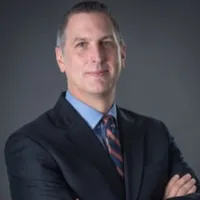
Deane Ilukowicz, Chief People Officer at TPI Composites, Inc.
Episode 109 · March 3, 2025 · 18:52
Deane Ilukowicz, Chief People Officer at TPI Composites, Inc.
Key moments
In Deanie's words
“I tend to approach HR as a driver of that business outcome, and how do we align the people function as not just the people function, but really the driver of how we're going to achieve the business strategy.”
“I'm one of the, the lone voices out here that says I don't believe in work-life balance. I believe in choices, right?”
“My general mantra about communication is we communicate what we know, when we know it, in the most thoughtful and engaging way possible.”
Transcript
Read the transcript3,658 words
HostWelcome to the Built by People podcast, where we share the stories and insights of the world's top HR leaders. Join us as we dive deep into the minds of HR executives, uncovering their strategies, challenges, and triumphs in shaping today's workforce. I'm excited to welcome Deanie to the Built by People podcast. Thank you so much for joining us. And as a starting question, I always love to ask you if you could share a little bit more about your career journey.
GuestGood morning. Good afternoon. Good evening. It's great to be here. My name's Denia Lukwitz, and I'm currently the Chief People Officer at TPI Composites based here in Scottsdale, Arizona. I started my career in HR in a very non-traditional way. I had no intention to be an HR professional, honestly, when I graduated from school. My career and college life was focused on medical and thinking about being a doctor. I have an undergrad degree in social and behavioral science and fell into operational management. I actually started my career as a management trainee. Back in the day when they had management programs, when you worked in every department, you learned the job, you put hands on the job. I worked in a printing plant, and then you went into a role to be an assistant manager and then a manager and on the track to be a plant manager. So at that time, I really thought my career was going to take me in an operational path towards that chief operating officer role. Fell into HR, literally. We had our regional HR person fall in a manufacturing facility. I was portable, I was relocatable, I was single at the time, and they said, hey, we need someone to travel from Philadelphia through South Florida and Puerto Rico and do HR stuff. And back then in the '90s, a lot of it was personnel management, documentation, checking records, making sure you didn't have ghost associates and those types of things. And I said, hey, yeah, let's go. And here I am 25, 30 years later as a chief people officer. So that journey has taken me through many twists and turns. I ended up staying with that company or family of companies for 19 years. So I started as a management trainee and ended up as a VP of human resources in one of their spinoff companies. At that point, I'd been through an IPO with a family of companies, which is great learning. At a point in time, the chief information officer came to me and said, hey, maybe you need to go somewhere else. I'd been with this family of companies for 19 years, and honestly, I was a little heartbroken. I knew I didn't want the top job, didn't want the head of HR job at that company, but had aspirations to lead HR for a public company as a career goal. And he sat me down and said, look, it's, it's time for you to look for something else. And opportunities came here and there, and I found a great opportunity to go work for a credit card company. Wonderful culture. And honestly, 6 months after I took that job, the company as of with prior got purchased. So I really do think the CIO was in his own way, keeping his eye out for my career and making sure that I flew the nest. But also landed, loved working for the credit card company, took my family to Chicago. I tend to be the person in the family that relocates, and I have that trailing spouse. So a little bit of a gender reversal there. And I'm lucky to have such a role to lead the card member service group. So it was the biggest group I'd ever had at that time, was over 10,000 people, led HR in the US environment, got to do some international projects. But then I had the opportunity to go to a family-run company and be at the heart of HR. And that was the goal, right? Family owned and run. It was actually an ESOP company, which was really interesting culturally. And spent over 4 years there and was the first HR person I had the honor as wife. So there was interesting family dynamic. There was interesting industry dynamic while I was there. There was economic challenges across all of industrial manufacturing around the world. And the very first email I ever sent out in that company and job was that nobody was going to get a merit adjustment. Welcome to the new company and the family. And you get to share some unpopular news, but learned a lot from each each one of those experiences. Then I went to— back to Chicago into a role that was very different. It was an organizational effectiveness role. I've been told I have a kind of closeted OD background and mindset. I really like organizational development, just the principles and philosophies. When I took that role, it was positioned as a succession opportunity to the head of HR. And I was really excited about getting my feet wet in a functional area that I didn't have as much experience in and learning from that. And about 6 weeks after I joined the organization, they terminated the woman who hired me and then put someone else in that spot. So the succession path then got a little dimmer throughout that experience. But once again, learned and grew from that. And I am a bit of a fatalist. I think things happen for a reason. Got laid off from that job. Not the best circumstance, right? You move your family and start your new life, and then you lose your opportunity or your job or your livelihood. So I've been through that. I feel like I can provide good coaching to people who have been through that. But I got a great call one day saying, hey, I heard you're in the market, from someone that I had worked with at that company that I'd been with for 19 years, who'd been asked about a job here in Arizona. And the job is where I am today. They put me in contact with the general counsel who had actually hired as a contract admin leader 19 years-ish ago, if you will. And he remembered me. He referred me into the leadership pipeline and the process. And here I am 9 years later. And aspirationally, I'm the head of HR for people based company in manufacturing and publicly traded and feel like I've attained a lot of my career aspirations and goals, but I'm fortunate enough to work with a great team of leaders that I learn from every day. So hopefully that's not too long or too short, but that's just a brush of kind of my career journey. I did get my master's along the way, so I have my MBA with a concentration in finance, which as an HR leader, I drive our finance team a little crazy, but it's been great to pick up that education along the way.
HostDeanna, you started in operations as a management trainee, as you mentioned, and that was prior to transitioning to HR. How has that operational background shaped your approach to HR leadership, and why do you believe it's crucial for HR professionals to understand the business first?
GuestSo my operational background has made me more strategic regarding the business, and I really think if you're gonna think about people strategy, You need to anchor it to the business strategy. What are the business challenges? What's going on in the business? What problems are there? What solution sets can you provide? I tend to approach HR as a driver of that business outcome, and how do we align the people function as not just the people function, but really the driver of how we're going to achieve the business strategy. I'm a bit practical. HR solutions are great, but they need to solve a real-world problem. And I think I find that sometimes HR professionals jump to a solution because it's in their HR toolkit, but they don't calibrate back to what problem am I really trying to solve for the business? How do I get ahead of problems that the business might be experiencing? There's a lot of industry talk about the future of work and skill sets and some of these other related things, and really understanding the drivers of your business. Where are you winning? Where are you more challenged and what can you do to level set that culture and people dynamic to get in front of the business strategy so that you're best positioned to achieve the outcomes that the business and maybe your shareholders are looking for.
HostDana, you've mentioned in the past that many HR professionals can be too policy-driven. Can you share an example of when taking a more business-focused approach rather than a strict policy-focused one led to better outcomes?
GuestSure. So when you talk about policy, I've grown up and I've seen policy manuals be 4 inches thick and I've seen them be an inch thick. As an HR person, once you've been around for a long time, you see these manuals expand and contract based on what's going on, and particularly in a global environment. From my perspective, a well-written policy provides structure or guardrails. How do you make sure you're on the road without flying off, if that makes sense? But also allows for management discretion. To adapt to the business needs. Now, honestly, there's some policies that are non-negotiable, right? Think about your environment, harassment, code of conduct. Those things are fairly black and white. But when you talk about some policies, you think about compensation policy, for example, many companies have an annual adjustment process, right? You have to be hired by X date or you don't get an increase. You get one annual increase. And when you think about the world and how dynamic it is and how competitive it is for talent, Sometimes, right, you need to take the business side and someone's coming to you and saying, look, if I don't do something now, I'm at risk of losing this talent. And maybe you do something off-cycle, right? Maybe you talk about hybrid and work from home, and maybe you have a return to office policy that works for most people, but maybe you have a top performer that's going through a tough time right now, and you need to make an exception to afford them the opportunity to work from home for a period of time so that they can get their life straight and then get back into the office and environment. I just think that sometimes HR people lead with policy. You can't do this because the policy says, rather than backing up and saying, OK, what is the problem? What solution options do I have? How do I get the business to the outcome that they want, being mindful of culture and laws and all these other related things that we have to be thoughtful of around the HR discipline and get to the best business outcome?
HostDeena, can you explain the concept of the career energy triangle? And how choices, experiences, and renewal play a role in preventing things like burnout and maintaining motivation in a career?
GuestSure. And this is the way I look at things. I look at life as a triangle. I have two triangles that I think about, one in career and how you frame choices around role, which is who you work for on one side, who you work with on another side, and value, creating value and adding value and feeling valued. But when it comes to career energy, The way I think about that triangle is choices, and choices you make have consequences. And then I think about renewal and how you find time for renewal and experiencing leading to opportunities. So if I break that down just a little bit, people talk about work-life balance. I'm one of the, the lone voices out here that says I don't believe in work-life balance. I believe in choices, right? Sometimes you choose to prioritize your family for whatever reason or values you might have. And sometimes you need to choose to prioritize work, particularly as you're building your career and taking on more levels of responsibility. There's no right or wrong choice, but you have to be willing to live with the consequence. It's really easy to let yourself get judged, I think, particularly as a senior leader or a leader who's trying to grow your career, but just make those choices intentionally, understand the pro/con and understand the consequence to your choice and move on. Because if you get yourself stuck in that loop of reconsidering that choice that you made, you're probably wasting a lot of energy when you can be moving moving yourself and your mindset forward. I really believe in experiences leading to opportunity. I tend to gravitate towards challenge. I like a challenge. I like a change-intense environment. I take the unpopular roles. I went up to Syracuse, New York for one opportunity, and it was a rough environment, right? It was a call center environment, a manufacturing site. I'd gone from a really nice environment in the South and up to the wintry part of Syracuse, New York. Gravitated to that role because it was the job that nobody wanted. I believe that you can learn a lot more through life experience, particularly as an HR person. It's really hard to empathize or, or think about how to coach a leader if you haven't lived through or experienced something somewhat similar. And yes, education is important. I have a lot of it myself, but at the end of the day, thinking through those life experiences and how you gravitate towards projects or initiatives, even, you know, a factory closure. That I've done unfortunately too many times in my career. You learn a lot with that, and then you tuck that away into your toolkit and your mindset, and you can bring that forward. On the third side, you have renewal. And I think a lot of people forget that renewal doesn't have to mean rest. For me, renewal is physical activity. If I don't get my physical activity in some form or fashion, whether it's CrossFit or running, weightlifting, out there doing OCR courses, that really engenders my spirit. It pumps me up. It makes me excited. It gives me the level. Of excitement and passion and energy that I need to do my job. Some people, maybe they're readers and they like to sit in a corner and have quiet and read a book, and that's how they renew. But if you don't find time in a manner to fill your tank back up and your business is really demanding, it's going to draw a lot of that energy from you and you got to find a way to fill it up. For me, renewal isn't rest, but I get that for some people it is. But I think from a triangle perspective, when I talk about career energy and that triangle, It's how are you thinking through the dynamics of making choices, of finding that time for renewal, and just seeking out the experiences that are gonna help you grow and develop the most and maybe the fastest.
HostHaving gone through IPOs and also significant organizational changes, what have you learned about leading HR through major business transformation?
GuestGreat question. I would say the number one thing that I've learned is communication is key. You really need to be intentional with your communication. When it comes to communication, my general mantra about communication is we communicate what we know, when we know it, in the most thoughtful and engaging way possible. It's that thoughtful and engaging way possible that gets complicated very fast when you're working through major transformations, especially an IPO, because you can't always share everything that you know. I tell HR people, I tell leaders all the time that I'm about to give you this burden of knowledge. That now you have to tuck away. You need to make sure that you're making the right decisions for the organization with this information, but you can't completely share what's going on and being transparent. So how do you help the organization manage through change, understand who's impacted, how are they impacted, what's the right communication, what's the right training is all important. But specifically to IPOs, there's a general mindset around access to information and governance and compliance that has to happen when you're talking about an IPO. And I've worked for companies that have gone through that, used to have open book management, everybody knew everything. Now all of a sudden, who knows what information when is a little restricted. You're putting in different policies, you have different public filings that you have to do. So there's a lot of discipline that comes along with an IPO. But as an HR leader, to lead through that transformation is incredibly rewarding because you get to work with every different department. As an HR leader, I also think you need to think about scale. When I went through an IPO, for example, here at TPI, we had very thin corporate resources and we needed to add to our finance department, our legal department, our HR department in order to manage the governance and compliance activities that came along with being public. I also think you need to think about talent retention because some of the roles in organizations change a little bit when you go through an IPO. And as you're growing and scaling and you're listening to now shareholders and you're doing external calls and some of the information becomes a little bit more transparent than people are looking for, you need to manage through that talent piece of it as well.
HostWith TPI Composites' global workforce of 13,000 employees across different countries, how do you approach building an inclusive culture, uh, while maintaining your direct leadership style across various cultural contexts?
GuestYeah, that's a great question. I think that for us, we think about diversity of thought. And at the end of the day, when you're talking about leading across global groups, I think you need to be intentional. I tend to lead with transparency and empathy. And I think if you start there, you're open, you're honest, you're empathetic to the situation. I set clear expectations, but I have a really high bar for what good looks like. And I think if people understand what your expectations are, what good looks like, good looks like regardless of culture, that is translatable. I think inclusion or belonging also starts with listening and finding a platform to ensure that all voices are heard. At TPI, we are very focused, and actually we talk about a lot, everyone has a voice. We want you to use your voice at TPI regardless of what the content is. We want you to raise your hand and tell us what's going well, what might not be. We are very fortunate at TPI. I think our survey participation rates are generally in the mid to high 90s. So our associates also feel very comfortable sharing their feedback with us. The CEO and I, for example, do a Global Day of Understanding where we'll sit down and talk with associates at all levels all around the world, and they will ask all kinds of questions of him and of me and of the leadership team and to seek to understand what is our strategy and what are we doing to ensure that there's transparency and sharing of information down to the operator level. So those are just some ideas, but I think leading with Transparency, open communication, and, and being empathetic are, are keys to being successful as a leader in that environment.
HostDeanie, what parting advice would you like to share with our audience?
GuestI would say that as an HR leader, sometimes you're being asked to say no, and it's hard to say no. I don't like to say no. I think nobody likes to say no, but I think you need to find that balance of, okay, maybe we can't do it this way. But there's a way to get done what you're trying to get done. And let's talk about what options we have. So I think reserving the conversation to not just cut people off and say, no, you can't do that. And you can't do that because of this and this tells you you can't do that. Taking a step back as an HR leader at any level, honestly, as a generalist, as a manager, as a director, as the chief people officer, it doesn't really matter. But to pause the conversation and really listen to what problem the leader is trying to solve is going to help you understand and maybe think through different options to solve a problem than just jumping to, no, you can't do that. So one of my parting pieces of advice would be really listen to the business and do the best you can to provide consultative advice. But at the end of the day, as an HR leader, you want to be part of the business. You want to be pulled in. You want to develop those trusting relationships. And if you shut down conversation like that too often, you're gonna find yourself running after instead of being pulled in.
HostDeanie, thank you so much for joining us on the Built by People podcast. It was a pleasure to have you involved.
GuestIt was my pleasure. Thank you so much.
More conversations like this