Episode 216 · May 28, 2025 · 9:20
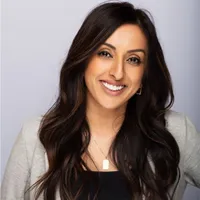
Carol MacKinlay
Chief Human Resources Officer, Velocity Global
Beyond Traditional HR: A Business-First Mindset Drives Global Culture & Success
Episode 216 · May 28, 2025 · 9:20
Beyond Traditional HR: A Business-First Mindset Drives Global Culture & Success
Key moments
In Carol's words
“I said, I've never done HR. They thought it was the same thing as what I was doing as a consultant. And so I learned HR from the top. And so I, but I, my sweet spot now has been helping companies kind of transition from late stage into IPO, doing turnarounds, getting things shipshape is what I say, just coming in and making sure things run smoothly, we're efficient, that we're doing what the company needs us to do in HR. So I'm really a business person that runs HR rather than somebody who's grown up through the HR function.”
“Culture's led from the top. And so looking at almost taking it as a consulting project, looking at what the CEO is like, how they run a company, what the rules of the game are, and trying to translate that across the company.”
“It's amazing how roadblocks fall away when people actually get why somebody else wants them to do what they're doing. That is the standard motion for me. Getting people face-to-face is invaluable.”
Transcript
Read the transcript1,752 words
IntroWelcome to the Built by People podcast, where we share the stories and insights of the world's top HR leaders. Join us as we dive deep into the minds of HR executives, uncovering their strategies, challenges, and triumphs in shaping today's workforce.
HostI'm excited to welcome Carol to the Built by People podcast. Carol, thank you so much for joining us. And as a starting question, I always have to ask if we can share a little bit more about your career journey.
GuestSure. I am now the Chief HR Officer at Velocity Global, which is an EOR platform that helps people expand around the world. So we have entities where you might not, and we can put people there. But I didn't get here. This is my fourth career, maybe fifth. So I have an industrial engineering degree from Berkeley. I am a process improvement person by background, by aptitude, I guess. And went down that path a little bit and decided I didn't like it. Switched to FP&A and was an Excel jockey for years and years for KPMG doing strategic planning and different things. And through that actually transitioned into executive pay. Worked for KPMG as an executive pay consultant, ended up forming my own boutique firm doing that back in the day before Compensia, before some of the big, before the Radford brothers had invented Radford, ended up at Plantronics when the VP of HR quit. So I was given the job because the management team and the board knew me. And I said, I've never done HR. They thought it was the same thing as what I was doing as a consultant. And so I learned HR from the top. And so I, but I, my sweet spot now has been helping companies kind of transition from late stage into IPO, doing turnarounds, getting things shipshape is what I say, just coming in and making sure things run smoothly, we're efficient, that we're doing what the company needs us to do in HR. So I'm really a business person that runs HR rather than somebody who's grown up through the HR function.
HostCarol, when was a time you helped shape or transform a workplace culture, and what specific actions did you take, and what impact did they have on the organization?
GuestSo, again, not as, you know, coming into HR, not as an HR person, and then kind of where I've ended, I'm always ending up changing cultures. That is pretty much what I'm tasked to do. So I come into turnaround situations, transitions from founder-led to professional CEOs, transitions as products change. I've helped spin out a company, those kind of things. So I always come into a culture that needs to shift. So it's not necessarily a wrong culture, but it's a culture that needs to shift to a new management team. And I actually talked to our management team yesterday about this. Culture's led from the top. And so looking at almost taking it as a consulting project, looking at what the CEO is like, how they run a company, what the rules of the game are, and trying to translate that across the company. So net, I look at how you communicate. Are we transparent about what we're looking for in people? Are we giving them the tools and the communications to understand why the business wants what it wants and getting people on the bus? And doing that with remote, and, and as I come into late stage, companies have already started to expand around the world. And so making sure that you pull in those distant folks to what's going on, that's a motion that I feel really good about trying to embrace everybody, start getting people face to face to talk about things, breaking down silos and just making things, giving everybody the intellectual understanding of what we're doing changes cultures pretty quickly.
HostCarol, how did you approach scaling your people strategy? As your company expanded globally. Can you share a challenge you faced and how you overcame it?
GuestYeah, so lots of those. So the current challenge here, we have a brand new management team. I think one person remains from the old leadership team here. And what I encountered here is breaking down silos. I've only been here 5 months. I think we've already made some pretty good inroads. But like I was saying in the last question, that typically is the problem of people running their own shows and not understanding how they actually map into what the company's trying to achieve.. And so we're working on that now of actually building cross-functional teams to tackle different challenges and make sure that people understand the other person's pain. It's amazing how roadblocks fall away when people actually get why somebody else wants them to do what they're doing. That is the standard motion for me. Getting people face-to-face is invaluable. And I actually made the pitch yesterday on doing all company meetings that we used to say at user testing, that was the bank account that you draw on across the year. If you can get people to meet each other, like each other, trust each other, you can draw down that bank account for months and months to come because they know who you are. And that makes a lot of just— people want to work with friends. And once you can build those friendships, it moves mountains.
HostCarol, tell me about a moment when sitting on a board gave you a different perspective that influenced how you lead internally.
GuestYeah. And it's not just board actually. It's my biggest aha is looking at founders, right? So I worked for Roger at Xero back when he was still CEO. He had grown it to a overnight almost to $100 million US business in multiple countries. Right now I'm on the board of Exodus, which is a DeFi crypto wallet. And JP Richardson is somebody I'm a huge fan of. And he has built— what founders do is run through walls. They've learned they can run through walls, and so they They just do things that we all say, you actually, you can't do that. And I'm not talking about things that are inappropriate by any means, but they look at things in a different way and they say, this is a challenge. I'm gonna look at it from the side, from the back. I'm gonna look all around and see how I can attack this challenge and make it work for me. And what I see JP doing is he's meeting people in the industry. He's taking a look at all the growth of technology in crypto. And he's trying to make it win-win, win for Exodus, win for the other guy, and bringing people together in that way. So the outreach, the thought process is what is mind-blowing to me of actually taking a look in a totally different manner than you would normally. And that's what I try to do from HR. And as I, I still live as a consultant in my head of coming in and saying, how can we do it right here and do it better rather than just the way we've always done it? And so that's the That, that's what I'm loving about the Exodus journey that we're on.
HostCarol, how have you leveraged diversity, not just demographically, but across global perspectives to build trust and alignment in distributed teams?
GuestYeah. And so I'm known for diversity. If you go on my LinkedIn, you'll see my demographics from user testing. I was very proud of what we built there, which was demographic diversity, right? What I love and the soapbox I get on about diversity is diversity of thought. So I need people on my team. I need people in the company who come from completely different walks of life where they grew up in a different way. They grew up in a different household. I wanna see people who had a different experience in life than me that believe in different things than me. So I tend to be somebody who's middle of the road so I can see both sides. I'm that arbitrator or ombudsman person that can see right and left and up and down. And so I try to sit in the middle. And bring people to me that can bring all the different perspectives. If you can get that thought perspective going, it's— it changes companies. It's radical to be able to attack a problem as a team from different perspectives, argue it to the ground, and then go have lunch. That is huge. And so I always tried to do that in my own group. They go, oh, she's being challenged by her group to do it differently. She's not authoritative in saying, this is the way we're going to do this. Instead, it's, this is this is an open culture, right? A transparent and open culture where you can say anything, you can talk your mind, and then we'll just decide what we're going to decide and move on. That diversity is what I'm known for and what I try and encourage other people to do too.
HostSo, Carol, what parting advice would you like to share with our community?
GuestThinking like a consultant, thinking not just the way you've always done it, but coming in and saying, what's right for this company? I've got my toolkit, I've got my ways I've done things, but I may need to alter them and make sure that this company is successful because every company has a different flavor. There's no complete transferable. And then coming back and being the person who breaks communication open. 80% of my job are communication issues. People didn't understand what they were asked to do. They didn't understand the direction. They didn't understand what the company's trying to do, or they just got into a fight with somebody because somebody used the wrong words. If you can fix that, the company, it's a 1 1 3. It just makes things better. And so that's looking for those communication problems and fixing them really quickly moves everybody forward. So that, those are my quick pieces of advice.
HostCarol, thank you so much for joining us on the Built by People podcast.
GuestIt was a pleasure to have you involved. Thank you much. It was really nice to meet you.
More conversations like this