Episode 15 · December 5, 2024 · 12:43
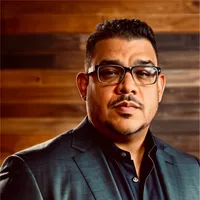
Brian Davenport
Vice President, Total Rewards, Asbury Communities
Beyond ROI: Why Executive Buy-In Is Total Rewards' Toughest Challenge.
Episode 15 · December 5, 2024 · 12:43
Beyond ROI: Why Executive Buy-In Is Total Rewards' Toughest Challenge.
Key moments
In Brian's words
“I would say that's the biggest lesson is connecting with the executive leadership team, the CEO, the CFO, Chief Administration Officer, whoever it may be, and really getting them to buy into the value of benefits, the value of compensation programs instead of compensation, developing an ROI.”
“It's evolved over the years, you know, the types of programs, et cetera, but it still boils down to 3 things, I think, and that's what is in those benefit programs and what's available to the employees. That's number 1. Number 2 is their out-of-pocket costs in the plan, the copays, the coinsurance. And number 3, what do they pay out of their paycheck?”
“And the newest trend is the use of AI. There are several companies that are able to look at all the job postings across the country and kind of pull out what the expected compensation is for those roles and then relay it back to us almost in real time.”
Transcript
Read the transcript2,057 words
HostWelcome to the Built by People podcast, where we share the stories and insights of the world's top HR leaders. Join us as we dive deep into the minds of HR executives, uncovering their strategies, challenges, and triumphs in shaping today's workforce. I'd like to welcome Brian Davenport, VP of Total Rewards at Asbury Communities, to the Built By People Podcast. Brian, thanks so much for joining. And I'd love to start off by just having you tell us a little bit more about your career journey?
GuestAbsolutely. First of all, thanks for having me. Really happy to be here. My career journey goes all the way back to starting as a healthcare underwriter for Prudential Insurance. Learned the business of healthcare and medical plans back when HMOs were cutting edge, actually. They're pretty routine today. But from underwriting, I went into consulting and did that for about 8 years, healthcare consulting. And that's when I made a really major change in my career and flipped from consulting to the HR side. And since 2001, I've been within companies on the HR side doing benefits, and eventually that grew into compensation, payroll, HR, HRIS. And that's where I ended up, you know, all of that plus leave management.
HostRyan, curious to get your perspective on some of the key lessons that you've learned along the way.
GuestYeah, I think we're going to talk about it a lot today, and that's executive buy-in. I would say that's the biggest lesson is connecting with the executive leadership team, the CEO, the CFO, Chief Administration Officer, whoever it may be, and really getting them to buy into the value of benefits, the value of compensation programs instead of compensation, developing an ROI. That's associated with those programs, building a rapport with them to help them understand the softer side of things, not just the numbers. So I think that has been the primary challenge at every place that I've been.
HostYou obviously have a lot of experience propping up benefit programs. What's your process been like for putting together a benefits package that is both relevant and compelling for your employee base?
GuestYeah, good question. It's evolved over the years, you know, the types of programs, et cetera, but it still boils down to 3 things, I think, and that's what is in those benefit programs and what's available to the employees. That's number 1. Number 2 is their out-of-pocket costs in the plan, the copays, the coinsurance. And number 3, what do they pay out of their paycheck? And 3 is probably most important to to a workforce depending on what type of workforce you have. We have a lot of blue-collar workers here, so that paycheck cost is very relevant to them. When you get to people who are more highly compensated, they're looking more for what's in the plan, you know, how rich are the benefits.
HostBenefit utilization is an inherent challenge for many companies. What are some of the measures that you're taking to drive up utilization through high-impact offerings?
GuestYeah, over the years, I would say it's always about taking a large claim base or a large cost base, if you will, and really splitting it and breaking it down into all the smaller components. So for years, if you look at a healthcare premium, you want to break that into the claims costs, the admin costs, the stop loss, the risk charge, all of those things. And then over the years, it's evolved into really looking at the claims and the claims utilization for a company. Prescription drug— how much do we spend on that? And that's been growing even faster than medical inflation over the last 20 years. So what kind of programs are in place to manage the prescription cost? And looking at specialty drugs and things like that. Emergency room costs, how much is a company spending there? And now we're looking at diagnoses. How much is being spent on diabetes, cancer, MSK, all those things. And now there are programs to manage those things more effectively and more efficiently. There are diabetes management programs. There are things for physical therapy. We're looking at virtual physical therapy now as a way to manage costs. So I know that was a long answer, but it's really, you know, taking a large cost of healthcare and breaking it down and really examining each of the pieces.
HostAnalytics obviously plays a pivotal role in compensation. I'm really curious to get your perspective on this, given your background and how you started your career. How are you leveraging tools and models to guide decision-making and help influence buy-in across the organization? Sure.
GuestYou know, for years we've always, you know, fielded surveys that drives everything— compensation surveys, what are other companies doing? But that has a lag to it. You know, we might participate in a survey in May and not get those results back until December and then try to use those for the next calendar year. So just within the last couple of years, things have become much more immediate. And the newest trend is the use of AI. There are several companies that are able to look at all the job postings across the country and kind of pull out what the expected compensation is for those roles and then relay it back to us almost in real time. So I'm pretty excited about that trend as far as being able to react more quickly to what's going on in the marketplace.
HostAre there any specific tools that you're using that you'd recommend to our audience?
GuestWell, we went with a company called Squirrel. There were two others that we looked at. One is mysalary.com, and there is a third that I'm blanking on their name. But there definitely are some companies out there that are doing this, and I'd recommend folks to look into it a little more deeply to see what might be a good match for them.
HostThere are cost concerns related to benefits. How are you illustrating the ROI associated with the programs you implement?
GuestYeah, ROI on benefits is very important, but at the same time, very challenging. You can implement something in 2025, you might not really see the results until 2027. And you might be impacting employees, and then 2 years from now, they are not your employees anymore. But if you don't do anything, you probably can see runaway costs. So it's something that I think you have to get through some of the skepticism that exists at the executive level. You have to build that trust and get them to trust that the programs that are going to be put in place are going to have a meaningful impact because the ROI is just so hard to find. And it's not just me saying that. I mean, I've had consultants that have worked with me over the years and a lot of times they will say, look, we think this is going to work. This is the latest. Some companies, utilization companies, will try to prove an ROI. It's really hard to prove.
HostCan you give us an example of a time when you were able to prove out the ROI associated with the program?
GuestIt's been a lot of, you know, payer claims utilization only went up 5% this year instead of 8% this year. Do you think that that program had an impact? You know, perhaps. But it is exceptionally hard, I think, to prove this. And that's why I think You just have to use some good judgment and have some trust and faith that these programs are working.
HostWe talked about the costs associated with benefits. I also want to talk about some of the factors you consider when determining how to cut back on spend in certain areas related to benefits and compensation.
GuestYeah, it's really looking at what's most impactful from a cost standpoint. Least impactful to the employee. You know, are there things that you can do in which it will create no noise or reduce the amount of noise that you're going to hear back from employees? And sometimes there are little things that you can do, you know, $5 copay change, 10% increase to dental contributions instead of 5%. You could do little things like that. It has a dollar impact. It's very low noise that you'll hear from the employees. But then there are times when you have to do something more drastic than there are times when you just say, we're going to accept the noise that's going to come back from, from the employees and you do it because it's going to save 10%, 15%, 20%. And sometimes you just have to do that.
HostAre there any specific initiatives that you've put into place in the world of compensation and benefits that you'd like to share with our audience?
GuestI mean, I think it's just trying to be how— in front of us to what's going on. I was an early adopter of consumer-driven health plans back in 2003. Didn't really know much about it. I think that goes back to that, that faith issue again, that, you know, that was a concept that was just beginning to emerge at that point. We took it on and we thought that we were seeing some pretty significant savings in our health plan because the consumer— the high deductible health plan was costing us far less than the PPO that we had at the time. You know, over the years there have been programs that have worked, some that maybe haven't worked as well, but trying to move ahead with the latest technology, the latest trends, that's something I think we should continue to follow through in the years ahead.
HostRight. Can you elaborate on a challenge that you've had in your career and what it took to overcome that challenge?
GuestOh, I mean, I think from compensation, from compensation standpoint, designing incentive compensation is always a challenge because there are so many people who want to have a say in that, you know, so many different levers you can pull. And I think over the years, just designing those, working with CFOs to understand what results are going to look like, what we're forecasting, and what share of profits we want to give back to the associates, you know, how much of the profit we can afford to share. I would say that's been the biggest challenge over the years. So, you know, not only if in a total rewards standpoint, you deal a lot with numbers, and my emphasis certainly has been numbers over the years, But developing the rapport with the CFO, building that trust, that is something that is extremely important so that you can collaborate and come up with something that is going to make the employees happy, will be cost effective at the same time.
HostRyan, what parting advice would you like to share with the Built by People community?
GuestProbably just to build on what I was just talking about is building that rapport. With the C-suite, with leaders, doing this job in a vacuum, which can happen sometimes. And sometimes, you know, in total rewards, you get caught up with the administration because administration benefits of payroll, of 401, of compensation, of merit cycles, all those things. It's a heavy lift and you have to execute it as flawlessly as you can or else you hear a lot of noise. You know, when it comes to payroll, nobody thinks about payroll. When they get that check every 2 weeks, everything's fine. If something's wrong, we hear about it, right? And leaders hear about it. So yeah, you get caught up in the administration, but I think you have to do more than that. I think you have to constantly think about the relationships with the C-suite leaders, with the CHRO, with, with other leaders for different departments throughout an organization. So that would be my advice, is to constantly be thinking about that and developing it.
HostRyan, thanks so much for joining us on the Built by People podcast. It was great to have you involved.
GuestI really enjoyed it. Thank you for having me.
More conversations like this