
Guest · with Kimball · 23:34
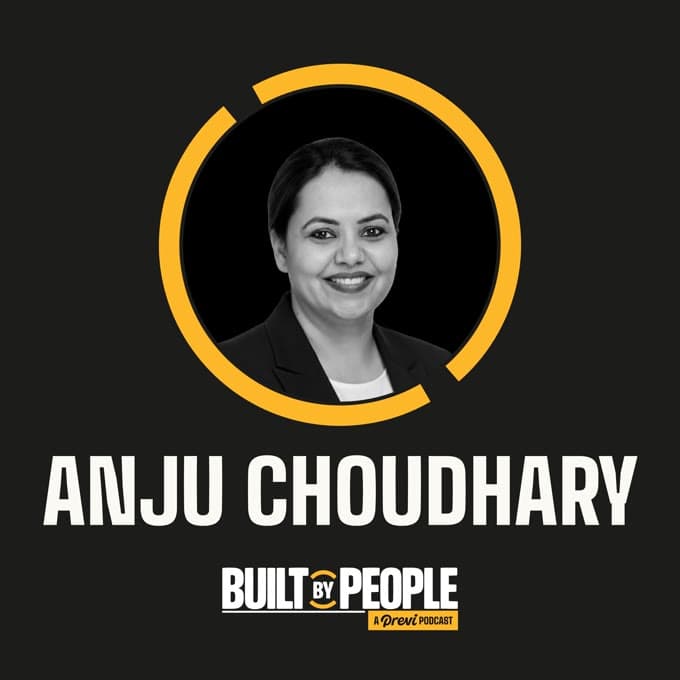
Anju Choudhary
CHRO, Xoxoday
HR Happened to Me by Chance
Key moments
In Anju's words
“Even your top performers, when they get a best rating, they don't know what they did right so they can replicate next year.”
“HR happened to me by chance, but I stayed by choice.”
“That's the best way you can serve other people: by knowing what they need in the moment instead of you judging what they might need.”
About this conversation
Anju Choudhary has spent 20 years in HR. She was at IBM for more than a decade, led global talent and organizational development at NextRoll, spent a few years as a product leader at Skillsoft, and is now CHRO at Xoxoday, a rewards and engagement platform. She and Kimball talk about the folder where she put every HR email while she was in a revenue role (she never got through it) and what that taught her about how HR communicates. They also cover the IBM program that paired every new hire with an ambassador for their first 90 days, and why she asks people what they need instead of treating them the way she'd want to be treated.
Transcript
Read the transcript4,095 words
IntroAny of the HR communication that came I put in a folder to say, I'm gonna go through this in a while. And that folder grew in size. I never got a chance to go through only a few, despite my best intention.
HostAll right. Welcome to the Built by People podcast, Anju, and we're super excited to have you on. So you spent over a decade at IBM, where you were selected as the IBM top talent 5 times in 7 years, and then you led the global talent and organizational development at Nextroll before moving into content strategy at Skillsoft. And now you're the Chief People Officer at Zozoday. Is that right?
GuestThat's correct, Kimball. Thank you for having me over.
HostYes, absolutely. So, uh, usually we like to start with just a warmup question and just to get to break the ice a little bit, but what's the wildest thing that's happened to you in HR that you're allowed to talk about?
GuestGreat question. I think in my 20 years of tenure in various functions of HR, I've seen some interesting wild stuff, right, from certain process crises to people situations and a lot of stuff. Unfortunately, those are the things I'm unable to talk about, but I'm gonna give you full marks for making an attempt and appreciate the question. It is locked and sealed, and hopefully God gives us strength to continue to deal with those, because we're in the service of people, and our job involves taking care of them every day, all day long.
HostYeah. Yes, no, absolutely. So no, no, no worries. We'll, we'll jump right into it then. So at Zozo Day itself, it's a rewards and engagement platform, right? So does being at this company whose product is employee engagement create any tension or advantage or what did you, or anything you didn't expect?
GuestDefinitely, there are a bunch of things that I wasn't really foresighted to be able to see, but there are opportunities. It is very exciting. We're at the service of creating solutions that other companies use to engage, retain, and continue to build high-performing teams. And when that happens, you have to think a few steps ahead. And I think that's the most exciting part. The challenge is when you're so deep into it, sometimes you forget to drink your own Kool-Aid. So you have to be very much intentional about it, which means— I remember this tip, and I shared this in many podcasts with people, so hopefully it's gonna stick. It's about a sticky note. So a sticky sticky note solution. A leader actually told me they put a sticky note with their team members' names, and as they go through their week, they kind of remember to recognize what they like. So you continue to recognize behaviors that you want to see in future, and they do that manually. And I was like, this is lovely. So I tried to do a sticky note so you remember. So one of the challenges when you're so deep into it and you're reminding other people, you gotta remind yourself to do that too. The exciting part is we get to co-create innovative solutions to help engage top talent. And as the situation right now, you wanna hold onto the talent that you have, you wanna continue to grow that. So I think it's very, very exciting to me.
HostYeah, so it's almost like you want to just slow down a little bit and it, it's amazing just reaching out and being aware of your team, just how far that goes for the employee. But I don't know if you have any examples you can share of that.
GuestI love the idea. You actually pinned it. Slowing down, slowing down to go fast. That's so important. And I think I took time as a leader to learn that, cuz you are in a go, go, go mode. And one time, one of my leader actually at IBM told me, Anju, I love your passion and your energy, but you gotta be careful because when you're at the finish line, you will turn around and you'll not find your people because you're running too fast. And what he meant by that is, yes, you got it, you got goals and you gotta reach there and you're passionate about doing it, but you need to take your people along. And in that journey, every milestone, you spend some time to recognize that. To celebrate that milestone, and that actually builds the momentum further. So it might seem counterintuitive that we can't take a moment to reflect on, but that reflection could actually help you identify challenges that you face so you can uncover that for future, but also to celebrate the— those milestones. So taking that little moment to celebrate is always going to be helpful.
HostYeah, I absolutely love that. And kind of along those same lines, how do you think more departments or just individual employees can partner better with HR teams?
GuestI think the pulse of company that HR teams constantly are trying to gauge in terms of what's working, what's not working. So I think we have tons of surveys. And sometimes it's a fault of ours, the HR teams. There's so much on our plate that we forget to not really forget to, we have to be again intentional. The voices that you're hearing, what action plan that you create against that, and then how are you going to respond to that? What are you going to do? You can't boil the ocean. And then that's when you have to go to people and say, we heard you, these are the biggest challenges, but out of these, these are the 3 or 4 we're going to work on. These are the actions we will take, and hence we will continue to keep you updated about it. And then recently, I was talking to a friend of mine, and she's like, "We want our leaders to take those action plans. We want them to be able to share that sentiment with the team that we heard you." So how can other teams participate is when we are there at your door asking for your feedback, please share. Then HR teams need to, you know, with great power comes great responsibility. We need to address those and say, "We heard you, and this is what we heard. And as compared to our previous year, these are the new action plans we're going to do." So it's a co-creation together, participation together. And whenever there is a culture change, I think that's such a great opportunity to use. Never let go a good crisis for waste. Use that as an opportunity to install new behaviors. Talk about how are you going to respond to that and what programs will you put in place. So whenever a new crisis comes in, which it will, but you'll learn something new out of it.
HostYeah, I love that. And it seems like too, just in your career, you find those challenges as opportunities. and there was one in particular that I wanted to touch on was when you were with IBM and in the Buddy program. Can you tell me a little bit more about that and what, what you did there?
GuestYes, it's very exciting because IBM has been on growth mode during that time. We're hiring. In hundreds and thousands of numbers, and we're hiring globally. When you have a really big ship to steer, you want to make sure that culture becomes evident on day one. I feel like onboarding needs to be done so well because as a new hire, they always second-guessing, did I make the right choice by joining this company? So you need to create clarity that, you know, this is what you're going to do. You need to create community so they can connect with it. Talk about culture, and then compliance. A number of times, we are thinking about clarity and compliance, not so much about communication and community. And I think those are important parts of creating that culture. So the Buddy Program was to ensure that they get all the 4 C's covered, they're able to build that connection to the company. I say that when I hear the music that I heard during onboarding at IBM, it still gives me goosebumps. And the reason is I had such a huge emotional connect. So the IBM Royal Blue Ambassadors, that was the name the program was, uh, was to— it was a formal role that all new hires will get adopted, and that's the term we use, adopted by a Royal Blue Ambassador who'll walk through from onboarding till first 90 days in the company to be able to— until you hand it over to a people manager. And that The first 90 days is super critical. The program, I can talk about it for days, but was helpful in helping us reduce early attrition, create better engagement with new hires, and then people who've gone through the Royal Blue Ambassador program had a longer tenure in the company, were able to identify new opportunities within. And that's why it's important to create intentional programs targeted towards the challenges that your culture, is facing, or you might anticipate, and not just go and follow the next shiny thing, which is easy to do. However, I'm so proud of that program. It was run globally. It allowed us to create a fantastic new hire experience, and we could actually then showcase qualitatively and quantitatively the impact of that program, which again is very hard to do in HR program because there is correlation, not direct causation. So Think of program that could have the highest impact.
HostI love that. And kind of along those same lines, it seems like with technology advances, it really helps us spend more time with our people. Uh, how have you been able to utilize technology to take off a load of tasks that you're generally doing so you can spend more time focusing on people?
GuestI love that, and I think that's the biggest biggest personal, advantage of technology that we have currently. We've spoken about things that you do not enjoy so much. They're repetitive. Somebody's got to do it, create dashboards or something as simple as doing reimbursements. I hate that part of the job sometimes, but I'm so glad for tools that would allow you to— I don't have to struggle with that then, because even if it frees 5 minutes of my time, then I'm able to use that more strategically We've spoken about how managers can have better career conversations, use opportunities to interact with their team members, not just focusing on task and project, but towards coaching them to have more impactful jobs. During that time, you can use the data, use technology to get yourself prepared using tools like ours. Of course, you can have a look at this person, Kimball, used to receive all these shoutouts, and suddenly there is a drop, and I haven't seen him being receiving any awards. So is there a burnout challenge or skills challenge? So the manager can then really use that time. And then additionally, in our team, we're going around thinking about everyone's job role and then workflows within job roles. What is people only? What is AI only? And what's human and AI together? So you can then, in those buckets, really allocate the parts to AI so you can focus on human and human plus AI. Areas more deeply and be more strategic. And then we are asking people, what are the parts of jobs that you don't like, or like myself, you don't enjoy that much? So you can outsource that to technology as far as it is okay by compliance, and then it is going to provide a good employee experience, whether that's creating a chatbot for people operations. So they're not addressing the question of what's the benefit plan, how many PTOs do I have left? There's so much that they do every day. But especially within HR, I think there is so much potential that we can outsource to the technology and then focus on the people issues, which is connecting with our employees and addressing their personal challenges.
HostYeah, I absolutely love that. So it's almost like you're doing a customized technology approach just based on that role that you're over or that person and the things they like or don't like about. I think that's really wise. I love that.
GuestI want to caution people, as long as they're not outsourcing the people part of it, that, that is where the challenge could be. You can't have technology doing performance reviews. You can't have technology— it can help with coaching, some parts of it. For example, if you and I discussed about what you're going to do next week, we can have technology that keeping you honest about it. If you miss something, how can I connect you with somebody else who can coach you? Those, but you can't outsource the coaching part, the human
HostYeah, no, absolutely. That, that makes a lot of sense. I did want to touch on as well, at NextRoll, you were the global health of talent and OD for 4 years. When you're designing performance management for a company that spans multiple countries, what's the place that, or piece of it that breaks most often?
GuestYeah, good question. We were just talking about how do you continue to engage employees across borders, across cultures, across time zones, various teams. And then even at that point too, when you're making so much effort, why do people get out of performance management feeling defeated? And the reason for that is it is exhausting process. Somebody's got to keep tab of what did you do last quarter. Sometimes companies are doing it once a year. Who even remembers what I did in January when I'm in December? So technology can do so much, but the biases would creep in. Mostly you'd remember what just happened recently, the other kind of biases that happen too. So the biggest challenge is, how do you get over the traditional performance management and create a Constant coaching culture at the organization, because even your top performers, when they get a best rating, they don't know what they did right so they can replicate next year. Also, this is too less, too late, because we're starting our goal setting in January traditionally. There are some companies that are doing it biannually. There's some doing quarterly. We're away from that. Things change every week. So yes, we should set goals and a bigger goal, but they need to be addressed much more frequently now. And in the past, those barriers were only about culture and distance and teams and matrix organization. But now with AI, every time your business model may change, the business that you're into could completely change. I've seen overnight some businesses being redundant because what they were doing, a simple plugin could be inserted now. So when we're in that situation, then we need to be working much more closely and look away from traditional performance management and create programs that are going to address those challenges, where connecting tissue, which is our managers, become very crucial. So leadership has a vision, employees gonna deliver, the managers need to be enabled and empowered both to be able to run that. At the same time, HR business partners and teams need to connect and continue to provide support and resources to deliver.
HostI love that. And you kind of mentioned that at the— I think it was my first question, just on communication as one of those 4 Cs. How do you do that when things are changing so frequently? It seems like you mentioned it's like every week we have new goals and we're even maybe changing complete platforms or new products, whatever it might be, how do you make sure that communication stays consistent and everyone still sees the overall vision? Um,
GuestFirst I'm going to start with a failure. as you see my career journey, I've been in HR mostly, but I also became a product leader for about 3-4 years at Skillsoft. And during that time, I'm directly working with customers, directly responsible for revenue. And during that time, any of the HR communication that came I put in a folder to say, I'm gonna go through this in a while. And that folder grew in size. I never got a chance to go through only a few, despite my best intention. But when I was in HR and somebody would come to me and say, I wish we had a mentorship program. And I'm like, how come? Are you living under a rock? We've had a program for the last 5 years. How do you not know? But I got this deep empathy once I got into a revenue-generating role. And you're facing customers, you're, You're in a go, go, go mode, which HR is also, but we run so many programs that we sometimes are like, yes, everybody knows about it because we are sending a newsletter. We have these on Slack. But actually, this reminds me what my IBM boss used to say, tell them what you're gonna tell them, tell them what you came here to tell them, and tell them what you just told them, and continue to do that over and over again. So there's never, um, you're never over-communicating. You are never over-engaging. So one, of course, have your formal channels that you have, whether your wiki or Slack or other means of communication, engage their leaders. So when we run programs, let's say a mentorship program, I'm gonna engage with the leader and say, "Who do you wanna nominate and why? And then let me join your weekly team meeting call and let me tell them about this program and how it can be beneficial." So engage the leaders directly. So it's not just HR program, but actually a broad program. So HR needs to come out of thinking that we run this program, so everybody knows about it. You need to continue to overcommunicate. And at the same time, why is it not landing if people are not engaging? Like, where's that connecting link missing? Find that out and work on that. And then leaders, they need to walk the talk too. I heard this one time when we were running a D&I program, and they were about 400 employees that showed up. And they said, if it's so important, why aren't the leaders here? And unfortunately, it's not that the leaders didn't want to participate. They actually were busy in another offsite. That actually gave me a perspective to say, we're going to sync calendars and make sure there are no important events that are conflicting so people can participate. So sometimes, it could be just finding where the gap is and fixing that.
HostYeah, I love that. One last, I think we have time for at least one or two more questions here, but, and then I would love your feedback too on what else would you want to tell people that are just starting off in your position? How, and maybe let's just go there actually. What, Someone who's just starting their HR career, what advice would you give that person?
GuestUm, there's this book that I really love which is How Women Rise. It's not just for women, it's for everyone actually, but it focuses on on some of the areas that when you join a new job or you're into a new career, we sometimes think, let me learn more about it, let me onboard, and then I'm gonna reach out to the people, which is leadership, your stakeholders. Actually, I think that's a wrong approach. You should get in front of people as quickly as possible. Anybody who could be remotely engaged with the work that you're doing, who has expectation of some sort of a delivery from your role, Get in front of them and say, "I'm doing my listening tours, and I'd love to learn from you. How does my role work with yours? And if it doesn't, just tell me more about the culture and the company and where we are going." Get their perspective without making any commitment, because you don't know what you can deliver right now, but always then follow through too. So make your allies act as quickly as possible, because you don't know who can open doors for you that you might take much longer to open. So that'll be my advice. Create your allies, and that's internally, but also externally. There are number of communities that you can participate. A bunch of them are free, so you don't have to pay for it because our roles can be so heads down and sometimes you're a team of one, so you don't have to struggle by yourself. And that came much later to me. Whenever we face problem, I'm always into how can I solution this? And now I've realized who has already solved this? Can I reach They might already be working on
HostYes. Well, and I think too, just communicating with people over, like you mentioned, um, that was something I fortunately learned earlier on in my career as well, just learning from other people's mistakes so I don't make those same mistakes. And so having a great mentor or just community, like you mentioned, is huge. So I guess the last question, one thing that I really enjoyed when I managed a team of around 50 at a previous role, and I always told them, I want to help you become better people. If I, if you guys are better people at home or, or at work, like you're gonna be better here as well. So I want to coach you on just being a better person. what's one, like, uh, yeah, I, I guess for you, what has, what's one way you've seen that where just helping coach people has brought back better work from, from your employees?
GuestThat's such a deep question. I'm going to start with why, why do I do what I do today. I tell people HR happened to me by chance, but I stayed by choice. And the reason is I had a double specialization during my MBA But I got this job in HR and I was like, you know what, I'm gonna take this one up. And I stayed because it allowed me to help people. Even if I'm helping one person a day, it just makes me feel better. But how do you help other people is most of the time our perspective is, how would I want to be treated in this situation? What would I need help in? And actually I realized it's wrong. It's what they need in the moment. And let me give you an example. I'm a mother of two, and my kids, as they were growing up this time, I've had a great support system from my parents and my in-laws, and that allowed me to focus more on my career because I've had a great support system. While there are other team members where they have young babies and they don't have that support system. So if I went with how I wanted to be treated, I wanted to be given more opportunity because I was raring to go and But I don't want to be treating other people the same way, 'cause I don't know what their situation is, how are they situated. So I'm gonna ask them, how can I help you? And I think that's the best way. That's the best way you can serve other people by knowing what they need in the moment instead of you judging, uh, what they might need.
HostI absolutely love that. Well, thank you so much for this conversation. I really have enjoyed it and I hope our listeners too, they, they'll kind of put their ear to it and double down and listen to it maybe once or twice, but thank you so much for the conversation.
GuestThank you so much for having me. I appreciate it.
More conversations like this